
 100% FREE ACCESS
12th Standard CBSE Syllabus & Materials
12th Standard CBSE
CBSE 12th Economics Government Budget and the Economy Previous year Question Papers Study Material - QB365 Set A
NEW12th Standard CBSE
CBSE 12th Computer Science Interface Python with MySQL - New Previous year Question Papers Study Material - QB365 Set A
NEW12th Standard CBSE
CBSE 12th Computer Science Database Concept - New Previous year Question Papers Study Material - QB365 Set A
NEW12th Standard CBSE
CBSE 12th Computer Science Data Communication - New Previous year Question Papers Study Material - QB365 Set A
NEW12th Standard CBSE
CBSE 12th Computer Science Data Structures - New Previous year Question Papers Study Material - QB365 Set A
NEW12th Standard CBSE
CBSE 12th Computer Science Functions - New Previous year Question Papers Study Material - QB365 Set A

Published on: 02/11/2025
Download CBSE Class 12th Standard CBSE Chemistry question papers, sample papers, important questions, and previous year solved papers in PDF format. Get free study materials, NCERT solutions, and exam preparation resources for Class 12th Standard CBSE Chemistry
Questions + Answers key
Take MCQ Chemistry Test
1.
Describe the chemical test to distinguish between ethanol and phenol.
2.
Write the equation involved in the acetylation of salicylic acid.
3.
What is the main product obtained when vapors of t-butyl alcohol are passed over copper at 3000C?
4.
Write IUPAC name of the following:
\({ CH }_{ 3 }-\underset { \overset { | }{ { CH }_{ 3 } } }{ C } =\underset { \overset { | }{ { Br } } }{ C } -{ CH }_{ 2 }OH\)
5.
Write steps to carry out the conversion of phenol to aspirin.
6.
Give the equations of reactions of preparation of phenol from cumene
7.
What is meant by hydroboration-oxidation reaction? Illustrate with an example.
8.
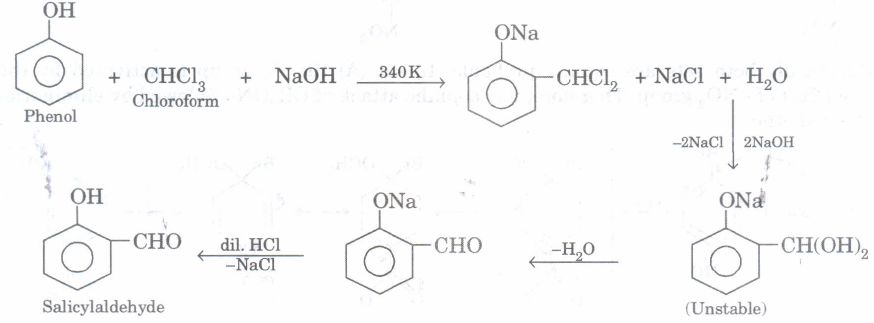
Write the equations involved in the
Reimenn-Tiemann reaction.
9.
Out of 2-chloroethanol and ethanol, which one is more acidic and why?
10.
Which of the following alcohols will not undergo oxidation?
Butanol
Butan-2-ol
2-methylbutan-2-ol
3-methylbutan-2-ol
11.
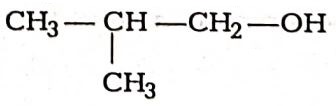
Lucas reagent produces cloudiness immediately with
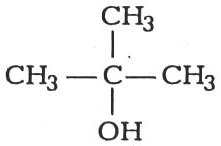
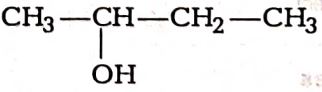
CH3 - CH2 - CH2 - OH
12.
Salicylic acid on heating with acetic anhydride in basic medium gives
Aspirin
Methyl salicylate
Phenyl salicylate
Acetyl salicylate
13.
The electrophile used in Reimer-Tiemann reaction is
\(\begin{equation} \mathrm{CCl}_{3}^{\oplus} \end{equation}\)
CCI2
\(\begin{equation} \mathrm{Cl}_{3}^{\oplus} \end{equation}\)
H2O
14.
The correct order of decreasing acidity of nitrophenols will be
m-nitrophenol > p-nitrophenol > o-nitrophenol
o-nitrophenol > m-nitrophenol > p-nitrophenol
p-nitrophenol > m-nitrophenol > o-nitrophenol
p-nitrophenol > o-nitrophenol > m-nitrophenol
15.
Isopropyl benzene is oxidised in the presence of air to compound 'A'. When compound 'A' is treated with dilute mineral acid,the aromatic product formed is
phenol
benzene
benzaldehyde
acetophenone
toluene
16.
The most suitable reagent for the conversion of R-CH2OH \(\longrightarrow\) R-CHO is
PCC(Pyridinium chlorochromate)
KMnO4
CrO3
K2Cr2O7
17.
Propene on hydroboration-oxidation produces
CH3CH2CH2OH
CH3CHOHCH3
CH3CHOHCH2OH
CH3CH2CHO
18.
What is the correct order of reactivity of alcohols in the following reaction?
\(R-OH+HCI\overset { ZnCl_{ 2 } }{ \longrightarrow } R-Cl+{ H }_{ 2 }O\)
\({ 1 }^{ \circ }>{ 2 }^{ \circ }>{ 3 }^{ \circ }\)
\({ 1 }^{ \circ }<{ 2 }^{ \circ }{ >3 }^{ \circ }\)
\({ 3 }^{ \circ }>{ 2 }^{ \circ }>{ 1 }^{ \circ }\)
\({ 3 }^{ \circ }>{ 1 }^{ \circ }>{ 2 }^{ \circ }\)
19.
The compound (C) in the following series of reactions is:
\(Aceton+{ CH }_{ 3 }MgBr\overset { Dry\ ether }{ \longrightarrow } A\overset { { H }_{ 3 }{ O }^{ + } }{ \longrightarrow } B\overset { 363K }{ \underset { 20%{ H }_{ 2 }{ SO }_{ 4 } }{ \longrightarrow } } C+H_{ 2 }O\)
2-Methylpropene
but-2-ene
but-1-ene
propene
20.
(i) How is phenol obtained from (a) aniline (b) benzene sulphonic acid?
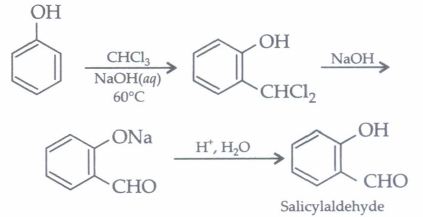
(ii) How it can be converted into (a) salicylaldehyde (b) benzoquinone (c) toluene?
21.
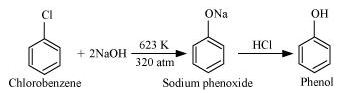
Write chemical reaction for the preparation of phenol from chlorobenzene.
22.
Write structures of the compounds whose IUPAC names are as follows:
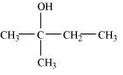
(i) 2-Methylbutan-2-ol
(ii) 1-Phenylpropan-2-ol
(iii) 3,5-Dimethylhexane –1, 3, 5-triol
(iv) 2,3 – Diethylphenol
(v) 1 – Ethoxypropane
(vi) 2-Ethoxy-3-methylpentane
(vii) Cyclohexylmethanol
(viii) 3-Cyclohexylpentan-3-ol
(ix) Cyclopent-3-en-1-ol
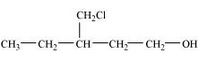
(x) 4-Chloro-3-ethylbutan-1-ol.
23.
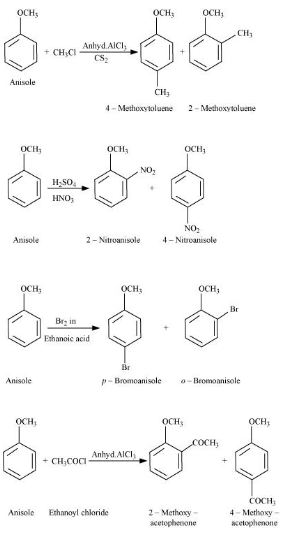
Write equation of the following reactions.
(i) Friedel-Crafts reaction (alkylation in anisole)
(ii) Nitration of anisole
(iii) Bromination of anisole in ethanoic acid medium
(iv) Friedel-Crafts (acetylation of anisole)
24.
How does Lucas reagent help in the distinction of primary, secondary and tertiary alcohols? Discuss the reactions involved.
25.
Read the passage given below and answer the following questions:
Reimer- Tiemann reaction introduces an aldehyde group, on aromatic ring of phenol, ortho to the hydroxyl group. This is a general method for the synthesis of substituted salicylaldehydes as depicted below.
The following questions are multiple choice questions. Choose the most appropriate answer:
(i) Reimer-Tiemann reaction is an example of
| (a) nucleophilic substitution reaction | (b) electrophilic substitution reaction |
| (c) nucleophilic addition reaction | (d) electrophilic addition reaction |
(ii) Which of the following reagents is used in the given reaction in steps I?
| (a) aq. NaOH + CH3CI | (b) aq. NaOH + CH2Cl2 | (c) aq. NaOH + CHCl3 | (d) aq. NaOH + CCl4 |
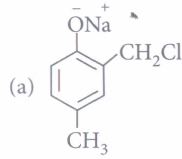
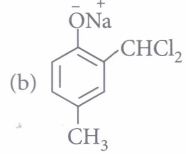
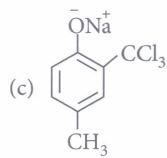
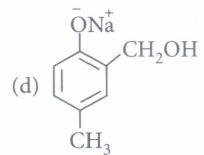
(iii) The structure of the intermediate [A] is
 |
 |
 |
 |
(iv) When phenol reacts with chloroform in presence of KOH, the product formed is
| (a) salicylic acid | (b) salicylaldehyde | (c) both (a) and (b) | (d) none of these. |
1.
Ethanol when warmed with NaOH + I2 gives yellow ppt of iodoform while phenol does not give this test.

2.

3.
Isobutylene (2-Methyl propane)
4.
2-Bromo-3-methyl but-2-en-1-ol
5.

6.
7.
The addition of diborane to alkenes to form trialkylboranes followed by their oxidation with alkaline hydrogen peroxide to form alcohols is called hydroboration-oxidation reaction.

For example,
\(\underset { Propene }{ { CH }_{ 3 }CH={ CH }_{ 2 } } \overset { { BH }_{ 3 } }{ \underset { THF }{ \longrightarrow } } ({ CH }_{ 3 }{ CH }_{ 2 }{ CH }_{ 2 })\overset { { OH }^{ - },{ H }_{ 2 }{ O }_{ 2 } }{ \longrightarrow } \underset { Propene-1-ol }{ { 3CH }_{ 3 }CH{ CH }_{ 2 } } OH+B({ OH })_{ 3 }\)
8.
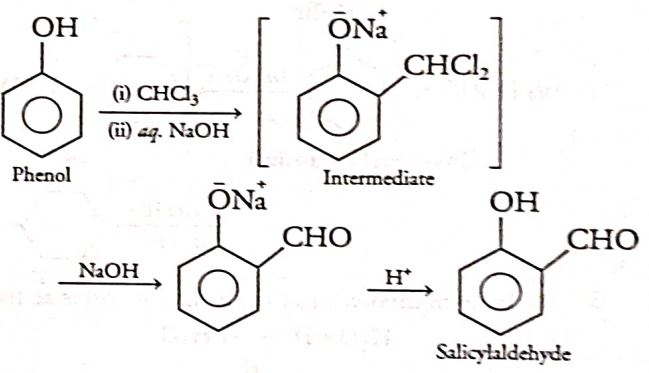
9.
2-chloroethanol is more acidic than ethanol. Due to -I-effect (electron withdrawing group)of the CI-atom, electron density on O-H bond decreases. So, O-H bond of 2-chloroethanol becomes weaker than O-H bond of ethanol. Thus, the release of H+ ion from O-H bond of 2-chloroethane becomes easier.
10.
(c)
2-methylbutan-2-ol
11.
(a)
12.
(a)
Aspirin
13.
(b)
CCI2
14.
(d)
p-nitrophenol > o-nitrophenol > m-nitrophenol
15.
(a)
phenol
16.
(a)
PCC(Pyridinium chlorochromate)
17.
(a)
CH3CH2CH2OH
18.
(c)
\({ 3 }^{ \circ }>{ 2 }^{ \circ }>{ 1 }^{ \circ }\)
19.
(a)
2-Methylpropene
20.
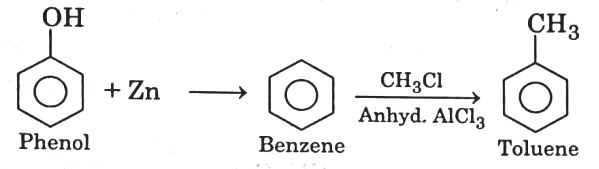
21.
Chlorobenzene is fused with NaOH (at 623 K and 320 atm pressure) to produce sodium phenoxide, which gives phenol on acidification.
22.
(i)
(ii)
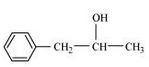
(iii)
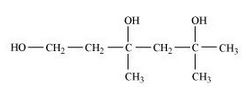
(iv)

(v)
\(\mathrm{CH}_{3}-\mathrm{CH}_{2}-\mathrm{O}-\mathrm{CH}_{2}-\mathrm{CH}_{2}-\mathrm{CH}_{3}\)
(vi)
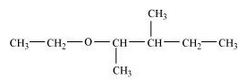
(vii)

(viii)
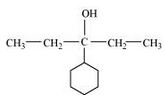
(ix)

(x)
23.
24.
The Lucas test differentiates between primary, secondary, and tertiary alcohols.
It is based on the difference in reactivity of the alcohols with HCl in an SN1 reaction:
ROH + HCl→RCl+H2O
It works because secondary carbocations are more stable and form faster than primary carbocations, and tertiary carbocations are so stable that the reaction takes place almost immediately.
25.
(i) (b): It is an electrophilic substitution reaction.
(ii) (c)
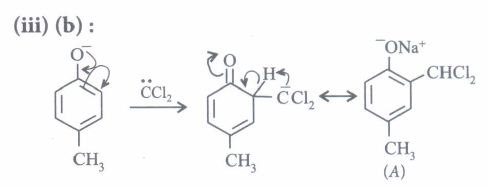
(iv) (b): It is known as Reimer-Tiemann reaction.

12th Standard CBSE Syllabus & Materials
12th Standard CBSE
CBSE 12th Computer Science Python Revision Tour I - New Previous year Question Papers Study Material - QB365 Set A
NEW12th Standard CBSE
CBSE 12th Business Studies Planning Important Questions And Answers Study Material - QB365 Set A
NEW12th Standard CBSE
CBSE 12th Business Studies Business Environment Important Questions And Answers Study Material - QB365 Set A
NEW12th Standard CBSE
CBSE 12th Business Studies Principles of Management Important Questions And Answers Study Material - QB365 Set A



NCERT Books

Syllabus

Exam Pattern

Sample Question Papers

Previous year Question Papers

Important Notes

MCQ Practice test

NCERT Exemplers

Case study Questions

Image Based Questions

Passage based Questions

HOT Questions

Value Based Questions

Model Questions Papers
NCERT ( Book Back ) Questions

Assertion and Reason
Important Questions And Answers

CBSE 12th Standard CBSE Subjects
CBSE Standards








