
 100% FREE ACCESS
12th Standard CBSE Syllabus & Materials
12th Standard CBSE
CBSE 12th Economics Government Budget and the Economy Previous year Question Papers Study Material - QB365 Set A
NEW12th Standard CBSE
CBSE 12th Computer Science Interface Python with MySQL - New Previous year Question Papers Study Material - QB365 Set A
NEW12th Standard CBSE
CBSE 12th Computer Science Database Concept - New Previous year Question Papers Study Material - QB365 Set A
NEW12th Standard CBSE
CBSE 12th Computer Science Data Communication - New Previous year Question Papers Study Material - QB365 Set A
NEW12th Standard CBSE
CBSE 12th Computer Science Data Structures - New Previous year Question Papers Study Material - QB365 Set A
NEW12th Standard CBSE
CBSE 12th Computer Science Functions - New Previous year Question Papers Study Material - QB365 Set A

Published on: 02/11/2025
Download CBSE Class 12th Standard CBSE Chemistry question papers, sample papers, important questions, and previous year solved papers in PDF format. Get free study materials, NCERT solutions, and exam preparation resources for Class 12th Standard CBSE Chemistry
Questions + Answers key
Take MCQ Chemistry Test
1.
Which of the following alcohols will not undergo oxidation?
Butanol
Butan-2-ol
2-methylbutan-2-ol
3-methylbutan-2-ol
2.
Williamson's synthesis of preparing dimethyl ether is a/an
SN1 reaction
elimination reaction
SN2 reaction
nucleophilic addition reaction
3.
Whlch of the following reagents will not convert ethyl alcohol into ethyl chloride?
PCl5
NaCl
SOCl2
HCl / ZnCl2
4.
Compounds A and C in the following reaction are

identical
positional isomers
functional isomers
optical isomers
5.
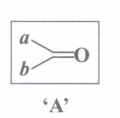
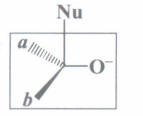
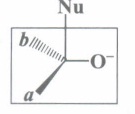
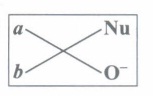
Which of the following is the correct representation for intermediate of nucleophilic addition reaction to the given carbonyl compound (A):
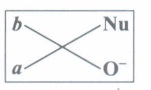
6.
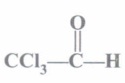 reacts with chlorobenzene in presence of cone, H2 SO4 produces
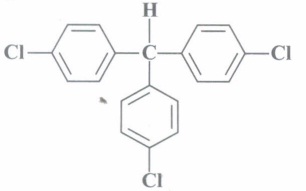
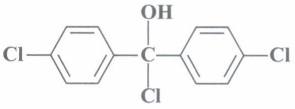
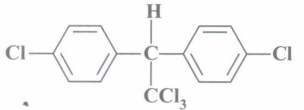
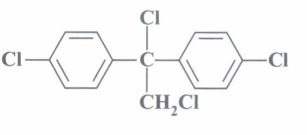
7.
Which of the following compounds will react with sodium hydroxide solution in water?
C6H5OH
C6H5CH2OH
(CH3 )3 COH
C2H5OH
8.
Salicylic acid on heating with acetic anhydride in basic medium gives
Aspirin
Methyl salicylate
Phenyl salicylate
Acetyl salicylate
9.
Which of the following reactions will yield phenol?
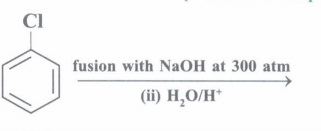
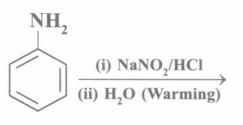
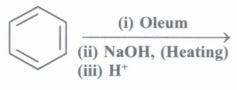
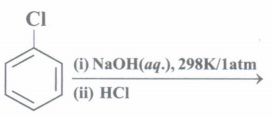
10.
The product formed during Hell - Volhard - Zelinsky reaction is
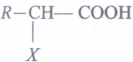
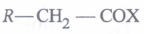
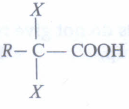
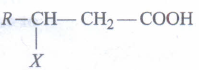
11.
IUPAC name of \(\alpha\)- acetyl succinic acid is
2 - (1-oxoethyl) butane-1,4-dioic acid
3 - (2-oxoethyl) butane-1,4-dioic acid
Hexan - 1, 6-dioic acid
Butane -1,4 - dicarboxylic acid
12.
In the reaction, \(\begin{equation} \mathrm{H}_{3} \mathrm{C} \longrightarrow \mathrm{CH}=\mathrm{CH}-\mathrm{CH}_{2}-\mathrm{CH}_{2}-\mathrm{CN} \end{equation}\)
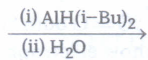 Identify the product formed in the given reaction.
\(\mathrm{H}_{3} \mathrm{C}-\mathrm{CH}_{2} \mathrm{CH}_{2} \mathrm{CH}_{2} \mathrm{CH}_{2} \mathrm{CN}\)
\(\mathrm{H}_{3} \mathrm{C}-\mathrm{CH}=\mathrm{CH}-\mathrm{CH}_{2} \mathrm{CH}_{2} \mathrm{CHO}\)
\(\mathrm{H}_{3} \mathrm{CCH}_{2} \mathrm{CH}_{2} \mathrm{CH}_{2} \mathrm{CH}_{2} \mathrm{CHO}\)
None of the above
13.
The process of converting alkyl halides into alcohols involves___________.
addition reaction
substitution reaction
dehydrohalogenation reaction
rearrangement reaction
14.
IUPAC name of m- cresol is___________.
3-methylphenol
3-chlorophenol
3-methoxyphenol
benzene-1,3-diol
15.
Give IUPAC name of the compound given below.
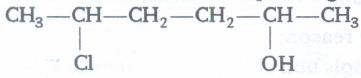
2-chloro-5-hydroxyhexane
2-hydroxy-5-chlorohexane
5-chlorohexan-2-ol
2-chlorohexan-5-ol
16.
Through which of the following reactions number of carbon atoms can be increased in the chain ?
Grignard reaction
Cannizzaro's reaction
Aldol condensation
HVZ reaction
17.
The correct order of increasing acidic strength is ________________.
Phenol
Ethanol
Ethanol
Chloroacetic acid
18.
Which of the following statements about benzaldehyde is are true ?
Reduces Tollens' reagent
Undergoes aldol condensation
Undergoes Cannizzaro reaction
Does not form an addition compound with sodium hydrogen sulphite
19.
Amoung the following compounds. most acidic is
p-nitrophenol
p-hydroxybenzoic acid
o-hydroxybenzoic acid
p-toluic acid
20.
The correct order of decreasing acid strength of trichloroacetic (A), trifluoroacetic acid (B), benzoic acid (C) and formic acid (D) is
A > B > C > D
A > C > B > D
B > A > D > C
B > A > C > D
21.
Phenol \(\xrightarrow [ dust ]{ Zn } X\xrightarrow [ Anhyd.AI{ CI }_{ 3 } ]{ { CH }_{ 3 }CI } Y\xrightarrow [ KM{ nO }_{ 4 } ]{ Alk. } Z,\) The product Z is
benzaldehyde
benzoic acid
benzene
toluene
22.
Which of the following compounds will give a yellow precipitate with iodine and alkali?
Acetophenone
Methyl acetate
Acetamide
2-Hydroxypropane
23.
Which of the following compounds is resistant to nucleophilic attack y hydroxyl ions?
Methyl acetate
Acetonitrile
Acetamide
Diethyl ether
24.
When CH2=CH-O-CH2CH3 reacts with HI gives a mixture of
ethane
ethanol
iodoethene
ethanal
25.
In the Cannizaro reaction given below,
2 Ph __ CHO \(\xrightarrow{OH^{-}}\) Ph __ CH2OH + PhCO-2, the slowest step is
the attack of - OH at the carbonyl group
the transfer of hydride ion to the carbonyl group
the transfer of hydride ion to the carbonyl group
the abstraction of a proton from the carboxylic acid
the deprotonation of Ph __ CH2OH
26.
Trichloroacetaldehyde was subjected to Cannizaro's reaction by using NaOH. The mixture and another products contains sodium trichloroacetate and other compound. The other compound is
trichloromethanol
2,2,2-trichloropropanol
chloroform
2,2,2-trichloromethanol
27.
For making distination between 2-pentanone and 3-pentanone, the reagent employed is
K2Cr2O7/H2SO4
Zn-Hg/HCI
SeO2
Iodine/NaOH
28.
CH3CHO and C6H5CH2 can be distinguished chemically by
Benedict's rect
Iodoform test
Tollens'reagent test
Fehling's solution test
29.
Iodoform can be prepared form all except
butan-2-one
acetophenone
propan-2-ol
propan-1-ol
30.
Oxidation of acetaldehyde with selenium dioxide produces
ethanoic acid
methanoic acid
glyoxal
oxalic acid
31.
Which one of the following is reduced with zinc and hydrochloric acid to give the corresponding hydrocarbon ?
ethyl acetate
acetic acid
acetamide
butan-2-one
32.
The smallest ketone and its next homologue are reacted with NH2OH to form oxime
two different oximes are formed
three different oximes are formed
two oximes are optically active
all oximes are optically active
33.
Decreasing order reactivity in Williamson's ether synthesis of the following is:
I.Me3CCH2Br
II.CH3CH2CH2Br
III.CH2=CHCH2Cl
IV.CH3CH2CH2Cl.
III > II > IV > I
I > II > IV III
IIC > III > IV > I
I > III > II > IV
34.
Identify Z in the sequence of reactions: CH3CH2CH = CH2\(\overset{HBr/H_2O_2}\longrightarrow\) Y \(\overset{C_2H_5ONa}\longrightarrow\) Z.
CH3-(CH2)3-O-CH2CH3
(CH3)2CH-O-CH2CH3
CH3-(CH2)4-O-CH3
CH3CH2-CH(CH3)-O-CH2CH3
35.
In Williamson's synthesis, ethoxyethane is prepared by
heating sodium ethoxide with ethyl bromide
passing ethanol heated alumina
treating ethyl alcohol with excess of cone.H2SO4 at 430-440K
36.
Given are cyclohexanol
(I) acetic acid
(II) 2,4,6-trinitrophenol
(III) and phenol
(IV) In these, the order of decreasing acidic character will be
IIII > IV II >I
III > II > IV > I
II > III > I > IV
II > III > IV > I
37.
The correct order of decreasing acidity of nitrophenols will be
m-nitrophenol > p-nitrophenol > o-nitrophenol
o-nitrophenol > m-nitrophenol > p-nitrophenol
p-nitrophenol > m-nitrophenol > o-nitrophenol
p-nitrophenol > o-nitrophenol > m-nitrophenol
38.
Iodoform can be prepared from all except
isopropyl alcohol
3-methyl-2-butanone
isobutyl alcohol
ethyl methyl ketone
39.
Which of the following compounds can be used as antifreeze in automobile radiators?
Methyl alcohol
Glycol
Nitrophenol
Ethyl alcohol
40.
4-Methoxyacetophenone can be prepared from anisole by
Reimer-Tiemann reaction
Kolbr's reaction
Friedel-Crafs reaction
Wurtz reaction
Cannizzaro reaction
41.
In the following reaction :
RMgX + HC(OEt)3 \(\xrightarrow {Ether}\) \(\xrightarrow {H_3O^{+}}\)
RCHO
R2CHOEt
R3CH
RCH(OEt)2
42.
By which one of the following reactions ketones cannot prepared ?
Hydration of alkynes
Hydrolysis of gem-dihalides
Dry distillation of calcium carboxylates
Stephen's reaction
Ozonolysis of appropriately substituted alkenes
43.
HC \(\equiv\) CH \(\overset { HgSO_{ 4 } }{ \underset { H_{ 2 }{ SO }_{ 4 } }{ \longrightarrow } } \) \(\overset {(i)CH_3 MgBr }{ \underset { (ii)H_2O}{ \longrightarrow } } \) \(\overset {PBr_3} { \longrightarrow } \) gives
CH3CHBrCH3
CH3CH2CH2Br
CH2=CH-Br
BrCH=CH-CH3
44.
Among the following compounds, strongest acid is
HC\(\equiv\)CH
C6H6
C2H6
CH3OH
45.
Ozonolysis of an organic compound 'A' produces acetone and propinaldehyde in equimolar mixture. Identify 'A' from the following compounds
2-Methyl-1-pentene
1-pentene
2-Pentene
2-Methyl-2-pentene
46.
Which of the esters shown,after reduction with LiAlH4 and aqueous work up, will yield two molecules of only a single alcohol?
C6H5COOC6H5
CH3CH2COOCH2CH3
C6H5COOCH2C6H5
CH3COOCH3
47.
The product of acid -catalysed hydration of 2-phenylpropane is
3-phenyl-2-propanol
1-phenyl-2-propanol
2-phenyl-2-propanol
2-phenyl-1-propanol
48.
Acid catalysed hydration of alkene is an example for
free radical substitution
nucleophilic substitution
nucleophilic addition
electrophilic addition
electrophilic substitution
49.
The formation of cyanohydrin from acetone is which type of reaction ?
Electrophilic substitution
Electrophilic addition
Nucleophilic addition
Nucleophilic substitution
50.
The compound (C) in the following series of reactions is:
\(Aceton+{ CH }_{ 3 }MgBr\overset { Dry\ ether }{ \longrightarrow } A\overset { { H }_{ 3 }{ O }^{ + } }{ \longrightarrow } B\overset { 363K }{ \underset { 20%{ H }_{ 2 }{ SO }_{ 4 } }{ \longrightarrow } } C+H_{ 2 }O\)
2-Methylpropene
but-2-ene
but-1-ene
propene
1.
(c)
2-methylbutan-2-ol
2.
(c)
SN2 reaction
3.
(b)
NaCl
4.
(b)
positional isomers
5.
(a)
6.
(c)
7.
(a)
C6H5OH
8.
(a)
Aspirin
9.
(a)
10.
(a)
11.
(a)
2 - (1-oxoethyl) butane-1,4-dioic acid
12.
(b)
\(\mathrm{H}_{3} \mathrm{C}-\mathrm{CH}=\mathrm{CH}-\mathrm{CH}_{2} \mathrm{CH}_{2} \mathrm{CHO}\)
13.
(b)
substitution reaction
14.
(a)
3-methylphenol
15.
(c)
5-chlorohexan-2-ol
16.
(c)
Aldol condensation
17.
(c)
Ethanol
18.
(c)
Undergoes Cannizzaro reaction
19.
(c)
o-hydroxybenzoic acid
20.
(c)
B > A > D > C
21.
(b)
benzoic acid
22.
(d)
2-Hydroxypropane
23.
(d)
Diethyl ether
24.
(d)
ethanal
25.
(b)
the transfer of hydride ion to the carbonyl group
26.
(d)
2,2,2-trichloromethanol
27.
(d)
Iodine/NaOH
28.
(b)
Iodoform test
29.
(d)
propan-1-ol
30.
(c)
glyoxal
31.
(d)
butan-2-one
32.
(b)
three different oximes are formed
33.
(c)
IIC > III > IV > I
34.
(a)
CH3-(CH2)3-O-CH2CH3
35.
(a)
heating sodium ethoxide with ethyl bromide
36.
(b)
III > II > IV > I
37.
(d)
p-nitrophenol > o-nitrophenol > m-nitrophenol
38.
(c)
isobutyl alcohol
39.
(b)
Glycol
40.
(c)
Friedel-Crafs reaction
41.
(a)
RCHO
42.
(d)
Stephen's reaction
43.
(a)
CH3CHBrCH3
44.
(d)
CH3OH
45.
(d)
2-Methyl-2-pentene
46.
(c)
C6H5COOCH2C6H5
47.
(c)
2-phenyl-2-propanol
48.
electrophilic addition
49.
(c)
Nucleophilic addition
50.
(a)
2-Methylpropene

12th Standard CBSE Syllabus & Materials
12th Standard CBSE
CBSE 12th Computer Science Python Revision Tour I - New Previous year Question Papers Study Material - QB365 Set A
NEW12th Standard CBSE
CBSE 12th Business Studies Planning Important Questions And Answers Study Material - QB365 Set A
NEW12th Standard CBSE
CBSE 12th Business Studies Business Environment Important Questions And Answers Study Material - QB365 Set A
NEW12th Standard CBSE
CBSE 12th Business Studies Principles of Management Important Questions And Answers Study Material - QB365 Set A



NCERT Books

Syllabus

Exam Pattern

Sample Question Papers

Previous year Question Papers

Important Notes

MCQ Practice test

NCERT Exemplers

Case study Questions

Image Based Questions

Passage based Questions

HOT Questions

Value Based Questions

Model Questions Papers
NCERT ( Book Back ) Questions

Assertion and Reason
Important Questions And Answers

CBSE 12th Standard CBSE Subjects
CBSE Standards








