
 100% FREE ACCESS
12th Standard CBSE Syllabus & Materials
12th Standard CBSE
CBSE 12th Economics Government Budget and the Economy Previous year Question Papers Study Material - QB365 Set A
NEW12th Standard CBSE
CBSE 12th Computer Science Interface Python with MySQL - New Previous year Question Papers Study Material - QB365 Set A
NEW12th Standard CBSE
CBSE 12th Computer Science Database Concept - New Previous year Question Papers Study Material - QB365 Set A
NEW12th Standard CBSE
CBSE 12th Computer Science Data Communication - New Previous year Question Papers Study Material - QB365 Set A
NEW12th Standard CBSE
CBSE 12th Computer Science Data Structures - New Previous year Question Papers Study Material - QB365 Set A
NEW12th Standard CBSE
CBSE 12th Computer Science Functions - New Previous year Question Papers Study Material - QB365 Set A

Published on: 02/11/2025
Download CBSE Class 12th Standard CBSE Chemistry question papers, sample papers, important questions, and previous year solved papers in PDF format. Get free study materials, NCERT solutions, and exam preparation resources for Class 12th Standard CBSE Chemistry
Questions + Answers key
Take MCQ Chemistry Test
1.
A compound (A) with molecular formula C5H10O,forms a phenyl hydrazone and gives negative Tollen's and iodoform tests. The compound on reduction gives n-pentane. The compound (A) is
pentan-3-one
pentanal
pentanol
pentan-2-one
2.
What is the correct IUPAC name of the given Compound?
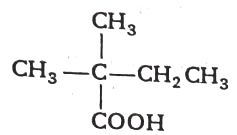
2, 2-dimethylbutanoic acid
2-carboxyl-2-methylbutane
2-ethyl-2-methylpropanoic acid
3-methylbutane carboxylic acid
3.
Which is the most suitable reagent for the following conversion?
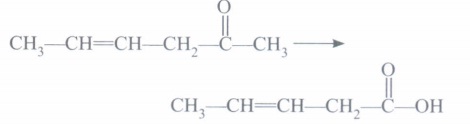
Tollen's reagen
Benzoyl peroxide
I2 and NaOH solution
Sn and NaOH solution
4.
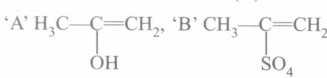
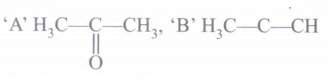
Predict the correct intermediate and the product in the following reaction:

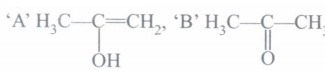
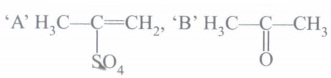
5.
The IUPAC name of the compound
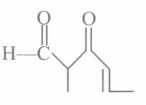
2-Fonnyl hex-2-en-3-one
5-methyl-4-oxo hex-2-en-5al
3-keto-2-methyl hex-5en-al
3-keto-2-methyl hex-4-en-1-al
6.
Which of the following is the correct representation for intermediate of nucleophilic addition reaction to the given carbonyl compound (A):
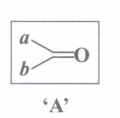
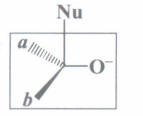
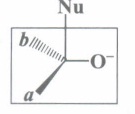
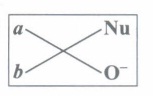
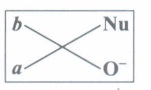
7.
Which of the following compounds do not undergo aldol condensation?
CH3-CHO
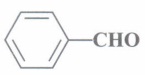
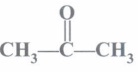
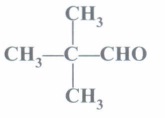
8.
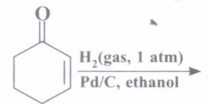 A is
A is
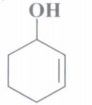
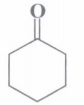
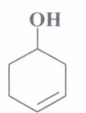
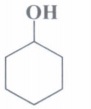
9.
The product formed by the reaction of an aldehyde with a primary amine is
Carboxylic acid
Aromatic acid
Schiff's base
Ketone
10.
Which among the given molecules can exhibit tautomerism?
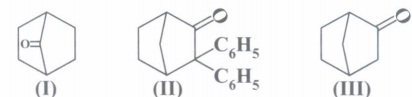
III only
Both I and III
Both I and II
Both II and III
11.
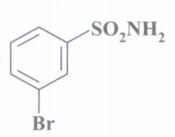
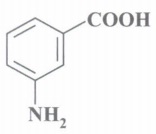
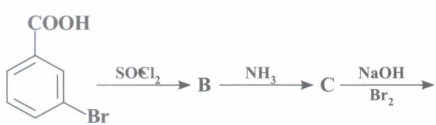 D. 'D' is
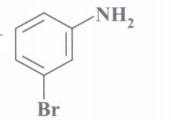
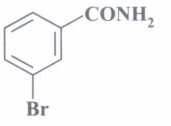
12.
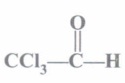 reacts with chlorobenzene in presence of cone, H2 SO4 produces
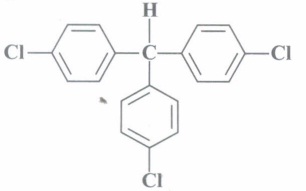
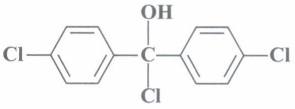
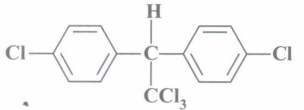
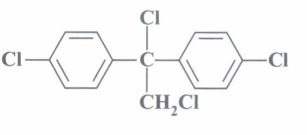
13.
\(\mathrm{CH}_{3} \mathrm{COOH} \stackrel{\mathrm{SOCl}_{2}}{\longrightarrow} \ ^{\prime} \mathrm{A}^{\prime} \frac{\text { Benzene }}{\mathrm{Anhy} \mathrm{AlCl}_{3}}> ^{\prime} \mathrm{B}^{\prime} \stackrel{\mathrm{HCN}}{\longrightarrow} \ ^{\prime} \mathrm{C} ^{\prime} \stackrel{\mathrm{HOH}}{\longrightarrow} \ ^{\prime} \mathrm{D} ^{\prime}\)
The product 'D' is:
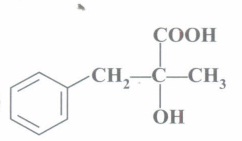
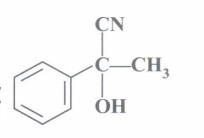
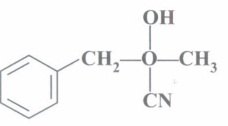
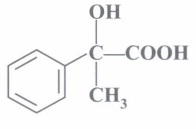
14.
What is the by-product formed in this reaction

NaHCO3
CO2
Na2HCO3
Na2CO3
15.
Sodalime is the mixture of
NaOH and CaO in the ratio of 3 : 2
NaOH and CaO in the ratio of 1:3
NaOH and CaO in the ratio of 3 : 1
NaOH and CaO in the ratio of 2 : 3
16.
Select the reagent for the given conversion.
\(\mathrm{CH}_{3}\left(\mathrm{CH}_{2}\right)_{8} \mathrm{CH}_{2} \mathrm{OH} \longrightarrow \mathrm{CH}_{3}\left(\mathrm{CH}_{2}\right)_{8} \mathrm{COOH}\)
KMnO4 in acidic,neutral, alkaline media
K2Cr2O7 in acidic media
CrO3 in acidic media
All of the above
17.
IUPAC name of \(\alpha\)- acetyl succinic acid is
2 - (1-oxoethyl) butane-1,4-dioic acid
3 - (2-oxoethyl) butane-1,4-dioic acid
Hexan - 1, 6-dioic acid
Butane -1,4 - dicarboxylic acid
18.
Cannizzaro's reaction is not given by ____________.
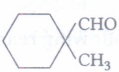
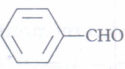
HCHO
CH3CHO
19.
Which of the following reagents is/are used in the given reaction? "RCHO ⇾ RCOOH".
Nitric acid
Potassium dichromate
Tollen's reagent
All of the above
20.
Which of the following compounds is most reactive towards nucleophilic addition reactions?
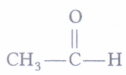
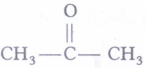
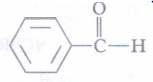
21.
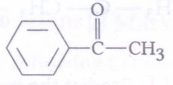
In the reaction, \(\begin{equation} \mathrm{H}_{3} \mathrm{C} \longrightarrow \mathrm{CH}=\mathrm{CH}-\mathrm{CH}_{2}-\mathrm{CH}_{2}-\mathrm{CN} \end{equation}\)
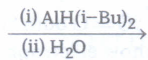 Identify the product formed in the given reaction.
\(\mathrm{H}_{3} \mathrm{C}-\mathrm{CH}_{2} \mathrm{CH}_{2} \mathrm{CH}_{2} \mathrm{CH}_{2} \mathrm{CN}\)
\(\mathrm{H}_{3} \mathrm{C}-\mathrm{CH}=\mathrm{CH}-\mathrm{CH}_{2} \mathrm{CH}_{2} \mathrm{CHO}\)
\(\mathrm{H}_{3} \mathrm{CCH}_{2} \mathrm{CH}_{2} \mathrm{CH}_{2} \mathrm{CH}_{2} \mathrm{CHO}\)
None of the above
22.
Benzophenone can be obtained by ______________ .
Benzoyl chloride + Benzene + AICI3
Benzoyl chloride + Diphenylcadmium
Benzoyl chloride + Phenylmagnesium chloride
Benzene + Carbon monoxide + ZnCI2
23.
Hydroxylamine reacts with
CH3COCI
CH3COCH3
CH3COOC2H5
CH3CONH2
24.
Phenol and benzoic acid may be distinguished by their reaction with
aqueous NaOH
aqueous COCH3
neutral FeCI3
Br2 - H2O
25.
Which of the following can reduce Fehling's solution ?
Formic acid
Formaldehyde
Acetic acid
Acetaldehyde
26.
Which of the following on oxidation with alkaline KMnO4 followed by acidification with dil. HCI gives benxoic acid
tolune
ethylbenzene
isopropylbenzene
tert-butylbenzene
27.
Which of the following statements about benzaldehyde is are true ?
Reduces Tollens' reagent
Undergoes aldol condensation
Undergoes Cannizzaro reaction
Does not form an addition compound with sodium hydrogen sulphite
28.
Benzophenone (C6H5COC6H5) will react with
NaHSO3
CH3OH
HCN
NH2OH
29.
The distinguishing test between methanoic acid and ethanoic acid is
Tollens' test
sodium bicarbonate test
Litmus test
esterification test
30.
When CH2 = CH _ COOH is reduced with LiAIH4 the compound obtained will be
CH3 _ CH2 _ CHO
CH3 _ CH2 _ COOH
CH2 = CH _ CH2OH
CH3 _ CH2 _ COOH
31.
Methyl benzoate can ve prepared by
C6H5COOH + CH3OH \(\xrightarrow {H^{+}}\)
C6H5COCI+ CH3OH \(\xrightarrow {Pyridine}\)
C6H5COOH + CH3N2 \(\longrightarrow \)
All the above methods
32.
Among the followig compounds, the one(s) that gives effervescence with aqueous NaHCO3 solution is (are)
I. (CH3CO)2O
II. CH3COOH
III. PhOH
IV. CH3COCHO
I and II
I and III
only II
I and IV
33.
The correct increasing order of the acid strength of benzoic acid (I), 4-nitrobenzoic acid (II),3, 4-finitrobenzonic acid (III) and 4-methoxybenzoic acid (IV) is
I < II < III < IV
II < I < IV < III
IV < I < II < III
IV < II < I < III
I < IV < II < III
34.
The decreasin order of acidity amoung the following compounds, ethanol (1), 2, 2, 2-trifluorethanol (II), trifluoroacetic acid (III) and acetic acid (IV) is
III > II > IV > I
IV > III > II > I
I > II > III > IV
III > IV > II > I
35.
The strongest acid amongst the following compounds is
HCOOH
CH3CH2CH2COOH
CICH2CH2CH2COOH
CH3COOH
36.
The correct order of decreasing acid strength of trichloroacetic (A), trifluoroacetic acid (B), benzoic acid (C) and formic acid (D) is
A > B > C > D
A > C > B > D
B > A > D > C
B > A > C > D
37.
The correct order of acidic strength of carboxylic acids is
formic acid < benzoic acid < acetic acid
formic acid < acetic acid < benzoic acid
acetic acid < formic acid < benzoic acid
acetic acid < benzoic acid < formic acid
38.
Grinard reagents and organolithium compounds on addition to dry ice separately,followed by hydrolysis gives
ketones and carboxylic acids respectively
carboxylic acids and ketones respectively
only carboxylic acids
only ketones
39.
The acid D obtained through the following sequence of reactions is: C2H5Br \(\xrightarrow{Alc.KOH}\) A \(\xrightarrow [ { CCI }_{ 4 } ]{ { Br }_{ 2 } } B\xrightarrow [ (excess) ]{ KCN } C\xrightarrow { { H }_{ 3 }{ O }^{ + } } D\)
succinic acid
malonic acid
maleic acid
oxalic acid
40.
R - CH2 _ CH2OH can be converted into RCH2CH2COOH. The correct sequence of reagents is
PBr3,KCN,H+
PBr3,KCN,H2
KCN,H+
HCN, PBr3, H+
41.
Phenol \(\xrightarrow [ dust ]{ Zn } X\xrightarrow [ Anhyd.AI{ CI }_{ 3 } ]{ { CH }_{ 3 }CI } Y\xrightarrow [ KM{ nO }_{ 4 } ]{ Alk. } Z,\) The product Z is
benzaldehyde
benzoic acid
benzene
toluene
42.
The compound formed as a result of oxidation of ethylbenzene by KMnO4 is :
benzyl alcohol
benzophenone
acetophenone
benzoic acid
43.
An organic compound with the molecular formula C8H8O forms 2, 4 - DNP derivative, reduces Tollens' reagent and undergoes Cannizzaro reaction. On vigorous oxidation, it gives 1,2-benzene dicarboxylic acid. The organic compound is
e-ethylbenzaldehyde
2-methylbenzaldehyde
acetophenone
3-methylbenzaldehyde
44.
Which of the following reagents reacts differently with HCHO, CH3CHO, and CH3COCH3?
HCN
NH2NH2
NH2OH
NH3
45.
Trichloroacetaldehyde was subjected to Cannizaro's reaction by using NaOH. The mixture and another products contains sodium trichloroacetate and other compound. The other compound is
trichloromethanol
2,2,2-trichloropropanol
chloroform
2,2,2-trichloromethanol
46.
Aldol condensation does not occur between
two different aldehydes
two different ketones
an aldehyde and a ketone
an aldehyde and an ester
47.
A compound of molecular formula CH 100% (A) reacts with Tollens' reagent to give silver mirror but does not undergo aldol condensation. The compound A is
3-pentanone
2,2-dimethylpropanal
3-hydroxy-2-pentene
3-methyllbutanone
48.
Aldol condensation between which of the following two compounds followed by dehydration gives methyl vinyl ketone ?
Formaldehyde and acetone
Formaldehyde and acetaldehyde
Two molecules of acetaldehyde
Two molecules of acetone
49.
The cross aldol product formed when propanal acts as the electrophile and butanal as nucleophile is
3-hydroxy-2-methylpentanal
3-hydroxy-2-methylhexanal
2-ethyl-3-hydroxylpentanal
2-ethyl-3-hydroxyhexanal
50.
A carbonyl compound with molecular weight 86, does not reduce Fehling's solution but forms crystalline bisulphite derivatibe and gives iodoform test. The possible compound can be
2-pentanone and 3-pentanone
2-pentanone and 3-methyl-2-butanone
2-pentanone and pentanal
3-pentanone and 3-methyl-2-butanone
51.
For making distination between 2-pentanone and 3-pentanone, the reagent employed is
K2Cr2O7/H2SO4
Zn-Hg/HCI
SeO2
Iodine/NaOH
52.
CH3CHO and C6H5CH2 can be distinguished chemically by
Benedict's rect
Iodoform test
Tollens'reagent test
Fehling's solution test
53.
Iodoform can be prepared form all except
butan-2-one
acetophenone
propan-2-ol
propan-1-ol
54.
Oxidation of acetaldehyde with selenium dioxide produces
ethanoic acid
methanoic acid
glyoxal
oxalic acid
55.
C3H5O did not give a silver mirror with Tollens' reagent, but give an oxmic with hydroxmine. reagent, but gave an oxmie with hydroxylamine. It can give possitive
iodoform test
Fehling's test
Schiff's test
Carbylamine test
56.
Benxaldehyde and acetone can be best distinguished using
Fehling's solution
sodium hydroxide solution
2, 4-DNP
Tollens' reagent
57.
Which one of the following is reduced with zinc and hydrochloric acid to give the corresponding hydrocarbon ?
ethyl acetate
acetic acid
acetamide
butan-2-one
58.
The smallest ketone and its next homologue are reacted with NH2OH to form oxime
two different oximes are formed
three different oximes are formed
two oximes are optically active
all oximes are optically active
59.
Reaction of Carbonyl compound with one of the following reagents involves nucleophilic addition followed by elemination of water. The reagent is
hydrazine in presence of feelby acidic solution
hydrocyanic acid
sodium hydrogen sulphite
Grignard reagent
60.
Consider the reaction :
RCHO + NH2NH2 \(\longrightarrow\) RCH = N __ NH2
What short of reaction is it?
Electrophilic addition - elimination reaction
Free radical addition - elimination reaction
Free radical addition - elimination reaction
Nucleophilic addition - elimination reaction
61.
The reagent used for separation of acetaldehyde and a acetophenone is
NaHSO3
C6H5NHNH2
NH2OH
NaOH ___ I2
62.
A carbonyl compound reacts with hydrogen cyanic to form a cyanhydrin which on hydrolysis forms a racemic mixture of \(\alpha\) -hydroxy acid. The carbonyl compound is
formaldehyde
acetaldheyde
acetone
diethyl ketone
63.
In the following reaction :
RMgX + HC(OEt)3 \(\xrightarrow {Ether}\) \(\xrightarrow {H_3O^{+}}\)
RCHO
R2CHOEt
R3CH
RCH(OEt)2
64.
By which one of the following reactions ketones cannot prepared ?
Hydration of alkynes
Hydrolysis of gem-dihalides
Dry distillation of calcium carboxylates
Stephen's reaction
Ozonolysis of appropriately substituted alkenes
65.
Which of the following is the industrial method of preparation of acetaldeyde ?
CH3CN \(\xrightarrow [ HCI ]{ Sn{ CI }_{ 2 } } \) CH3CH = NH \(\xrightarrow {H_3O^{+}}\)
CH3COCI + H2 \(\xrightarrow [ BaSO_4 ]{Pd } \) CH3CHO + HCI
CH2 = CH2 + H2O \(\xrightarrow {Pd ^{2+}}\)
All of the above.
66.
Ozonolysis of an organic compound gives formaldehyde as one of the peoducts. This confirms the presence of
a vinyl group
an isopropyl group
an acetylene triple bond
two ethylenic double bonds
67.
Identify the product of the reaction PhC \(\equiv CMe\xrightarrow { { H }_{ 3 }{ O }^{ + },{ Hg }^{ 2+ } } ?\)
PhCH2CH2CHO
PhCOCH2CH3
phCH2COCH3
PhCOCOMe
68.
Acetic acid is treated with Ca(OH)2 and the product so obtained is subject to dry distillation. The final product is
propanal
ethanol
ethanal
propanone
69.
Identify the correct order of boiling points of the following compounds :
CH3CH2CH2CH2OH (1), CH3CH2CH2CHO (2), CH3CH2CH2COOH (3)
1 > 2 > 3
3 > 1 > 2
1 > 3 > 2
3 > 2 > 1
70.
The product formed in Aldol condensation is
an alpha, beta unsaturated ester
a beta hydroxy acid
a beta hydroxyaldehyde or ketone
an alpha hydroxy aldehyde or ketone
71.
In urotropine, the number of N ----- N bond is
6
4
2
0
72.
Methyl ketones are characterized through
Tollens' reagent
Iodoform test
Schiff's reagent
Fehling's solution
73.
The compound that does not undergo Cannizzaro reaction is
formaldehyde
acetaldehyde
benzaldehyde
trimethylacetaldehyde
74.
The chemical that undergoes self-oxidation and self-reduction in the same reaction is
benzyl alcohol
acetone
formaldehyde
acetic acid
75.
In a reaction, RCHO is reduced to RCH3 using amalgamated zinc and concentrated HCl and warming the solution. The reaction is known as
Meerwein-Ponndorf reaction
Clemmensen reduction
Wolff-Kishner reduction
Schiff's reaction
1.
(a)
pentan-3-one
2.
(a)
2, 2-dimethylbutanoic acid
3.
(c)
I2 and NaOH solution
4.
(c)
5.
(d)
3-keto-2-methyl hex-4-en-1-al
6.
(a)
7.
(b)
8.
(b)
9.
(c)
Schiff's base
10.
(a)
III only
11.
(c)
12.
(c)
13.
(d)
14.
(d)
Na2CO3
15.
(c)
NaOH and CaO in the ratio of 3 : 1
16.
(d)
All of the above
17.
(a)
2 - (1-oxoethyl) butane-1,4-dioic acid
18.
(d)
CH3CHO
19.
(d)
All of the above
20.
(a)
21.
(b)
\(\mathrm{H}_{3} \mathrm{C}-\mathrm{CH}=\mathrm{CH}-\mathrm{CH}_{2} \mathrm{CH}_{2} \mathrm{CHO}\)
22.
(a)
Benzoyl chloride + Benzene + AICI3
23.
(b)
CH3COCH3
24.
(d)
Br2 - H2O
25.
(d)
Acetaldehyde
26.
(b)
ethylbenzene
27.
(c)
Undergoes Cannizzaro reaction
28.
(d)
NH2OH
29.
(a)
Tollens' test
30.
(c)
CH2 = CH _ CH2OH
31.
(d)
All the above methods
32.
(a)
I and II
33.
(c)
IV < I < II < III
34.
(d)
III > IV > II > I
35.
(b)
CH3CH2CH2COOH
36.
(c)
B > A > D > C
37.
(d)
acetic acid < benzoic acid < formic acid
38.
(b)
carboxylic acids and ketones respectively
39.
(a)
succinic acid
40.
(a)
PBr3,KCN,H+
41.
(b)
benzoic acid
42.
(d)
benzoic acid
43.
(b)
2-methylbenzaldehyde
44.
(d)
NH3
45.
(d)
2,2,2-trichloromethanol
46.
(d)
an aldehyde and an ester
47.
(b)
2,2-dimethylpropanal
48.
(a)
Formaldehyde and acetone
49.
(a)
3-hydroxy-2-methylpentanal
50.
(b)
2-pentanone and 3-methyl-2-butanone
51.
(d)
Iodine/NaOH
52.
(b)
Iodoform test
53.
(d)
propan-1-ol
54.
(c)
glyoxal
55.
(a)
iodoform test
56.
(d)
Tollens' reagent
57.
(d)
butan-2-one
58.
(b)
three different oximes are formed
59.
(a)
hydrazine in presence of feelby acidic solution
60.
(d)
Nucleophilic addition - elimination reaction
61.
(a)
NaHSO3
62.
(b)
acetaldheyde
63.
(a)
RCHO
64.
(d)
Stephen's reaction
65.
(c)
CH2 = CH2 + H2O \(\xrightarrow {Pd ^{2+}}\)
66.
(a)
a vinyl group
67.
(b)
PhCOCH2CH3
68.
(d)
propanone
69.
(b)
3 > 1 > 2
70.
(c)
a beta hydroxyaldehyde or ketone
71.
(d)
0
72.
Methyl ketones are characterized by iodoform test
73.
acetaldehyde contains \(\alpha \)- hydrogens and hence does not undergo aldol condensation
74.
(c)
formaldehyde
75.
(b)
Clemmensen reduction

12th Standard CBSE Syllabus & Materials
12th Standard CBSE
CBSE 12th Computer Science Python Revision Tour I - New Previous year Question Papers Study Material - QB365 Set A
NEW12th Standard CBSE
CBSE 12th Business Studies Planning Important Questions And Answers Study Material - QB365 Set A
NEW12th Standard CBSE
CBSE 12th Business Studies Business Environment Important Questions And Answers Study Material - QB365 Set A
NEW12th Standard CBSE
CBSE 12th Business Studies Principles of Management Important Questions And Answers Study Material - QB365 Set A



NCERT Books

Syllabus

Exam Pattern

Sample Question Papers

Previous year Question Papers

Important Notes

MCQ Practice test

NCERT Exemplers

Case study Questions

Image Based Questions

Passage based Questions

HOT Questions

Value Based Questions

Model Questions Papers
NCERT ( Book Back ) Questions

Assertion and Reason
Important Questions And Answers

CBSE 12th Standard CBSE Subjects
CBSE Standards








