
 100% FREE ACCESS
12th Standard CBSE Syllabus & Materials
12th Standard CBSE
CBSE 12th Economics Government Budget and the Economy Previous year Question Papers Study Material - QB365 Set A
NEW12th Standard CBSE
CBSE 12th Computer Science Interface Python with MySQL - New Previous year Question Papers Study Material - QB365 Set A
NEW12th Standard CBSE
CBSE 12th Computer Science Database Concept - New Previous year Question Papers Study Material - QB365 Set A
NEW12th Standard CBSE
CBSE 12th Computer Science Data Communication - New Previous year Question Papers Study Material - QB365 Set A
NEW12th Standard CBSE
CBSE 12th Computer Science Data Structures - New Previous year Question Papers Study Material - QB365 Set A
NEW12th Standard CBSE
CBSE 12th Computer Science Functions - New Previous year Question Papers Study Material - QB365 Set A

Published on: 02/11/2025
Download CBSE Class 12th Standard CBSE Chemistry question papers, sample papers, important questions, and previous year solved papers in PDF format. Get free study materials, NCERT solutions, and exam preparation resources for Class 12th Standard CBSE Chemistry
Questions + Answers key
Take MCQ Chemistry Test
1.
Which one of the following has the highest dipole moment?
(i) CH2Cl2
(ii) CHCl3
(iii) CCl4
2.
Write the structures of the following organic halogen compounds.
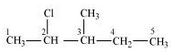
(i) 2-Chloro-3-methylpentane
(ii) p-Bromochlorobenzene
(iii) 1-Chloro-4-ethylcyclohexane
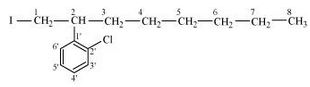
(iv) 2-(2-Chlorophenyl)-1-iodooctane
(v) 2-Bromobutane
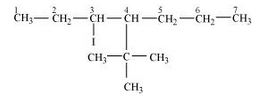
(vi) 4-tert-Butyl-3-iodoheptane
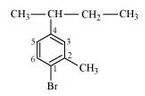
(vii) 1-Bromo-4-sec-butyl-2-methylbenzene
(viii) 1,4-Dibromobut-2-ene
3.
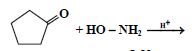
Predict the products of the following reactions:
(i)
(ii)
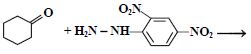
(iii)

(iv)
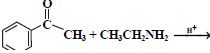
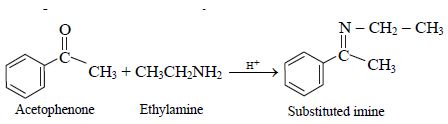
Elimination of H2O from carbonyl and amine group and formation of C= N bond.
4.
How is the variability in oxidation states of transition metals different from that of the non transition metals? Illustrate with examples.
5.
Calculate \(\Lambda_{m}^{0}\) for CaCl2 and MgSO4 from the data given in Table
| Ion | \(\lambda^0\)/(S cm2mol–1) | Ion | \(\lambda^0\)/(S cm2mol–1) |
| H+ | 349.6 | OH– | 199.1 |
| Na+ | 50.1 | Cl– | 76.3 |
| K+ | 73.5 | Br– | 78.1 |
| Ca2+ | 119.0 | CH3COO | -40.9 |
| Mg2+ | 106.0 | \(\mathrm{SO}_{4}^{2-}\) | 160.0 |
6.
(i) Give the structures of different isomeric amines corresponding to the molecular formula, C4H11N.
(ii) Write the IUPAC names of all the isomers.
(iii) What type of isomerism is exhibited by different pairs of amines?
7.
The molar conductivity of 0.025 mol L-1 methanoic acid is 46.1 S cm2 mol-1. Calculate its degree of dissociation and dissociation constant. Given \({ \lambda }^{ o }{ (H }^{ + })=349.6 \ S{ cm }^{ 2 }{ mol }^{ -1 }\) and \({ \lambda }^{ o }{ (H }COO^{ - })=54.6 \ S{ cm }^{ 2 }{ mol }^{ -1 }\).
8.
Calculate the mass of a non-volatile solute (molecular mass 40 g mol -1) which should be dissolved in 114 g octane to reduce its vapour pressure to 80%.
9.
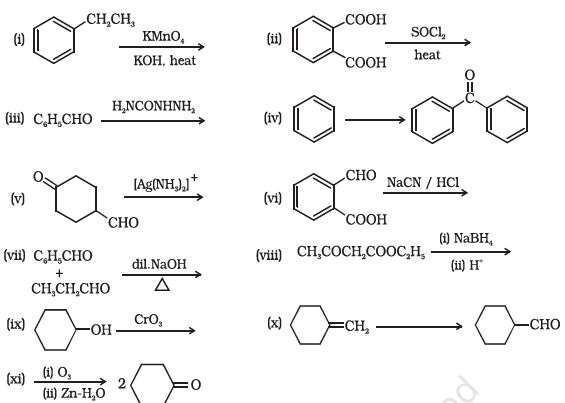
Complete each synthesis by giving missing starting material, reagent or products.
10.
Show how each of the following compounds could be converted to benzoic acid
(i) Ethylbenzene
(ii) Acetophenone
(iii) Bromobenzene
(iv) Phenyethene (Styrene).
11.
The decomposition of N2O5 in CCl4 at 318K has been studied by monitoring the concentration of N2O5 in the solution. Initially the concentration of N2O5 is 2.33 mol L–1 and after 184 minutes, it is reduced to 2.08 mol L–1. The reaction takes place according to the equation
2 N2O5 (g) → 4 NO2 (g) + O2 (g)
Calculate the average rate of this reaction in terms of hours, minutes and seconds. What is the rate of production of NO2 during this period?
12.
Explain giving reason:
(a) The enthalpies of atomisation of the transition metals are high.
(b) Transition metals and many of their compounds show paramagnetic behaviour.
(c) The transition metals generally form coloured compounds.
(d) transition metals and their many compounds act as good catalyst.
13.
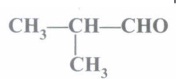
Write IUPAC name of the following compound:
14.
Name the species formed when methylamine reacts with HNO2.
15.
What is the coordination number of central metal ion in \(\begin{equation} \left[\mathrm{Fe}\left(\mathrm{C}_{2} \mathrm{O}_{4}\right)_{3}\right]^{3-} \end{equation}\) ?
16.
For a certain reaction, large fraction of molecules has energy more than the threshold energy, yet the rate of reaction is very slow. Why ?
17.
Why is the vapour pressure of an aqueous solution of glucose lower than that of water?
18.
Two liquids A and B on mixing produce a warm solution. Which type of deviation from Raoult's law does it show ?
19.
What would be the reactant and reagent used to obtain 2, 4-dimethyl pentan-3-ol?
Propanal and propyl magneslum bromide
3-methylbutanal and 2-methyl magnesium iodide
2-dimethylpropanone and methyl magnesium iodide
2-methylpropanal and iso-propyl magnesium iodide
20.
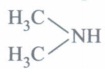
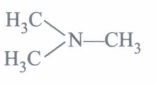
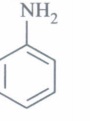
The most reactive amine towards dilute hydrochloric acid is ___________
CH3 - NH2
21.
About (CoF6)3- and [Co(2O4)3]3-, which of the following statements are false.
I. Both are octahedral
II. [Co(2O4)3]3- - is diamagnetic
(CoF6)3- is paramagnetic
III. Both are outer orbital complex
IV. In both Co is +3.
II and III
II, III, IV
III only
III and IV
22.
The spatial arrangement of the two or more polypeptide chains with respect to each other is known as
primary structure
secondary structure
tertiary structure
quaternary structure
23.
CH3CHO and C6H5CH2 can be distinguished chemically by
Benedict's rect
Iodoform test
Tollens'reagent test
Fehling's solution test
24.
Which of the following methods cannot be used to prepare allyl fluride ?
CICH2CH = CH2 \(\xrightarrow { NaF,acetone } \)
CH3CH = CH2 + F2 \(\xrightarrow { hv } \)
HOCH2CH = CH2 \(\xrightarrow { HF } \)
CICH2CH = CH2+AgF \(\longrightarrow \)
25.
What is the correct order of reactivity of alcohols in the following reaction?
\(R-OH+HCI\overset { ZnCl_{ 2 } }{ \longrightarrow } R-Cl+{ H }_{ 2 }O\)
\({ 1 }^{ \circ }>{ 2 }^{ \circ }>{ 3 }^{ \circ }\)
\({ 1 }^{ \circ }<{ 2 }^{ \circ }{ >3 }^{ \circ }\)
\({ 3 }^{ \circ }>{ 2 }^{ \circ }>{ 1 }^{ \circ }\)
\({ 3 }^{ \circ }>{ 1 }^{ \circ }>{ 2 }^{ \circ }\)
26.
Standard reduction potentials of the half reactions are given below :
\({ F }_{ 2 }(g)+{ 2e }^{ - }\longrightarrow 2{ F }^{ - }(aq);{ E }^{ 0 }=+2.85V\)
\({ Cl }_{ 2 }(g)+{ 2e }^{ - }\longrightarrow 2{ Cl }^{ - }(aq);{ E }^{ 0 }=+1.36V\)
\({ Br }_{ 2 }(s)+{ 2e }^{ - }\longrightarrow 2{ Br }^{ - }(aq);{ E }^{ 0 }=+1.06V\)
\({ I }_{ 2 }(s)+{ 2e }^{ - }\longrightarrow 2{ I }^{ - }(aq);{ E }^{ 0 }=+0.53V\)
The strongest oxidizing and reducing agents respectively are :
Cl2 and Br-
Cl2 and I2
F2 and I-
Br2 and Cl-
27.
Which of the following are arranged in the decreasing order of dipole moment?
CH3Cl, CH3Br, CH3F
CH3Cl, CH3F, CH3Br
CH3Br, CH3Cl, CH3F
CH3Br, CH3F, CH3Cl
28.
The addition of HBr is easiest with
CH2=CHCl
ClCH=CHCl
CH3-CH=CH2
(CH3)2C=CH2
29.
A first order reaction is carried out staring with 10 mol L-1 of the reactant. It is 40 % complete in one hour. If the same reaction is carried out with an initial concentration of 5 mol L-1, the percentage of the reaction that is completed in one hour will be
40 %
80 %
20 %
60 %
30.
The density (in g mL-1) of a 3.60 M sulphuric acid solution that is 29% H2SO4 (Molar mass = 98 g mol-1) by mass will be
1.45
1.64
1.88
1.22
31.
Assertion : Disruption of the native structure of a protein is called denaturation.
Reason : The change in colour and appearance of egg during cooking is due to denaturation.
Codes:
A) Assertion and reason both are correct statements and reason is correct explanation for assertion.
B) Assertion and reason both are correct statements but reason is not correct explanation for assertion.
C) Assertion is correct statement but reason is wrong statement.
D) Assertion is wrong statement but reason is correct statement.
32.
Assertion : Electrolysis of an aqueous solution of KI gives I2 at the anode but that of KF gives O2 at the anode not F2 .
Reason : I- ions have much higher oxidation potential than water while F- ions have much lower oxidation potential than water.
Codes :
(a) Assertion and reason both are correct statements and reason is correct explanation for assertion.
(b) Assertion and reason both are correct statements but reason is not correct explanation for assertion.
(c) Assertion is correct statement but reason is wrong statement.
(d) Assertion is wrong statement but reason is correct statement.
33.
Assertion: Fe3+ is more stable than Fe2+.
Reason: Fe2+ ions are easily oxidised to Fe3+ ions
Codes:
(a) Assertion and reason both are correct statements and reason is correct explanation for assertion.
(b) Assertion and reason both are correct statements but reason is not correct explanation for assertion.
(c) Assertion is correct statement but reason is wrong statement.
(d) Assertion is wrong statement but reason is correct statement
34.
In the following questions. an Assertion (A) is followed by a corresponding Reason (R) Use the following keys to choose the appropriate answer.
Assertion (A) Benzene diazonium salts are soluble in water.
Reason (R) They are covalent in nature, so they are soluble in water.
Codes:
(a) Both (A) and (R) are correct, (R) is the correct explanation of (A).
(b) Both (A) and (R) are correct, (R) is not the correct explanation of (A).
(c) (A) is correct; (R) is incorrect.
(d) (A) is incorrect; (R) is correct.
35.
Electrochemistry plays a very important part in our daily life. Primary cells like dry cell is used in torches, wall clock, mercury cell is used in hearing aids, watches. Secondary cells Ni-Cd cell is used in cordless phones, lithium battery is used in mobiles, lead storage battery is used in vehicle and inverter. Fuel cells like H2 -O2 cell was used in apollo space programme. A 38% solution of sulphuric and is used in lead storage battery. Its density is 1.30 g mL -1. The battery holds 3.5 L of the acid. During the discharge of the battery, the density of H2 SO4 falls to 1.14 g mL -1 (20% solution by mass) (Molar mass of H2 SO4 is 98 g mol -1).
(a) Write the chemical reaction taking place at anode when lead storage battery is in use.
(b) How much electricity in Faraday is required to carry out the reduction of one mole of PbO2 ?
(c) What is molarity of sulphuric acid before discharge?
(d) What is mass of sulphuric acid in solution after discharge?
(e) Write the products of electrolysis when dilute sulphuric acid is electrolysed using platinum electrodes.
36.
Read the passage given below and answer the following questions:
Ligands are atoms or ions which can donate electrons to the central atoms. Ligands can be monodentate, bidentate or polydentate as well. Few ligands can coordinate with the central atom through more than one site, these are called ambidentate ligands. When a di- or polydentate ligand uses its two or more donor atoms to bind a single metal ion, it is said to be a chelating ligand.
In these questions (i-iv), a statement of assertion followed by a statement of reason is given. Choose the correct answer out of the following choices.
(a) Assertion and reason both are correct statements and reason is correct explanation for assertion.
(b) Assertion and reason both are correct statements but reason is not correct explanation for assertion.
(c) Assertion is correct statement but reason is wrong statement.
(d) Assertion is wrong statement but reason is correct statement.
(i) Assertion: Glycinate ion is an example of mono dentate ligand.
Reason: Glycinate contains Nand O as donor atoms
(ii) Assertion: Oxalate ion is a bidentate ligand.
Reason: Oxalate ion has two donor atoms
(iii) Assertion: A chelating ligand must possess two or more lone pairs at such a distance that it may form suitable strain free 5 and 6 membered rings with the metal ion.
Reason: H2N- NH2 is a chelating ligand.
(iv) Assertion: In Zeise's salt coordination number of Pt is five.
Reason: Ethene is a monodentate ligand.
1.
Dichloromethane has highest dipole moment among CH2Cl2, CHCl3 and CCl4. The decreasing order of dipole moments is CH2Cl2>CHCl3>CCl4. These molecules have tetrahedral geometry due to sp3 hybridization of carbon atom.In CCl4, the individual C−Cl bond dipoles cancel each other which results in zero dipole moment.
Hence, CCl4 is non polar.
2.
(i) 2-Chloro-3-methylpentane
(ii) p-Bromochlorobenzene

(iii) 1-Chloro-4-ethylcyclohexane

(iv) 2-(2-Chlorophenyl)-1-iodooctane
(v) 2-Bromobutane

(vi) 4-tert-Butyl-3-iodoheptane
(vii) 1-Bromo-4-sec-butyl-2-methylbenzene
(viii) 1,4-Dibromobut-2-ene

3.
(i) Cyclopentanone reacts with hydroxyl amine to form oxime.
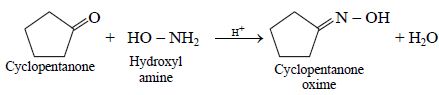
(ii) \(\text { a } \beta\)unsaturated aldehyde reacts with semicarbazide (H2NCONHNH2) to form semicarbazone.

(iii) Cyclohexanone reacts with 2,4-dinitro phenyl hydrazine to form 2,4-dinitro phenyl hydrazone.
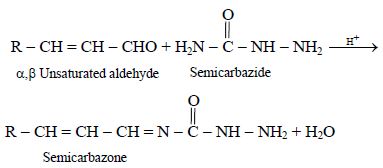
(iv) Acetophenone reacts with ethyl amine to form an imine
4.
The variability in oxidation states of transition metals is due to the incomplete filling of d-orbitals in such a way that their oxidation states differ from each other by unity, e.g., Fe+ and Fe3+, Cu+ and Cu2+ etc. In the case of non-transition elements, the oxidation states differ by units of two, e.g., Pb2+ and Pb4+, S2+ and S4+ etc. Moreover, in transition elements, the higher oxidation states are more stable for heavier elements in a group. For example, in group 6, Mo (VI) and W (VI) are more stable than Cr (VI). In P block elements, the lower oxidation states are more stable for heavier members due to inert pair effect, e.g., in group 16, Pb (II) is more stable than Pb (IV).
5.
We know from Kohlrausch law that
\(A_{m\left(\mathrm{CaCl}_{2}\right)}^{\mathrm{o}}=\lambda_{\mathrm{Ca}^{2+}}^{0}+2 \lambda_{\mathrm{Cl}^{-}}^{0}=119.0 \mathrm{~S} \mathrm{~cm}^{2} \mathrm{~mol}^{-1}+2(76.3) \mathrm{S} \mathrm{cm}^{2} \mathrm{~mol}^{-1}\)
= (119.0 + 152.6) S cm2 mol–1
= 271.6 S cm2 mol–1
\(A_{n\left(\mathrm{MgSO}_{4}\right)}^{\mathrm{o}}=\lambda_{\mathrm{Mg}^{2+}}^{0}+\lambda_{\mathrm{so}_{4}^{2}}^{0}=106.0 \mathrm{~S} \mathrm{~cm}^{2} \mathrm{~mol}^{-1}+160.0 \mathrm{~S} \mathrm{~cm}^{2} \mathrm{~mol}^{-1}\)
= 266 S cm2 mol–1
6.
(i) and (ii)
Eight isomers of C4H11N are
(a) \(\stackrel{4}{\mathrm{C}} \mathrm{H}_3-\stackrel{3}{\mathrm{C}} \mathrm{H}_2-\stackrel{2}{\mathrm{C}} \mathrm{H}_2-\stackrel{1}{\mathrm{C}} \mathrm{H}_2-\mathrm{NH}_2\)
Butan -1 -amine
(Primary)
(b) CH3
|
\(\stackrel{3}{CH}_3-{ }^2 \mathrm{CH}-\stackrel{1}{C} \mathrm{H}_2-\mathrm{NH}_2\)
2-methyl propan -1-amine
(Primary)
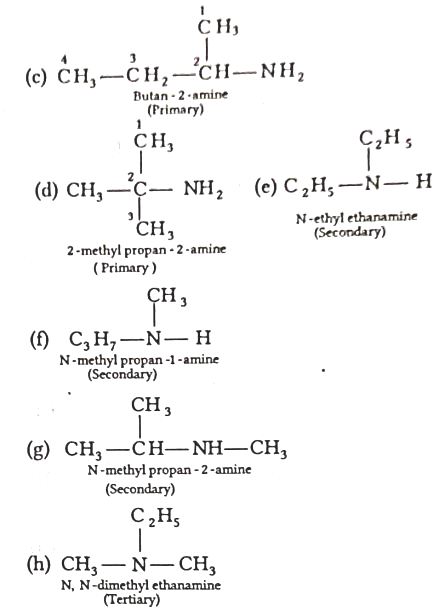
(iii) Isomerism exhibited by different amines are:
(a) Chain isomers, i.e. have different carbon chains, (a) and (b), (c) and (d) (as discussed in part (i) and (ii)]
(b) Position isomers, i.e. functional group occupy different positions, (a) and (c), (b) and (d).
(c) Metamers, i.e. different alkyl groups are attached to the same functional group, (e) and (f), (e) and (g).
(d) Functional isomers, i.e. they have different functional groups. All the three categories (1°, 2° and 3°) of amines are the functional isomers of each other.
7.
\({ { \wedge }^{ ° } }_{ \left( HCOOH \right) }={ { \lambda }^{ ° } }_{ \left( { H }^{ + } \right) }+{ { \lambda }^{ ° } }_{ \left( { HCOO }^{ - } \right) }\)
\(=349.6+54.6\\=404.2S{ cm }^{ 2 }{ mol }^{ -1 }\)
\(\alpha =\frac { { { { \wedge } }^{ m } }_{ c } }{ { { { \wedge } }^{ m } }_{ 0 } } =\frac { 46.1 }{ 404.2 } =0.114\)
\({ K }_{ c }=\frac { c{ \alpha }^{ 2 } }{ 1-\alpha } =\frac { 0.025\times { \left( 0.114 \right) }^{ 2 } }{ 1-0.114 } =3.67\times { 10 }^{ -4 }\)
8.
According to Raoult’s Law,
\(\frac{\mathrm{P}_{\mathrm{A}}^{\circ}-\mathrm{P}_{\mathrm{S}}}{\mathrm{P}_{\mathrm{S}}}=\frac{n_{\mathrm{B}}}{n_{\mathrm{A}}}=\frac{\mathrm{W}_{\mathrm{B}}}{\mathrm{M}_{\mathrm{B}}} \times \frac{\mathrm{M}_{\mathrm{A}}}{\mathrm{W}_{\mathrm{A}}}\)
\(\text { Let } \mathrm{P}_{\mathrm{A}}^{\circ}=1 \mathrm{~atm}, \mathrm{P}_{\mathrm{S}}=0 \cdot 8 \mathrm{~atm} ; \mathrm{P}_{\mathrm{A}}^{\circ}-\mathrm{P}_{\mathrm{S}}=0 \cdot 2 \mathrm{~atm} ; \mathrm{M}_{\mathrm{B}}=40 \mathrm{~g} \mathrm{~mol}^{-1} ; \mathrm{W}_{\mathrm{A}}=114 \mathrm{~g} \)
\(\mathrm{M}_{\mathrm{A}}\left(\mathrm{C}_{8} \mathrm{H}_{18}\right)=114 \mathrm{~g} \mathrm{~mol}^{-1} \)
\(\mathrm{W}_{\mathrm{B}}=\frac{\left(\mathrm{P}_{\mathrm{A}}^{\circ}-\mathrm{P}_{\mathrm{S}}\right)}{\mathrm{P}_{\mathrm{S}}} \times \frac{\mathrm{M}_{\mathrm{B}} \times \mathrm{W}_{\mathrm{A}}}{\mathrm{M}_{\mathrm{A}}}\)
\(=\frac{(0 \cdot 2 \mathrm{~atm})}{(0 \cdot 8 \mathrm{~atm})} \times \frac{\left(40 \mathrm{~g} \mathrm{~mol}^{-1}\right) \times(114 \mathrm{~g})}{\left(114 \mathrm{~g} \mathrm{~mol}^{-1}\right)}=10 \cdot 0 \mathrm{~g}\)
9.
(i)
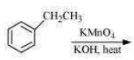
(ii)
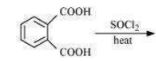
(iii)
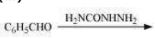
(iv)
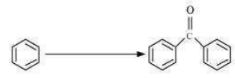
(v)
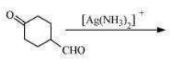
(vi)
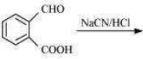
(vii)
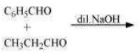
(viii)
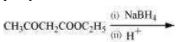
(ix)
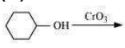
(x)

(xi)
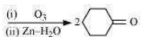
10.
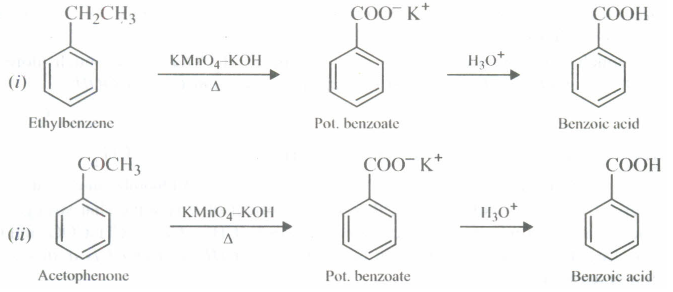
.png)
11.
\(\text { Average Rage } =\frac{1}{2}\left\{-\frac{\Delta\left[\mathrm{N}_{2} \mathrm{O}_{5}\right]}{\Delta t}\right\} \)
\(=-\frac{1}{2}\left[\frac{(2.08-2.33) \mathrm{mol} \mathrm{L}^{-1}}{184 \mathrm{~min}}\right] \)
\(=6.79 \times 10^{-4} \mathrm{~mol} \mathrm{~L}^{-1} / \mathrm{min}\)
\(=\left(6.79 \times 10^{-4} \mathrm{~mol} \mathrm{~L}^{-1} \mathrm{~min}^{-1}\right) \times(60 \mathrm{~min} / 1 \mathrm{~h}) \)
\(=4.07 \times 10^{-2} \mathrm{~mol} \mathrm{~L}^{-1} / \mathrm{h} \)
\(=6.79 \times 10^{-4} \mathrm{~mol} \mathrm{~L}^{-1} \times 1 \mathrm{~min} / 60 \mathrm{~s} \)
\( =1.13 \times 10^{-5} \mathrm{~mol} \mathrm{~L}^{-1} \mathrm{~s}^{-1} \)
It may be remembered that
Rate \( =\frac{1}{4}\left\{\frac{\Delta\left[\mathrm{NO}_{2}\right]}{\Delta t}\right\} \)
\(\frac{\Delta\left[\mathrm{NO}_{2}\right]}{\Delta t} =6.79 \times 10^{-4} \times 4 \mathrm{~mol} \mathrm{~L}^{-1} \mathrm{~min}^{-1}\)
\(=2.72 \times 10^{-3} \mathrm{~mol} \mathrm{~L}^{-1} \mathrm{~min}^{-1} \)
12.
(a) The high enthalpies of atomization are due to a large number of unpaired electrons in their atoms. Therefore, they have stronger interatomic interactions and hence, stronger bonding between atoms. Thus, they have high enthalpies of atomization.
(b) Most of the compounds of transition elements contain unpaired electrons in their (n-1) d-subshells. Therefore, they are paramagnetic in nature and are attracted by the magnetic field. The magnetic character is expressed in terms of magnetic moment. The larger the number of unpaired electrons in a substance, the greater is the paramagnetic character and larger is the magnetic moment. The magnetic moment is expressed in Bohr magneton abbreviated as B.M. For example, Ti2+ has 2 unpaired electrons and has less magnetic moment than Mn2+which has 3 unpaired electrons. Mn2+has 5 unpaired electrons and has maximum magnetic moment among the divalent transition metal ions because d-subshell can have a maximum of 5 unpaired electrons.
(c) Most of the transition metal ions are colored both in the solid state and in aqueous solutions.The color of these ions is attributed to the presence of incomplete (n - 1) d subshell. The electrons in these metal ions can be easily promoted from one energy level to another in the same d-subshell. The amount of energy required to excite the electrons to higher energy states within the same d-subshell corresponds to the energy of certain colors of visible light. Therefore, when white light falls on a transition metal compound, some of its energy corresponding to a certain color, is absorbed causing promotion of d-electrons. This is known as d-d transitions. The remaining colors of white light are transmitted and the compound appears colored. For example, hydrated cupric compounds absorb radiations corresponding to red light and the transmitted color is greenish blue (which is complementary color to red color). Thus, cupric compounds have greenish-blue color
(d) Some transition metals and their compounds act too good catalysts for various reactions. This is due to their ability to show multiple oxidation states. The common examples are Fe, Co, Ni, V, Cr, Mn, Pt, etc.The transition metals form reaction intermediates with the substrate by using empty d-orbitals. These intermediates give reaction paths of lower activation energy and therefore, increase the rate of reaction.
13.
2-Methyl propanal.
14.
Methanol (CH3OH).
15.
6
16.
This is because colliding molecules may not be having proper orientation for collision to be effective.
17.
In pure water, the entire surface is occupied by water are volatile. On adding glucose, some water molecules on the surface are replaced by glucose molecules which are non - volatile. Hence, vapour pressure is lowered.
18.
Warming up of the solution means that the process of mixing is exothermic, i.e., \(\Delta H_{ mixing }=-ve\). This implies that the solution shows a negative deviation.
19.
(d)
2-methylpropanal and iso-propyl magnesium iodide
20.
(b)
21.
(c)
III only
22.
(d)
quaternary structure
23.
(b)
Iodoform test
24.
(a)
CICH2CH = CH2 \(\xrightarrow { NaF,acetone } \)
25.
(c)
\({ 3 }^{ \circ }>{ 2 }^{ \circ }>{ 1 }^{ \circ }\)
26.
(c)
F2 and I-
27.
(b)
CH3Cl, CH3F, CH3Br
28.
(d)
(CH3)2C=CH2
29.
(a)
40 %
30.
(d)
1.22
31.
B) Assertion and reason both are correct statements but reason is not correct explanation for assertion.
Explanation:
Due to denaturation, a protein loses its biological activity. During denaturation the protein molecule uncoils from a more random conformation and precipitates from the solution.
32.
(a) Assertion and reason both are correct statements and reason is correct explanation for assertion.
33.
(b) Fe3+ is more stable than Fe2+. The electronic configuration of Fe3+ has half-filled 'd' orbitals and thus, becomes more stable.
26Fe2+ : 1s2 2s2 2p6 3s2 3p6 3d6
26Fe3+ : 1s2 2s2 2p6 3s2 3p6 3d5
34.
(c) Benzene diazonium salts are soluble in water because they are ionic in nature. Thus, (A) is correct and R is incorrect.
35.
(a) \(\mathrm{Pb}+\mathrm{SO}_{4}^{2-} \longrightarrow \mathrm{PbSO}_{4}+2 \mathrm{e}^{-}\) (At anode)
(b) \(\mathrm{PbO}_{2}+4 \mathrm{H}^{+}+2 \mathrm{e}^{-}+\mathrm{SO}_{4}^{2-} \longrightarrow \mathrm{PbSO}_{4}+2 \mathrm{H}_{2} \mathrm{O}\)
2 Faraday is required.
(c) \(\mathrm{M}=\frac{\text { percentage by mass } \times d \times 10}{\text { Molar mass }}\)
\(=\frac{38 \times 1.30 \times 10}{98}=\frac{494}{98}=5.041 \mathrm{M}\)
(d) Mass of solution after discharge = 3500 mL x 1.14 g mL-1 = 3990 g
Mass of H2 SO4 present in solution (20%) = \(\frac{20}{100} \times 3990 \mathrm{~g}=798 \mathrm{~g}\)
(e) \(\mathrm{H}_{2} \mathrm{SO}_{4}(\mathrm{dil}) \longrightarrow 2 \mathrm{H}^{+}+\mathrm{SO}_{4}^{2-}\)
H2O \(\rightarrow\) H+ + OH-
At cathode: 2H+ + 2e- \(\rightarrow\) H2(g)
At anode: \(2 \mathrm{H}_{2} \mathrm{O} \longrightarrow 4 \mathrm{H}^{+}+4 \mathrm{e}^{-}+\mathrm{O}_{2}(g)\)
H2 gas is liberated at cathode and O2 gas is formed at anode.
36.
(i) (d): Glycinate ion is an example of bidentate ligand. It contains Nand O as donor atoms.
(ii) (a)
(iii) (c) : H2N - NH2 does not act as chelating ligand.
The coordination by hydrazine leads to a three member highly unstable strained ring and thus it does not act as chelating agent.
(iv) (d): In Zeises salt, coordination no. of Pt is 4. Ethylene is a mono dentate ligand.

12th Standard CBSE Syllabus & Materials
12th Standard CBSE
CBSE 12th Computer Science Python Revision Tour I - New Previous year Question Papers Study Material - QB365 Set A
NEW12th Standard CBSE
CBSE 12th Business Studies Planning Important Questions And Answers Study Material - QB365 Set A
NEW12th Standard CBSE
CBSE 12th Business Studies Business Environment Important Questions And Answers Study Material - QB365 Set A
NEW12th Standard CBSE
CBSE 12th Business Studies Principles of Management Important Questions And Answers Study Material - QB365 Set A



NCERT Books

Syllabus

Exam Pattern

Sample Question Papers

Previous year Question Papers

Important Notes

MCQ Practice test

NCERT Exemplers

Case study Questions

Image Based Questions

Passage based Questions

HOT Questions

Value Based Questions

Model Questions Papers
NCERT ( Book Back ) Questions

Assertion and Reason
Important Questions And Answers

CBSE 12th Standard CBSE Subjects
CBSE Standards








