
 100% FREE ACCESS
12th Standard CBSE Syllabus & Materials
12th Standard CBSE
CBSE 12th Economics Government Budget and the Economy Previous year Question Papers Study Material - QB365 Set A
NEW12th Standard CBSE
CBSE 12th Computer Science Interface Python with MySQL - New Previous year Question Papers Study Material - QB365 Set A
NEW12th Standard CBSE
CBSE 12th Computer Science Database Concept - New Previous year Question Papers Study Material - QB365 Set A
NEW12th Standard CBSE
CBSE 12th Computer Science Data Communication - New Previous year Question Papers Study Material - QB365 Set A
NEW12th Standard CBSE
CBSE 12th Computer Science Data Structures - New Previous year Question Papers Study Material - QB365 Set A
NEW12th Standard CBSE
CBSE 12th Computer Science Functions - New Previous year Question Papers Study Material - QB365 Set A

Published on: 02/11/2025
Download CBSE Class 12th Standard CBSE Maths question papers, sample papers, important questions, and previous year solved papers in PDF format. Get free study materials, NCERT solutions, and exam preparation resources for Class 12th Standard CBSE Maths
Questions + Answers key
Take MCQ Maths Test
1.
Let f be a real valued function defined by j(x) = 4x + 3. Find the real valued function g such that gof = fog = lR Or show that f is invertible and find f-1
2.
Show that each of the relation R in the set \(A=\{x=Z: 0 \leq x \leq 12\}\) given by R = {(a, b) : |a-b| is a multiple of 4} is an equivalence relation. Find the set of all elements related to 1 in each case.
3.
Let L be the set of all lines in XY-plane and R be the relation in L defined as R = {(L1, L2) : L1 is parallel to L2}. Show that R is an equivalence relation. Find the set of all lines related to the line y = 2x + 4.
4.
Show that the relation R in the set A = {1, 2, 3, 4, 5} given by R = {(a, b) : |a - b| is divisible by 2} is an equivalence relation. Write all the equivalence classes of R.
5.
Let X = {1, 2, 3, 4, 5, 6, 7, 8, 9}. Let R1 be a relation in X given by R1 = {(x, y)}: x - y is divisible by 3} and R2 be another relation on X given by R2 = {(x, y): (x, y)} \(\subset\) {1, 4, 7} or {x, y} \(\subset\){2, 5, 8} or {x, y} \(\subset\){3, 6, 9}} show that R1 = R2
6.
Let A = (-1, 0, 1, 2) B = (-4, -2, 0, 2) and f.g:A \(\rightarrow\)B be function defined by f(x) = x2 -x, x ∈ A and g(x) = 2 |x - \(\frac { 1 }{ 2 } \)|-1 x ∈ A. Are f and g equal? Justify your answer. (Hint: One may note that two functions f : A → B and g : A → B such that f(a) = g(a) ∀ a ∈ A, are called equal functions).
7.
If f(x) = \(\frac { 4x+3 }{ 6x-4 } ,x\neq \frac { 2 }{ 3 } \) then show that \(fof(x)=x\ ,x\neq \frac { 2 }{ 3 } \) What is the inverse of f?
8.
Consider the binary operation * on the set {1, 2, 3, 4, 5} defined by a*b = min{a, b}. Write the operation table of the operation *.
9.
If A = {I, 2, 3} and relation R = {(2, 3)} in A.
Check whether relation R is reflexive, symmetric and transitive.
10.
Identify the following type of matrice.
\(\left[\begin{array}{r}1 \\ 2 \\ -1\end{array}\right]\)
11.
If the function f: \(R\rightarrow R\) be given by \(f(x)=x^{ 2 }\) and g: \(R\rightarrow R\) be given by \(g(x)=\frac { x }{ x-1 } ,x\neq 1\), find fog and gof and hence find fog (2) and gof (-3).
12.
Let \(f:R\rightarrow R\) be defined as f(x) = 10x + 7. Find the function \(g:R\rightarrow R\) such that
\(g.f=fog=I_{ R }\).
13.
Consider \(f:\{ 1,2,3\} \rightarrow \{ a,b,c\} ,\) given by: f(1) = a, f(2) = b and f(3) = c. Find \(f^{ -1 }\) and show that \((f^{ -1 })^{ -1 }=f\) .
14.
Give example of relation, which is:
(i) Symmetric but neither reflexive nor transitive
(ii) Transitive but neither reflexive nor symmetric
(iii) Reflexive and symmetric but not transitive
(iv) Reflexive and transitive but not symmetric
(v) symmetric and transitive but not reflexive.
15.
Let R be a relation on the set A of ordered pairs of positive integers defined by (x, y) R(u, v) if and only if xv = yu. Show that R is an equivalence relation.
16.
Show that addition, subtraction and multiplication are binary operations on R but division is not a binary operation on R.
Further, show that division is a binary operation on the set R, of non-zero real numbers.
17.
Let f : {2, 3, 4, 5} \(\rightarrow\) {3, 4, 5, 9} and g : {3, 4, 5, 9} \(\rightarrow\) {7, 11, 15} be functions defined as f (2) = 3, f (3) = 4, f (4) = f (5) = 5 and g(3) = g(4) = 7 and g(5) = g(9) = 11. Find gof.
18.
Determine whether each of the following relations are reflexive, symmetric and transitive:
Relation R in the set A of human beings in a town at a particular time given by
(a) R = {(x, y): x and y work at the same place}
(b) R = {(x, y): x and y live in the same locality}
(c) R = {(x, y): x is exactly 7 cm taller than y}
(d) R = {(x, y): x is wife of y}
(e) R = {(x, y): x is father of y}
19.
Find the inverse of the function f(x) = (x -3)3.
20.
Let f:\(X\rightarrow Y\) be a function Define a relation R on X given be R=[(a,b) ; (f(b)] Show that R is an equivalence relation ?
21.
The relation R in the set of real numbers defined as R = {(a, b) \(\in\) R x R : 1 + ab > 0} is
reflexive and transitive
symmetric and transitive
reflexive and symmetric
equivalence 'relation
22.
Let A = {a, b}. Then number of one-one functions from A to A possible are
2
4
1
3
23.
If R be a relation “less than” from set A = {1, 2, 3, 4} to B = {1, 3, 5}, i.e. (a, b) ∈ R if a < b, if (b,a) ∈ R-1elements in R-1 are
{(3, 3), (3, 5), (5, 3), (5, 5)}
{(3, 1), (5, 1), (3, 2), (5, 2), (5, 3), (5, 4)}
{(3, 3), (3, 4), (4, 5)}
{(1, 3), (1, 5), (2, 3), (2, 5), (3, 5), (4, 5)}
24.
Let A = {1, 2, 3, 4} and let R = {(2, 2), (3, 3), (4, 4), (1, 2)} be a relation on A. Then, R is
Symmetric
Transitive
Reflexive
Equivalence relation
25.
Let A = {1, 2, 3}. Then number of equivalence relations containing (1, 2) is
1
2
3
4
26.
Let A = {1, 2, 3}. Then number of relations containing (1, 2) and (1, 3) which are reflexive and symmetric but not transitive is
1
2
3
4
27.
Let f : R ➝ R be defined as f (x) = 3x. Choose the correct answer
f is one-one onto
f is many-one onto
f is one-one but not onto
f is neither one-one nor onto
28.
Let f : R ⟶ R be defined as f(x) = x4. Choose the correct answer
f is one-one onto
f is many-one onto
f is one-one but not onto
f is neither one-one nor onto
29.
Students of a school are taken to a railway museum to learn about railways heritage and its history.
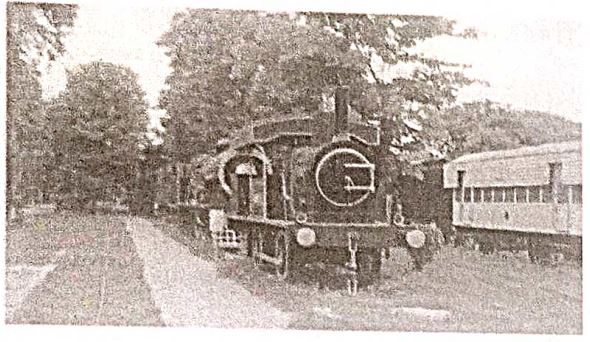
An exhibit in the museum depicted many rail lines on the track near the railway station. Let L be the set of all rail lines on the railway track and R be the relation on L defined by
R = {(l1, l2) : l1 is parallel to l2}
On the basis of the above information, answer the following questions.
(i) Find whether the relation R is symmetric or not.
(ii) Find whether the relation R is transitive or not.
(iii) If one of the rail lines on the railway track is represented by the equation y = 3x + 2, then find the set of rail lines in R related to it.
Or
Let S be the relation defined by S= ((l1,l2) : l1 is perpendicular to l2) check whether the relation S is symmetric and transitive.
30.
Consider the mapping \(f: A \rightarrow B\) is defined by \(f(x)=\frac{x-1}{x-2}\) such that f is a bijection.
Based on the above information, answer the following questions.
(i) Domain of f is
| (a) R - {2} | (b) R | (C) R-{1,2} | (d) R-{0} |
(ii) Range of f is
| (a) R | (b) R -{1} | (C) R-{0} | (d) R-{1,2} |
(iii) If g: \(R-\{2\} \rightarrow R-\{1\}\) is defined by g(x) = 2f(x) - I, then g(x) in terms of x is
| (a) \(\frac{x+2}{x}\) | (b) \(\frac{x+1}{x-2}\) | (c) \(\frac{x-2}{x}\) | (d) \(\frac{x}{x-2}\) |
(iv) The function g defined above, is
| (a) | One-one | (b) Many-one | (c) into | (d) None of these |
(v) A function J(x) is said to be one-one iff
| (a) \(f\left(x_{1}\right)=f\left(x_{2}\right) \Rightarrow-x_{1}=x_{2}\) | (b) \(f\left(-x_{1}\right)=f\left(-x_{2}\right) \Rightarrow-x_{1}=x_{2}\) | (c) \(f\left(x_{1}\right)=f\left(x_{2}\right) \Rightarrow x_{1}=x_{2}\) | (d) None of these |
31.
\(f(x)=\frac{x-1}{|x-1|}, x(\neq 1) \in R \text { then range of ' } f \text { ' is }\)_______
32.
Let A = {l, 2, 3, 4} and B = {a, b, c}, Then number of one-one functions from A to B are ______
33.
The domain of the function f: R \(\rightarrow\) R defined by \(f(x)=\sqrt{4-x^{2}} \text { is }\)________
34.
Consider the set A containing n elements, then the total number of injective functions from set A onto itself is ________
35.
Let R be a relation defined as R = {(x, x), (y, y), (z, z ), (x,z)} in set A = {x, y, z} then R is _______ (reflexive/symmetric) relation.
36.
Let Z be the set of integers and R be a relation defined in Z such that aRb if (a b) is divisible by 5. Then R partitions the set Z into _____ pairwise disjoint subsets.
37.
Let N be the set of natural numbers, then for the operation *, defined as a * b = a + b identity element exists. State true or false.
38.
"Binary operation on a set has always the identity element." State true or false.
39.
The functionJ: R \(\rightarrow\) R defined asf(x) = [x], where [x] is greatest integer \(\le\) x, is onto function. State true or false.
1.
\(\text { Given } f(x)=4 x+3\)
\(\text { Let } f(x)=a \Rightarrow 4 x+3=a \Rightarrow x=\frac{a-3}{4}\)
\(\text { We define } g: R \rightarrow R \text { as } g(x)=\frac{x-3}{4}\)
\(\text { Now. } \ f o g(x)=f(g(x))=f\left(\frac{x-3}{4}\right)=4\left(\frac{x-3}{4}\right)+3=x\)
\(\text { and } \quad g o f(x)=g(f(x))=g(4 x+3)=\frac{4 x+3-3}{4}=x\)
\(\text { Hence, } \quad g(x)=\frac{x-3}{4}\)
or
\(\text { Given, } f(x)=4 x+3, \text { function } f: R \rightarrow R\)
\(\text { For one-one: Let for } x_{1}, x_{2} \in R\)
\(f\left(x_{1}\right) =f\left(x_{2}\right) \Rightarrow 4 x_{1}+3=4 x_{2}+3 \)
\(\Rightarrow 4 x_{1}=4 x_{2} \Rightarrow x_{1}=x_{2} \)
\(\text { As } f\left(x_{1}\right)= f\left(x_{2}\right) \Rightarrow x_{1}=x_{2}\)
Hence, one-one
For onto: Let for y \(\in\) R
There exists x \(\in\) R, such that y = f(x).
\(\Rightarrow y=4 x+3 \Rightarrow y-3=4 x \)
\(\Rightarrow x=\frac{y-3}{4} \in R\)
Hence, onto
\(\text {For inverse, } x=\frac{y-3}{4} \Rightarrow f^{-1}(y)=\frac{y-3}{4}\)
\(\text {So, } f^{-1}(x)=\frac{x-3}{4}\)
2.
\(A=\{x=Z: 0 \leq \leq 12\}\) = {0, 1, 2,3, 4, 5, 6, 7, 8, 9, 10, 11, 12}
R = {(a,b) : |a-b| is a multiple of 4}
For any element a ∈A, we have (a, a) ∈ R as |a - a| = 0 is a multiple of 4.
∴ R is reflexive.
Now, let (a, b) ∈ R ⇒ |a- b| is a multiple of 4.
⇒ |-(a-b)| = |b -a| is a multiple of 4
⇒ (b, a) ∈ R
∴ R is symmetric.
Now, let (a, b), (b, c) ∈ R.
⇒ |a - b| is multiple of 4 and |b - c| is a multiple of 4
⇒ (a-b) is a multiple of 4 and (b-c) is a multiple of 4
⇒ (a-c) = (a - b) + (b - c) is a multiple of 4
⇒ (a,c) ∈R
∴ R is transitive.
Hence, R is an equivalence relation.
The set of elements related to 1 is {1, 5, 9} since
|1 - 1| = 0 is a multiple of 4
|5 - 1| = 4 is a multiple of 4
|9 - 1| = 8 is a multiple of 4
3.
Given, R = {(L1, L2): L1 is parallel to L2}.
Reflexive R is reflexive as any line L is parallel to itself,
i.e. (L, L) ∈ R.
Symmetric Now,let (L1, L2)∈R
⇒ L1 is parallel to L2 => L2 is parallel to L1
⇒ (L2, L1)∈R
So, R is symmetric.
Transitive Now, let (L1, L2), (L2, L3) ∈R
Then, LI is parallel to L2 and L2 is parallel to L3.
⇒ L1 is parallel to L3.
⇒ (L1, L3)∈R.
So, R is transitive.
Hence, R is an equivalence relation.
The set of all lines related to the line y = 2x + 4 is the
set of all lines that are parallel to the line y = 2x + 4.
Slope of line, y = 2x + 4 is m = 2.
It is known that parallel lines have the same slope.
So, the line parallel to the given line will be of the form
y = 2x + c, where c ∈R.
Hence, the set of all lines related to the given line is
given by y = 2x + c, where c ∈R.
4.
We have a relation R in set A = {1, 2, 3, 4, 5} defined as
R = {(a, b): la - bl is divisible by 2}
Clearly, R = {(1, 1), (1, 3), (1, 5), (2, 2), (2, 4), (3, 1), (3, 3), (3, 5), (4, 2), (4, 4), (5, 1), (5, 3), (5, 5)}
Reflexive For any a ∈ A, we have |a - a| = 0, which is divisible by 2.
⇒ (a, a) ∈ R, ∀ a ∈ A
Thus, R is reflexive.
Symmetric Let a, b∈A,such that(a, b)∈R
\( \Rightarrow |a-b| \) Iis divisible by 2
\( \Rightarrow |a-b| \) = \(2\lambda\) for some \( \lambda \epsilon N\)
\(\Rightarrow |b-a|=2 \lambda \) for some \( \lambda \epsilon N\) \([\because|a-b|=|b-a|] \)
Thus, R is symmetric
Transitive Let a, b, c ∈ A, such that (a, b) ∈ R and
⇒ |a - b| is divisible by 2 and |b - c| is divisible by 2.
⇒ |a - b| = 2λand |b - c| = 2, for some λ μ∈N
⇒ (a-b) = ±2A and (b-c) = ±2μ
Now, |a-c| = |(a-b) + (b-c)| = |±2λ + (±2λ)1
= I± 2λ ± 2μ = 2|± λ ± μ| [some positive number]
⇒ |a-c|is divisible by 2 ⇒ (a, c) ∈ R
Thus, R is transitive.
Hence, R is an equivalence relation.
Now, [a] = {xe A : (a, x)e R}
ஃ Equivalence class [1] = {1, 3, 5}, [2] = {2, 4}, [3] = {1, 3, 5},
[4] = {2, 4} and [5] = {1, 3, 5}
Hence, [1] = [3] = [5] = {1, 3, 5} and [2] = [4] = {2, 4}
5.
Note that the characteristic of sets {1, 4, 7}, {2, 5, 8} and {3, 6, 9} is that difference between any two elements of these sets is a multiple of 3.
Therefore, (x, y) \(\in\) R1 \(\Rightarrow\) x – y is a multiple of 3 \(\Rightarrow\) {x, y} \(\subset\) {1, 4, 7} or {x, y} \(\subset\) {2, 5, 8} or {x, y} \(\subset\) {3, 6, 9} \(\Rightarrow\) (x, y) \(\in\) R2.
Hence, R1 \(\subset\) R2.
Similarly, {x, y} \(\in\) R2 Þ {x, y}\(\subset\) {1, 4, 7} or {x, y} \(\subset\) {2, 5, 8} or {x, y} \(\subset\) {3, 6, 9} \(\Rightarrow\) x – y is divisible by 3 \(\Rightarrow\) {x, y} \(\in\) R1.
This shows that R2 \(\subset\) R1.
Hence, R1 = R2
6.
It is given that A = {−1, 0, 1, 2}, B = {−4, −2, 0, 2}.
Also, it is given that f, g : A → B are defined by f(x) = x2 − x, x ∈ A and \(g(x)=2\left|x-\frac{1}{2}\right|-1, x \in A\)
It is observed that:
\(f(-1)=\left(1^{2}\right)-(-1)=1+1=2 \)
\(g(-1)=2\left|(-1)-\frac{1}{2}\right|-1=2\left(\frac{3}{2}\right)-1=3-1=2 \)
⇒ f(-1) = g(-1)
f(0) = (0)^2 - 0 = 0
\(g(0)=2\left|0-\frac{1}{2}\right|-1=2\left(\frac{1}{2}\right)-1=1-1=0\)
⇒ f(0) = g(0)
f(1) = (1)^2 - 1 = 1 - 1 = 0
\(g(1)=2\left|a-\frac{1}{2}\right|-1=2\left(\frac{1}{2}\right)-1=1-1=0\)
⇒ f(1) = g(1)
f(2) = (2)^2 - 2 = 4 - 2 = 2
\(g(2)=2\left|2-\frac{1}{2}\right|-1=2\left(\frac{3}{2}\right)-1=3-1=2\)
⇒ f(2) = g(2)
f(a) = g(a) ∀ a ∈ A
Hence, the functions f and g are equal.
7.
(fof)(x) = f(f(x)
\(=f\left( \frac { 4x+3 }{ 6x-4 } \right) \)
\(=\frac { 4\left( \frac { 4x+3 }{ 6x-4 } \right) +3 }{ 6\left( \frac { 4x+3 }{ 6x-4 } \right) -4 } =\frac { \left( \frac { 16x+12 }{ 6x-4 } \right) +3 }{ \left( \frac { 24x+18 }{ 6x-4 } \right) -4 } \)
\(=\frac { \left( \frac { 16x+12+3(6x-4) }{ 6x-4 } \right) }{ \left( \frac { 24x+18-4(6x-4) }{ 6x-4 } \right) } \)
\(=\frac { \left( \frac { 16x+12+18x-12 }{ 6x-4 } \right) }{ \left( \frac { 24x+18-24x+16 }{ 6x-4 } \right) } \)
\(=\frac { 34x }{ 34 } z\)
\(x\neq \frac { 2 }{ 3 } \)
8.
Given a * b = min {a, b]
Operation table for * is
| * | 1 | 2 | 3 | 4 | 5 |
| 1 | 1 | 1 | 1 | 1 | 1 |
| 2 | 1 | 2 | 2 | 2 | 2 |
| 3 | 1 | 2 | 3 | 3 | 3 |
| 4 | 1 | 2 | 3 | 4 | 4 |
| 5 | 1 | 2 | 3 | 4 | 5 |
9.
Not reflexive, as (1, 1) \(\notin\) R.
Not symmetric, as (2, 3) \(\in\) R but (3, 2) \(\notin\) R.
Transitive, as relation R in a non empty set containing one element is transitive
10.
We. have \(\left[\begin{array}{r}1 \\ 2 \\ -1\end{array}\right]\) Here,w. see that matrix has threerows and only one column. So, it is a column matrix.
11.
We have:
\(f(x)=x^{ 2 }+2\) and \(g(x)=\frac { x }{ x-1 } \)
\(\therefore \) \(fog(x)=f(g(x))=(g(x))^{ 2 }+2\)
\(=\left( \frac { x }{ x-1 } \right) ^{ 2 }+2=\frac { x^{ 2 }+2(x-1)^{ 2 } }{ (x-1)^{ 2 } } \)
\(=\frac { x^{ 2 }+2(x^{ 2 }-2x+1) }{ (x-1)^{ 2 } } =\frac { 3x^{ 2 }-4x+2 }{ (x-1)^{ 2 } } \)
Hence, fog (2)\(=\frac { 3(4)-4(2)+2 }{ (2-1)^{ 2 } } =\frac { 12-8+2 }{ (1)^{ 2 } } =\frac { 6 }{ 1 } =6\)
And \(gof(x)=g(f(x))=\frac { f(x) }{ f(x)-1 } \)
\(=\frac { x^{ 2 }+2 }{ (x^{ 2 }+2)-1 } =\frac { x^{ 2 }+2 }{ x^{ 2 }+1 } \)
Hence, \(gof(-3)=\frac { (-3)^{ 2 }+2 }{ (-3)^{ 2 }+1 } =\frac { 9+2 }{ 9+1 } =\frac { 11 }{ 10 } \) .
12.
Let \(f:R\rightarrow R\) , where \(X,Y\subseteq R.\).
Let \(y\in Y\) , arbitrarily.
By definition, \(y=10x+7\) for \(x\in X\)
\(\Rightarrow \) \(x=\frac { y-7 }{ 10 } \).
We define \(g:Y\rightarrow X\) by \(g(y)=\frac { y-7 }{ 10 } \) .
Now \((gof)\ (x)\ =g(f(x))=\frac { f(x)-7 }{ 10 } \)
\(=\frac { (10x+7)-7 }{ 10 } =x\)
and (fog) (y) = f(g(y)) = 10g(y)+7
\(=10\left( \frac { y-7 }{ 10 } \right) +7=y\)
Thus \(gof=fog=I_{ R }\).
Hence, f is invertible and \(g:Y\rightarrow X\) such that
\(g(y)=\frac { y-7 }{ 10 } \)
13.
We have: f(1) = a, f(2) = b and f(3) = c.
Thus f = {(1,a), (2,b), (3,c)}.
Clearly, f is one-one \(\Rightarrow f\) is invertible
and \(1=f^{ -1 }(a),\ 2=f^{ -1 }(b),\)
\(3=f^{ -1 }(c)\)
\(\Rightarrow \) \(f^{ -1 }:\{ a,b,c\} \rightarrow \{ 1,2,3\} \).
Clearly, \(f^{ -1 }\) os one-one and onto
and \((f^{ -1 })^{ -1 }=\{ (1,a),\ (2,b),\ (3,c)\)
\(\left[ \because \ f^{ -1 }=\{ (a,1),\ (b,2),\ (c,3)\} \right] \)
\(\Rightarrow \) \((f^{ -1 })^{ -1 }=f\).
14.
Let A = {1, 2, 3}.
(i) The relation R = {(2, 3), (3, 2)} is symmetric but neither reflexive nor transitive.
\(\left[ \because \ (1,1)\notin R;(2,3)\in R\ but\ (3,2)\in R\ but\ (2,2)\notin R \right] \)
(ii) The relation R = {(1, 3), (3, 2), (1, 2)} is transitive but neither reflexive nor symmetric
\(\left[ \because \ (1,1)\notin R;(1,3)\in R\ but\ (3,1)\notin R \right] \)
(iii) The relation R={(1,1), (2,2), (3,3), (2,3), (3,2), (1,2), (2,1)} is reflexive and symmetric but not transistive.
\(\left[ \because \ (1,1)\notin R;(2,3)\in R\ but\ (3,2)\in R\ but\ (2,2)\notin R \right] \)
(iv) The relation R = {(1, 1), (2, 2), (3, 3), (1, 2)} is reflexive and transitive but not symetric.
\(\left[ \because \ (1,2)\in R\ but\ (2,1)\notin R \right] \)
(v) The relation R = {(1, 2), (2, 1), (1, 1), (2, 2)} is symmetric and transitive but not reflexive. \(\left[ \because \ (3,3)\notin R \right] \)
15.
Clearly, (x, y) R (x, y), ∀ (x, y) ∈ A, since xy = yx.
This shows that R is reflexive.
Further, (x, y) R (u, v) ⇒ xv = yu ⇒ uy = vx and hence (u, v) R (x, y).
This shows that R is symmetric. Similarly, (x, y) R (u, v) and (u, v) R (a, b) ⇒ xv = yu and
\(u b=v a \Rightarrow x v \frac{a}{u}=y u \frac{a}{u} \Rightarrow x v \frac{b}{v}=y u \frac{a}{u} \Rightarrow x b=y a\) and hence (x, y) R (a, b).
Thus, R is transitive. Thus, R is an equivalence relation.
16.
\(+:\ R\rightarrow R\) is given by :
\((x,y)\rightarrow x+y\)
\(-:\ R\rightarrow R\) is given by :
\((x,y)\rightarrow x-y\)
\(\times :\ R\rightarrow R\) is given by :
\((x,y)\rightarrow xy\)
Since '+' , '-' and '\(\times \)' are functions,
\(\therefore \) these are binary operations on R.
But \(\div :\ R\rightarrow R\) is given by :
\((x,y)\rightarrow \frac { x }{ y } \) is not a function and consequently it is not a binary operation. \(\left[ \because \ For\ y=0,\frac { x }{ y } \ is\ not\ defined \right] \)
However, \(\div :R*\times R*\rightarrow R*\) given by:
\((x,y)\rightarrow \frac { x }{ y } \)
is a function and hence a binary operation in R*, where R* is the set of non-zero real numbers (i.e. R-{0}).
17.
We have gof (2) = g (f (2)) = g(3) = 7, gof (3) = g(f (3)) = g(4) = 7, gof (4) = g(f (4)) = g(5) = 11 and gof (5) = g(5) = 11.
18.
(a) R = {(x, y): x and y work at the same place}
⇒ (x, x) ∈ R
∴ R is reflexive.
If (x, y) ∈ R, then x and y work at the same place.
⇒ y and x work at the same place.
⇒ (y, x) ∈ R.
∴ R is symmetric.
Now, let (x, y), (y, z) ∈ R
⇒ x and y work at the same place and y and z work at the same place.
⇒ x and z work at the same place.
⇒ (x, z) ∈R
∴ R is transitive.
Hence, R is reflexive, symmetric, and transitive.
(b) R = {(x, y): x and y live in the same locality}
Clearly (x, x) ∈ R as x and x is the same human being.
∴ R is reflexive.
If (x, y) ∈R, then x and y live in the same locality.
⇒ y and x live in the same locality.
⇒ (y, x) ∈ R
∴ R is symmetric.
Now, let (x, y) ∈ R and (y, z) ∈ R.
⇒ x and y live in the same locality and y and z live in the same locality.
⇒ x and z live in the same locality.
⇒ (x, z) ∈ R
∴ R is transitive.
Hence, R is reflexive, symmetric, and transitive.
(c) R = {(x, y): x is exactly 7 cm taller than y}
Now,
(x, x) ∉ R
Since human being x cannot be taller than himself.
∴ R is not reflexive.
Now, let (x, y) ∈R.
⇒ x is exactly 7 cm taller than y.
Then, y is not taller than x.
∴ (y, x) ∉R
Indeed if x is exactly 7 cm taller than y, then y is exactly 7 cm shorter than x.
∴ R is not symmetric.
Now,
Let (x, y), (y, z) ∈ R.
⇒ x is exactly 7 cm taller thany and y is exactly 7 cm taller than z.
⇒ x is exactly 14 cm taller than z .
∴ (x, z) ∉R
∴ R is not transitive.
Hence, R is neither reflexive, nor symmetric, nor transitive.
(d) R = {(x, y): x is the wife of y}
Now,
(x, x) ∉ R
Since x cannot be the wife of herself.
∴ R is not reflexive.
Now, let (x, y) ∈ R
⇒ x is the wife of y.
Clearly y is not the wife of x.
∴ (y, x) ∉ R
Indeed if x is the wife of y, then y is the husband of x.
∴ R is not symmetric.
Let (x, y), (y, z) ∈ R
⇒ x is the wife of y and y is the wife of z.
This case is not possible. Also, this does not imply that x is the wife of z.
∴ (x, z) ∉ R
∴ R is not transitive.
Hence, R is neither reflexive, nor symmetric, nor transitive.
(e) R = {(x, y): x is the father of y}
(x, x) ∉ R
As x cannot be the father of himself.
∴ R is not reflexive.
Now, let (x, y) ∈R.
⇒ x is the father of y.
⇒ y cannot be the father of y.
Indeed, y is the son or the daughter of y.
∴(y, x) ∉ R
∴ R is not symmetric.
Now, let (x, y) ∈ R and (y, z) ∈ R.
⇒ x is the father of y and y is the father of z.
⇒ x is not the father of z.
Indeed x is the grandfather of z.
∴ (x, z) ∉ R
∴ R is not transitive.
Hence, R is neither reflexive, nor symmetric, nor transitive.
19.
Let y = (x-3)3
Taking cube roots on both sides, we get
\((y)^{1 / 3} =\left((x-3)^{3}\right)^{1 / 3}\)
\(\Rightarrow \ y^{1 / 3} =x-3 \Rightarrow x=3+y^{1 / 3}\)
\(\therefore f^{-1}(y) =3+y^{1 / 3}\left[\because y=f(x) \Rightarrow x=f^{-1}(y)\right]\)
\(\text { or } f^{-1}(x) =3+x^{1 / 3}\)
20.
The given function is f: X → Y and relation on X is R={(a, b): f(a) = f (b)}
Reflexive Since, for every x ∈ X, we have
f'(x) = f(x)
⇒ (xx) ∈ R, ∀ ∈ X Therefore, R is reflexive.
Symmetric Let (x, y) ∈ R
Then, f(x)=f(y)
⇒ f(y)=f(x)
⇒ (y, x) ∈ R
Thus, (x, y) ∈ R ⇒ (y, x)∈ R, ∀x, y∈ X
Therefore, R is symmetric.
Transitive Let x, y, z∈ X such that
(x, y) ∈ R and (y, z) ∈ R
Given a relation 5 in \(N \times N\), defined as
(a, b) S(c, d), if a+d=b+c.
Reflexive Let (a, b) be any arbitrary element of \(N \times N\)
i.e. \((a, b) \in N \times N\), where \(a, b \in N\)
Now, as a+b=b+a
[∴ addition is commutative ]
Therefore \quad(a, b) S(a, b)
So, S is reflexive.
Symmetric \(\operatorname{Let}(a, b),(c, d) \in N \times N\), such that (a, b)
S(c, d). Then, a+d=b+c
\( \Rightarrow b+c=a+d \Rightarrow c+b=d+a \)
\(\Rightarrow (c, d) S(a, b)\)
So, S is symmetric.
Transitive Let \((a, b),(c, d),(e, f) \in N \times N\) such that (a, b) S(c, d) and (c, d) S(e, f).
Then, a+d=b+c and c+f=d+e
On adding the above equations, we get
a+d+c+f=b+c+d+e
\( \Rightarrow a+f=b+e \Rightarrow(a, b) S(e, f)\)
So, S is transitive.
Thus, S is reflexive, symmetric and transitive. Hence, S is an equivalence
21.
(c)
reflexive and symmetric
22.
(a)
2
23.
(b)
{(3, 1), (5, 1), (3, 2), (5, 2), (5, 3), (5, 4)}
24.
(b)
Transitive
25.
(b)
2
26.
(a)
1
27.
(a)
f is one-one onto
28.
(d)
f is neither one-one nor onto
29.
We have, R = {(l1,l2) :l1 is parallel to l2}
(i) If l1 is parallel to l2, then l2 is parallel to l1.
So, if (l1, l2) \(\in R,\) then (l2, l1) \(\in R\)
\(\therefore\) R is symmetric.
(ii) If l1 is parallel to l2 and l2 is parallel to l3, then l1 is parallel to l3.
So, if \(\left(l_1, l_2\right) \in R,\left(l_2, l_3\right) \in R\), then (l1,l3)\(\in R\)
\(\therefore\) R is transitive.
(iii) Let equation of line parallel to y = 3x + 2 be y = mx + c, where m is the slope of line. Since, y = 3x + 2 and y = mx + c are parallel. Slope of (y =3x + 2) = Slope of(y = mx + c)
\(\Rightarrow\) 3 = m i.e. m = 3
Hence, the required line is
y = 3x + c, where c \(\in R\)
Or
We have, S = {(I1, I2) : l1 is perpendicular to l2}
For Symmetric If I1, is perpendicular to I2, then l2 is perpendicular to l1.
So, if (l1,l2) \(\in S\), then (l2, l1) \(\in S\)
\(\therefore\) S is symmetric.
For Transitive If I1, is perpendicular to l2, and l2, is perpendicular to l3, then I1, is not perpendicular to l3, it is parallel to I3.
So, if \(\left(l_1, l_2\right) \in S,\left(l_2, l_3\right) \in S \text {, then }\left(l_1, l_3\right) \notin S \text {. }\)
\(\therefore\) S is not transitive.
30.
(i) (a) : For f(x) to be defined \(x-2 \neq 0\) i.e.,\(x \neq 2\)
\(\therefore\) Domain of f = R - {2}
(ii) (b) : Let y =J(x), then \(y=\frac{x-1}{x-2}\)
\(\Rightarrow x y-2 y=x-1 \Rightarrow x y-x=2 y-1 \Rightarrow x=\frac{2 y-1}{y-1}\)
Since, \(x \in R-\{2\}\),therefore \(y \neq 1\)
Hence, range of f = R-{1}
(iii) (d): We have,g(x) = 2f(x) - 1
\(=2\left(\frac{x-1}{x-2}\right)-1=\frac{2 x-2-x+2}{x-2}=\frac{x}{x-2}\)
(iv) (a) : We have, \(g(x)=\frac{x}{x-2}\) ,
Let \(g\left(x_{1}\right)=g\left(x_{2}\right) \Rightarrow \frac{x_{1}}{x_{1}-2}=\frac{x_{2}}{x_{2}-2}\)
\(\Rightarrow x_{1} x_{2}-2 x_{1}=x_{1} x_{2}-2 x_{2} \Rightarrow 2 x_{1}=2 x_{2} \Rightarrow x_{1}=x_{2}\)
Thus, \(g\left(x_{1}\right)=g\left(x_{2}\right) \Rightarrow x_{1}=x_{2}\)
Hence, g(x) is one-one.
(v) (c)
31.
()
\(\{-1,1\}, \text { as }|x-1|=\left\{\begin{array}{r} (x-1), x \geq 1 \\ -(x-1), x<1 \end{array} .\right.\)
32.
()
0, as : n(A) > n(B)
33.
()
[-2, 2]. For domain \(4-x^{2} \geq 0 \Rightarrow 4 \geq x^{2} \Rightarrow x^{2} \leq 4\)
\(\Rightarrow x^{2} \leq(2)^{2} \Rightarrow-2 \leq x \leq 2, \text { i.e. }[-2,2] .\)
34.
()
Total number of injective functions from set containing n elements to a set containing n elements isnPn = n!
35.
()
Reflexive, as for all a \(\in\) A, (a, a) \(\in\) R.
36.
()
Five, as remainder can be 0, 1, 2, 3, 4.
37.
(b)
38.
(b)
39.
(b)

12th Standard CBSE Syllabus & Materials
12th Standard CBSE
CBSE 12th Computer Science Python Revision Tour I - New Previous year Question Papers Study Material - QB365 Set A
NEW12th Standard CBSE
CBSE 12th Business Studies Planning Important Questions And Answers Study Material - QB365 Set A
NEW12th Standard CBSE
CBSE 12th Business Studies Business Environment Important Questions And Answers Study Material - QB365 Set A
NEW12th Standard CBSE
CBSE 12th Business Studies Principles of Management Important Questions And Answers Study Material - QB365 Set A



NCERT Books

Syllabus

Exam Pattern

Sample Question Papers

Previous year Question Papers

Important Notes

MCQ Practice test

NCERT Exemplers

Case study Questions

Image Based Questions

Passage based Questions

HOT Questions

Value Based Questions

Model Questions Papers
NCERT ( Book Back ) Questions

Assertion and Reason
Important Questions And Answers

CBSE 12th Standard CBSE Subjects
CBSE Standards








