
 100% FREE ACCESS
12th Standard CBSE Syllabus & Materials
12th Standard CBSE
CBSE 12th Economics Government Budget and the Economy Previous year Question Papers Study Material - QB365 Set A
NEW12th Standard CBSE
CBSE 12th Computer Science Interface Python with MySQL - New Previous year Question Papers Study Material - QB365 Set A
NEW12th Standard CBSE
CBSE 12th Computer Science Database Concept - New Previous year Question Papers Study Material - QB365 Set A
NEW12th Standard CBSE
CBSE 12th Computer Science Data Communication - New Previous year Question Papers Study Material - QB365 Set A
NEW12th Standard CBSE
CBSE 12th Computer Science Data Structures - New Previous year Question Papers Study Material - QB365 Set A
NEW12th Standard CBSE
CBSE 12th Computer Science Functions - New Previous year Question Papers Study Material - QB365 Set A

Published on: 02/11/2025
Download CBSE Class 12th Standard CBSE Maths question papers, sample papers, important questions, and previous year solved papers in PDF format. Get free study materials, NCERT solutions, and exam preparation resources for Class 12th Standard CBSE Maths
Questions + Answers key
Take MCQ Maths Test
1.
Solve \(x+y \frac{d y}{d x}=2 y\)
2.
Find the integral of the functions in \(\sin ^{ 2 }{ (2x+5) } .\)
3.
Let A = R-{3} and B = R-{1} Consider the function \(f:A\rightarrow B\) be defined by \(f(x)=\left( \frac { x-2 }{ x-3 } \right) \). Is f one-one and onto? Justify your answer.
4.
A bag contains 4 red and 4 black balls, another bag contains 2 red and 6 black balls. One of the two bags is selected at random and a ball is drawn from the bag which is found to be red. Find the probability that the ball is drawn from the first bag.
5.
One card is drawn at random from a well shuffled deck of 52 cards. In which of the following cases are the events E and F independent?
(i) E : ‘the card drawn is a spade’ F : ‘the card drawn is an ace’
(ii) E : ‘the card drawn is black’ F : ‘the card drawn is a king’
(iii) E : ‘the card drawn is a king or queen’ F : ‘the card drawn is a queen or jack’.
6.
Solve the differential equation : (1 + x2) \(\frac {dy}{dx}\) + 2xy = \(\frac {1}{{1}+{x}^{2}}\), given that y = 0 when x = 1.
7.
Evaluate the integral: \(\int \begin{Bmatrix} {1\over log\ x}-{1\over(log\ x)^2} \end{Bmatrix}dx.\)
8.
The length x of a rectangle is decreasing at the rate of 5 cm/minute and the width y is increasing at the rate of 4 cm/minute. When x = 8cm and y = 6cm, find the rates of change of
(a) the perimeter,
(b) the area of the rectangle.
9.
Find \(\int \frac{1}{\cos ^2 x(1-\tan x)^2} d x\)
10.
Find the maximum profit that a company can make, if the profit function is given by \(P(x)=72+42 x-x^2\), where x is the number of units and P is the profit in rupees.
11.
Find the general solution of the following differential equation.
\(\frac{d y}{d x}=1-x+y-x y\)
12.
Solve the following differential equation.
\(\frac{d y}{d x}+\sqrt{\frac{1-y^{2}}{1-x^{2}}}=0\)
13.
If \(f:[1, \infty ) \rightarrow [2, \infty )\) is defined by \(f(x)=x+\frac{1}{x}\) , then find \(f^{-1}(x)\)
14.
One card is drawn is drawn from a pack of 52 cards. Find the probability of getting :
(a) a red card
(b) a jack of hearts
(c) a black face card
(d) a king.
15.
Given P(A) = 0.4, P(B) = 0.7 and P(B/A) = 0.6, Find \(P(A\cup B)\)
16.
Find \(\int \frac{\cos \theta}{\left(4+\sin ^2 \theta\right)\left(5-4 \cos ^2 \theta\right)} d \theta\)
17.
Solve the initial value problem
\((x-\sin y) d y+(\tan y) d x=0, y(0)=0\)
18.
Using integration, find the area of the region given by {(x, y) : (x2 ≤ y ≤ |x| ) }
19.
There are three coins. First is a biased that comes up tails 60% of the times, second is also a biased coin that comes up heads 75% of the times and third is an unbiased coin. One of the three coins is chosen at random and tossed, it shows heads, what is the probability that it was the first coin?
20.
An insurance company insured 2,000 cyclists, 4,000 scooter drivers and 6,000 motorbike drivers. The probability of an accident involving a cyclist, scooter driver and a motorbike driver are 0.01, 0.03 and 0.15 respectively. One of the insured persons meets with an accident. What is the probability that he is a scooter driver?
Which mode of transport would you suggest to a student and why?
21.
If \(f^{\prime}(x)=x+\frac{1}{x}\), then f(x) is
\(x^2+\log |x|+C\)
\(\frac{x^2}{2}+\log |x|+C\)
\(\frac{x}{2}+\log |x|+C\)
\(\frac{x}{2}-\log |x|+C\)
22.
A function f : R → R is defined as \(f(x) = x ^ 3 + 1\) Then, the function has
no minimum value
no maximum value
both maximum and minimum values
neither maximum nor minimum
23.
For two events A and B, if P(A) = 0.4, P(B) = 0.8 and P(B/A) = 0.6, then P(AUB) is equal to
0.24
0.3
0.48
0.96
24.
The area of the smaller region between the ellipse \(\frac{x^{2}}{a^{2}}+\frac{y^{2}}{b^{2}}=1 \text { and the line } \frac{x}{a}+\frac{y}{b}=1\) in first quadrant is
\(\frac{1}{2} a b\)
\(\frac{1}{2} \pi a b\)
\(\pi a b\)
\(\frac{a b}{4}(\pi-2)\)
25.
The events \(E_{1}, E_{2}, \ldots, E_{n}\) represent a partition of the sample space S, if
\(E_{i} \cap E_{j}=\phi, i \neq j, i, j=1,2,3, \ldots, n\)
\(E_{1} \cup E_{2} \cup \ldots \cup E_{n}=S\)
\(P\left(E_{i}\right)>0 \text { for all } i=1,2,3, \ldots, n\)
All of the above
26.
\(\int_{0}^{\pi / 2} \sqrt{1-\sin 2 x} d x\) is equal to
\(2 \sqrt{2}\)
\(2(\sqrt{2}+1)\)
2
\(2(\sqrt{2}-1)\)
27.
Formation of the differential equation of the family of curves represented by y = Ae2x + Be-2x is:
\(\frac { { d }^{ 2 }y }{ d{ x }^{ 2 } } -4y=0\)
\(\frac { { d }^{ 2 }y }{ d{ x }^{ 2 } } -4y=0\)
\(\frac { dy }{ dx } =2y\)
\(\frac { { d }^{ 2 }y }{ { dx }^{ 2 } } +4y=0\)
28.
Area under the circle x2 + y2 = 16 is
π sq units
13π sq units
16 π sq units
4 π sq units
29.
Let A = {1, 2, 3, 4} and let R = {(2, 2), (3, 3), (4, 4), (1, 2)} be a relation on A. Then, R is
Symmetric
Transitive
Reflexive
Equivalence relation
30.
If A and B are two events such that P(A) ≠ 0 and P(B | A) = 1, then
A ⊂ B
B ⊂ A
B = Φ
A = Φ
31.
The general solution of the differential equation \(\frac { ydx-xdy }{ y } =0\) is
xy = C
x = Cy2
y = Cx
y = Cx2
32.
The area bounded by the curve y = x |x| , x-axis and the ordinates x = – 1 and x = 1 is given by
0
\(\frac13\)
\(\frac23\)
\(\frac43\)
33.
If f (a + b – x) = f (x), then \(\int _{ a }^{ b }{ xf(x) } dx\) is equal to
\(\frac { a+b }{ 2 } \int _{ a }^{ b }{ f(b-x) } dx\)
\(\frac { a+b }{ 2 } \int _{ a }^{ b }{ f(b+x) } dx\)
\(\frac { b-a }{ 2 } \int _{ a }^{ b }{ f(x) } dx\)
\(\frac { a+b }{ 2 } \int _{ a }^{ b }{ f(x) } dx\)
34.
∫ x2 ex3 dx equals
\(\frac { 1 }{ 3 } { e }^{ { x }^{ 3 } }+C\)
\(\frac { 1 }{ 3 } { e }^{ { x }^{ 3 } }+C\)
\(\frac { 1 }{ 2 } { e }^{ { x }^{ 3 } }+C\)
\(\frac { 1 }{ 2 } { e }^{ { x }^{ 3 } }+C\)
35.
The point on the curve x2 = 2y which is nearest to the point (0, 5) is
(2 \(\sqrt2\),4)
(2 \(\sqrt2\),0)
(0, 0)
(2, 2)
36.
Let f : R ➝ R be defined as f (x) = 3x. Choose the correct answer
f is one-one onto
f is many-one onto
f is one-one but not onto
f is neither one-one nor onto
37.
The degree of the differential equation
\({ \left( 1+\frac { dy }{ dx } \right) }^{ 3 }={ \left( \frac { dy }{ dx } \right) }^{ 2 }\) is
1
2
3
4
38.
The side of an equilateral triangle is increasing at the rate of 2 cm/s. The rate at which area increases when the side is 10 is
10 cm²/s
\(\sqrt3\) cm²/s
10 \(\sqrt3\) cm²/s
\(\frac{10}{3}\)cm²/s
39.
A volleyball player serves the ball which takes a parabolic path given by the equation \(h(t)=-\frac{7}{2} t^2+\frac{13}{2} t+1\), where h(t) is the height of ball at any time t (in sec), \((t \geq 0)\).
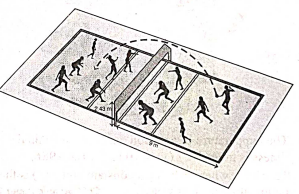
Based on the above information, answer the following questions.
(i) Is h(t) a continuous function ? Justify
(ii) Find the time at which the height of the ball is maximum.
40.
A departmental store sends bills to charge its customers once a month. Past experience shows that 70% of its customers pay their first month bill in time. The store also found that the customer who pays the bill in time has the probability of 0.8 of paying in time next month and the customer who doesn't pay in time has the probability of 0.4 of paying in time the next month.
Based on the above information, answer the following questions.
(i) Let E1 and E2, respectively denote the event of customer paying or not paying the first month bill in time.
Find P(E1), P(E2).
(ii) Let A denotes the event of customer paying second month's bill in time, then find P\(\left(\frac{A}{E_1}\right)\) and \(P\left(\frac{A}{E_2}\right)\).
(iii) Find the probability of customer paying second month's bill in time.
Or
(ii) Find the probability of customer paying first month's bill in time, if it is found that customer has paid the second month's bill in time.
41.
Students of a school are taken to a railway museum to learn about railways heritage and its history.
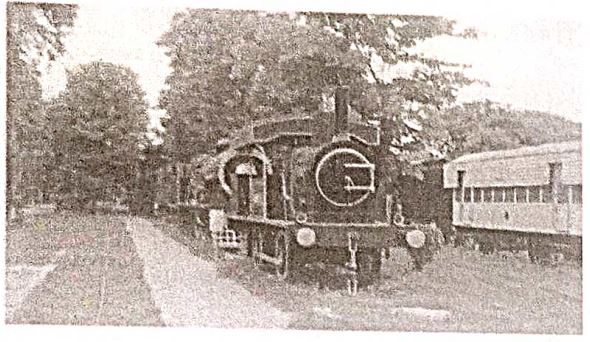
An exhibit in the museum depicted many rail lines on the track near the railway station. Let L be the set of all rail lines on the railway track and R be the relation on L defined by
R = {(l1, l2) : l1 is parallel to l2}
On the basis of the above information, answer the following questions.
(i) Find whether the relation R is symmetric or not.
(ii) Find whether the relation R is transitive or not.
(iii) If one of the rail lines on the railway track is represented by the equation y = 3x + 2, then find the set of rail lines in R related to it.
Or
Let S be the relation defined by S= ((l1,l2) : l1 is perpendicular to l2) check whether the relation S is symmetric and transitive.
42.
Assertion (A) If P(A) = \(\frac{3}{5}\)and P(B)=\(\frac{1}{5}\), then P(A\(\cap\)B), if A and B are independent events, is \(\frac{3}{25}\).
Reason (R) Two cards are drawn at random and without replacement from a pack of 52 playing cards. Then, the probability that both the cards are 25 black, is \(\frac{25}{102}\).
(a) Both A and R are correct; R is the correct explanation of A
(b) Both A and R are correct; R is not the correct explanation of A
(c) A is correct; R is incorrect
(d) R is correct; A is incorrect
43.
Assertion (A) The function f(x) = x2 - 4x + 6 is strictly increasing in the interval (2, \(\infty\)).
Reason (R) The function f(x) = x2 - 4x + 6 is strictly decreasing in the interval (-\(\infty\), 2).
(a) Both A and R are correct; R is the correct explanation of A
(b) Both A and R are correct; R is not the correct explanation of A
(c) A is correct; R is incorrect
(d) R is correct; A is incorrect
1.
(i) Write the given equation as \(\frac{d y}{d x}=2-\left(\frac{x}{y}\right)\) .
(ii) Substitute y = vx to solve it
\(=\log |y-x|=C+\frac{x}{(y-x)}\)
2.
\(\sin ^{2}(2 x+5)=\frac{1-\cos 2(2 x+5)}{2}=\frac{1-\cos (4 x+10)}{2} \)
\(\Rightarrow \int \sin ^{2}(2 x+5) d x=\int \frac{1-\cos (4 x+10)}{2} d x \)
\(=\frac{1}{2} \int 1 d x-\frac{1}{2} \int \cos (4 x+10) d x \)
\(=\frac{1}{2} x-\frac{1}{2}\left(\frac{\sin (4 x+10)}{4}\right)+\mathrm{C} \)
\(=\frac{1}{2} x-\frac{1}{8} \sin (4 x+10)+\mathrm{C} \)
3.
Let \(x_{ 1 },x_{ 2 }\in R-\{ 3\} \)
Now \(f(x_{ 1 })=f(x_{ 2 })\)
\(\Rightarrow \) \(\frac { x_{ 1 }-2 }{ x_{ 1 }-3 } =\frac { x_{ 2 }-2 }{ x_{ 2 }-3 } \)
\(\Rightarrow \) \((x_{ 1 }-2)(x_{ 2 }-3)=(x_{ 2 }-2)(x_{ 1 }-3)\)
\(\Rightarrow \) \(x_{ 1 }x_{ 2 }-3x_{ 1 }-2x_{ 2 }+6=\) \(x_{ 2 }x_{ 1 }-3x_{ 2 }-2x_{ 1 }+6\)
\(\Rightarrow \) \(-3x_{ 1 }-2x_{ 2 }=3x_{ 2 }-2x_{ 1 }\)
\(\Rightarrow \) \(x_{ 1 }=x_{ 2 }\)
\(\Rightarrow \) \(f\) is one-one.
Let \(y\in R-\{ 1\} \).
Then f(x)=y.
When \(\left( \frac { x-2 }{ x-3 } \right) =y,x\neq 3\)
\(\Rightarrow \) x - 2 = yx - 3y
\(\Rightarrow \) x - xy = 2 - 3y
\(\Rightarrow \) \(x=\frac { 2-3y }{ 1-y } \in A\)
\(\left[ \because \frac { 2-3y }{ 1-y } =3-\frac { 1 }{ 1-y } \neq 3\quad \right] \)
\(\therefore \) Corresponding to each \(y\in B\), there exists \(\frac { 2-3y }{ 1-y } \in A\)
such that \(f\left( \frac { 2-3y }{ 1-y } \right) =y\)
\(\Rightarrow \)f is onto.
Hence, 'f' is one-one and onto.
4.
Let the events be:
E1 : First bag is selected
E2 : Second bag is selected and A : Ball drawn is red.
\(P({ { E }_{ 1 })=P({ E }_{ 2 })=\frac { 1 }{ 2 } }\)
and \(P(A/{ E }_{ 1 })=\frac { 4 }{ 8 } =\frac { 1 }{ 2 } ,P(A/{ E }_{ 2 })=\frac { 2 }{ 8 } =\frac { 1 }{ 4 } \)
By Bayes, Theorem
\(P({ E }_{ 1 })=\frac { P({ E }_{ 1 })P(A/{ E }_{ 1 }) }{ P({ E }_{ 1 })P(A/{ E }_{ 1 })+P({ E }_{ 2 })P(A/{ E }_{ 2 }) } \)
\(=\frac { \frac { 1 }{ 2 } \frac { 1 }{ 2 } }{ \frac { 1 }{ 2 } \frac { 1 }{ 2 } +\frac { 1 }{ 2 } \frac { 1 }{ 4 } } =\frac { 1 }{ 4 } \times \frac { 8 }{ 2+1 } =\frac { 2 }{ 3 } \)
5.
(i) \(P(E)=\frac { 13 }{ 52 } =\frac { 1 }{ 4 } \)
\(P(F)=\frac { 4 }{ 52 } =\frac { 1 }{ 13 } \)
\(P(E\cap F)=\frac { 1 }{ 52 } =\frac { 1 }{ 4 } \times \frac { 1 }{ 13 } \)
= P(E).P(F)
Hence, the events E and F and independent.
(ii) \(P(E)=\frac { 26 }{ 52 } =\frac { 1 }{ 2 } ,P(F)=\frac { 4 }{ 52 } =\frac { 1 }{ 13 } \)
\(P(E\cap F)=\frac { 2 }{ 52 } =\frac { 1 }{ 26 } =\frac { 1 }{ 2 } \times \frac { 1 }{ 13 } \)
= P(E).P(F)
(iii) \(P(E)=\frac { 8 }{ 52 } =\frac { 2 }{ 13 } ,P(F)=\frac { 8 }{ 52 } =\frac { 2 }{ 13 } \)
\(P(E\cap F)=\frac { 4 }{ 52 } =\frac { 1 }{ 13 } \)
and \(P(E)P(F)=\frac { 2 }{ 13 } \times \frac { 2 }{ 13 } =\frac { 4 }{ 169 } \)
Thus \(P(E\cap F)\neq P(E)P(F)\)
Hence, the events E and F are not independent.
6.
\(\Rightarrow \) xy = \(\frac {{x}^{4}}{4} + c\)is the required solution.
7.
\(={x\over log\ x}+c\)
8.
Let P be the perimeter and A be the area of the rectangle of length x and width y.
Given \(\frac{d x}{d t}=-5 \mathrm{~cm} / \mathrm{min}\)
[negative (-) sign for decreasing rate]
\(x=8 \mathrm{~cm}, \frac{d y}{d t}=4 \mathrm{~cm} / \mathrm{min} \text { and } y=6 \mathrm{~cm}\)
(ii) Perimeter of the rectangle.\(P=2(x+y)\)
On differentiating both sides w.r.t. t, we get
\( \frac{d P}{d t} =2\left(\frac{d x}{d t}+\frac{d y}{d t}\right) \)
\(=2(-5+4)=-2 \mathrm{~cm} / \mathrm{min}\)
So, perimeter decreases at the rate of 2 cm/min.
(ii) Area of the rectangle, A = xy
On differentiating both sides w.r.t. t, we get
\( \frac{d A}{d t} =x \frac{d y}{d t}+y \frac{d x}{d t} \)
\(=8 \times 4+6 \times(-5)=32-30=2 \mathrm{~cm}^{2} / \mathrm{min} \)
Hence, area increases at the rate of 2 cm 2 /min.
9.
Let \(I=\int \frac{1}{\cos ^2 x(1-\tan x)^2} d x=\int \frac{\sec ^2 x}{(1-\tan x)^2} d x\)
Now, put (1-tan x) = t
\(\Rightarrow -\sec ^2 x d x=d t \Rightarrow \sec ^2 x d x=-d t \)
\(\therefore I=-\int \frac{d t}{t^2}=\frac{1}{t}+C=\frac{1}{1-\tan x}+C\)
10.
Given, \(P(x)=72+42 x-x^2\)
On differentiating w.r.t, x, we get
\(P^{\prime}(x)=42-2 x\)
For maximum profit, we put \(P^{\prime}(x)=0\)
\(\Rightarrow 42-2 x =0\)
\(\Rightarrow x =21\)
Therefore The maximum value of P(x) is at x = 21
\(\Rightarrow \quad P(21) =72+42(21)-(21)^2 =72+882-441=513\)
Thus, the maximum profit is ₹ 513.
11.
Write the given equation as \(\frac{d y}{d x}=(1-x)(1+y)\) and solve it.
\(=\sqrt{1-x^{2}}+\sqrt{1-y^{2}}=C\)
12.
Given differential equation is
\(\frac{d y}{d x}+\sqrt{\frac{1-y^{2}}{1-x^{2}}}=0
\)
\(\Rightarrow \frac{d y}{d x}=-\frac{\sqrt{1-y^{2}}}{\sqrt{1-x^{2}}} \)
On separating the variables, we get
\(\frac{1}{\sqrt{1-y^{2}}} d y=-\frac{1}{\sqrt{1-x^{2}}} d x \)
On integrating both sides, we get
\(\int \frac{1}{\sqrt{1-y^{2}}} d y=-\int \frac{1}{\sqrt{1-x^{2}}} d x
\)
\(\Rightarrow \sin ^{-1} y=-\sin ^{-1} x+C
\)
\(\Rightarrow \sin ^{-1} x+\sin ^{-1} y=C \)
which is the required general solution.
13.
Given, a function \(f:[1, \infty) \rightarrow(2,-)\) defined by \(f(x)=x+\frac{1}{x}\)
Now, let \(y=f(x)\)
\(\Rightarrow y=x+\frac{1}{x} \Rightarrow y=\frac{x^{2}+1}{x}\)
\(\Rightarrow x y=x^{2}+1 \rightarrow x^{2}-x y+1=0\)
\(\Rightarrow x=\frac{y+\sqrt{\gamma^{t}-4}}{2} \rightarrow x=\frac{x^{*} \sqrt{y^{2}-4}}{2}\)
\({\left[\text { neglecting } x=\frac{y-\sqrt{y^{2}-4}}{2} \because\right. \text { For } y=3 \in[2, \infty)} \)
\(x=\frac{3-\sqrt{9-4}}{2}=\frac{3-\sqrt{5}}{2}=\frac{3-223}{2}=\frac{0.77}{2} \notin[1, \infty) \)
\(\Rightarrow f^{-1}(y)=\frac{y+\sqrt{y^{2}-4}}{2} \quad\left[\because y=f(x) \Rightarrow x=f^{-1}(y)\right]\)
\(\text { or } f^{-1}(x)=\frac{x+\sqrt{x^{2}-4}}{2}\)
14.
Total number of cards = 52
(a) Number of favourable cases = 26
\(\therefore\) Required probability =\(\frac { 26 }{ 52 } =\frac { 1 }{ 2 } \)
(b) Number of favourable cases = 1
\(\therefore\) Required probability = \(\frac { 1 }{ 52 } \)
(c) Number of favourable cases = 6
\(\therefore\) Required probability =\(\frac { 6 }{ 52 } =\frac { 3 }{ 26 } \)
(d) Number of favourable cases = 4
\(\therefore\) Required probability = \(\frac { 4 }{ 52 } =\frac { 1 }{ 13 } \)
15.
\(
P(B / A)=\frac{P(A \cap B)}{P(A)}
\)
\(\Rightarrow 0.6 \times 0.4=P(A \cap B)
\)
\(\Rightarrow P(A \cap B)=0.24
\)
\( P(A \cup B)=P(A)+P(B)-P(A \cap B)
\)
\(=0.4+0.7-0.24=0.86
\)
16.
Let \(I=\int \frac{\cos \theta}{\left(4+\sin ^2 \theta\right)\left(5-4 \cos ^2 \theta\right)} d \theta\)
\(=\int \frac{\cos \theta}{\left(4+\sin ^2 \theta\right)\left[5-4\left(1-\sin ^2 \theta\right)\right]} d \theta \)
\(=\int \frac{\cos \theta}{\left(4+\sin ^2 \theta\right)\left(5-4+4 \sin ^2 \theta\right)} d \theta\)
\(=\int \frac{\cos \theta}{\left(4+\sin ^2 \theta\right)\left(1+4 \sin ^2 \theta\right)} d \theta\)
Let \(\sin \theta=t \Rightarrow \cos \theta d \theta=d t\)
Then, \(I=\int \frac{d t}{\left(4+t^2\right)\left(1+4 t^2\right)}\)
Again, let \(\frac{1}{\left(4+t^2\right)\left(1+4 t^2\right)}=\frac{A}{4+t^2}+\frac{B}{1+4 t^2}\)
[by partial fraction]
At \(t=0, \frac{A}{4}+\frac{B}{1}=\frac{1}{4 \times 1} \Rightarrow A+4 B=1\)
At \(t=1, \frac{A}{5}+\frac{B}{5}=\frac{1}{5 \times 5} \Rightarrow 5 A+5 B=1\)
On solving Eqs. (iii) and (iv), we get
\(A=-\frac{1}{15} \text { and } B=\frac{4}{15}\)
On putting \(A=-\frac{1}{15}\) and \(B=\frac{4}{15}\) in Eq. (ii), we get
\(\frac{1}{\left(4+t^2\right)\left(1+4 t^2\right)}=\frac{-\frac{1}{15}}{4+t^2}+\frac{\frac{4}{15}}{1+4 t^2}\)
\(\Rightarrow \quad \frac{1}{\left(4+t^2\right)\left(1+4 t^2\right)}=\frac{-1}{15\left(4+t^2\right)}+\frac{4}{15\left(1+4 t^2\right)}\)
Now, \( I=\int \frac{1}{\left(4+t^2\right)\left(1+4 t^2\right)} d t \)
\(=\frac{-1}{15} \int \frac{1}{4+t^2} d t+\frac{4}{15} \int \frac{1}{1+4 t^2} d t\)
\(=\frac{-1}{15} \int \frac{1}{2^2+t^2}+\frac{4}{15 \times 4} \int \frac{1}{\left(\frac{1}{2}\right)^2+t^2} d t \)
\(=\frac{-1}{15} \cdot \frac{1}{2} \tan ^{-1} \frac{t}{2}+\frac{1}{15} \cdot \frac{1}{1 / 2} \tan ^{-1} \frac{t}{1 / 2}+C \quad\left[\because \int \frac{d x}{x^2+a^2}=\frac{1}{a} \tan ^{-1} \frac{x}{a}+C\right]\)
\(= \frac{-1}{30} \tan ^{-1} \frac{\sin \theta}{2}+\frac{2}{15} \tan ^{-1} 2 \sin \theta+C \quad[\because t=\sin \theta]\)
17.
Write the given differential equation as
\(\frac{d x}{d y}=-\left(\frac{x-\sin y}{\tan y}\right)\)
\(\Rightarrow \frac{d x}{d y}+(\cot y) x=\cos y\) \(y=\sin ^{-1} 2 x\)
18.
Given, x2 ≤ y..(i)
and y ≤ |x|...(ii)
Clearly, curve (i) is parabola directed upward with vertex at (0, 0) and symmetrical about y-axis.
Also \(y=|x|=\begin{cases} x\quad if\quad x\ge 0 \\ -x\quad ,if\quad x<\quad 0 \end{cases}\)
The lines y = x and y = - x both passes through origin and have slope of + 1& - 1 respectively.
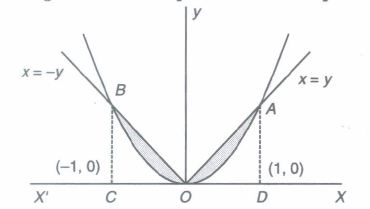
⇒ Required Area = 2x Standard Area on a side
= \(-\left[ \left( \frac { 1 }{ 2 } -1 \right) -\left( \frac { 16 }{ 2 } -4 \right) \right] \)
= \(2{ \left[ \frac { { x }^{ 2 } }{ 2 } -\frac { { x }^{ 3 } }{ 2 } \right] }_{ 0 }^{ 1 }\)
= \(2\left[ \frac { 1 }{ 2 } -\frac { 1 }{ 3 } \right] =2\times \frac { 1 }{ 6 } \)
= \(\frac { 1 }{ 3 } \) sq.units
19.
Let the events be:
E1 = Choosing 1st coin
E2 = Choosing 2nd coin
E3 = Choosing 3rd coin
A: Getting Heads
\(P({ E }_{ 1 })=P({ E }_{ 2 })=P(E_{ 3 })=\frac { 1 }{ 3 } \)
\(P(A/{ E }_{ 1 })=\frac { 40 }{ 100 } ,P(A/{ E }_{ 2 })=\frac { 75 }{ 100 } ,\)
\(P(A/{ E }_{ 3 })=\frac { 1 }{ 2 } \)
\(P({ E }_{ 1 }/A)\)
\(=\frac { P({ E }_{ 1 })P(A/{ E }_{ 1 }) }{ P({ E }_{ 1 })P(A/{ E }_{ 1 })+P({ E }_{ 2 })P(A/{ E }_{ 2 })+P({ E }_{ 3 })P(A/{ E }_{ 3 }) } \)
\(=\frac { \frac { 1 }{ 3 } .\frac { 40 }{ 100 } }{ \frac { 1 }{ 3 } .\frac { 40 }{ 100 } +\frac { 1 }{ 3 } .\frac { 75 }{ 100 } +\frac { 1 }{ 3 } .\frac { 1 }{ 2 } } =\frac { 8 }{ 33 } \)
20.
Let the events defined are :
E1: Person chosen is a cyclist
E2: Person chosen is a scooter driver
E3: Person chosen is a motorbike driver
A:Person meets with an accident
P(E1_= 1/6, P(E2) = 1/3, P(E3) = 1/2
P(A/E1) = 0.01, P(A/E2) = 0.03,
P(A/E3) = 0.15
\(P{ (E }_{ 2 }/A)=\frac { P({ E }_{ 2 }).P(A/{ E }_{ 2 }) }{ P({ E }_{ 1 }).P(A/{ E }_{ 1 })+P({ E }_{ 2 }).P(A/{ E }_{ 2 })+P({ E }_{ 3 }).P(A/{ E }_{ 3) } } \)
\(=\frac { \frac { 1 }{ 3 } \times 0.03 }{ \frac { 1 }{ 6 } \times 0.01+\frac { 1 }{ 3 } \times 0.03+\frac { 1 }{ 2 } \times 0.15 } \)
\(=\frac { 0.01 }{ 0.086 } \)
= 0.11627
Suggestion: Cycle should be promoted as it is:
(i) Good for health
(ii) Pollution free
(iii) Saves energy (no petrol).
21.
(b)
\(\frac{x^2}{2}+\log |x|+C\)
22.
(d)
neither maximum nor minimum
23.
(d)
0.96
24.
(d)
\(\frac{a b}{4}(\pi-2)\)
25.
(d)
All of the above
26.
(d)
\(2(\sqrt{2}-1)\)
27.
(b)
\(\frac { { d }^{ 2 }y }{ d{ x }^{ 2 } } -4y=0\)
28.
(c)
16 π sq units
29.
(b)
Transitive
30.
(a)
A ⊂ B
31.
(c)
y = Cx
32.
(c)
\(\frac23\)
33.
(d)
\(\frac { a+b }{ 2 } \int _{ a }^{ b }{ f(x) } dx\)
34.
(a)
\(\frac { 1 }{ 3 } { e }^{ { x }^{ 3 } }+C\)
35.
(a)
(2 \(\sqrt2\),4)
36.
(a)
f is one-one onto
37.
As differential equation is
1+ \(3\frac { dy }{ dx } +3{ \left( \frac { dy }{ dx } \right) }^{ 2 }+{ \left( \frac { dy }{ dx } \right) }^{ 3 }={ \left( \frac { dy }{ dx } \right) }^{ 2 }\)
Exponent of highest order derivative is 3.
38.
As \(\frac { dx }{ dt } =2\) cm/s, x is side of equiolatral triangle.
A = \(\frac { \sqrt { 3 } }{ 4 } { x }^{ 2 }\)
\(\Rightarrow \frac { dA }{ dx } =\frac { \sqrt { 3 } }{ 2 } { x }\frac { dx }{ dt } \)
= \(\frac { \sqrt { 3 } }{ 2 } x2=\sqrt { 3 } x\)
∴\(|\frac{dA}{dx}|\)x=10 = 10\(\sqrt3\) cm2/s
39.
\(\text { Given, } h(t)=-\frac{7}{2} t^2+\frac{13}{2} t+1\)
(i) Yes,
Since, h(t) is a polynomial function.
So, it is everywhere continuous.
(ii) \( h^{\prime}(t)=-\frac{7}{2}(2 t)+\frac{13}{2} \)
\(\Rightarrow \quad h^{\prime}(t)=-7 t+\frac{13}{2}\)
Also, \(h^{\prime \prime}(t)=-7\)
For maxima or minima, put \(h^{\prime}(t)=0\)
\(\Rightarrow -7 t+\frac{13}{2}=0 \)
\(\Rightarrow -7 t=-\frac{13}{2}\)
\(\Rightarrow t=\frac{13}{14}\)
At \(t=\frac{13}{14}, h^{\prime \prime}(t)<0\)
So, \(t=\frac{13}{14}\) is point of maxima.
Thus, at \(t=\frac{13}{14}\) the height of the ball is maximum.
40.
Given, 70% customers pay their first month bill in time, therefore, the customers who do not pay bill in time is 30%.
(i) Let E1 and E2, denote the event of customer paying or not paying the fìrst month bill in time, respectively.
Then, P(E1) = 70% = 0.7
and P(E2) = 30% = 0.3
(ii) Given that the probability of customers who pays the bill in time next month is 0.8 and who does not pay in time is 0.4.
Let A denotes the event of customer paying second month's bill in time.
\(\therefore P\left(\frac{A}{E_1}\right)=P\) (customer paying second month bill in time when they pay first month bill)
= 0.8
and \(P\left(\frac{A}{E_2}\right)=P\) (customer paying second month bill in time when they do not pay first month bill in time)
= 0.4
(ii) The probability of customer paying second month's bill in time = 0.7 \(\times\) 0.8 = 0.56
Or
The probability of customer paying first month's bill in time, if it is found that customer has paid the second month's bill in time is \(P\left(\frac{E_1}{A}\right)\)
\(\begin{aligned}
P\left(\frac{E_1}{A}\right) & =\frac{P\left(E_1\right) \cdot P\left(\frac{A}{E_1}\right)}{P\left(E_1\right) \cdot P\left(\frac{A}{E_1}\right)+P\left(E_2\right) \cdot P\left(\frac{A}{E_2}\right)}
\end{aligned}\)
\(\begin{aligned}
=\frac{0.7 \times 0.8}{0.7 \times 0.8+0.3 \times 0.4}
\end{aligned}\)
\(\begin{aligned}
=\frac{0.56}{0.56+0.12}=\frac{0.56}{0.68}
\end{aligned}\)
= 0.824
41.
We have, R = {(l1,l2) :l1 is parallel to l2}
(i) If l1 is parallel to l2, then l2 is parallel to l1.
So, if (l1, l2) \(\in R,\) then (l2, l1) \(\in R\)
\(\therefore\) R is symmetric.
(ii) If l1 is parallel to l2 and l2 is parallel to l3, then l1 is parallel to l3.
So, if \(\left(l_1, l_2\right) \in R,\left(l_2, l_3\right) \in R\), then (l1,l3)\(\in R\)
\(\therefore\) R is transitive.
(iii) Let equation of line parallel to y = 3x + 2 be y = mx + c, where m is the slope of line. Since, y = 3x + 2 and y = mx + c are parallel. Slope of (y =3x + 2) = Slope of(y = mx + c)
\(\Rightarrow\) 3 = m i.e. m = 3
Hence, the required line is
y = 3x + c, where c \(\in R\)
Or
We have, S = {(I1, I2) : l1 is perpendicular to l2}
For Symmetric If I1, is perpendicular to I2, then l2 is perpendicular to l1.
So, if (l1,l2) \(\in S\), then (l2, l1) \(\in S\)
\(\therefore\) S is symmetric.
For Transitive If I1, is perpendicular to l2, and l2, is perpendicular to l3, then I1, is not perpendicular to l3, it is parallel to I3.
So, if \(\left(l_1, l_2\right) \in S,\left(l_2, l_3\right) \in S \text {, then }\left(l_1, l_3\right) \notin S \text {. }\)
\(\therefore\) S is not transitive.
42.
(b) Both A and R are correct; R is not the correct explanation of A
43.
(b) We have, f(x) = x2 - 4x + 6 or f'(x) = 2x - 4

Therefore, f'(x) = 0 gives x = 2. Now, the point x = 2 divides the real line into two disjoint intervals namely, (- \(\infty\), 2) and (2, \(\infty\)). In the interval ( -\(\infty\), 2), f'(x) = 2x - 4 < 0.
Therefore,f is strictly decreasing in this interval. Also, in the interval (2, \(\infty\)), f'(x) > 0 and so the function f is strictly increasing in this interval.
Both Assertion and Reason are correct but Reason is not the correct explanation of Assertion.

12th Standard CBSE Syllabus & Materials
12th Standard CBSE
CBSE 12th Computer Science Python Revision Tour I - New Previous year Question Papers Study Material - QB365 Set A
NEW12th Standard CBSE
CBSE 12th Business Studies Planning Important Questions And Answers Study Material - QB365 Set A
NEW12th Standard CBSE
CBSE 12th Business Studies Business Environment Important Questions And Answers Study Material - QB365 Set A
NEW12th Standard CBSE
CBSE 12th Business Studies Principles of Management Important Questions And Answers Study Material - QB365 Set A



NCERT Books

Syllabus

Exam Pattern

Sample Question Papers

Previous year Question Papers

Important Notes

MCQ Practice test

NCERT Exemplers

Case study Questions

Image Based Questions

Passage based Questions

HOT Questions

Value Based Questions

Model Questions Papers
NCERT ( Book Back ) Questions

Assertion and Reason
Important Questions And Answers

CBSE 12th Standard CBSE Subjects
CBSE Standards








