
 100% FREE ACCESS
12th Standard CBSE Syllabus & Materials
12th Standard CBSE
CBSE 12th Economics Government Budget and the Economy Previous year Question Papers Study Material - QB365 Set A
NEW12th Standard CBSE
CBSE 12th Computer Science Interface Python with MySQL - New Previous year Question Papers Study Material - QB365 Set A
NEW12th Standard CBSE
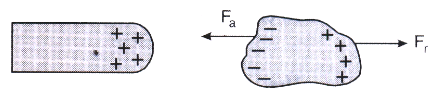
CBSE 12th Computer Science Database Concept - New Previous year Question Papers Study Material - QB365 Set A
NEW12th Standard CBSE
CBSE 12th Computer Science Data Communication - New Previous year Question Papers Study Material - QB365 Set A
NEW12th Standard CBSE
CBSE 12th Computer Science Data Structures - New Previous year Question Papers Study Material - QB365 Set A
NEW12th Standard CBSE
CBSE 12th Computer Science Functions - New Previous year Question Papers Study Material - QB365 Set A

Published on: 15/11/2019
Electrostatics
Download CBSE Class 12th Standard CBSE Physics question papers, sample papers, important questions, and previous year solved papers in PDF format. Get free study materials, NCERT solutions, and exam preparation resources for Class 12th Standard CBSE Physics
Questions + Answers key
Take MCQ Physics Test
1.
A charged Particle q is shot towards another charged particle Q which is fixed , with a speed v. It approaches Q up to a closet distance r and then returns, If q were given a speed 2 v the n find the closet distance of approach.
2.
State superposition principle for electrostatic force on a charge due to a number of charges.
3.
Two point charges of +2 \(\mu C\) and +6 \(\mu C\) repel each other with a force of 12N. If each is given an additional charge of -4\(\mu C\) , what will be the new force?
4.
Two small balls having equal positive charge q coulomb are suspended by two insulating strings of equal length l metre from a hook fixed to a stand. The whole set up is taken in a satellite into space where there is no gravity. What is the angle between the two strings and the tension in each string?
5.
In a parallel plate capacitor with air between the plates, each plate has an area of 6\(\times\)10-3m2 and the distance between the plates is 3 mm. Calculate the capacitance if this capacitor. If this capacitor is connected to a 100 V supply, what is the charge on each plate of the capacitor?
6.
Two capacitors \(3\mu F\) and \(6\mu F\) are connected in series with a 6V battery. A cross which of the capacitors will there be larger potential difference?
7.
Why does a charged glass rod attract a piece of paper?
8.
(a) conductor A with a cavity as shown in figure.
(i) is given a charge Q. Show that the entire charge must appear on the outer surface of the conductor.
(ii) Another conductor B with charge q is inserted into the cavity keeping B insulated from A. Show that the total charge on the outside surface A is Q + q Figure.
(iii) A sensitive instrument is to be shifted from the strong electrostatic field in its environment. Siggest a possible way.
-Q.png)
-Q.png)
9.
What is the force between two small charged spheres having charges of 2 \(\times\) 10-7C and 3 \(\times\) 10-7C placed 30 cm apart in air?
10.
An elderly woman went alone to Registrar's office to disburse her property. When she enquired in the office she was asked to get a xerox copy of the do ment which works under electrostatic induction. The xerox shop was far away and across the road. She took the help of a passer-by and got her xerox done.
(a) What values did the passer-by have?
(b) How does a neutral body get charged by electrostatic induction?
11.
As it is known that all matter is made up of atoms/ molecules. Every atom consists of a central core, called the atomic nucleus, around which negatively charged electrons revolve in circular orbits. Every atom is electrically neutral containing as many electrons as the number of protons in the nucleus. All the materials are electrically neutral, they contain charges, but their charges are exactly balanced.
Read the above passage and answer the following questions.
Everybody whether a conductor or an insulator is electrically neutral. Is it true?
Charging lies in charge imbalance, i.e. excess charge or deficit charge, comment.
How do you visualise this principle being applied in our daily life?
12.
A physics teacher tells his students in the class that in paramagnetic materials, every atom has some permanent magnetic dipole moment. In the absence of an external magnetic field, the atomic dipoles are randomly oriented so that average magnetic moment per unit volume of the material behaves as a magnet. When an external magnetic field is applied, the torque developed tries to align the atomic magnetic dipoles in the direction of the field. That is why the specimen gets magnetized weekly in the direction of the field.
Read the above passage and answer the following questions:
(i) Name any three paramagnetic materials
(ii) Name any two ferromagnetic materials. How is their behavior different from that of paramagnetic materials?
(iii) The teacher asks the students how true is the famous saying: 'Spare the rod and spoil the child', comment.
13.
A 4 μF capacitor is charged by a 200V supply is then disconnected and the charged capacitor is connected to another uncharged 2 μF capacitors. How much electrostatic energy of the first capacitor is in the form of heat and electromagnetic radiation?
14.
If \(\oint _{ s }^{ }{ E.ds } =0\) over a surface, then
the electric field inside the surface and on it is zero
the electric field inside the surface is necessarily uniorm
the number of flux lines entering the surface must be equal to the number of flux lines leaving it
all charges must necessarily be outside the surface
15.
1 stat-Coulomb = ......... Coulomb
\(3\times 10^9\)
\(3\times 10^{-9}\)
\({1\over3}\times 10^9\)
\({1\over 3}\times 10^{-9}\)
16.
Electrostatic potential V at a point, distant r from a charge q varies as
q/r2
q2/r
q/r
q2/r2
17.
Electric field intensity (E) due to an electric dipole varies with distance (r) of the point from the centre of dipole as:
\(E\alpha {1\over r}\)
\(E\alpha{1\over r^4}\)
\(E\alpha{1\over r^2}\)
\(E\alpha {1\over r^3}\)
18.
The SI unit of electric field intensity is
N
N/C
C/m2
N/m2
1.
q \(\rightarrow\)_______Q
1/2 mv2 = kQq/r
Or, v2 a1/r
Or, r a 1/v2
Or, r' = r/4
2.
The principle of superposition states that total force on a given charge is the vector sum of the individual forces exerted on it by all other charges, the force between two charges being exerted in such a manner as if all other charges were absent
\(\overrightarrow { F } =\overrightarrow { F_{ 12 } } +\overrightarrow { F_{ 13 } } +....+\overrightarrow { F_{ 1N } } \)
3.
q1 = +\(\mu C\), q2 = +6\(\mu C\), F = 12N
\(q_{1}^{'}=+2-4=-2\mu C;\) \(q_2^{'}=+6-4=2\mu C\)
F' = ?
\({F'\over F}={(q_1^{'})(q_2^{'})\over q_1q_2}={(-2)(2)\over(2)(6)}=-{1\over 3}\)
\(F'={-F\over 3}={-12\over 3}=-4 N\)(attractive)
4.
In a satellite, there is a condition of weightlessness. Therefore, mg = 0. On account of electrostatic force of repulsion between the balls, the strings would become horizontal. Therefore, angle between the strings = 180o.
Also, tension in each string = force of repulsion
\(T={1\over 4\pi\epsilon_o}{q^2\over(2l)^2}N\)
5.
Given,
The area of plate of the capacitor, A = 6 x 10⁻³ m2
Distances between the plates, d = 3mm = 3 x 10⁻³ m
Voltage supplied, V = 100V
Capacitance of a parallel plate capacitor is given by, \(C=\frac{\epsilon \times A}{d}\)
Here,
ε = permittivity of free space = 8.854 x10⁻¹² N-1 m -2 C-2
\(C=\frac{8.854 \times 10^{-12} \times 6 \times 10^{-3}}{3 \times 10^{-3}}=17.81 \times 10^{-12} \mathrm{~F}=17.71 \mathrm{pF}\)
Therefore, each plate of the capacitor is having a charge of
q = VC = 100 x 17.81 x 10-12 C = 1.771 x 10⁻⁹ C
6.
\(3\mu F\)
7.
When a charged rod is brought near a piece of paper, equal and opposite charge is induced on the paper. The force of attraction between the glass rod and the piece of paper is more than the force of repulsion between the glass rod and piece of paper. Hence the charged glass rod attract the piece of paper.
8.
(a) We know that the net field inside a charged conductor is zero i.e.
\(\overrightarrow { E } \) = 0, inside
Let us choose a gaussian surface lying wholly within the conductor and enclosing the cavity.
According to Gauss' law,
\(\oint \overrightarrow { E } .\overrightarrow { dS } =\frac { q }{ { \varepsilon }_{ 0 } } =0\) \((\because \overrightarrow { E } =0,inside)\)
\(\therefore \) q = 0 i.e. charge inside the cavity is zero. Hence the entire charge Q on the conductor must appear on the outer surface of the conductor.
(b) The conductor B carrying a charge + q inseted in the cavity induces a charge - q on the metal surface of cavity and + q on the outside surface of the conductor A [Fig (b)]. As the outer surface of A originally had a charge Q, the total charge on it would become (Q + q).
(c) To shift a sensitive instrument from the strong electrostatic fields in its environment, enclose the instrument fully by a metallic surface.
9.
Given q1 = 2 \(\times\) 10-7 C, q2 = 3 \(\times\) 10-7 C r = 30 cm = 0.3 m
Therefore, Force of repulsion, F = 9 \(\times\) 109 \(\times\) \(\frac { { q }_{ 1 }{ q }_{ 2 } }{ { r }^{ 2 } } \)
= \(9\times { 10 }^{ 9 }\times \frac { 2\times { 1 }0^{ -7 }\times 3\times { 10 }^{ -7 } }{ { (0.3) }^{ 2 } } =\frac { 54\times { 10 }^{ -5 } }{ 9\times { 10 }^{ -2 } } \)
\(=\ 6\times { 10 }^{ -3 }N\)
10.
(a) Helping, sharing, respect for elderly people.
(b) For a body to get positively charged, a negatively charged body has to brought close to the neutral body which after earthing gets charged uniformly.
11.
Yes, it is true. Every conductor/insulator is electrically neutral, as it contains equal amounts of positive charge and negative charge.
This statement is true. Charging lies in charge imbalance. When a body loses some electrons, it becomes positively charged because it has excess of protons over electrons. The reverse is also true.
Nature/God has created the universe. In original, all bodies are neutral with no forces of attraction/repulsion. When interests of any two persons clash (i.e. two bodies are rubbed against each other), they become charged. From the charging, the forces of attraction/repulsion arises, i.e. pulls and pressures of life.
Nature/God wants us to live in peace without stress and tensions in life. We get charged over petty things in life and invite all sorts of pulls, pressures and tensions.
12.
(i) Examples of paramagnetic material are aluminum; chromium; oxygen.
(ii) Iron and cobalt are two ferromagnetic materials. The ferromagnetic substances, but to a much larger degree. For example, relative magnetic permeability of paramagnetic substances is slightly greater than 1
13.
Charge on the \(4\mu F\) capacitor when it is charged to 200 V.
\(Q=CV=(4\times { 10 }^{ -6 }F)(200\quad V)=8\times { 10 }^{ -4 }C\)
This charged capacitor is then connected to an unchanged capacitor of capacitance \(2\mu F\)
So \({ C }^{ ' }=(4+2)\mu F=6\mu F\)
The charge capacitor is then capacitor is now shared between the two until they attain a common potential.
The common potential after the combination
\(=\frac { Q }{ { C }^{ ' } } =\frac { 8\times { 10 }^{ -4 }C }{ 6\times { 10 }^{ -6 }F } =1.33\times { 10 }^{ 2 }V=133V\)
The electrical potential energy of the first capacitor before it is connected to the second
\(=\frac { 1 }{ 2 } { CV }^{ 2 }=\frac { 1 }{ 2 } (4\times { 10 }^{ -6 }){ (200) }^{ 2 }\)
\(=8\times { 10 }^{ -2 }J\)
The electrical potential energy of the system after they are connected
\(=\frac { 1 }{ 2 } { { C }^{ ' }{ V }^{ ' } }^{ 2 }=\frac { 1 }{ 2 } \left( 6\times { 10 }^{ -6 } \right) { (200) }^{ 2 }=5.30\times { 10 }^{ -2 }J\)
Energy in the form of heat and electromagnetic radiation
\(=\left( 8\times { 10 }^{ -2 }-5.3\times { 10 }^{ -2 } \right) J=2.7\times { 10 }^{ -2 }J\)
14.
(c)
the number of flux lines entering the surface must be equal to the number of flux lines leaving it
15.
(d)
\({1\over 3}\times 10^{-9}\)
16.
(c)
q/r
17.
(d)
\(E\alpha {1\over r^3}\)
18.
(b)
N/C

12th Standard CBSE Syllabus & Materials
12th Standard CBSE
CBSE 12th Computer Science Python Revision Tour I - New Previous year Question Papers Study Material - QB365 Set A
NEW12th Standard CBSE
CBSE 12th Business Studies Planning Important Questions And Answers Study Material - QB365 Set A
NEW12th Standard CBSE
CBSE 12th Business Studies Business Environment Important Questions And Answers Study Material - QB365 Set A
NEW12th Standard CBSE
CBSE 12th Business Studies Principles of Management Important Questions And Answers Study Material - QB365 Set A



CBSE 12th Standard CBSE Subjects
CBSE Standards










