
 100% FREE ACCESS
12th Standard CBSE Syllabus & Materials
12th Standard CBSE
CBSE 12th Economics Government Budget and the Economy Previous year Question Papers Study Material - QB365 Set A
NEW12th Standard CBSE
CBSE 12th Computer Science Interface Python with MySQL - New Previous year Question Papers Study Material - QB365 Set A
NEW12th Standard CBSE
CBSE 12th Computer Science Database Concept - New Previous year Question Papers Study Material - QB365 Set A
NEW12th Standard CBSE
CBSE 12th Computer Science Data Communication - New Previous year Question Papers Study Material - QB365 Set A
NEW12th Standard CBSE
CBSE 12th Computer Science Data Structures - New Previous year Question Papers Study Material - QB365 Set A
NEW12th Standard CBSE
CBSE 12th Computer Science Functions - New Previous year Question Papers Study Material - QB365 Set A

Published on: 28/05/2021
QB365 Provides the HOT Question Papers for Class 12 Biology, and also provide the detail solution for each and every HOT Questions. HOT Questions will help to get more idea about question pattern in every exams and also will help to get more marks in Exams
Download CBSE Class 12th Standard CBSE Biology question papers, sample papers, important questions, and previous year solved papers in PDF format. Get free study materials, NCERT solutions, and exam preparation resources for Class 12th Standard CBSE Biology
Questions + Answers key
Take MCQ Biology Test1.
In a population which has achieved Hardy- Weinberg equilibrium, which two process will not occur.
2.
Mention one significant difference between ontogeny and phylogeny.
3.
Write the formula to calculate allele frequency in future generations according to Hardy- Weinberg equilibrium
4.
Define the terms
1.Germplasm
2.Branching descent.
5.
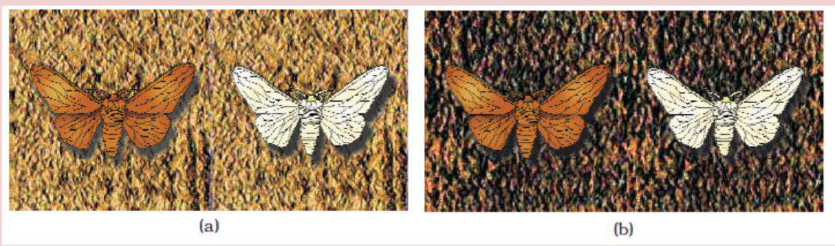
What do these pictures (a) and (b) illustrate with reference to evolution?
6.
(i) Select the homologous structures from the combinations given below :
(a) Forelimbs of whales and bats
(b) Tuber of potato and sweet potato
(c) Eyes of octopus and mammals
(d) Thorns of Bougainvillea and tendrils of Cucurbitta
(ii) State the kind of evolution they represent.
7.
Write down 4 important resemblances between apes and humans.
8.
Discuss, is evolution a process or the end result of a process.
9.
Evolution is not a direct process, but a stochastive process, based on chance event(s) in nature. Justify.
10.
Why are the wings of butterfly and birds said to be analogous organs? Name the type of evolution, the analogous organs are a result of.
1.
In such a population natural selection and random mating does not occur. This is because both these process promotes evolution which disrupts the Hardy-Weinberg equilibrium.
2.
(i) Ontogeny is embryonic development, i.e. the origin and development of an organism from an embryo to an adult.
(ii) Phylogeny is ancestral history, i.e. the evolutionary development and history of a species or higher taxonomic grouping of organisms.
3.
(p + q)2 =p2+2pq+q2=1
4.
1. Germplasm - Protoplasm contained inside the germ cells that is transmitted from one generation to other is called germplasm.
2. Branching descent-It the formation of different types of species from a common ancestor due to variations and adaptations to varying ecological niches.
5.
( a ) Dark and grey coloured moths on the bark of a tree in an unpolluted area
(b) Dark and grey coloured moths on the bark of a tree in a polluted area.
Above picture shows industrial melanism. Prior to industrial revolution England had plenty of lichen flora on the bark of trees giving light coloured background suitable for white coloured moth but dark coloured moths were easily predated by the predators declining their numbers. After industrial revolution lichens disappeared from the tree barks which caused easy predation of white coloured moths than dark coloured declining the numbers of white moth in course of time.
6.
(i) Homologous structure are :
(a) Forelimbs of whales and bats; and
(b) Thorns of Bougainville and tendrills of Cucurbita.
(ii) They exhibits divergent evolution.
7.
(i) Large head, mobile neck, short trunk with broad chest, long limbs;
(ii) large, highly convoluted brain;
(iii) well developed facial muscles to express emotions; and
(iv) lack of tail.
8.
1. The biodiversity we see today is the story of evolution, i.e. evolution is considered as a process, that has resulted in various life forms.
2. If we talk about the life on earth, evolution is considered as a consequence of the process, called natural selection.
3. It is difficult to decide, whether evolution and natural selection are processes or results of some unknown processes.
9.
1. Evolution is not a direct process in terms of determinism
2. As the environment changes, due to meteorological, biological and other physical activities, the organisms which are better adapted to the changed environment are selected by nature in a much lesser time scale.
3. It is also true for natural selection and evolution of antibiotic-resistant strains of bacteria in a time scale of months.
4. So, evolution is a stochastic process based on chance events in nature and chance mutation in the organism.
10.
1. convergent evolution is the evolutionary process, where anatomically different structures in different groups of organisms evolve towards the same function, in similar habitats.
2. Such structures in different groups of organisms which perform similar function, but are anatomically different, are called analogous organs.
3. The wings of a butterfly and those of bird are anatomically different, but perform the same function (flying); hence they are said to be analogous organs.

12th Standard CBSE Syllabus & Materials
12th Standard CBSE
CBSE 12th Computer Science Python Revision Tour I - New Previous year Question Papers Study Material - QB365 Set A
NEW12th Standard CBSE
CBSE 12th Business Studies Planning Important Questions And Answers Study Material - QB365 Set A
NEW12th Standard CBSE
CBSE 12th Business Studies Business Environment Important Questions And Answers Study Material - QB365 Set A
NEW12th Standard CBSE
CBSE 12th Business Studies Principles of Management Important Questions And Answers Study Material - QB365 Set A



NCERT Books

Syllabus

Exam Pattern

Sample Question Papers

Previous year Question Papers

Important Notes

MCQ Practice test

NCERT Exemplers

Case study Questions

Image Based Questions

Passage based Questions

HOT Questions

Value Based Questions

Model Questions Papers
NCERT ( Book Back ) Questions

Assertion and Reason
Important Questions And Answers

CBSE 12th Standard CBSE Subjects
CBSE Standards









