
 100% FREE ACCESS
12th Standard CBSE Syllabus & Materials
12th Standard CBSE
CBSE 12th Economics Government Budget and the Economy Previous year Question Papers Study Material - QB365 Set A
NEW12th Standard CBSE
CBSE 12th Computer Science Interface Python with MySQL - New Previous year Question Papers Study Material - QB365 Set A
NEW12th Standard CBSE
CBSE 12th Computer Science Database Concept - New Previous year Question Papers Study Material - QB365 Set A
NEW12th Standard CBSE
CBSE 12th Computer Science Data Communication - New Previous year Question Papers Study Material - QB365 Set A
NEW12th Standard CBSE
CBSE 12th Computer Science Data Structures - New Previous year Question Papers Study Material - QB365 Set A
NEW12th Standard CBSE
CBSE 12th Computer Science Functions - New Previous year Question Papers Study Material - QB365 Set A

Published on: 28/05/2021
QB365 Provides the HOT Question Papers for Class 12 Biology, and also provide the detail solution for each and every HOT Questions. HOT Questions will help to get more idea about question pattern in every exams and also will help to get more marks in Exams
Download CBSE Class 12th Standard CBSE Biology question papers, sample papers, important questions, and previous year solved papers in PDF format. Get free study materials, NCERT solutions, and exam preparation resources for Class 12th Standard CBSE Biology
Questions + Answers key
Take MCQ Biology Test1.
You might have been seen in TV or read in newspaper about bird flu. This has created a fear in the country and had drastically affected egg and chicken consumption.
Find out more about this and discuss whether the panic reaction was justified.
2.
Why are cloudy, dusty and humid nights warmer than the clear, dust-free and dry nights?
3.
What kind of evolution has brought similarity in the following:
(i) Placental cat and a marsupial cat
(ii) Fishes and whales
(iii) Darwin's finches
4.
(a) Study the graph carefully and correlate the follicular growth that takes place according to hormonal levels on
(i) 1-5 days
(ii) 12-14 days
(iii) 25-28 days (if the ovum is not fertilized).
(b) Specify source(s) of the hormones mentioned n the graph.
5.
Can the host-parasite relationship provide evidence for evolution? Explain.
6.
When is the structure and composition of a community expected to remain unchanged?
7.
Identify the type of inheritance shown in the following pedigree diagram.
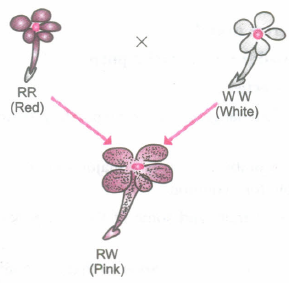
Observe the following figure and answer the following questions-
(a) Name the plant in which the above cross was made and by whome?
(b) What phenomenon does this cross shows.
8.
What do you understand by 5'-end and 3'-end?
9.
Here some correct and some wrong statements.Correct only those statements which are wrong:
(a) The genetic code is universal
(b)The genetic code is ambiguous
(c)The genetic code is regenerated.
(d)Transfer RNA(tRNA)carry amino acids to mRNA codons and used again and again in transcription.
(e)UAA, UAG and UGC are terminator codon
(f)Lac operon consists of regulatory genes, operator gene,structural and promoter gene
10.
What is the main reason for low milk production in India? How can it be improved?
11.
Name 'A' and 'B' in the following equations:
Sugary juice \(\underrightarrow { 'A' } \) Ethanol + H2 O ; Ethanol \(\underrightarrow { Acetobacter\quad aceti } \) B
12.
What will happen if -
(i) A plasmid vector is digested with Eco RI at a single site
(ii) A sample of human DNA is digested with Eco RI.
(iii) The two samples (plasmid and human DNA) are allowed to hybridise in presence of DNA ligase.
13.
Few gaps have been left in the following table. Fill up the gaps.
| Restriction Enzyme | Source | Recognition sequence and site of cleavage |
| Bam HI | Bacillus amyloliquiefaciens H | a |
| Eco RI | b | \(\downarrow \) 5'-G-A-A-T-T-C-3' 3'-C-T-T-A-A-G-5' \(\uparrow \) |
| c | Haemophillus influenzae Rd | \(\downarrow \) 5'-G-T-C-G-A-C-3' 3'-C-A-G-C-T-G-5' \(\uparrow \) |
14.
(a) Some men have abnormally low sperm count in seminal fluid. Also, some women cannot normally conceive because of any of the following reasons:
(i) They cannot produce ova,
(ii) They have blocked oviducts, or
(iii) They have spermicidal secretions in the vagina.
In such couples, one technique is commonly used. Name that Assisted Reproduction Technique.
(b) At what stage, fertilized egg is transferred into the fallopian tube or uterus of the mother in this technique?
15.
(a) At present, Reproductive and Child Health Care(RCH) Programmes are launched by the government of India. Name the two major aims and objectives of these programmes.
(b) Name the prominent Assisted Reproduction Technologies being used today to assist infertile couples to have children.
16.
(a) List two invasive techniques being used to determine the genetic disorders of the foetus.
(b) Can you name any non-invasive technique being used by physician now a days to determine the foetal condition?
17.
(i) The graph given alongside represent the growth patterns of two types of aquatic organisms over a brief period of times in a water body surrounded by an agricultural land extensively supplied with fertilisers.Identify the organisms that would represent (i) A and (ii) B.
(ii) State the reason for such a change in the water body and also write the term given to it.
18.
(a) Name the type of synthesis
(b) Occurrence in the types of synthesis and as shown below:
19.
Why are green algae not likely to be found in the deepest strata of the ocean?
20.
Women experience two major events in their lifetime one at menarche and the second at menopause, mention the characteristics of both the events.
21.
If implementation of better techniques and new strategies are required to provide more efficient care and assistance to people, then why is there a statutory ban on amniocentesis? Write the use of this technique and give reason to justify the ban.
22.
An organic farmer releies on natural predection for controlling plant pests and diseases. Justify giving reasons why this is considered to be holistic approch.
23.
The study of
(i) fossils of dinosaurs
(ii) forelimbs of Cheeta, bat and human
(ii) thorns of Bougainvillea and tendril of Cucurbita shows that evolution of life forms has indeed taken place on earth. Explain.
24.
Anthropogenic action can hasten evolution. Explain with the help of a suitable example.
25.
(i)Why does DNA replication occur in small replication forks and not in its entire length?
(ii)Why is DNA replication countinuous and discountinuous in a replication fork?
(iii)Explain the importance of 'origin of replication' in a replication fork.
1.
Bird flu refers to the illness caused by any of the strains of influenza virus. It has been around for thousands of years that several varieties of the existing virus mutate sufficiently to affect humans.
Fear is intended to be the warning system to protect us against imminent danger and thus, it is justified. However, it can be prevented by practicing good hygiene and by taking some precautions in eating habits of poultry food.
2.
Clouds, dust particles and water vapours can produce green house effect. This is the reason why cloudy, dusty and humid nights are warmer than the clear, dust-free and dry nights.
3.
(i) Parallel evolution.
(ii) Convergent evolution.
(ii) Divergent evolution.
4.
(a) (i) LH increases and FSH decreases.
(ii) LH peaks and FSH peaks.
(iii) LH level decreases and FSH level maintained.
(b) Source of FSH and LH are anterior pituitary.
5.
Yes. Ostrich and rhea, two flightless birds placed in separate orders, are parasitised by an identical species of tapeworm and two identical species of feather mites. These parasites do not occur in any other bird. This similarity of parasites shows that the ostrich and rhea birds have evolved from a common ancestor.
6.
In ecological succession, the climax community remains stable as long as the environment remains unchanged.
7.
(a) The cross was made by Carl Correns in Mirabilis Japala 9Four O'clock,vern. Gulbansi).
(b) The cross shows incomplete dominance.
8.
A polynucleotide chain comprises of a long chain of nucleotides joined by 3'-5' phosphodiester linkages.Such a polymer has at one a free phosphate moiety at 5'-end of ribose sugar.This end of polymer is referred to as 5'-end.Similarly, at the other end of the polymer, the pentose sugar has a free 3'-OH group.This end of polymer is referred to as 3'-end.
9.
(a)Correct
(b)The genetic code is non-ambiguous
(c)The genetic code is degenerate
(d)Transfer RNA(tRNA) carry amino acids to mRNA codons and used again and again in translation
(e)Correct
(f)Correct
10.
The main reasons for low milk production in India are insufficient number of improved breeds and the improper feeding of the cattle. Improved breeds should be increased in number by proper management which include fascilities, processes, materials and labour. Cattle should be fed with proper and balanced feed consisting of appropriate quantities of proteins, carbohydrates, fats, vitamins and water.
11.
'A' = Saccharomyces cerevisiae ; 'B' = Acetic acid
12.
(i) It will produce two sticky ends.
(ii) Human DNA pieces will also form sticky ends.
(iii) Some molecules will form with pieces of human DNA inserted into the plasmid vector at the Eco RI site.
13.
a = 5'- G-G-A-T-C-C-3',
b = Escherichia coli RY 13,
c = Hin d II
3'-C-C-T-A-G-G-5'
14.
(a) This technique is called test tube baby.
(b) Zygote or early embryo (upto 8 blastomere stage) is transferred into the fallopian tube of mother (ZIFT, zygote intra fallopian transfer) or embryo with more than 8 blastomeres in transferred into the uterus of the mother (Intra uterine transfer or IUT).
15.
(a) (i) creating awareness among the people about various reproduction related aspects, and
(ii) providing facilities and support for building up a reproductively healthy society
(b) Some Prominent Assisted Reproduction Technologies are:
(i) 'Test tube baby' programme.
(ii) Gamete intra fallopian transfer (GIFT).
(iii) Intra cytoplasmic sperm injection (ICSI).
(iv) Artificial insemination technique (AIT).
16.
(a) Amniocentesis and Chorionic Villus Sampling(CVS).
(b) Ultrasound imaging
17.
(i) A - Fish B - Algae
(ii) (a) Presence of large amount of nutrients in water
(b) Algal bloom
18.
(a) Continuous synthesis of DNA
(b) Discontinuous synthesis of DNA
19.
Green algae are not likely to be found in the deepest strata of sea because the environment is perpectually dark and sun as source of energy not available.
20.
Menarche represents the beginning of menstrual cycle which is an indication of attainment of sexual maturity.It usually occurs at the age of 12-15 years.Menopause, on the other hand, refers to the cessation of menstruation, which in turn means stoppage of gamete production i.e., it marks the end of reproductive fertile life of the female.It occurs between 45 to 55 years.Menopause, on the other hand, refers to the cessation of menstruation, which in turn means stoppage of gamete production i.e., it marks the end of reproductive fertile life of the female.It occurs between 45 to 55 years of age.
21.
1.Amniocentesis is a foetal determination test based upon the chromosomal pattern in the amniotic fluid surrounding the developing embryo.It should be legally banned throughout the country as such a ban shall check increasing female foeticide cases and maintain a normal sex ratio in the country.
2. Use This technique can be used to identify some abnormalities in the number of chromosomes and to detect certain biochemicals and enzymatic abnormality.
22.
1. Organic farming is a holistic approach that seeks to develop an understanding of the webs of interaction among the myriads of organisms that form the flora and fauna of the field.
2. The organic farmer works to create a system where the insects (called pests) are not eradicated, but kept at manageable levels by a complex system of checks and balance within a living and vibrant ecosystem.
3. According to the organic farmer, the eradication of the creatures, called pests, is not only possible but also undesirable, because many beneficial predatory and parasitic insects cannot survive without them.
4. Such a use of biocontrol measures reduces the use of chemical pesticides and thereby the pollution.
23.
(i) Fossils of dinosaurs provide palaeontological evidences for evolution.
They represent extinct organisms.
A study of fossils indicates the geological time period in which these organisms existed and that life forms varied over time.
(ii) Forelimbs of cheetah, bat, whale and humans provide evidences of evolution from comparative anatomy and morphology.
The similarity in the anatomy of these organs indicates that the same structure has developed along different directions as adaptations to different needs; homology indicates common ancestry.
(iii) Thorns of Bougainvillea and tendril of Cucurbita also provide evidences from comparative anatomy and morphology.
They represent homology (both are stem modifications) and homology represents common ancestry and divergent evolution.
24.
1.Anthropogenic actions, i.e. human activities have been found to enhance evolution.
e,g. 1.Use of DDT has resulted in evolution of DDT-resistant mosquitoes.
2.Evolution of antibiotic or drug-resistant microbes.
3. When DDT was used fo the first time, many mosquitoes died, but a few survived.
4. These few mosquitoes showed resistance to DDT and reproduced in the presence of DDT.
5. Most of the offspring were also resistant to DDT.
6. Hence, the mosquito populations of today consist mainly of DDT-resistant mosquitoes and hence, DDT is not effective.
7. In the absence of DDT, these DDT-resistant mosquitoes had no advantage over those mosquitoes, which were sensitive to DDT.
8. This is an example of evolution due to anthropogenic activities.
25.
(i) Replication of DNA occurs in small replication forks, because DNA is such a long molecule that the separation of the two strands along its entire length requires a very high amount of energy.
(ii) DNA polymerase can catalyse the polymerisation of nucleotides only in \({ 5 }^{ ' }\rightarrow { 3 }^{ ' }\) direction.So on the template strand with \({ 3 }^{ ' }\rightarrow { 5 }^{ ' }\) polarity, DNA replication is continuous.On the template strand with \({ 5 }^{ ' }\rightarrow { 3 }^{ ' }\) polarity, DNA synthesis occurs in short stretches as the opening of replication fork continues; later these short stretches are joined by the action of DNA ligases
(iii) Replication of DNA does not initiate randomly, and DNA polymerases on their own cannot initiate replication.So, there is a specific sequence on DNA, called origin of replication; DNA polymerase binds to it and continues the process.

12th Standard CBSE Syllabus & Materials
12th Standard CBSE
CBSE 12th Computer Science Python Revision Tour I - New Previous year Question Papers Study Material - QB365 Set A
NEW12th Standard CBSE
CBSE 12th Business Studies Planning Important Questions And Answers Study Material - QB365 Set A
NEW12th Standard CBSE
CBSE 12th Business Studies Business Environment Important Questions And Answers Study Material - QB365 Set A
NEW12th Standard CBSE
CBSE 12th Business Studies Principles of Management Important Questions And Answers Study Material - QB365 Set A



NCERT Books

Syllabus

Exam Pattern

Sample Question Papers

Previous year Question Papers

Important Notes

MCQ Practice test

NCERT Exemplers

Case study Questions

Image Based Questions

Passage based Questions

HOT Questions

Value Based Questions

Model Questions Papers
NCERT ( Book Back ) Questions

Assertion and Reason
Important Questions And Answers

CBSE 12th Standard CBSE Subjects
CBSE Standards









