
 100% FREE ACCESS
12th Standard CBSE Syllabus & Materials
12th Standard CBSE
CBSE 12th Economics Government Budget and the Economy Previous year Question Papers Study Material - QB365 Set A
NEW12th Standard CBSE
CBSE 12th Computer Science Interface Python with MySQL - New Previous year Question Papers Study Material - QB365 Set A
NEW12th Standard CBSE
CBSE 12th Computer Science Database Concept - New Previous year Question Papers Study Material - QB365 Set A
NEW12th Standard CBSE
CBSE 12th Computer Science Data Communication - New Previous year Question Papers Study Material - QB365 Set A
NEW12th Standard CBSE
CBSE 12th Computer Science Data Structures - New Previous year Question Papers Study Material - QB365 Set A
NEW12th Standard CBSE
CBSE 12th Computer Science Functions - New Previous year Question Papers Study Material - QB365 Set A

Published on: 25/05/2021
QB365 Provides the updated NCERT Examplar Questions for Class 12 Biology, and also provide the detail solution for each and every ncert examplar questions , QB365 will give all kind of study materials will help to get more marks
Download CBSE Class 12th Standard CBSE Biology question papers, sample papers, important questions, and previous year solved papers in PDF format. Get free study materials, NCERT solutions, and exam preparation resources for Class 12th Standard CBSE Biology
Questions + Answers key
Take MCQ Biology Test1.
Would it be appropriate to use DNA probes such as VNTR in DNA fingerprinting of a bacteriophage?
2.
(i) Explain DNA polymorphism as the basis of genetic mapping of human genome.
(ii) State the role of VNTR in DNA fingerprinting.
3.
Given below is a schematic representation of a lac operon.
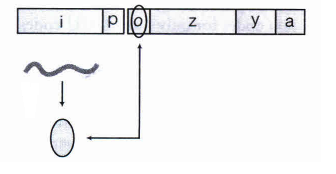
(i) Identify i and p.
(ii) Name the inducer for this operon and explain its function.
4.
How many histones make the core part of a nucleosome.What is the basis of binding DNA molecule to the histones?
5.
(a) What is the contribution of Avery, MacCleod and McCarty?
(b) How did the transformation experiments of Griffith differ from those of Avery and MacCleod?
(c) What was the significance of each?
6.
Why was it believed earlier that proteins could be genetic material?
7.
Compare the primary structure of nucleic acid and protein
8.
Comments on the utility of variability in a number of tendons repeat during DNA fingerprinting.
9.
During DNA replication, why is it that the entire molecule does not open in one go? Explain replication fork. what is the two function that the monomers (dNTPs) play?
10.
Discuss the significance of heavy isotope of nitrogen.in Melson and Stahl's experiment.
1.
Bacteriophage does not repetitive sequences such as (i.e. 5386bp) and have all the coding sequence.Therefore, DNA fingerprint is not done for phages.
2.
(i) Polymorphism is inherited from parents to children.So, it is useful for the identification(forensic application) and paternity testing. It arises due to mutations and also plays an important role in evolution and speciation.These mutations in the evolution in the non-coding sequences have piled up with time and form the basis of DNA polymorphism.IT is basis of genetic of human genome as well as DNA fingerprinting.
(ii) Variable Number of Tandem Repeats(VNTRs) belong to a class of satellite DNA called as minisatellite.VNTR are used as probes in DNA fingerprinting..
3.
(i) i-Regulatory gene, p - Promotor gene.
(ii) Inducer is lactose.
Functions
(a) Enters the cell and binds to the repressor and inactivates it.
(b) As a result, repressor cannot bind to the operator .This allows RNA polymerase to have access to the promotor and transactions proceeds.
4.
The core part of nucleosome comprises of 8 Histone molecules.DNA molecules is negatively charged whereas histone octomer is positively charged.Therefore, negatively charged DNA binds with the positively charged histone octomer
5.
(a) Avery, MacCleod and McCarty gave the proof that "Transforming agent" is DNA
Avery, MacCleod and McCarty experiment:
1) Oswald Avery, colin MacCleod and McCarty in 1933-34 revealed the chemical nature of the transforming substance to be DNA
2) They purified DNA, RNA, Protein from heat-killed S-strain to see which of them could transform R-cells \(\rightarrow \)S-cells.
3) They also observed that protein digesting enzyme (protease) and RNA digesting enzyme (RNAase) have no effect on transformation whereas digestion of DNA with DNAase would not cause transformation
4) This finding established that transforming genetic material is DNA
Result of experiment
| Mixture | Result |
| 1) R-type bacteria + carbohydrates of S-type bacteria 2) R-type + protein of S-type 3) R-type + DNA of S-type 4) R-type + DNA of S-type + Deoxyribonuclease |
R-type R-type S-type R-type |
(b) Griffith's in vitro experiments demonstrated the occurrence of transformation in Pneumococcus. They provide no indication as to the molecular basis of the transformation phenomenon. Avery and MacCleod carried their experiments in vitro employing biochemical analysis to demonstrate that transformation was mediated by DNA
(c) Griffith showed that a transforming substance existed. Avery et.al. defined it as DNA
6.
Living organisms are composed of various biomolecules and there are two main macromolecules, i.e., DNA and proteins which can have structural specificity as diverse as the basic requirement of genetic material
It was believed that proteins could be the ideal candidates for genetic material because:
(1) Proteins are made up of twenty amino acids thus the diversity can be generated on the basis of the number of residues of each amino acid in a given protein and sequence of amino acid would be enormous.
(2) They are macromolecules and universally present.
7.
primary structure of nucleic acid and protein
| Nucleic acid | Protein |
| 1) Polynucleotid | 1)Polpeptide |
| 2) a) Four types of nucleotides in DNA (dAMP, dCMP, dGMP and dTMP) are present b) Four types of nucleotides in RNA (AMP, CMP, GMP, and UMP are present |
2) Twenty amino acids present in innumerable numbers and sequences |
| 3) A polynucleotide strand has a polarity (5' end and 3' end). | 3) Polypeptide would have a free-COOH group at C-Terminal, one \({ NH }_{ 2 }\) group at N-Terminal. |
| 4) Nucleotides are linked with phosphodi-ester bonds | 4) Amino acid are linked with peptide bonds |
8.
Tandemness in repeats provides many copies of the sequence for DNA fingerprinting and variability in nitrogen base sequences presents in them. Being individual-specific, this proves to be useful in the process of DNA fingerprinting.
9.
(i) While replicating, the entire DNA molecule to keep the whole molecule stabilised does not open in one go because it would be highly expense energetically. Actually un unwidinsg creates tension in the molecule as uncoiled parts.
Actually, unwinding creates tension in the molecule as uncoiled parts starts forming super coils due to the interaction of exposed nucleotides.
(ii) Replication fork: Instead helicase enzyme, acts on the double strand at or site (origin of replication and a small stretch is unzipped. Immediately. It is held and stabilised by single strand binding protein.
Slowly with the help of enzymes, exposed strands are copied as a point of unwinding moves and ahead in both direction
It gives an appearence of Y-shaped structure which is called replication fork.
The two functions that the monorner units of NTPs play are:
1. They pair up with exposed nucleotides of the template strand and make phosphodiester linkages and release a pyrophosphate.
2. Hydrolysis of his pyrophosphate by enzyme pyrophosphate release energy that will facilitate making hydrogen bonds between free nucleotides and bases of the template strand
10.
1) By using the heavy isotope of nitrogen.they could find out the semiconservative nature of DNA replication as the densities of DNA having in\( { 15 }_{ N }\) both the strands \( { 15 }_{ N }/{ 14 }_{ N }\) DNA and \( { 14 }_{ N }/{ 14 }_{ N }\) DNA were all different.
2) The hybrid DNA (\( { 15 }_{ N }/{ 14 }_{ N }\) DNA ) had a density intermediate between that of heavy DNA (\({ 15 }_{ N }/{ 15 }_{ N }\) DNA) and that of light/normal DNA (\({ 14 }_{ N }/{ 14 }_{ N }\) DNA)

12th Standard CBSE Syllabus & Materials
12th Standard CBSE
CBSE 12th Computer Science Python Revision Tour I - New Previous year Question Papers Study Material - QB365 Set A
NEW12th Standard CBSE
CBSE 12th Business Studies Planning Important Questions And Answers Study Material - QB365 Set A
NEW12th Standard CBSE
CBSE 12th Business Studies Business Environment Important Questions And Answers Study Material - QB365 Set A
NEW12th Standard CBSE
CBSE 12th Business Studies Principles of Management Important Questions And Answers Study Material - QB365 Set A



NCERT Books

Syllabus

Exam Pattern

Sample Question Papers

Previous year Question Papers

Important Notes

MCQ Practice test

NCERT Exemplers

Case study Questions

Image Based Questions

Passage based Questions

HOT Questions

Value Based Questions

Model Questions Papers
NCERT ( Book Back ) Questions

Assertion and Reason
Important Questions And Answers

CBSE 12th Standard CBSE Subjects
CBSE Standards









