
 100% FREE ACCESS
12th Standard CBSE Syllabus & Materials
12th Standard CBSE
CBSE 12th Economics Government Budget and the Economy Previous year Question Papers Study Material - QB365 Set A
NEW12th Standard CBSE
CBSE 12th Computer Science Interface Python with MySQL - New Previous year Question Papers Study Material - QB365 Set A
NEW12th Standard CBSE
CBSE 12th Computer Science Database Concept - New Previous year Question Papers Study Material - QB365 Set A
NEW12th Standard CBSE
CBSE 12th Computer Science Data Communication - New Previous year Question Papers Study Material - QB365 Set A
NEW12th Standard CBSE
CBSE 12th Computer Science Data Structures - New Previous year Question Papers Study Material - QB365 Set A
NEW12th Standard CBSE
CBSE 12th Computer Science Functions - New Previous year Question Papers Study Material - QB365 Set A

Published on: 24/05/2021
QB365 Provides the updated NCERT Examplar Questions for Class 12 Biology, and also provide the detail solution for each and every ncert examplar questions , QB365 will give all kind of study materials will help to get more marks
Download CBSE Class 12th Standard CBSE Biology question papers, sample papers, important questions, and previous year solved papers in PDF format. Get free study materials, NCERT solutions, and exam preparation resources for Class 12th Standard CBSE Biology
Questions + Answers key
Take MCQ Biology Test1.
Draw a labelled sketch of sparged-stirred tank bioreactor. Write its application.
2.
How bacterial cells are made competent to take up DNA?
3.
Mention three uses of PCR.
4.
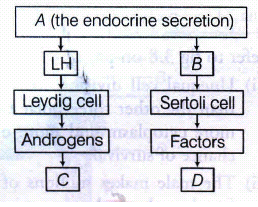
Identify A,B,C and D with reference to gametogenesis in humans in the flow chart given below.
5.
While creating and the presence of variation is directionless, natural selection is directional as it is in the context of adaptation.comment
6.
In which way have microbes played a major role in controlling diseases caused by harmful bacteria?
7.
Differentiate the following and give examples of each.
(i) Innate and acquired immunity.
(ii) Active and passive immunity.
8.
'Prevention is better than cure'. Comment.
9.
What are methanogens? Name the animals in which methanogens occur and the role they play there
10.
In which parts of the body of the hosts do the following events in the life cycle of Plasmodium take place? Name both the body part and the host.
(a) Fertilization (b) Development of gametocytes (c) Release of sporozoites (d) Asexual reproduction.
11.
Explain why ecological succession will be faster in a forest devastated by fire than on a bare rock? Also, compare succession in case of an abandoned land after floods with that on a bare rock?
12.
Identify the phenomenon in the following example-
"Sickle cell anaemia is an autosomal recessive trait.It is caused by the substitution of anino acid glutamic acid by valine at the sixth position of the beta globin chain of haemoglobin.This substitution of amino acid occurs due to phenomenon in which the sixth codon of beta globin gene is transformed from GAG to GUG".
13.
What will you do to get your cow crossed artificially by an exotic bull?
14.
Correct the following statement giving reasons -
"The mature insulin molecule consists of three short polypeptide chains".
15.
List the condition found on the primitive earth.
16.
A _______ is the development of seeds from unfertilised female gamete.
B. Parthenocarpy is the development of______in an unfertilised flower, resulting in a_______
C. Polyembryony is the presence of more than one_______ in the_______
D. There are usually three germ pores in _______and one in _______
E. The anther wall is composed of_______to_______layers.
F. The flowers producing _______ and _______ with bright _______ attract the insects.
G. Plants with reduced power of _______ reproduction, _______ dormant period of seed or _______ viability are propagated through vegetative reproduction.
H. The integuments of ovule surround the_______all around expect at the apex, leaving a narrow passage, called the _______.
I. The wind-pollinated flowers are generally _______sexual.
J. In many dicots, the reserves in the _______ and consumed by the developing embryo.
17.
Why was it believed earlier that proteins could be genetic material?
18.
Compare the primary structure of nucleic acid and protein
19.
How does species diversity differ from ecological diversity?
20.
Explain as to how protection of diversity hot spots alone can reduce up to 30% of the current rate of species extinction.
21.
What does 'red' indicate in the IUCN red list (2004)?
22.
What could have triggered mass extinction of species in the past?
23.
Comment on the statement that "evolution and natural selection are end result of consequences of some other processes but themselves are not processes.
24.
The evolutionary story of moths in England during industrialization reveals, that "evolution is apparently reversible". Clarify this statement.
25.
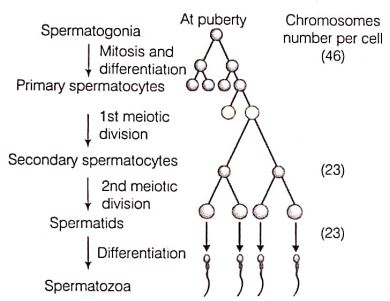
Meiotic division during oogenesis is different from that in spermatogenesis. Explain how and why?
1.
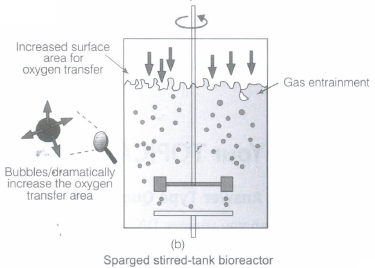
Application These bioreactors are used to produce large quantities of products enzymes, etc., using microbial, plant, animal of human cells.
2.
Since, DNA is a hydrophilic molecule, it cannot pass through the cell membranes. In order to force bacteria to take up the plasmid, the bacterial cells must first be made competent to take up DNA. This is done by treating them with a specific concentration of a divalent cation such as calcium, which increases the efficiency with which DNA enters the bacterium through the pores in its cell wall.
Recombinant DNA can then be forced into such cells by incubating the cells with recombinant DNA on ice, followed by placing them briefly at 42 C (heat shock) , and then putting them back on ice. This enable the bacteria to take up the recombinant DNA.
3.
Three uses of PCR are:
(i) It is used to during rDNA for production of newer and desired DNA
(ii) It is used for DNA sequencing.
(iii) It is used in DNA figerprinting.
4.
A - GnRH
B - FSH
C - Spermatogenesis
D - Spermiogenesis
5.
The creation and the presence of variation is directionless in regards that they occur randomly and spontaneously. The variations which are helpful in the adaption of an organism towards its surrondings would be passed on to next generations.
Natural selection is the most critical evolutionary process,which can be considered directional as it leads to only one path that is selection and prepetuation of better adapted individuals.Natural selection leads to survival of the fittest and disappearance of all those organism which do not fit in the prevailing environmental conditions.
6.
1.Several microbes are used in preparing medicines.
2.The most important medicines for which microbes are used are antibiotics. These are chemical compounds produced by some microbes and are used to kill or to subside the growth of other disease-causing microbes. Streptomycin, tetracycline and penicillin are some of the commonly used antibiotics. These antibiotics have significantly contributed towards the welfare of the human society.
7.
(i) Differences between innate immunity and acquired immunity are:
| Innate Immunity | Acquired Immunity |
| It includes the defence elements with which an individual is born. | It is immunity which is acquired after birth. |
| It consists of various types of barriers that prevent the entry of foreign agents. | It consists of specialised cells (T-cells and B-cells) and antibodies that circulate in the body fluid. |
| It remains throughtout life. | It can be short lived or life long. |
(ii) Differences between active immunity and passive immunity are:
| Active Immunity | Passive Immunity |
| lt is developed by the body due to contact with pathogen or its antigen. | It is developed when ready-made antibodies are injected into the body. |
| It has no side effects. | It may cause a reaction. |
| It is slow but long lasting. | It is fast but lasts only for few days. |
| It takes time to develop its response. | It is used when the immune response has to be faster. |
| e.g vaccination for polio, etc. | e.g. administration of tetanus antitoxins, etc. |
8.
Prevention is always better than cure because some diseases cause extensive damage to the body tissues or organs and have a
(i) negative effect on their capacity to function
(ii) permanent or long term debilitating effect.
(iii) negative mental and psychological effect.
(iv) financial burden.
Hence, it is said that prevention is easier and effective than cure of a disease.
9.
1. Certain bacteria which grow anaerobically on cellulosic material, produce large amounts of methane along with CO2 and H2. These bacteria are called methanogens (one of the common bacterium is Methanobacterium).
2. Methanogens are commonly found in the anaerobic sludge during sewage treatment and are also present in the rumen (a part of stomach) of cattle. In rumen, methanogens help in the breakdown of cellulose and their excreta called gobar, is rich in these bacteria. Therefore, dung can be used to produce biogas commonly called as gobar gas.
10.
(a) Fertilization takes place in the mosquito intestine.
(b) Female Anopheles in the stomach.
(c) Female Anopheles mosquito release sporozoites in human body.
(d) Human body, in liver and blood cells
11.
If succession occurs in an area devoid of life, it is termed as primary succession. On the other hand, if succession occurs in an area where natural or man made causes have resulted in destruction but area still has organic matter, then it is termed as secondary succession.
Primary succession on a bare rock is very slow as establishment of new communities is slow process and formation of soil takes several hundred years.On the other hand, in areas where natural biotic communities have been destroyed,e.g.., because forests after fire or abondoned land after floods, succession is faster.It because such areas still have soil and sediment rich in organic matter.
12.
The phenomenon is point mutation that involves substitution of a single nitrogenous base in DNA.
13.
There are insemination centres throughout the country which collect the semen of superior bulls of exotic or indigenous breeds and store in the frozen form to be used at a later date. We should take our cows to these centres for artificial insemination.
14.
Hormone insulin is synthesized as a proinsulin which consists of three polypeptide chains.It undergoes a process of maturation during which the chain C consisting of 33 amino acids is removed.The mature insulin molecule consists of two short polypeptide chains of about 51 amino acids.The chain A has 21 and the chain B has 30 amino acids which are linked together by disulphide bridges.
15.
The earth originally had a strongly reducing atmosphere. There was no oxygen in molecular form in the primitive atmosphere.
16.
A. Parthengenesis
B. fruit, seedless
C. embryo, seed
D. dicots, monocots
E. 4 to 5
F. nectar fragrance, colours
G. sexual, long, poor
H. nucellus, micropyle
I. uni
J. endosperm.
17.
Living organisms are composed of various biomolecules and there are two main macromolecules, i.e., DNA and proteins which can have structural specificity as diverse as the basic requirement of genetic material
It was believed that proteins could be the ideal candidates for genetic material because:
(1) Proteins are made up of twenty amino acids thus the diversity can be generated on the basis of the number of residues of each amino acid in a given protein and sequence of amino acid would be enormous.
(2) They are macromolecules and universally present.
18.
primary structure of nucleic acid and protein
| Nucleic acid | Protein |
| 1) Polynucleotid | 1)Polpeptide |
| 2) a) Four types of nucleotides in DNA (dAMP, dCMP, dGMP and dTMP) are present b) Four types of nucleotides in RNA (AMP, CMP, GMP, and UMP are present |
2) Twenty amino acids present in innumerable numbers and sequences |
| 3) A polynucleotide strand has a polarity (5' end and 3' end). | 3) Polypeptide would have a free-COOH group at C-Terminal, one \({ NH }_{ 2 }\) group at N-Terminal. |
| 4) Nucleotides are linked with phosphodi-ester bonds | 4) Amino acid are linked with peptide bonds |
19.
Species diversity is the occurrence of variety and abundance of species in community while ecological diversity is the occurrence of different ecosystem and communities in a geographical area.
20.
Hot spots bear major number of endemic species through having the area 2 % only. Thus by protecting hot spots, rate of extinction of species can be reduced up to 30%.
21.
'Red' in IUCN red list (2004) indicates the threatened species i.e. the species under varying degree of extinction risk categories.
22.
Glaciation, melting of snow, eruption of large volcanoes, earthquakes, movement of continents, large meteorites falling on earth, drought, etc. could have triggered mass extinction.
23.
1. We are still not clear whether evolution and natural selection are processes or results of some unknown processes.
2. On one hand, when we describe the world as we see today, we describe evolution a process.
3. On the other hand, when we describe life on earth, we treat evolution as a consequences of the process of natural selection.
24.
With the industrial growth in 1920, the white-winged grey-coloured Biston betularia was rapidly replaced by a dark-coloured melanic Biston carbonaria as the later had more chances of survival and favoured by Natural selection. But after 1956, the coal was rapidly replaced by oil and electricity as energy source in the industries which reduced soot deposition. So the light coloured moth is again replacing the dark-coloured moth by reverse evolution.
25.
Meiotic division during oogenesis is different from that of spermatogenesis in the following ways
|
Meiotic division in spermatogenesis |
Meiotic division in Oogenesis |
|
Many million sperms generated at a time. |
Only one mature ovum is generated at a time, every month. |
|
After two complete meiotic divisions, four equal sized cells are produced. |
Meiosis-l gers arrested at prophase-I and when it is complered at later stage, one big cell with almost all the cytoplasm and three very small-sized cells are produced. |
|
They mature into flagellated and motile cell. |
Mature ovum is non-flagellated and non-motile. |
(i) Unequal cell division makes the ovum much larger than the other three polar bodies. As, ovum has more
cyloplasm and more organelles, it has a better chance of survival.
(ii) The male makes millions of tiny sperms, while the female makes only one egg per month that also arrested for second meiotic division, until just before fertilisation. This is a way of conserving energy.
(iüi) Sperm is smaller and motile as it has to move out of male system to female reproductive system. Larger egg has abundant reserve food, so thal embryo starts developing right after fertilisation.

12th Standard CBSE Syllabus & Materials
12th Standard CBSE
CBSE 12th Computer Science Python Revision Tour I - New Previous year Question Papers Study Material - QB365 Set A
NEW12th Standard CBSE
CBSE 12th Business Studies Planning Important Questions And Answers Study Material - QB365 Set A
NEW12th Standard CBSE
CBSE 12th Business Studies Business Environment Important Questions And Answers Study Material - QB365 Set A
NEW12th Standard CBSE
CBSE 12th Business Studies Principles of Management Important Questions And Answers Study Material - QB365 Set A



NCERT Books

Syllabus

Exam Pattern

Sample Question Papers

Previous year Question Papers

Important Notes

MCQ Practice test

NCERT Exemplers

Case study Questions

Image Based Questions

Passage based Questions

HOT Questions

Value Based Questions

Model Questions Papers
NCERT ( Book Back ) Questions

Assertion and Reason
Important Questions And Answers

CBSE 12th Standard CBSE Subjects
CBSE Standards









