
 100% FREE ACCESS
12th Standard CBSE Syllabus & Materials
12th Standard CBSE
CBSE 12th Economics Government Budget and the Economy Previous year Question Papers Study Material - QB365 Set A
NEW12th Standard CBSE
CBSE 12th Computer Science Interface Python with MySQL - New Previous year Question Papers Study Material - QB365 Set A
NEW12th Standard CBSE
CBSE 12th Computer Science Database Concept - New Previous year Question Papers Study Material - QB365 Set A
NEW12th Standard CBSE
CBSE 12th Computer Science Data Communication - New Previous year Question Papers Study Material - QB365 Set A
NEW12th Standard CBSE
CBSE 12th Computer Science Data Structures - New Previous year Question Papers Study Material - QB365 Set A
NEW12th Standard CBSE
CBSE 12th Computer Science Functions - New Previous year Question Papers Study Material - QB365 Set A

Published on: 21/05/2021
QB365 Provides the updated CASE Study Questions for Class 12 Maths, and also provide the detail solution for each and every case study questions . Case study questions are latest updated question pattern from NCERT, QB365 will helps to get more marks in Exams
Download CBSE Class 12th Standard CBSE Maths question papers, sample papers, important questions, and previous year solved papers in PDF format. Get free study materials, NCERT solutions, and exam preparation resources for Class 12th Standard CBSE Maths
Questions + Answers key
Take MCQ Maths Test
1.
Suman was doing a project on a school survey, on the average number of hours spent on study by students selected at random. At the end of-survey, Suman prepared the following report related to the data. Let X denotes the average number of hours spent on study by students. The probability that X can take the values x, has the following form, where k is some unknown constant.
\(P(X=x)=\left\{\begin{array}{l}
0.2, \text { if } x=0 \\
k x, \text { if } x=1 \text { or } 2 \\
k(6-x), \text { if } x=3 \text { or } 4 \\
0, \text { otherwise }
\end{array}\right.\)
Based on the above information, answer the following questions.
(i) Find the value of k.
| (a) 0.1 | (b) 0.2 | (c) 0.3 | (d) 0.05 |
(ii) What is the probability that the average study time of students is not more than 1 hour?
| (a) 0.4 | (b) 0.3 | (c) 0.5 | (d) 0.1 |
(iii) What is the probability that the average study time of students is at least 3 hours?
| (a) 0.5 | (b) 0.9 | (c) 0.8 | (d) 0.1 |
(iv) What is the probability that the average study time of students is exactly 2 hours?
| (a) 0.4 | (b) 0.5 | (c) 0.7 | (d) 0.2 |
(v) What is the probability that the average study time of students is at least 1 hour?
| (a) 0.2 | (b) 0.4 | (c) 0.8 | (d) 0.6 |
2.
A doctor is to visit a patient. From the past experience, it is known that the probabilities that he will come by cab, metro, bike or by other means of transport are respectively 0.3, 0.2, 0.1 and 0.4. The probabilities that he will be late are 0.25, 0.3, 0.35 and 0.1 if he comes by cab, metro, bike and other means of transport respectively.
Based on the above information, answer the following questions.
(i) When the doctor arrives late, what is the probability that he comes by metro?
| \((a) \ \frac{5}{4}\) | \((b) \ \frac{2}{7}\) | \((c) \ \frac{5}{21}\) | \((d) \ \frac{1}{6}\) |
(ii) When the doctor arrives late, what is the probability that he comes by cab?
| \((a) \ \frac{4}{21}\) | \((b) \ \frac{1}{7}\) | \((c) \ \frac{5}{14}\) | \((d) \ \frac{2}{21}\) |
(iii) When the doctor arrives late, what is the probability that he comes by bike?
| \((a) \ \frac{5}{21}\) | \((b) \ \frac{4}{7}\) | \((c) \ \frac{5}{6}\) | \((d) \ \frac{1}{6}\) |
(iv) When the doctor arrives late, what is the probability that he comes by other means of transport?
| \((a) \ \frac{6}{7}\) | \((b) \ \frac{5}{14}\) | \((c) \ \frac{4}{21}\) | \((d) \ \frac{2}{7}\) |
(v) What is the probability that the doctor is late by any means?
| \((a) \ 1\) | \((b) \ 0\) | \((c) \ \frac{1}{2}\) | \((d) \ \frac{1}{4}\) |
3.
Ajay enrolled himself in an online practice test portal provided by his school for better practice. Out of 5 questions in a set-I, he was able to solve 4 of them and got stuck in the one which is as shown below.
If A and B are independent events, P(A) = 0.6 and P(B) = 0.8, then answer the following questions.
(i) P (A \(\cap\) B) =
| (a) 0.2 | (b) 0.9 | (c) 0.48 | (d) 0.6 |
(ii) P (A \(\cup\) B) =
| (a) 0.92 | (b) 0.08 | (c) 0.48 | (d) 0.64 |
(iii) P (B | A) =
| (a) 0.14 | (b) 0.2 | (c) 0.6 | (d) 0.8 |
(iv) P (A | B) =
| (a) 0.6 | (b) 0.9 | (c) 0.19 | (d) 0.11 |
(v) P ( not A and not B ) =
| (a) 0.01 | (b) 0.48 | (c) 0.08 | (d) 0.91 |
4.
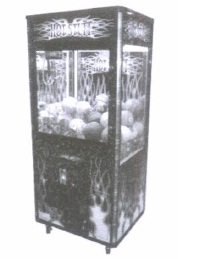
In a play zone, Aastha is playing crane game. It has 12 blue balls, 8 red balls, 10 yellow balls and 5 green balls. If Aastha draws two balls one after the other without replacement, then answer the following questions.
(i) What is the probability that the first ball is blue and the second ball is green?
| \((a) \ \frac{5}{119}\) | \((b) \ \frac{12}{119}\) | \((c) \ \frac{6}{119}\) | \((d) \ \frac{5}{119}\) |
(ii) What is the probability that the first ball is yellow and the second ball is red?
| \((a) \ \frac{6}{119}\) | \((b) \ \frac{8}{119}\) | \((c) \ \frac{24}{119}\) | (d) None of these |
(iii) What is the probability that both the balls are red?
| \((a) \ \frac{4}{85}\) | \((b) \ \frac{24}{595}\) | \((c) \ \frac{12}{119}\) | \((c) \ \frac{64}{119}\) |
(iv) What is the probability that the first ball is green and the second ball is not yellow?
| \((a) \ \frac{10}{119}\) | \((b) \ \frac{6}{85}\) | \((c) \ \frac{12}{119}\) | (d) None of these |
(v) What is the probability that both the balls are not blue?
| \((a) \ \frac{6}{595}\) | \((b) \ \frac{12}{85}\) | \((c) \ \frac{15}{17}\) | \((d) \ \frac{253}{595}\) |
5.
Three friends A, B and C are playing a dice game. The numbers rolled up by them in their first three chances were noted and given by A = {1, 5},B = {2, 4, 5} and C = {1, 2, 5} as A reaches the cell 'SKIP YOUR NEXT TURN' in second throw.
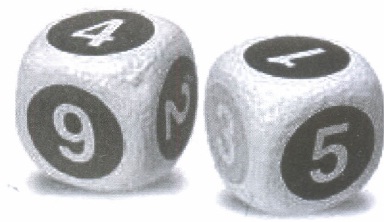
Based on the above information, answer the following questions.
(i) P (A I B) =
| \((a) \ \frac{1}{6}\) | \((b) \ \frac{1}{3}\) | \((c) \ \frac{1}{2}\) | \((d) \ \frac{2}{3}\) |
(ii) P (B I C) =
| \((a) \ \frac{2}{3}\) | \((b) \ \frac{1}{12}\) | \((c) \ \frac{1}{9}\) | \((d) \ 0\) |
(iii) P (A ⋂ B I C) =
| \((a) \ \frac{1}{6}\) | \((b) \ \frac{1}{2}\) | \((c) \ \frac{1}{12}\) | \((d) \ \frac{1}{3}\) |
(iv) P (A I C) =
| \((a) \ \frac{1}{4}\) | \((b) \ 1\) | \((c) \ \frac{2}{3}\) | (d) None of these |
(v) P (A ∪ B I C) =
| \((a) \ 0\) | \((b) \ \frac{1}{2}\) | \((c) \ \frac{2}{3}\) | \((d) \ 1\) |
1.
(i) (a): We know that \(\Sigma P_{i}=1\)
Then 0.2 + k + 2k + 3k + 2k + 0 = 1
\(\Rightarrow\) 8k = 1 - 0.2 = 0.8 \(\Rightarrow\) k = 0.1
(ii) (b): P(Average study time is not more than 1 hour)
= P(X ≤ 1) = P(X = 0) + P(X = 1) = 0.2 + 0.1 = 0.3
(iii) (a): P(Average study time is at least 3 hours)
P(X ≥ 3) = P(X = 3) + P(X = 4) = 0.3 + 0.2 = 0.5
(iv) (d): P(Average study time is exactly 2 hours)
= P(X = 2) = 0.2
(v) (c): P(Average study time is at least 1 hour)
= 1 - P(X = 0) = 1 - 0.2 = 0.8
2.
Let E be the event that the doctor visit the patient late and let A1, A2, A3, A4 be the events that the doctor comes by cab, metro, bike and other means of transport respectively.
\(P\left(A_{1}\right)=0.3, P\left(A_{2}\right)=0.2, P\left(A_{3}\right)=0.1, P\left(A_{4}\right)=0.4\)
P(E I A1) = Probability that the doctor arriving late when he comes by cab = 0.25
Similarly, P ( E I A2) = 0.3, P (E I A3) = 0.35 and P ( E I A3) = 0.1
(i) (b): P(A2 | E) = Probability that the doctor arriving late and he comes by metro
\(=\frac{P\left(A_{2}\right) P\left(E \mid A_{2}\right)}{\sum P\left(A_{i}\right) P\left(E \mid A_{i}\right)}\)
\(=\frac{(0.2)(0.3)}{(0.3)(0.25)+(0.2)(0.3)+(0.1)(0.35)+(0.4)(0.1)}\)
\(=\frac{0.06}{0.21}=\frac{2}{7}\)
(ii) (c): P(A1 | E) = Probability that the doctor arriving late and he comes by cab
\(=\frac{P\left(A_{1}\right) P\left(E \mid A_{1}\right)}{\Sigma P\left(A_{i}\right) P\left(E \mid A_{i}\right)}\)
\(=\frac{(0.3)(0,25)}{(0.3)(0.25)+(0.2)(0.3)+(0.1)(0.35)+(0.4)(0.1)}\)
\(=\frac{0.075}{0.21}=\frac{5}{14}\)
(iii) (d): P(A3| E) = Probability that the doctor arriving late and he comes by bike
\(=\frac{P\left(A_{3}\right) P\left(E \mid A_{3}\right)}{\sum P\left(A_{i}\right) P\left(E \mid A_{i}\right)}\)
\(=\frac{(0.1)(0.35)}{(0.3)(0.25)+(0.2)(0.3)+(0.1)(0.35)+(0.4)(0.1)}\)
\(=\frac{0.035}{0.21}=\frac{1}{6}\)
(iv) (c): P(A4 | E) = Probability that the doctor arriving late and he comes by other means of transport
\(=\frac{P\left(A_{4}\right) P\left(E \mid A_{4}\right)}{\Sigma P\left(A_{i}\right) P\left(E \mid A_{i}\right)}\)
\(=\frac{(0.4)(0.1)}{(0.3)(0.25)+(0.2)(0.3)+(0.1)(0.35)+(0.4)(0.1)}\)
\(=\frac{0.04}{0.21}=\frac{4}{21}\)
(v) (a): Probability that the doctor is late by any means
\(=\frac{2}{7}+\frac{5}{14}+\frac{1}{6}+\frac{4}{21}=1\)
3.
Here, P(A) = 0.6 and P(B) = 0.8
\(\text { (i) } \ (c): P(A \cap B)=P(A) \cdot P(B)=(0.6)(0.8)=0.48\)
\(\text { (ii) }(\text { a) }: P(A \cup B)=P(A)+P(B)-P(A \cap B)\)
= 0.6 + 0.8 - 0.48 = 0.92
(iii) (d): P(B I A) = P(B) (\(\because\)A and B are independent)
= 0.8
(iv) (a): p (A I B) = p(A) (\(\because\)A and B are independent)
= 0.6
(v) (c) : P(not A and not B) = \(P\left(A^{\prime} \cap B^{\prime}\right)=P(A \cup B)^{\prime}\)
\(=1-P(A \cup B)=1-0.92=0.08\)
4.
Let B, R, Y and G denote the events that ball drawn is blue, red, yellow and green respectively.
\(\therefore P(B)=\frac{12}{35}, P(R)=\frac{8}{35}, P(Y)=\frac{10}{35} \text { and } P(G)=\frac{5}{35}\)
\((i) \ (c): P(G \cap B)=P(B) \cdot P(G \mid B)=\frac{12}{35} \cdot \frac{5}{34}=\frac{6}{119}\)
\((ii) \ (\mathbf{b}): P(R \cap Y)=P(Y) \cdot P(R \mid Y)=\frac{10}{35} \cdot \frac{8}{34}=\frac{8}{119}\)
(iii) (a): Let E = event of drawing a first red ball and
F = event of drawing a second red ball
Here, \(P(E)=\frac{8}{35} \text { and } P(E)=\frac{7}{34}\)
\(\therefore \P(F \cap E)=P(E) \cdot P(F \mid E)=\frac{8}{35} \cdot \frac{7}{34}=\frac{4}{85}\)
\(\text {(iv) }(c): P\left(Y^{\prime} \cap G\right)=P(G) \cdot\left(Y^{\prime} \mid G\right)=\frac{5}{35} \cdot \frac{24}{34}=\frac{12}{119}\)
(v) (d): Let E = event of drawing a first non-blue ball and F = event of drawing a second non-blue ball
Here, \(P(E)=\frac{23}{35} \text { and } P(F)=\frac{22}{34}\)
\(\therefore \ P(F \cap E)=P(E) \cdot P(F \mid E)=\frac{23}{35} \cdot \frac{22}{34}=\frac{253}{595}\)
5.
Here, sample space = {1, 2, 3,4,5, 6}, A ⋂ B = {5}, B ⋂ C = {2, 5}, A ⋂ C = {1, 5}, A ⋂ B ⋂ C = {5} and {A U B} ⋂ C = {1, 2, 5}
Also, \(P(A)=\frac{2}{6}, P(B)=\frac{3}{6}, P(C)=\frac{3}{6}\)
\(P(A \cap B)=\frac{1}{6}, P(B \cap C)=\frac{2}{6}, P(A \cap C)=\frac{2}{6} \)
\(P(A \cap B \cap C)=\frac{1}{6} \text { and } P((A \cup B) \cap C)=\frac{3}{6}\)
\((i) \ (\mathbf{b}): P(A \mid B)=\frac{P(A \cap B)}{P(B)}=\frac{1 / 6}{3 / 6}=\frac{1}{3}\)
\((ii) \ (a): P(B \mid C)=\frac{P(B \cap C)}{P(C)}=\frac{2 / 6}{3 / 6}=\frac{2}{3}\)
\((iii) \ (\mathrm{d}): P(A \cap B \mid C)=\frac{P(A \cap B \cap C)}{P(C)}=\frac{1 / 6}{3 / 6}=\frac{1}{3}\)
\((iv) \ (c): P(A \mid C)=\frac{P(A \cap C)}{P(C)}=\frac{2 / 6}{3 / 6}=\frac{2}{3}\)
\( (v) \ (\mathbf{d}): P(A \cup B \mid C)=\frac{P((A \cup B) \cap C)}{P(C)}=\frac{3 / 6}{3 / 6}=1\)

12th Standard CBSE Syllabus & Materials
12th Standard CBSE
CBSE 12th Computer Science Python Revision Tour I - New Previous year Question Papers Study Material - QB365 Set A
NEW12th Standard CBSE
CBSE 12th Business Studies Planning Important Questions And Answers Study Material - QB365 Set A
NEW12th Standard CBSE
CBSE 12th Business Studies Business Environment Important Questions And Answers Study Material - QB365 Set A
NEW12th Standard CBSE
CBSE 12th Business Studies Principles of Management Important Questions And Answers Study Material - QB365 Set A



NCERT Books

Syllabus

Exam Pattern

Sample Question Papers

Previous year Question Papers

Important Notes

MCQ Practice test

NCERT Exemplers

Case study Questions

Image Based Questions

Passage based Questions

HOT Questions

Value Based Questions

Model Questions Papers
NCERT ( Book Back ) Questions

Assertion and Reason
Important Questions And Answers

CBSE 12th Standard CBSE Subjects
CBSE Standards








