
 100% FREE ACCESS
12th Standard CBSE Syllabus & Materials
12th Standard CBSE
CBSE 12th Economics Government Budget and the Economy Previous year Question Papers Study Material - QB365 Set A
NEW12th Standard CBSE
CBSE 12th Computer Science Interface Python with MySQL - New Previous year Question Papers Study Material - QB365 Set A
NEW12th Standard CBSE
CBSE 12th Computer Science Database Concept - New Previous year Question Papers Study Material - QB365 Set A
NEW12th Standard CBSE
CBSE 12th Computer Science Data Communication - New Previous year Question Papers Study Material - QB365 Set A
NEW12th Standard CBSE
CBSE 12th Computer Science Data Structures - New Previous year Question Papers Study Material - QB365 Set A
NEW12th Standard CBSE
CBSE 12th Computer Science Functions - New Previous year Question Papers Study Material - QB365 Set A

Published on: 01/03/2019
Reproduction in Organisms HOTs Questions
Download CBSE Class 12th Standard CBSE Biology question papers, sample papers, important questions, and previous year solved papers in PDF format. Get free study materials, NCERT solutions, and exam preparation resources for Class 12th Standard CBSE Biology
Questions + Answers key
Take MCQ Biology Test
1.
Which part would be most suitable for raising virus-free plants for micropropagation?
Bark
Vascular tissue
Meristem
Node
2.
Vegetative propagation in Pistia occurs by
Stolon
Offset
unner
Sucker
3.
Which of the following statements support the view that elaborate sexual reproductive process appeared much later in the organic evolution.
(i) Lower groups of organisms have simpler body design.
(ii) Asexual reproduction is common in lower groups.
(iii) Asexual reproduction is common in higher groups of organisms
(iv) The high incidence of sexual reproduction in angiosperms and vertebrates
(i) and (ii)
(i) and (iii)
(ii) and (iv)
(ii) and (iii)
4.
vegitative propagation in mint occurs by
Offset
Rhizome
Sucker
Runner
5.
Which of the following animal is having longitudinal binary fission?
Euglena
Plasmodium
Planaria
Paramecium
Hydra
6.
Which of the following statements is true of ginger?
Germinating bud appears from the eye of the stem tuber.
Germinating bud appears from the node of the rhizome
Germinating bud appears from the notch of the leaf margin.
7.
Which of the following statements is true of yeast?
The cell divides by binary fission. One of them develops into a bud.
The cell divides unequally. The smaller cell develops into a bud.
The cell produces conidia, which develop into a bud.
8.
Name the units of vegetative propagation in grasses and water hyacinth.
9.
Give a reason for the following:
i)The animals exhibiting external fertilization discharge large number of gametes.
ii)Marchantia is a dioecious plant.
10.
Although potato tuber is an underground part, it is considered as steam, why?
11.
Which of the following statement is true for Hydra?
(i) It produces asexual gemmules.
(ii) It produces unicellular bud.
(iii) It produces multicellular bud.
12.
Mention a characteristic feature and a function of zoospores in some algae.
13.
In the following figure of a fruit, label the part which is protective in function and that is responsible for producing new plants.

14.
The turkey usually produces females for several generations. How is this possible?
15.
(a) State the difference between meiocyte and gamete with respect to chromosome number.
(b) Why is a whiptail lizard referred to as parthenogenetic?
16.
In the whiptail lizards, only females are born generation after generation. There are no males. How is this possible?
17.
Offspring derived by asexual reproduction are called clones. Justify giving two reasons.
18.
How are Cucurbita plants different from papaya plants with reference to the flowers they bear?
19.
Why is it that there is no natural death in single-celled organisms like Amoeba and bacteria?
20.
List three strategies that a bisexual chasmogamous flower can evolve to prevent self pollination (autogamy).
21.
Reptiles and frogs are oviparous animals; yet they differ in certain aspects of reproduction. Bring out the differences and mention which of the two animals has more advantage in survival.
22.
How does sexual reproduction enable organisms like algae and fungi to survive during unfavourable conditions?
23.
Name the units of vegetative propagation in water hyacinth. Explain giving reasons why it has become the most invasive aquatic weed.
24.
Name any two organisms and the phenomenon involved where the female gamete undergoes development to form new organisms without fertilisation.
25.
Is the presence of a large number of chromosomes in an organism, a hindrance to sexual reproduction? Explain.
26.
Observe the diagram given below and answer the question that follow.
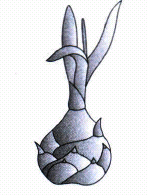
(i) What does the given diagram show?
(ii) Name any two plants (other than the one shown in fig.) Which reproduce by the same method.
(iii) What are these plant parts referred to?
27.
It is generally observed that the number of male gametes produced is several thousand times the number of female gametes. What is the reason behind if?
28.
A gardener grafted a scion of "Dashahari" mango twig to the stock of Zea mays. He took all precautions during the grafting process but failed to get positive results as the grafting was not successful. Give the possible reason.
29.
Although potato tuber is an underground plant part, it is considered as a stem. Give two reasons.
30.
Differentiate between oviparous and viviparous animals with an example of each.
31.
How does yeast reproduce asexually? Show it diagrammatically.
32.
Do all the gametes formed from a parent organism have the same genetic composition (identical DNA copies of the parental genome)? Analyze the situation with the background of gametogenesis and provide or give a suitable explanation.
33.
Difference between:
(a) Oestrous cycle and menstrual cycle
(b) Ovipary and vivipary. City an example of each type .
34.
Jagan has two mango trees in the backyard of his house, which yielded fruits for the first time during this summer. The fruits were small, fibrous and not so sweet. In the next house, where his friend Ajay livers, there is a mango tree, which yields fruits that are fleshy/juicy, very sweet and bigger in size. Ajay, a student of B.sc. (Botany) comes out with an idea and takes some branches from the jagan's garden to his garden and explains the procedure.
(a) What method do you think Ajay has suggested for getting good quality fruits, on the trees of Jagan's house in a short period of time, i.e. during the next season?
(b) Describe how it is carried out to help japan.
(c) What are its advantages over growing a mango tree with the seeds obtained from Ajay's garden?
(d) Mention the values expressed by Ajay in this case.
35.
Which of the followings are monoecioues and diocious organisms?
(a) Earthworm ____________
(b) chara ____________
(c) Marchantia __________
(d) Cockroach _____________
1.
(c)
Meristem
2.
(a)
Stolon
3.
(c)
(ii) and (iv)
4.
(c)
Sucker
5.
(a)
Euglena
6.
(b)
Germinating bud appears from the node of the rhizome
7.
(b)
The cell divides unequally. The smaller cell develops into a bud.
8.
()
Grasses: Runner.
Water hyacinth: Offset.
9.
()
i) The organism exhibiting external fertilization discharge a large number of gametes into the water to increase the chances of fertilization.
ii)In Marchantia, male and female reproductive organs are present in separate individuals.Such type of plants is called dioecious plants.
10.
()
Potato tuber is considered as a stem because of the following reasons:
(i) The tuber has nodes and internodes which are parts of a stem.
(ii) Leafy shoots appear from the nodes.
11.
()
Statement(iii) is true. Multicellular organism like Hydra reproduce asexually by producing multicellular bud that further develops into a new organism.
12.
()
Zoospores in algae are motile cells helping in asexual reproduction.
13.
()
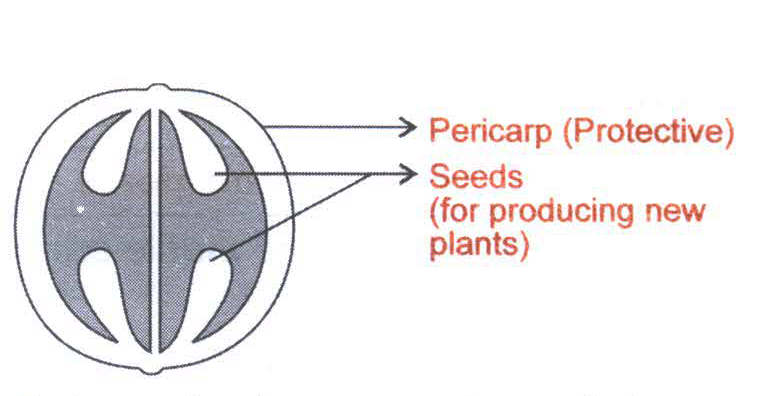
14.
()
The whiptail lizard/turkey shows parthe-nogenesis, the phenomenon which the female gamete undergoes development without fertilisation into adult.
15.
(a) A meiocyte is diploid cell, while a gamete is haploid.
(b) A whiptail lizard develops from the female gamete, without fertilisation; hence it is parthenognetic.
16.
()
The whiptail lizard/turkey shows parthe-nogenesis, the phenomenon which the female gamete undergoes development without fertilisation into adult.
17.
()
They are genetically and morphologically identical among themselves and identical to the parent.
18.
()
Papaya plants are dioecious as an individual plant bears exclusively either staminate flowers or pistillate flowers.
19.
In single-celled organisms like Amoeba and bacteria the parental body itself divides into two parts and becomes daughter cells. Each of these divided cells rapidly grows into adult organisms. Therefore, the parent cannot be said to have died, it continues living as daughter cells.
20.
(i) Protandry: (maturation of anthers before stigma) or protogyny (maturation of stigma before anther) i.e. Dichogamy may take place.
(ii) To bear styles of different lengths.
(iii) Heterostyly: To bear lever mechanism e.g. Salvia.
21.
| Reptiles | Frogs |
|
In reptiles, fertilisation is internal |
In frogs, fertilisation is external. |
| They lay fertillised eggs in safe places. | Both male and female gametes are laid in water |
| Eggs have a calcareous shell for protection. | Eggs have no calcareous shell, but have mucilaginous covering. |
22.
Sexual reproduction in organisms like algae and fungi occurs either towards the end of favorable season or at the onset of unfavourable seasons; the zygote formed as a result of sexual reproduction develops a thick wall that helps to survive under unfavourable conditions. Also, sexual reproduction brings in genetic variation, which helps in the better survival of some individuals under an unfavorable change in the environment
23.
Offset. The plants propagate vegetatively at such a phenomenal rate that it is very difficult to get rid of them; it drains oxygen from the water and causes mortality of aquatic organisms.
24.
(i) Rotifers/honeybees/some lizards/turkey.
(ii) Parthenogenesis.
25.
No, the presence of a large number of chromosomes in an organism is not a hindrance to sexual reproduction, e.g. Ophioglossum (a fern) has chromosome number 1260, still, it can reproduce sexually, In higher organisms, the chromosomes are present in a compartment called nucleus, within the cell.Whether the number is small or large, the chromosomes are duplicated and then segregated inside this compartment, during cell division.
26.
(i) The given diagram shows a bulbil of Agave.
27.
During the process of fertilization, a large number of male gametes fail to reach gametes. Therefore, male gametes are produced in large numbers to compensate this loss.
28.
Gardener did a mistake by selecting a monocotyledonous stock for grafting a dicotyledonous scion. Usually grafting is between two dicotyledonous plants where cambium develops at the place of grafting.
29.
(i) The tuber has nodes and internodes.
(ii) Leafy shoots appear from the nodes.
30.
| Oviparous animals | Viviparous animals |
| These are the animals which lay fertilised or unfertilised eggs. | The are the animals which give birth to young ones. |
| Chances of survival are less as off-spring of oviparous animals are at a great risk as they are threatened by their predators and unfavourable environmental conditions, e.g. frogs, birds. | Chances of survival are hih as offspring of viviparous animals are protected by the parent organism from predators/enemies and unfavourable climate, eg. Human beings/mammals. |
31.
Yeast reproduces asexually by budding under favourable conditions.
32.
No, all the gametes formed from a parent organism do not have the same genetic composition.
It can be better understood with the help of the explanation given below: sexual reproduction in organisms involves the fusion of gametes from two different individuals.these gametes are formed by the process of gametogenesis.In the heterogametic species, gametes are of two types, i.e. male and female. Gametes are always haploid though the parent body from which they arise may be either haploid or diploid.
i)A haploid parent like Monera, fungi, algae and bryophytes produce gametes by mitotic division.The number of chromosomes,i.e. the genetic composition remain same after such type of division.
ii)The diploid parent like pteridophytes, gymnosperms, angiosperms and most of the animals including human beings produces gametes by meiosis.In such organisms (Diploid), specialized cells undergo meiosis.At the end of meiosis, only one set of chromosomes gets incorporated into each gamete.It means the gametes formed to contain a haploid number of chromosomes in contrast to the number of chromosomes in mother cells.
33.
(a) Differences between oestrous cycle and menstrual cycle
| Oestrous Cycle | Menstrual Cycle |
| 1. It refers to the cyclic changes in the female reproductive system of non-primates. | 1. It refers to the cyclic changes in the female reproductive system of primate females. |
| 2. There is no menstruation at the end of oestrous cycle. | 2. Ther is menstruation at the end of menstrual cycle. |
| 3.At the time of ovulation animals show 'estrus' or 'heat' and copulation occurs only at that period. | 3. There is no 'heat period during ovulation and copulation occurs during any part of the cycle. |
(b) Differences between oviparous and viviparous animals.
| Oviparous animals | Viviparous animals |
| 1. These are the animals which lay fertilized or Unfertilised eggs in a safe place in the environment. | 1. These are the animals which give birth to young ones. |
| 2. Offspring of oviparous animals are at a great risk as they are threatened by their predators and unfavorable environmental conditions. | 2. Offspring of viviparous animals are protected by the parent organism from predators/enemies and unfavorable climates |
34.
(a) Grafting a branch from the tree of Ajay's house on a tree of Jagan's garden can be done.
(b) The part of the graft that forms the upper part is called scion and the part of the graft that becomes the supporting portion (the root and base), is called stock.
(i) The scion is selected from a superior quality plant (juicy, larger mango fruits) while the stock belongs to the plant to be improved.
(ii) The scion and stock should be of same diameter and slant cuts are made on both the branches.
(iii) The scion is kept on the stock, covered with grafting clay and polythene; it is tied well and arrangement of water supply/ moisturising is made.
(iv) After a few weeks, you will see buds and leaves appearing on scion.
(c)The mango tree will start producing flowers and fruits very early, may be in the next season itself. - Many branches can be grafted on the tree with poor quality mangoes.
(i) When grown from a seed it takes many years for the tree to produce fruits. - Sometimes the plant produced from the seed may not be of the same quality, as sexual reproduction results in variation.
(d) Values for friendship and generosity.
35.
()
(a) Earthworm Monoecious
(b) Chara Monoecious
(c) Marchantia Dioecious
(d) Cockroach Dioecious

12th Standard CBSE Syllabus & Materials
12th Standard CBSE
CBSE 12th Computer Science Python Revision Tour I - New Previous year Question Papers Study Material - QB365 Set A
NEW12th Standard CBSE
CBSE 12th Business Studies Planning Important Questions And Answers Study Material - QB365 Set A
NEW12th Standard CBSE
CBSE 12th Business Studies Business Environment Important Questions And Answers Study Material - QB365 Set A
NEW12th Standard CBSE
CBSE 12th Business Studies Principles of Management Important Questions And Answers Study Material - QB365 Set A



CBSE 12th Standard CBSE Subjects
CBSE Standards










