
 100% FREE ACCESS
11th Standard Syllabus & Materials
11th Standard
TN 11th Tamil இயற்கை வேளாண்மை,சுற்றுச்சூழல் -செய்யுள் - மனோன்மணீயம் Important Questions And Answers Study Material - QB365 Set A
NEW11th Standard
TN 11th Tamil என்னுயிர் என்பேன் -துணைப்பாடம் - இசைத்தமிழர் இருவர் Important Questions And Answers Study Material - QB365 Set A
NEW11th Standard
TN 11th Tamil மொழி கலை -செய்யுள் - ஒவ்வொரு புல்லையும் Important Questions And Answers Study Material - QB365 Set A
NEW11th Standard
TN 11th Tamil பீடு பெற நில் - இலக்கணம் - பகுபத உறுப்புகள் Important Questions And Answers Study Material - QB365 Set A
NEW11th Standard
TN 11th Tamil பீடு பெற நில் - துணைப்பாடம் - வாடிவாசல் Important Questions And Answers Study Material - QB365 Set A
NEW11th Standard
TN 11th Tamil பீடு பெற நில் - செய்யுள் - குறுந்தொகை Important Questions And Answers Study Material - QB365 Set A

Published on: 05/12/2018
In this question paper, important 5 marks questions are taken from book back, creative and previous year question papers. This is the most important model question paper for 11th Biology. The question paper is created based on the current Matriculation syllabus. It is a very useful question paper for Matriculation and state board students for their exam preparation.
Students can make use of this question paper for practice. By practicing repeatedly you will get the idea of answering the questions and this improves the speed of answering. this will save the time and you can complete all the questions without any last our tension. Get more model question papers and practice for the board examination.
The most important questions from all the chapters for practicing to improve the students' scores.
Everyone has the same aim that is to reach the top rank list. We are paving the way for you to reach your goal. practice with important question papers and get set ready to crack your exams with confidence.
Download Tamil Nadu 11th Standard Biology question papers, model tests, one-mark questions, important questions, and public exam papers in PDF format. Free study materials and answer keys for TN State Board students.
Questions + Answers key
Take MCQ Biology Test1.
An artificial cell made of selectively permeable membrane immersed in a beaker (in the figure). Read the values and answer the following questions?
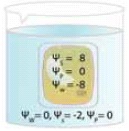
a. Draw an arrow to indicate the direction of water movement
b. Is the solution outside the cell isotonic, hypotonic or hypertonic?
c. Is the cell isotonic, hypotonic or hypertonic?
d. Will the cell become more flaccid, more turgid or stay in original size?
e. With reference to artificial cell state, the process is endosmosis or exosmosis? Give reasons.
2.
A transverse section of the trunk of a tree shows concentric rings which are known as growth rings. How are these rings formed? What are the significance of these rings?
3.
Distinguish the anatomy of dicot root from monocot root.
4.
Briefly explain the structure of thyroid gland.
5.
Describe the structures of olfactory receptors.
6.
What are the different types of rib bones that form the rib cage?
7.
Discuss the various techniques adopted in cattle breeding.
8.
Identify the following structures and explain their significance in renal physiology?
(a) Juxtaglomerular apparatus
(b) Podocytes
(c) Sphincters in the bladder
9.
Select the correct biological term.
Cardiac muscle, atria, tricuspid systole, auricles, arteries, diastole, ventricles, bicuspid valve, pulmonary artery, cardiac cycle, semilunar valve, veins, pulmonary vein, capillaries, vena cava, aorta.
(a) The main artery of the blood
(b) Valves between the left atrium and ventricle
(c) Technical name for relaxation of the heart.
(d) Another name for atria.
(e) The main vein.
(f) Vessels which carry blood away from the heart
(g) Two names for the upper chambers of the heart
(h) Thick walled chambers of the heart.
(i) Carries blood from the heart to the lungs
(j) Takes about 0.8 sec to complete.
(k) Valves situated at the point where blood flows out of the heart.
(l) Vessels which carry blood towards the heart
(m) Carries blood from the lungs to the heart.
(n) The two lower chambers of the heart.
(o) Prevent blood from re-entering the ventricles after entering the aorta.
(p) Technical name for one heartbeat.
(q) Valves between right atrium and ventricles.
(r) Technical name for contraction of the heart.
(s) Very narrow blood vessels.
10.
Write the similarities and difference between
a. Radicle buds and foliar buds
b. Phylloclade and cladode
11.
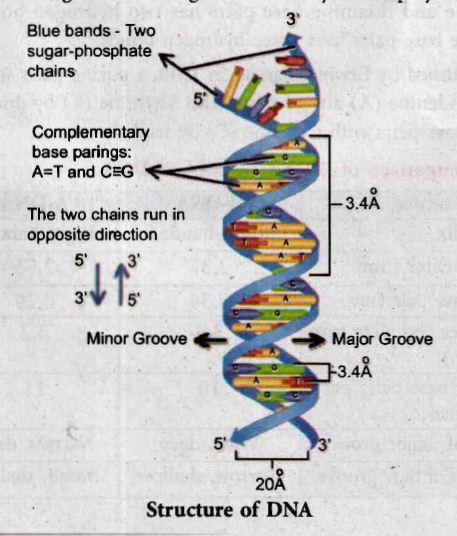
Write the characteristic features of DNA.
12.
Give a general account on lichens.
13.
Draw the ultrastructure of plant cell.
14.
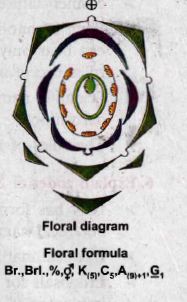
Give the floral characters of Clitoria ternatea.
15.
Write about Pachytene and Diplotene of Prophase I.
16.
Write the physiological effects of Cytokinins.
17.
Explain the conditions which creates problems in oxygen transport.
18.
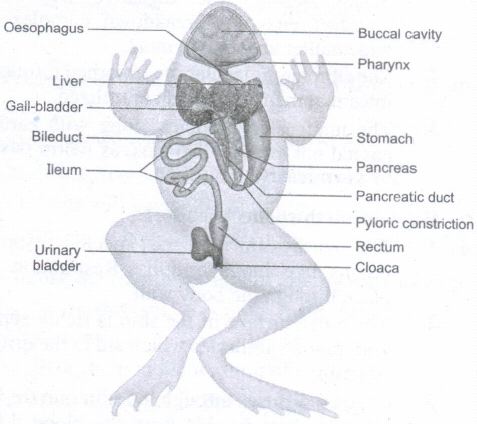
Draw a neat labelled diagram of the digestive system of frog.
19.
Could the number of eggs or young ones produced by an oviparous and viviparous female be equal? Why?
20.
Can we use recent molecular tools to identify and classify organisms?
1.
(a)
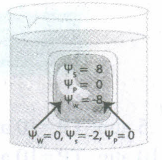
(b) Hypotonic
(c) Hypertonic
(d) More turgid
(e) Endosmosis, Because the cell is placed in pure water \(\left(\Psi_{\mathrm{W}}=0\right)\) or hypotonic solution. Hence the water enters into the artificial cell kept inside the beaker containing water.
2.
Annual Rings
(i) The activity of Vascular cambium is under the control of many physiological and environmental factors.
(ii) In temperate regions, the climatic conditions are not uniform throughout the year.
(iii) In the spring season, cambium is very active and produces a large number of xylary elements having Vessels/tracheids with wide lumen.
(iv) The wood formed during this season is called spring wood or early wood.
(v) The tracheary elements are fairly thin walled.
(vi) In winter, the cambium is less active and forms fewer xylary elements that have narrow vessels tracheids and this wood is called autumn wood or late wood.
(vii) The tracheary elements are with narrow lumen, very thick walled.
(viii) Spring wood is lighter in colour with lower density.
(ix) Autumn wood is darker and has higher density.
(x) Sometimes Annual rings are called growth rings but all growth rings are not annual rings.
(xi) In some trees more than one growth ring is formed within a year due to climatic change.
(xii) Additional growth rings are developed within a year due to adverse natural calamities like drought, frost, defoliation, flood, mechanical injury and biotic factors during the middle of a growing season, which results in the formation of more than one annual ring. Such rings are called pseudo or false-annual rings.
(xiii) Each annual ring corresponds to one year's growth and on the basis of these rings, the age of a particular plant can easily be calculated.
(xiv) The determination of the age of a tree by counting the annual rings is called dendrochronology.
3.
| S.No. | Characters | Dicot root | Monocot root |
|---|---|---|---|
| 1. | Pericycle | Gives rise to lateral roots, phellogen and a part of vascular cambium. | Gives rise to lateral roots only. |
| 2. | Vascular tissue | Usually limited number of xylem and phloem strips. | Usually more number of xylem and phloem strips. |
| 3. | Conjunctive tissue | Parenchymatous; Its cells are differentiated into vascular cambium. | Mostly sclerenchymatous but sometimes parenchymatous. It is never differentiated into vascular cambium. |
| 4. | Cambium | It appears as a secondary meristem at the time of secondary growth. | It is altogether absent. |
| 5. | Xylem | Usually tetrarch | Usually polyarch |
4.
Structure of thyroid gland:
Thyroid gland is the largest endocrine gland in the body.
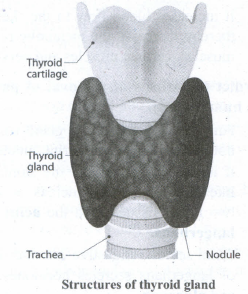
1. It is a butterfly shaped, bilobed gland located below the larynx on either side of upper trachea.
2. The two lateral lobes are connected by a median tissue mass called isthmus.
3. Each lobe is made up of many lobules. The lobules consist of follicles called acini.
4. Each acinus is lined with glandular, cuboidal or squamous epithelial cells. The lumen of acinus is filled with colloid, a thick glycoprotein mixture consisting of thyroglobulin molecules.
5. It secretes two hormones namely tri-iodothyronine [T3] and thyroxine or tetra-iodothyronine [T4].
6. The parafollicular cells or 'C' cells of thyroid gland secrete a hormone called thyrocalcitonin.
7. Iodine is essential for the normal synthesis of thyroid hormone.
8. Thyroid hormones shows a negative feedback effect on the hypothalamus and pituitary.
5.
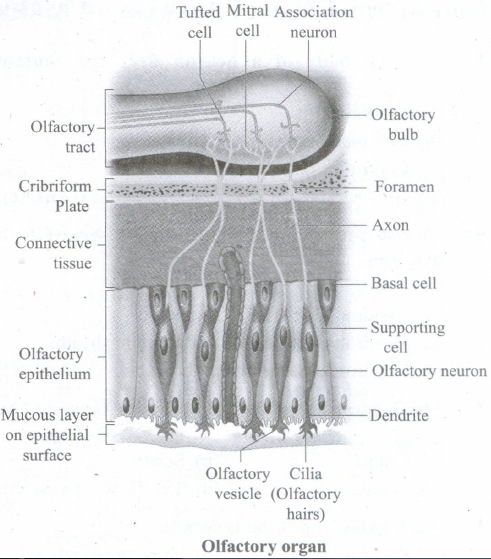
(i) The structure of chemoreceptors
(ii) The receptors for taste and smell are the chemoreceptors
(iii) The smell receptors are excited by airborne chemicals that dissolve in fluids.
(iv) The yellow coloured patches of olfactory epithelium form the olfactory organs that are located on the roof of the nasal cavity.
6.
The Rib cage:
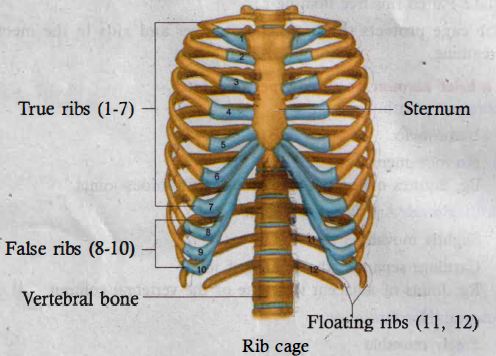
(i) There are 12 pairs of ribs.
(ii) Each rib is a thin flat bone connected dorsally to the vertebral column and ventrally to the sternum.
(iii) It has two articulation surfaces on its dorsal end hence called bicephalic.
(iv) The first seven pairs of ribs are called 'true ribs' or vertebro-sternal ribs.
(v) Dorsally they are attached to the thoracic vertebrae and ventrally connected to the sternum with the help of hyaline cartilages.
(vi) The 8th, 9th and 10th pairs of ribs do not articulate directly with the sternum but joined with the cartilaginous (hyaline cartilage) part of the seventh rib.
(vii) These are called 'false ribs' or vertebrochondral ribs.
(viii) The last 11th and 12th pairs of ribs are not connected ventrally. Therefore, they are called as 'floating ribs' or vertebral ribs.
(ix) Thoracic vertebrae, ribs and sternum together form the ribcage.
7.
There are various techniques adopted in cattle breeding.
1. Inbreeding:
i. Breeding between animals of the same breed for 4-6 generations is called inbreeding. Inbreeding increases homozygosity and exposes the harmful recessive genes.
ii. Continuous inbreeding reduces fertility and even productivity, resulting in "inbreeding depression" .
iii. This can be avoided by breeding selected animals of the breeding population and they should be mated with superior animals of the same breed but unrelated to the breeding population. It helps to restore fertility and yield.
2. Outbreeding:
(i) The breeding between unrelated animals is called outbreeding.
(ii) Outbreeding helps to produce new and favourable traits, to produce hybrids with superior qualities and helps to create new breeds. In outbreeding, there are another steps also involved.
i. Outcrossing:
It is the breeding between unrelated animals of the same breed but having no common ancestry. The offspring of such a cross is called outcross. This method is suitable for breeding animals below average in productivity.
ii. Crossbreeding: Breeding between a superior male of one breed with a superior female of another breed. The crossbred progeny has superior traits.
iii. Interspecific hybridization: Method of breeding between male and female of two different species. For eg male donkey is crossed with female horse the offspring is called as mule.
3. Artificial insemination:
(i). Another breeding method is Artificial insemination is a technique in which the semen collected from the male is injected to the reproductive tract of the selected female.
1. It is economical low cost.
2. No semen are wasted.
3. Cross breeding and outbreeding are favourable in this method.
8.
(a) Some nephrons, have very long loop of Henle that run deep into the medulla are called juxtamedullary nephrons which aid in filtration from glomerulus.
(b) Podocytes are the filtration slits.
(c) Sphincters of urinary bladder are internal paired (involuntary) and external paired (voluntary) control micturition.
9.
(a) Aorta
(b) Bicuspid
(c) Diastole
(d) Auricle
(e) Vena cava
(f) Arteries
(g) Atria /Auricles
(h) Ventricles
(i) Pulmonary Artery
(j) Cardiac cycle
(k) Semilunar Valves
(l) Veins
(m) Pulmonary vein
(n) Ventricles
(o) Semilunar Valve
(p) Cardiac cycle
(q) Tricuspid Valve
(r) Systole
(s) Capillaries
10.
| a | Radical buds | Foliar buds |
| Differences | Radicle buds arise from the lateral roots. Eg. Sweet potato | Foliar buds develop from veins or from margins of the leaves. Eg. Begonia |
| Similarities | It is a type of adventitious root | It is a type of adventitious root |
| b | Phylloclade | Cladode |
| Differences | Presence of series of nodes and internodes. Eg: Casuarina | Presence of one or two internodes only. Eg: Asparagus |
| Similarities | Phylloclade is a stem modification | Cladode is a stem modification |
11.
Features of DNA:
1. If one strand runs in the 5'- 3' direction, the other runs in 3'- 5' direction and thus are antiparallel (they run in opposite direction). The 5' end has the phosphate group and 3' end has the OH group.
2. The angle at which the two sugars protrude from the base pairs is about 120°, for the narrow angle and 240° for the wide angle. The narrow-angle between the sugars generates a minor groove and the large angle on the other edge generates major groove.
3. Each base is 0.34 nm apart and a complete turn of the helix comprises 3.4 nm or 10 base pairs per turn in the predominant B form of DNA.
4. DNA helical structure has a diameter of 20 A° and a pitch of about 34 A°. X-ray crystal study of DNA takes a stack of about 10 bp to go completely around the helix (360°).
5. Thermodynamic stability of the helix and specificity of base pairing includes
(i) the hydrogen bonds between the complementary bases of the double helix
(ii) stacking interaction between bases tend to stack about each other perpendicular to the direction of helical axis. Electron cloud interactions ((Π – Π)) between the bases in the helical stacks contribute to the stability of the double helix.
6. The phosphodiester linkages give an inherent polarity to the DNA helix. They form strong covalent bonds, give the strength and stability to the polynucleotide chain.
7. Plectonemic coiling - The two strands of the DNA are wrapped around each other in a helix, making it impossible to simply move them apart without breaking the entire structure. Whereas in paranemic coiling the two strands simply lie alongside one another, making them easier to pull apart.
8. Based on the helix and the distance between each turn the DNA is of three forms - A DNA, B DNA and Z DNA.
12.
(i) The symbiotic association between algae and fungi is called lichens.
(ii) The algal partner is called Phycobiont or Photobiont and the fungal partner is called Mycobiont.
(iii) Algae provide nutrition for fungal partner in turn fungi provide protection and also help to fix the thallus to the substratum through rhizines.
(iv) Asexual reproduction takes place through fragmentation, soredia and Isidia. Phycobionts reproduce by akinetes, hormogonia, aplanospore, etc., Mycobionts undergo sexual reproduction and produce ascocarps.
Classification:
(i) Based on the habitat lichens are classified into following types: Corticolous (on Bark) Lignicolous (on Wood) Saxicolous (on rocks) Terricolous (on ground) Marine (on siliceous rocks of sea) Fresh water (on siliceous rock of fresh water).
(ii) On the basis of morphology of the thallus they are divided into Leprose (a distinct fungal layer is absent) Crustose-crust like; Foliose-leaf like; Fruticose-branched pendulous shrub like.
(iii) The distribution of algal cells distinguishes lichens into two forms namely Homoiomerous (Algal cells evenly distributed in the thallus) and Heteromerous (a distinct layer of algae and fungi present)
(iv) If the fungal partner of lichen belongs to ascomycetes, it is called Ascolichen and if it is basidiomycetes it is called Basidiolichen.
13.
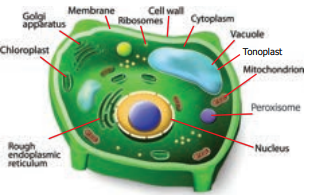
Ultrastructure of Plant Cell
14.
Habit : Twining climber
Root : Branched tap root system having nodules.
Stem : Aerial, weak stem and a twiner
Leaf : Imparipinnately compound, alternate, stipulate showing reticulate venation. Leaflets are stipellate. Petiolate and stipels are pulvinated.
Inflorescence : Solitary and axillary
Flower : Bracteate, bracteolate, bracteoles usually large, pedicellate, heterochlamydeous, complete, bisexual, pentamerous, zygomorphic and hypogynous.
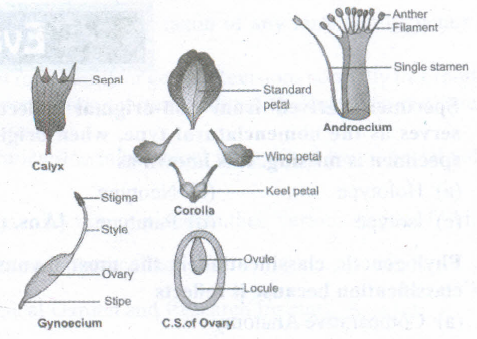
Calyx : Sepals 5, synsepalous, green showing valvate aestivation. Odd sepal is anterior in position.
Corolla : Petals 5, white or blue polypetalous, irregular papilionaceous corolla showing descendingly imbricate aestivation.
Androecium : Stamens 10, diadelphous (9)+1 nine stamens fused to form a bundle and the tenth stamen is free. Anthers are dithecous, basifixed, introrse and dehiscing by longitudinal slits.
Gynoecium : Monocarpellary, unilocular, with many ovules on marginal placentation, ovary superior, style simple and incurved with feathery stigma.
Fruit : Legume
Seed : Non-endospermous, reniform.
15.
(i) Pachytene:
1. At this stage bivalent chromosomes are clearly visible as tetrads. Bivalent of meiosis I consists of 4 chromatids and 2 centromeres.
2. Synapsis is completed and recombination nodules appear at a site where crossing over takes place between non-sister chromatids of homologous chromosomes.
3. Recombination of homologous chromosomes is completed by the end of the stage but the chromosomes are linked at the sites of crossing over. This is mediated by the enzyme recombinase.
(ii) Diplotene:
1. Synaptonemal complex disassembles and dissolves. The homologous chromosomes remain attached at one or more points where crossing over has taken place.
2. These points of attachment where 'X' shaped structures occur at the sites of crossing over is called Chiasmata. Chiasmata are chromatin structures at sites where recombination has taken place.
16.
Physiological effect:
1) Cytokinin promotes cell division in the presence of auxin (IAA).
2) Induces cell enlargement associated with IAA and gibberellins
3) Cytokinin can break the dormancy of certain light-sensitive seeds like tobacco and induces seed germination.
4) Cytokinin promotes the growth of lateral bud in the presence of apical bud.
5) Application of cytokinin delays the process of aging by nutrient mobilization.
6) It is known as Richmond Lang effect.
7) Cytokinin
(i) increases rate protein synthesis
(ii) induces the formation of inter-fascicular cambium
(iii) overcomes apical dominance
(iv) induces formation of new leaves, chloroplast and lateral shoots.
8) Plants accumulate solutes very actively with the help of cytokinins.
17.
Conditions which create the problems in O2 transport:
(i) Poor ventilation.
(ii) Less quantity of haemoglobin.
(iii) Anaemia
(iv) Histotoxic conditions of tissue fluid.
(v) Inability for the transport of O2 into cell due to cellular disorder.
18.
19.
(i) Eggs or young ones produced by an oviparous (egg laying) and viviparous (directly yield young ones) female animals may not be equal.
(ii) Numerous eggs are laid by oviparous, so the number of produced offspring is indefinite.
(iii) Eggs laid by oviparous, female may not develop into adults due to predators.
(iv) Oviparous female includes polyembryony.
(v) Viviparous produced by females need protection from predators associated with parental cares.
(vi) Development of young ones of oviparous female occurs in environment whereas the development of young ones of viviparous female occurs in the female reproductive system of adults.
20.
(i) Yes we can use recent molecular tools to identify and classify organisms.
(ii) Eg: Automated species identification tools electron microscopy (for cellular organelles and molecular structures by neo taxonomical tools) behaviour of organisms by ethology of taxonomical tools and development of electronic digital images and description by INOTAXA or e-Taxonomic resources.

11th Standard Syllabus & Materials
11th Standard
TN 11th Tamil பீடு பெற நில் - செய்யுள் - காவடிச்சிந்து Important Questions And Answers Study Material - QB365 Set A
NEW11th Standard
TN 11th Tamil பீடு பெற நில் - உரைநடை - மலை இடப்பெயர்கள் : ஓர் ஆய்வு Important Questions And Answers Study Material - QB365 Set A
NEW11th Standard
TN 11th Tamil மாமழை போற்றுதும் - துணைப்பாடம் - யானை டாக்டர் Important Questions And Answers Study Material - QB365 Set A
NEW11th Standard
TN 11th Tamil மாமழை போற்றுதும் - செய்யுள் - ஐங்குறுநூறு Important Questions And Answers Study Material - QB365 Set A



Tamilnadu Stateboard 11th Standard Subjects

Maths

Commerce

Economics
Biology

Business Maths and Statistics

Accountancy

Computer Science

Physics

Chemistry
Maths
Biology
Economics
Physics
Chemistry

History
Business Maths and Statistics

Computer Science
Accountancy

Computer Applications
History
Computer Technology
Commerce
Computer Applications
Computer Technology

Tamil

English

French
Tamilnadu Stateboard Standards

