
 100% FREE ACCESS
11th Standard Syllabus & Materials
11th Standard
TN 11th Tamil இயற்கை வேளாண்மை,சுற்றுச்சூழல் -செய்யுள் - மனோன்மணீயம் Important Questions And Answers Study Material - QB365 Set A
NEW11th Standard
TN 11th Tamil என்னுயிர் என்பேன் -துணைப்பாடம் - இசைத்தமிழர் இருவர் Important Questions And Answers Study Material - QB365 Set A
NEW11th Standard
TN 11th Tamil மொழி கலை -செய்யுள் - ஒவ்வொரு புல்லையும் Important Questions And Answers Study Material - QB365 Set A
NEW11th Standard
TN 11th Tamil பீடு பெற நில் - இலக்கணம் - பகுபத உறுப்புகள் Important Questions And Answers Study Material - QB365 Set A
NEW11th Standard
TN 11th Tamil பீடு பெற நில் - துணைப்பாடம் - வாடிவாசல் Important Questions And Answers Study Material - QB365 Set A
NEW11th Standard
TN 11th Tamil பீடு பெற நில் - செய்யுள் - குறுந்தொகை Important Questions And Answers Study Material - QB365 Set A

Published on: 12/11/2019
Download Tamil Nadu 11th Standard Biology question papers, model tests, one-mark questions, important questions, and public exam papers in PDF format. Free study materials and answer keys for TN State Board students.
Questions + Answers key
Take MCQ Biology Test1.
An example for intermediate day plant is ___________
Potato
Sugarcane
Rye
Night Jasmine
2.
Choose the plant showing CAM cycle.
Potato
Wheat
Opuntia
Maize
3.
Elongation of internodes in sugarcane is promoted by .................
IAA
GA
Cytokinin
ABA
4.
Choose the wrong statement.
i) Hydathodes are pores.
ii) Guttation occurs through the epithem.
iii) They are found in plants growing in shady places.
iv) The water exuded during this process is pure water.
i and iii
i,iii, and iv
ii and iii
ii and iv
5.
____________ is called as reduction division.
Meiosis
Mitosis
Amitosis
Budding
6.
Which reinforces the structure of the cell membrane in animal cells?
Cholesterol
Waxes
Proteins
Gerardus Johannes Mulder
7.
Benda named as____________________________
Golgi bodies
Mitochondria
Mitochondrial DNA
Chloroplasts
8.
In the diagram of lenticel identify the parts marked as i, ii, iii, iv
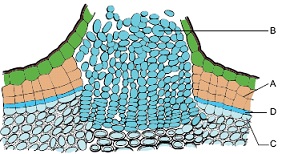
i. phellem, ii. Complementary tissue, iii.Phelloderm, iv. Phellogen.
i. Complementary tissue, ii. Phellem, iii.Phellogen, iv. Phelloderm
i. Phellogen, ii. Phellem, iii. Phelloderm, iv. complementary tissue
i. Phelloderm, ii. Phellem, iii. Complementary tissue, iv. Phellogen
9.
Examine the diagram of the two cell types A and B given below and select the correct option.
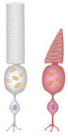
Cell-A is the rod cell found evenly all over retina
Cell-A is the cone cell more concentrated in the fovea centralis
Cell-B is concerned with colour vision in bright light
Cell-A is sensitive to bright light intensities
10.
Inland fisheries are _____.
deep sea fishing
capturing fishes from sea coast
Raising and capturing fishes in fresh water
oil extraction from fish
11.
The end product of Ornithine cycle is _____.
carbon dioxide
uric acid
urea
ammonia
12.
The clitellum is a distinct part in the body of earthworm Lampito mauritii, it is found in?
Segments 13 - 14
Segments 14 - 17
Segments 12 - 13
Segments 14 - 16
13.
Three domain classification was proposed by_______________
Carl woese
Ernst Haeckel
Whittaker
Theophrastus
14.
Perianth is present in_______.
Clitoria ternatea
Datura metel
Allium cepa
Pongamia pinnata
15.
Which of following represents gametophytic generation in pteridophytes?
Prothallus
Thallus
Cone
Rhizophore
16.
Name the deficiency diseases of protein.
17.
Name any three odoured plastids
18.
What are the parameters used to measure growth of plants?
19.
20.
Two groups (A & B) of bean plants of similar size and same leaf area were placed in identical conditions. Group A was exposed to light of wavelength 400-450nm & Group B to light of wavelength of 500-550nm. Compare the photosynthetic rate of the 2 groups giving reasons.
21.
Resistance in the airways is typically low. Why? Give two reasons.
22.
How are the kidneys involved in controlling blood volume? How is the volume of blood in the body related to arterial pressure?
23.
What might be the effect on a person whose diet has less iron content?
24.
Why are starch and glycogen more suitable than glucose as storage product?
25.
26.
Differentiate Homoiomerous and Heteromerous lichens.
27.
28.
List the differences between Sap wood and Heart wood?
29.
Explain the principle involved in PET scan
30.
Tabulate the comparison of types of cellular organization.
31.
Draw and label the events of cell cycle
32.
33.
Why bryophytes do not attain great heights?
34.
Write the similarities and difference between
a. Radicle buds and foliar buds
b. Phylloclade and cladode
35.
Explain the different types of fleshy fruit with suitable example.
36.
Give a general account on lichens.
37.
38.
How will you distinguish Solanaceae members from Liliaceae members?
39.
What is the role of national gardens in conserving biodiversity - Discuss.
40.
Differences Secondary Growth in Dicot Stem and Root
41.
42.
Differentiate between aggregate fruit with multiple fruit.
43.
Mention three salient features of Brown algae.
1.
(b)
Sugarcane
2.
(c)
Opuntia
3.
(b)
GA
4.
(d)
ii and iv
5.
(a)
Meiosis
6.
(a)
Cholesterol
7.
(b)
Mitochondria
8.
(a)
i. phellem, ii. Complementary tissue, iii.Phelloderm, iv. Phellogen.
9.
(c)
Cell-B is concerned with colour vision in bright light
10.
(c)
Raising and capturing fishes in fresh water
11.
(c)
urea
12.
(b)
Segments 14 - 17
13.
(a)
Carl woese
14.
(c)
Allium cepa
15.
(a)
Prothallus
16.
Marasmus and Kwashiorkor.
17.
The three odoured plastids are Chloroplast, Phaeoplast, Rhodoplast.
18.
Growth in plants can be measured in terms of,
1) Increase in length or girth (roots and stems)
2) Increase in fresh or dry weight
3) Increase in area or volume (fruits and leaves)
4) Increase in number of cells produced.
19.
20.
(i) Group A shows maximum photosynthesis. chlorophyll pigments of the spectrum is (400 - 450 nm), hence the photosynthesis is high.
(ii) Group B will show negligible amount of photosynthesis, because chlorophyll does not absorb any light in this region (500 - 550nm). It reflects green.
21.
(i) Entry of air with high pressure may collapse the tracheal tree.
(ii) The smooth muscles which contract and relax to adjust the diameter of air passage with a typical resistance against airways under normal pressure.
22.
(i) Nephrons of kidneys absorb and reabsorb blood plasma (55%) and handover it to venules of renal vein so that an average blood volume is maintained.
(ii) Oxygenated blood flows in the arterial system expresses the systolic pressure (120mm Hg) to balance the normal blood pressure towards the body organs.
23.
If a person diet does not contain iron, the synthesis of haemoglobin is lowered in bone marrow because each haemoglobin consists of 4 iron atoms to accept 4 O2
24.
Starch and glycogen are branched polysaccharides made up of glucose units. Therefore, they occupy lesser space and are less bulky. Moreover, they can be hydrolysed to glucose whenever required.
25.
26.
| Homoiomerous | Heteromerous |
| Algal cells evenly distributed in the thallus | A distinct layer of algae and fungi present |
27.
28.
| SapWood (Alburnum) | Heart wood (Duramen) | |
| 1. | Living part of the wood. | Dead part of the wood. |
| 2. | It is situated on the outer side of wood | It is situated in the centre part of wood |
| 3. | It is less dark in colour | It is dark in colour |
| 4. | Very soft in nature | Hard in nature |
| 5. | Tyloses are absent | Tyloses are present |
| 6. | It is not durable and not resistant to microorganisms | It is more durable and resists microorganisms |
29.
Positron Emission Tomographic Scanning (PET):
1. PET is also computerized imaging technique unlike CT.
2. Positron emission tomography (PET) is a nuclear medicine procedure based on the measurement of positron emission from radiolabelled tracer molecules.
30.
| Features | Prokaryotes | Mesokaryotes | Eukaryotes |
| Size of the cell | ~1-5\(\mu \)m | \(\sim 5-10\mu m\) | \(\sim 10-100\mu m\) |
| Nuclear Character | Nucleoid no true nucleus | Nucleus with nuclear membrane | True nucleus with nuclear membrane |
| DNA | Usually circular without histone proteins | Usually linear but without histone proteins | Usually linear with histone proteins |
| RNA/Protein synthesis | Couples in cytoplasm | Similar with eukaryotes | RNA synthesis Inside nucleus/Protein synthesis in cytoplasm |
| Ribosomes | 50S+30S | 60S+40S | 60S+40S |
| Organelles | Absent | Present | Numerous |
| Cell movement | Flagella | Gliding and flagella | Flagella and cilia |
| Organization | Usually single cell | Single and colony | Single, colonial and multicellular |
| Cell division | Binary fission | Binary fission | Mitosis and meiosis |
| Examples | Bacteria and Archaea | Dinoflagellate, Protozoa | Fungi, plants and animals |
31.
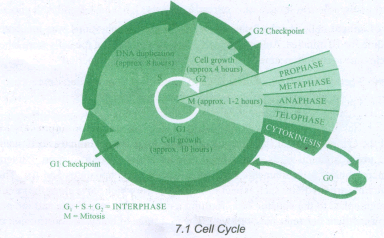
32.
33.
Bryophytes seldom achieve great heights. The possible reasons are:
1. Absence of roots.
2. Materials are transported from cell to cell.
3. Absence of vascular tissues.
4. Absence of cuticle on the plant body.
5. Requirement of external sheet of water for capillary conduction to all parts and transport of male gametes
34.
| a | Radical buds | Foliar buds |
| Differences | Radicle buds arise from the lateral roots. Eg. Sweet potato | Foliar buds develop from veins or from margins of the leaves. Eg. Begonia |
| Similarities | It is a type of adventitious root | It is a type of adventitious root |
| b | Phylloclade | Cladode |
| Differences | Presence of series of nodes and internodes. Eg: Casuarina | Presence of one or two internodes only. Eg: Asparagus |
| Similarities | Phylloclade is a stem modification | Cladode is a stem modification |
35.
The fruits are derived from single pistil where the pericarp is fleshy, succulent and differentiated into epicarp, mesocarp and endocarp. It is subdivided into the following.
(i) Berry: Fruit develops from bicarpellary or multicarpellary, syncarpous ovary. Here the epicarp is thin, the mesocarp and endocarp remain undifferentiated. They form a pulp in which the seeds are embedded. Eg: Tomato, Grapes, Brinjal.
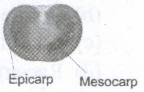
(ii) Drupe: Fruit develops from monocarpellary, superior ovary. It is usually one seeded. Pericarp is differentiated into outer skinny epicarp, fleshy and pulpy mesocarp and hard and stony endocarp around the seed. Eg: Mango, Coconut.
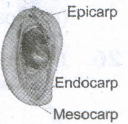
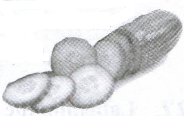
(iii) Pepo: Fruit develops from tricarpellary inferior ovary. Pericarp turns leathery or woody which encloses, fleshy mesocarp and smooth endocarp. Eg: Cucumber, Watermelon, Bottle gourd, Pumpkin.
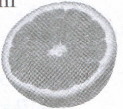
(iv) Hesperidium:Fruit develops from multicarpellary, multilocular, syncarpous, superior ovary. The fruit wall is differentiated into leathery epicarp with oil glands, a middle fibrous mesocarp. The endocarp forms distinct chambers, containing juicy hairs. Eg: Orange, Lemon.
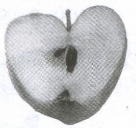
(v) Pome: It develops from multicarpellary, syncarpous, inferior ovary. The receptacle also develops along with the ovary and becomes fleshy, enclosing the true fruit. In pome the epicarp is thin skin like and endocarp is cartilaginous. Eg: Apple, Pear.
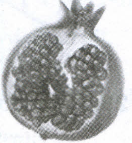
(vi) Balausta: A fleshy indehiscent fruit developing from multicarpellary, multilocular inferior ovary whose pericarp is tough and leathery. Seeds are attached irregularly with testa being the edible portion. Eg: Pomegranate.
36.
(i) The symbiotic association between algae and fungi is called lichens.
(ii) The algal partner is called Phycobiont or Photobiont and the fungal partner is called Mycobiont.
(iii) Algae provide nutrition for fungal partner in turn fungi provide protection and also help to fix the thallus to the substratum through rhizines.
(iv) Asexual reproduction takes place through fragmentation, soredia and Isidia. Phycobionts reproduce by akinetes, hormogonia, aplanospore, etc., Mycobionts undergo sexual reproduction and produce ascocarps.
Classification:
(i) Based on the habitat lichens are classified into following types: Corticolous (on Bark) Lignicolous (on Wood) Saxicolous (on rocks) Terricolous (on ground) Marine (on siliceous rocks of sea) Fresh water (on siliceous rock of fresh water).
(ii) On the basis of morphology of the thallus they are divided into Leprose (a distinct fungal layer is absent) Crustose-crust like; Foliose-leaf like; Fruticose-branched pendulous shrub like.
(iii) The distribution of algal cells distinguishes lichens into two forms namely Homoiomerous (Algal cells evenly distributed in the thallus) and Heteromerous (a distinct layer of algae and fungi present)
(iv) If the fungal partner of lichen belongs to ascomycetes, it is called Ascolichen and if it is basidiomycetes it is called Basidiolichen.
37.
38.
| S.No | Solanaceae | Liliaceae |
|---|---|---|
| 1. | It belongs to dicotyledons | It belongs to monocotyledons |
| 2. | Habit- mostly annual herbs, shrubs & small trees |
Mostly perennial herbs |
| 3. | Root- branched tap root | Adventitious & fibrous |
| 4. | Calyx & corolla present | Only perianth is present |
| 5. | Stamens 5, epipetalous | Stamens 6 arranged in 2 whorls of 3 each. |
| 6. | Bicarpellary, bilocular | Tricarpellary, trilocular |
| 7. | Capsule or berry | Septicidal or loculicidal capsule or a berry |
39.
Role of Botanical Garden:
Botanical Gardens play the following important roles.
1. Gardens have a wide range of species and supply taxonomic material for botanical research.
2. It can integrate information of diverse fields like Anatomy, Embryology, Phytochemistry, Cytology, Physiology and Ecology.
3. Act as a conservation centre for diversity, rare and endangered species.
4. It offers annual list of available species and a free exchange of seeds.
5. Botanical garden gives information about method of propagation, sale of plant material to the general public.
40.
| Secondary Growth in Dicot Stem | Secondary Growth in Root | |
| 1. | The cambial ring formed is circular in cross section from the beginning. | The cambial ring formed is wavy in the beginning and later becomes circular. |
| 2. | The cambial ring is partially primary (fascicular cambium)and partially secondary (Interfascicular cambium) in origin. | The cambial ring is completely secondary in origin. |
| 3. | Generally, periderm originates from the cortical cells (extrastelar in origin). | Generally, periderm originates from the pericyle. (intrastelar in origin) |
| 4. | More amount of cork is produced as stem is above the ground | Generally, less amount of cork is produced as root is underground. |
| 5. | Lenticels of periderm are prominent. | Lenticels of periderm are not very prominent. |
41.
42.
| S.No. | Aggregate fruit | Multiple fruit |
| 1 | Aggregate fruits develop from a single flower having an apocarpous pistil. Each of the free carpel develops into a simple fruitlet. A collection of simple fruitlets makes an Aggregate fruit. An individual ovary develops into a drupe, achene, follicle or berry | A Multiple or composite fruit develops from the whole inflorescence along with its peduncle on which they are borne |
| 2 | Eg: Polyalthia | Eg: Pineapple |
43.
1. The thallus is differentiated into leaf-like photosynthetic part' called frond, a stalk like structure called stipe and a holdfast.
2. Apart from Chlorophylls, Carotenoids and Xanthophylls, a golden brown pigment called fucoxanthin is present.
3. Mannitol and Laminarin are the reserve food materials.

11th Standard Syllabus & Materials
11th Standard
TN 11th Tamil பீடு பெற நில் - செய்யுள் - காவடிச்சிந்து Important Questions And Answers Study Material - QB365 Set A
NEW11th Standard
TN 11th Tamil பீடு பெற நில் - உரைநடை - மலை இடப்பெயர்கள் : ஓர் ஆய்வு Important Questions And Answers Study Material - QB365 Set A
NEW11th Standard
TN 11th Tamil மாமழை போற்றுதும் - துணைப்பாடம் - யானை டாக்டர் Important Questions And Answers Study Material - QB365 Set A
NEW11th Standard
TN 11th Tamil மாமழை போற்றுதும் - செய்யுள் - ஐங்குறுநூறு Important Questions And Answers Study Material - QB365 Set A



Tamilnadu Stateboard 11th Standard Subjects

Maths

Commerce

Economics
Biology

Business Maths and Statistics

Accountancy

Computer Science

Physics

Chemistry
Maths
Biology
Economics
Physics
Chemistry

History
Business Maths and Statistics

Computer Science
Accountancy

Computer Applications
History
Computer Technology
Commerce
Computer Applications
Computer Technology

Tamil

English

French
Tamilnadu Stateboard Standards

