
 100% FREE ACCESS
11th Standard Syllabus & Materials
11th Standard
TN 11th Tamil இயற்கை வேளாண்மை,சுற்றுச்சூழல் -செய்யுள் - மனோன்மணீயம் Important Questions And Answers Study Material - QB365 Set A
NEW11th Standard
TN 11th Tamil என்னுயிர் என்பேன் -துணைப்பாடம் - இசைத்தமிழர் இருவர் Important Questions And Answers Study Material - QB365 Set A
NEW11th Standard
TN 11th Tamil மொழி கலை -செய்யுள் - ஒவ்வொரு புல்லையும் Important Questions And Answers Study Material - QB365 Set A
NEW11th Standard
TN 11th Tamil பீடு பெற நில் - இலக்கணம் - பகுபத உறுப்புகள் Important Questions And Answers Study Material - QB365 Set A
NEW11th Standard
TN 11th Tamil பீடு பெற நில் - துணைப்பாடம் - வாடிவாசல் Important Questions And Answers Study Material - QB365 Set A
NEW11th Standard
TN 11th Tamil பீடு பெற நில் - செய்யுள் - குறுந்தொகை Important Questions And Answers Study Material - QB365 Set A

Published on: 22/09/2018
Important Question paper
Download Tamil Nadu 11th Standard Biology question papers, model tests, one-mark questions, important questions, and public exam papers in PDF format. Free study materials and answer keys for TN State Board students.
Questions + Answers key
Take MCQ Biology Test1.
Duplicate specimen of the holotype collected from same population _____________.
Holotype
Isotype
Lectotype
Syntype
2.
Find out the wrong match:
Eosinophils Allergic response
Basophils Secrete histamine and serotonin
Monocytes Secrete heparin
Lymphocytes Immune response
3.
Transitional epithelium occurs in ____________
Blood vessels
Trachea
Kidney
Ureter/urinary bladder
4.
Which of the following combinations are not matched?
| Column I | Column II |
| (a) Bilirubin and biliverdin | i) Intestinal juice |
| Column I | Column II |
| (b) Hydrolysis of starch | ii) Amylases |
| Column I | Column II |
| (c) Digestion of fat | iii) Lipases |
| Column I | Column II |
| (d) Salivary gland | iv) Parotid |
5.
6.
7.
The ciliated epithelium lines the _______.
Skin
Digestive tract
Gall bladder
Trachea
8.
9.
Gynoecium with united carpels is termed as ______.
Apocarpous
Multicarpellary
Syncarpous
None of the above
10.
Vexillary aestivation is characteristic of the family _____.
Fabaceae
Asteraceae
Solanaceae
Brassicaceae
11.
Flowers are zygomorphic in ______.
Ceropegia
Thevetia
Datura
Solanum
12.
Perianth is present in_______.
Clitoria ternatea
Datura metel
Allium cepa
Pongamia pinnata
13.
What are the advantages of CT over other imaging techniques?
14.
What does a pace maker do?
15.
Differentiate between simple raceme and spike.
16.
Differentiate between racemose and cymose.
17.
What is Inflorescence?
18.
What is meant by polygamous plant?
19.
Define bisexual flower
20.
Define Cymule
21.
Name the following.
i. The largest bee in the colony.
ii. The kind of flight which the new virgin queen takes along with the drones out of the hive.
22.
Digestive secretions are secreted only when needed Discuss.
23.
Head of cockroach is called hypognathous. Why?
24.
25.
What are earthworm casts?
26.
I am dispersed by ant and I have Caruncle. Who am I?
Note: Caruncle - Fleshy outgrowth at the base of the seed.
27.
(a) Name the projection seen on the surface of pineapple and Jackfruit.
(b) In Jack fruit the inflorescence axis produces above the fruit surface.
28.
Drupes and Nuts show single seed but are different. Justify.
29.
Do seedless fruits have triploid tissue? Why?
30.
What are the two processes necessary for the development of fruits?
31.
What is a gynobasic style?
32.
Define Involucre.
33.
Mention the types of Mixed inflorescence.
34.
Mention the types of special inflorescence.
35.
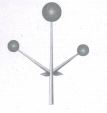
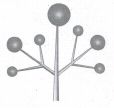
Draw the line diagram for the following inflorescence.
(a) Simple Dichasium
(b) Compound Dichasium
36.
Explain the different types of placentation with example.
37.
What is the meant by anther dehiscence? Explain the different kinds of anther dehiscence
38.
How do proteins differ from fats in their energy value and their role in the body?
39.
40.
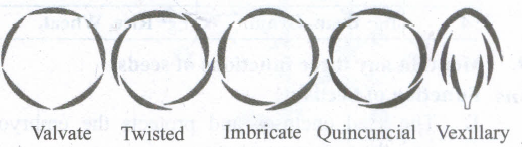
The mode of arrangement of either sepals or petals of a flower in bud condition is called aestivation. Draw the various types of aestivation.
41.
Define Umbel.
42.
What is Karyotaxonomy / Cytotaxonomy?
43.
What is the need for cladistics?
44.
How are cladistic groups classified?
45.
Write an essay on fleshy fruits and its kind.
46.
Describe different types of anthers in plants.
47.
1.
(b)
Isotype
2.
(c)
Monocytes Secrete heparin
3.
(d)
Ureter/urinary bladder
4.
(a)
| Column I | Column II |
| (a) Bilirubin and biliverdin | i) Intestinal juice |
5.
(b)
6.
(b)
7.
(d)
Trachea
8.
(d)
9.
(c)
Syncarpous
10.
(a)
Fabaceae
11.
(a)
Ceropegia
12.
(c)
Allium cepa
13.
Computed Tomographic (CT) scanning: It is a medical imaging technology employing tomography, were digital geometry processing is used to generate a three dimensional image of the internals of an object from a large series of two dimensional X ray images taken around a single axis of rotation.
Clinical significance:
1. Gives a clear image of bone, soft tissues and blood vessels.
2. - Helps in the diagnosis of injuries of the inner ears and sinuses.
3. To detect cancer, heart and lung disorders.
4. For diagnosis of spinal problems and skeletal injuries.
5. Helps to measure bone mineral density.
6. To detect stroke causing clots and hemorrhage in the brain.
14.
1. Pacemaker is a medical device which uses electrical impulses, delivered by electrodes contracting the heart muscles, to regulate the beating of the heart.
2. The primary purpose of a pacemaker is to maintain an adequate heart rate, either because the heart's natural pacemaker is not fast enough, or because there is a block in the hearts electrical conducting system.
15.
Simple raceme
1. The inflorescence with an unbranched main axis bears pedicellate flowers in acropetal succession. Example: Crotalaria retusa, mustard and radish.
2. Spike is an unbranched indeterminate inflorescence with sessile flowers. Example: Achyranthes, Stachytapheta.
16.
| Racemose | Cymose |
| Main axis of unlimited growth | Main axis of limited growth |
| Flowers arranged in an acropetal succession | Flowers arranged in a basipetal Succession |
| Opening of flowers is centripetal | opening of flowers is centrifugal |
| Usually the oldest flower at the base of the inflorescence axis. | Usually the oldest flower at the top of the inflorescence axis. |
17.
1. An inflorescence is a group of flowers arising from a branched or unbranched axis with a definite pattern.
2. Function of inflorescence js to display the flowers for effective pollination and facilitate seed dispersal.
3. The grouping of flowers in one place gives a better attraction to the visiting pollinators and maximize the energy of the plant.
18.
The condition in which bisexual and unisexual (staminate/pistillate) flowers occur ina same plant is called polygamous
19.
When a flower contains both androecium and gynoecium is called perfect flower
20.
A small, simple dichasium is called cymule
21.
1. Queen bee
2. Nuptial flight
22.
(i) Ingested food is to be completely digested.
(ii) Digestive medium should become normal conditions.
(iii) Maximum utilization of digestive secretions is to be performed for the digestion of food.
(iv) The stimulation of digestive hormonal secretions is to be regulated.
23.
(i) The head is small, triangular and lies at right angle to the longitudinal axis of the body.
(ii) The mouth parts are directed downwards so it is hypognathous.
24.
25.
(i) The dried solid excreta rich in urea released by pygidium of earthworms are earthworm casts or worm castings or worm pellets
(ii) They are released by anus due to the function of nephridia
(iii) Released worm castings increase the fertility of soil for plant growth
(iv) Worm castings are less released during rainy season
26.
Castor seed. Note: Seed Dispersal by ants is called myrmecochory.
27.
(a) In Pineapple the small projections present on the surface of the fruit represent persistent bracts. Pineapple is a multiple fruit developing from a spike.
(b) Jackfruit is a multiple fruits. All the flowers of the inflorescence develop in to a big large fruit and the inflorescence axis remains inside the fruit. The tip of the axis protrudes above the surface. In other inflorescences, the individual flower of the inflorescence develops into a fruit and the axis is seen clearly holding the fruits.
28.
1. Drupe is a simple fleshy fruit. The inner stony endocarp contains single seed. Mesocarp is fleshy and juicy.
2. Nut is a one-seeded fruit but has a woody and hard pericarp and is a simple dry indehiscent fruit.
29.
No, the endosperm is a triploid tissue formed after fertilization. Seedless fruits are formed without fertilization. So they lack a triploid tissue.
30.
Pollination and fertilization, are the two processes necessary for the development of fruits and seeds.
31.
Style arising from base of the ovary. Eg: Lamiaceae (Ocimum).
32.
1. The head inflorescence is surrounded by green coloured bracts called involucre of bracts.
2. They protect the young flowers and fruits.
3. Eg: Sunflower.
33.
Thyrsus and Verticillaster
34.
1. Cyathium
2. Hypanthodium
3. Coenanthium
35.
(a) Simple Dichasium
(b) Compound Dichasium
36.
| 1. Marginal (i) It is with the placentae along the margin of a unicarpellate ovary. (ii) Eg: Fabaceae. |
4. Axile (i) The placentae arises from the column in a compound ovary with septa. (ii) Eg: Hibiscus, tomato lemon |
| 2. Superficial (i) Ovules arise from the surface of the septa. (ii) Eg: Nymphaeaceae |
5. Parietal (i) It is the placentae on the ovary walls or upon intruding partitions of a unilocular, compound Ovary. (ii) Eg: Mustard, Argemone, cucumber. |
| 3. Free-central (i) It is with the placentae along the column in a compound ovary without septa. (ii) Eg: Caryophyllaceae, Dianthus, Primrose |
6. Basal (i) It is the placenta at the base of the ovary. (ii) Eg: Sunflower(Asteraceae) Marigold |
37.
It refers ~oopening of another to disperse pollen grains.
(i) Longitudinal: Anther dehisces along a suture parallel to long axis of each. anther lobe. ego Datura, china rose, cotton.
(ii) Transverse: Anther dehisces at right angles to the long axis of another lobe. ego Malvaceae.
(iii) Poricidal: Anther dehisces through pores at one end of the thecae. ego Ericaceae, Solanum, potato, brinjal, Cassia.
(iv) Valvular: Anther dehisces through a pore covered by a flap of tissue. ego Lauraceae, Cinnamomum.
38.
| S.No | Proteins | Fats |
| 1 | Yield energy if carbohydrates and fats are not available. |
Yield secondary concentrated source of energy. |
| 2. | Nitrogenous wastes are mostly formed. | Less formed. |
| 3. | Involve in growth and repair of the body. |
Involve in growth of the body and serve as the reserve food. |
| 4. | The caloric value and physiological fuel value of one gram of protein are 5.65 kcal and 4 kcal are respectively ICMR and WHO suggested that. |
The caloric value of 9.45 kcal and a physiological fuel value of 9 kcal per gram. |
| 5. | 1 gm/1kg of body weight needs proteins. |
4 gm/60 kg of body weight needs |
39.
40.
Different types of Aestivation:
41.
1. An inflorescence with the indeterminate central axis and pedicellate flowers arise from the common point of peduncle at the apex.
2. Compound umbel inflorescence is a branched umbel.
3. Each such umbel is called an umbellet.
4. Eg: Daucus carota (carrot).
42.
Utilization of the characters and phenomena of cytology for the explanation of taxonomic problem is known as cytotaxonomy or karyotaxonomy. The characters of chromosome such as number, size, morphology and behaviour during meiosis have proved to be of taxonomic value.
43.
Need for cladistics:
1. Cladistics is now the most commonly used and accepted method for creating phylogenetic system of classifications.
2. Cladistics produces a hypothesis about the relationship of organisms to predict the morphological characteristics of organism.
3. Cladistics helps to elucidate 'mechanism of evolution.
44.
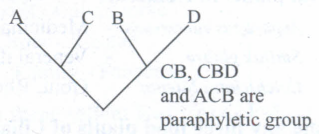
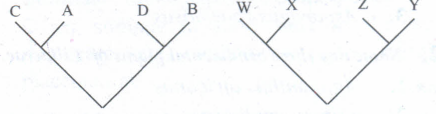
Represent diagrammatically
1. Monophyletic group: Taxa comprising all the descendants of a common ancestor.
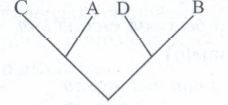
2. Paraphyletic group: Taxon that includes an ancestor but not all of the descendants of that ancestor.
3. Polyphyletic group: Taxa that includes members from two different lineages
45.
The fruits are derived from single pistil where the pericarp is fleshy, succulent and differentiated into epicarp, mesocarp and endocarp. It is subdivided into the following.
(i) Berry: Fruit develops from bicarpellary or multicarpellary, syncarpous ovary. Here the epicarp is thin, the mesocarp and endocarp remain undifferentiated. They form a pulp in which the seeds are embedded. eg. Tomato, Date Palm, Grapes, Brinja.
(ii) Drupe: Fruit develops from monocarpellary, superior ovary. It is usually one seeded. Pericarp is differentiated into outer skinny epicarp, fleshy and pulpy mesocarp and hard and stony endocarp around the seed. eg. Mango, Coconut.
(iii) Pepo: Fruit develops from tricarpellary inferior ovary. Pericarp terns leathery or woody which encloses, fleshy mesocarp and smooth endocarp. eg. Cucumber, Watermelon, Bottle gourd, Pumpkin.
(iv) Hesperidium: Fruit develops from multicarpellary, multilocular, syncarpous, superior ovary. The fruit wall is differentiated into leathery epicarp with oil glands, a middle fibrous mesocarp. The endocarp forms distinct chambers, containing juicy hairs. eg. Orange, Lemon.
(v) Pome: It develops from multicarpellary, syncarpous, inferior ovary. The receptacle also develops along with the ovary and becomes fleshy, enclosing the true fruit. In pome the epicarp is thin skin like and endocarp is cartilagenous. eg. Apple, Pear.
(vi) Balausta: A fleshy indehiscent fruit developing from multicarpellary, multilocular inferior ovary whose pericarp is tough and leathery.· Seeds are attached irregularly with testa being the edible portion. eg. Pomegranate.
46.
(i) Monothecal: One lobe with two microsporangia. They are kidney-shaped in a cross-section. eg. Malvaceae.
Some other types: Haplostemonous: stamens are uniseriate and equal in number to the petals and opposite the sepals (antisepalous).
Obhaplostemonous: Stamens are uniseriate, number equal to petals and opposite the petals (antipetalous)
Diplostemonous: Stamens are biseriate, outer antisepalous, inner antipetalous. eg. Murraya.
Obdiplostemonous: Stamens are biseriate, outer antipetalous, inner antisepalous. eg. Caryophyllaceae.
Polystemonous: Numerous stamens are normally many more than the number of petals.
(ii) Dithecal: It is a typical type, having two lobes with four microsporangia. They are butterfly shaped in cross section. eg. solanaceae.
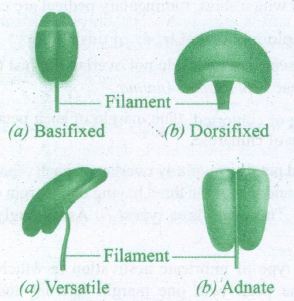
(i) Basifixed (Innate): Base of anther is attached to the tip of a filament. eg. Brassica, Datura.
(ii) Dorsifixed: Apex of filament is attached to the dorsal side of the anther. eg. Citrus, Hibiscus.
(iii) Versatile: Filament is attached to the anther at the midpoint. eg. Grasses.
(iv) Adnate: Filament is continued from the base to the apex of the anther. eg. Verbena, Ranunculus, Nelumbo.
Anther dehiscence: It refers to opening of anther to disperse pollen grains.
.png)
(i) Longitudinal: Another dehisces along a suture parallel to long axis of each anther lobe. eg. Datura, chinarose, cotton.
(ii) Transverse: Anther dehisces at right angles to the long axis of anther lobe. eg. Malvaceae.
(iii) Poricidal: Anther dehisces through pores at one end of the thecae. eg. Ericaceae, Solanum, potato, brinjal, Cassia.
(iv) Valvular: Anther dehisces through a pore covered by a flap of tissue. eg. Lauraceae, Cinnamomum.
Anther dehiscing direction: It shows the position of anther opening relative to the anther of the flower.
.png)
(i) Introrse: Anther dehisces towards the centre of the flower. eg. Dianthus.
(ii) Extrorse: Anther dehisces towards periphery of the flower. eg. Argemone.
47.

11th Standard Syllabus & Materials
11th Standard
TN 11th Tamil பீடு பெற நில் - செய்யுள் - காவடிச்சிந்து Important Questions And Answers Study Material - QB365 Set A
NEW11th Standard
TN 11th Tamil பீடு பெற நில் - உரைநடை - மலை இடப்பெயர்கள் : ஓர் ஆய்வு Important Questions And Answers Study Material - QB365 Set A
NEW11th Standard
TN 11th Tamil மாமழை போற்றுதும் - துணைப்பாடம் - யானை டாக்டர் Important Questions And Answers Study Material - QB365 Set A
NEW11th Standard
TN 11th Tamil மாமழை போற்றுதும் - செய்யுள் - ஐங்குறுநூறு Important Questions And Answers Study Material - QB365 Set A



Tamilnadu Stateboard 11th Standard Subjects

Maths

Commerce

Economics
Biology

Business Maths and Statistics

Accountancy

Computer Science

Physics

Chemistry
Maths
Biology
Economics
Physics
Chemistry

History
Business Maths and Statistics

Computer Science
Accountancy

Computer Applications
History
Computer Technology
Commerce
Computer Applications
Computer Technology

Tamil

English

French
Tamilnadu Stateboard Standards

