
 100% FREE ACCESS
11th Standard Syllabus & Materials
11th Standard
TN 11th Tamil இயற்கை வேளாண்மை,சுற்றுச்சூழல் -செய்யுள் - மனோன்மணீயம் Important Questions And Answers Study Material - QB365 Set A
NEW11th Standard
TN 11th Tamil என்னுயிர் என்பேன் -துணைப்பாடம் - இசைத்தமிழர் இருவர் Important Questions And Answers Study Material - QB365 Set A
NEW11th Standard
TN 11th Tamil மொழி கலை -செய்யுள் - ஒவ்வொரு புல்லையும் Important Questions And Answers Study Material - QB365 Set A
NEW11th Standard
TN 11th Tamil பீடு பெற நில் - இலக்கணம் - பகுபத உறுப்புகள் Important Questions And Answers Study Material - QB365 Set A
NEW11th Standard
TN 11th Tamil பீடு பெற நில் - துணைப்பாடம் - வாடிவாசல் Important Questions And Answers Study Material - QB365 Set A
NEW11th Standard
TN 11th Tamil பீடு பெற நில் - செய்யுள் - குறுந்தொகை Important Questions And Answers Study Material - QB365 Set A

Published on: 22/09/2018
Important question paper - 3 mark
Download Tamil Nadu 11th Standard Biology question papers, model tests, one-mark questions, important questions, and public exam papers in PDF format. Free study materials and answer keys for TN State Board students.
Questions + Answers key
Take MCQ Biology Test1.
Explain the regulation of cardiac activity.
2.
How the vascular plants dominate the Earth?
3.
Write any three differences between chlorophyceae and phaeophyceae members?
4.
List out the various asexual spores produced by algae.
5.
List out the various types of vegetative reproduction seen in algae.
6.
Where can we see cryophytic & halophytic algae? Give example.
7.
Differentiate Apopetalous from Sympetalous.
8.
Explain Bilateral symmetry.
9.
Distinguish between Monoecious & Dioecious.
10.
Provide the significance of seeds.
11.
Point out the functions of fruit.
12.
Provide the characteristics of multiple or composite fruit.
13.
Describe the characters of Androecium with diagram.
14.
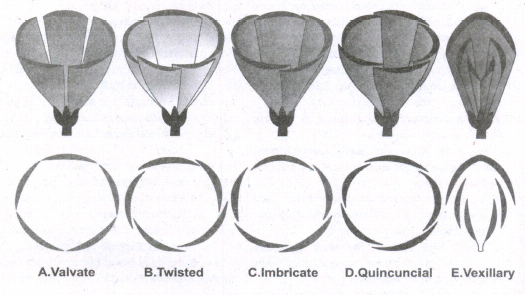
Draw and label the parts of types of aestivation.
15.
Compare gymnosperms and angiosperms.
16.
Write about secondary growth of gymnosperms.
17.
Discuss the various types of Protostele.
18.
Describe sporangium of pteridophytes.
19.
Describe the structure of pteridophytes.
20.
Write the physiological effects of Cytokinins.
21.
What is plasticity?
22.
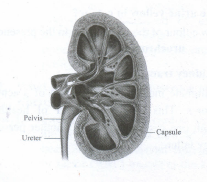
Draw a L.S. of Kidney and label
(a) Ureter
(b) Capsule
(c) Pelvis
23.
Ramu was 45 years old when he went to a doctor to check his blood pressure. His pressure was around 158/98mmHg. The doctor advised him to measure his blood pressure at home for two weeks. He came to the doctor saying his average -blood pressure was around 160/100mmHg. Doctor concludes that Ramu has high blood pressure or hypertension. If not controlled, hypertension can lead to heart failure, stroke and kidney failure. He returned to the doctor after two months after taking the drug, ACE inhibitor. This chemical blocks the production of angiotensin II, a powerful vasoconstrictor, so his blood pressure returned back to normal.
1. Why are people with high blood pressure at greater risk for having a hemorrhagic stroke?
2. Without medication Ramu's blood pressure was around 160/100mmHg after two weeks. Why this pressure was referred to as hypertension by the doctor.
3. Blocking the action of vasoconstrictor lower the blood pressure? Give reasons.
4. What is the role of ACE inhibitor in reducing blood pressure?
5. What conditions one might expect if the blood pressure is not controlled?
24.
When blood volume drops down abruptly, what happens to the stroke volume? State whether it increases or decreases?
25.
Suggest why arteries close to the heart have more elastic fibres in their walls than arteries further away from the heart?
26.
Differentiate between aggregate fruit with multiple fruit.
27.
Explain the types of placentation with examples.
28.
The term 'form genera' is used to name fossil plants - Explain.
29.
Mention three salient features of Brown algae.
30.
What is the contribution of prof. Birbal Sahni?
31.
What are Coralloid roots?
32.
Arrange the following structures in the order that a drop of water entering the nephron would encounter them
e. Afferent arteriole
f. Bowman’s capsule
g. Collecting duct
h. Distal tubule
i. Glomerulus
j. Loop of Henle
k. Proximal tubule
l. Renal pelvis
33.
Which part of the autonomic nervous system is involved in micturition process?
34.
What solute is normally present in the body to estimate GFR in humans?
35.
Which segment is the site of secretion and regulated reabsorption of ions and pH homeostasis?
1.
The type of heart in human is myogenic because the heart beat originates from the muscles of the heart. The nervous and endocrine systems work together with paracrine signals (metabolic activity) to influence the diameter of the arterioles and alter the blood flow. The neuronal control is achieved through autonomic nervous system (sympathetic and parasympathetic). Sympathetic neurons release nor-epinephrine and adrenal medulla releases epinephrine. The two hormones bind to \(\beta\) - adrenergic receptors and increase the heart rate. The parasympathetic neurons secrete acetylcholine that binds to muscarinic receptors and decreases the heart beat. Vasopressin and angiotensin II, involved in the regulation of the kidneys, results in vasoconstriction while natriuretic peptide promotes vasodilation. Vagus nerve is a parasympathetic nerve that supplies the atrium especially the SA and the AV nodes.
2.
The success and dominance of vascular plants is due to the development of,
1) Extensive root system.
2) Efficient conducting tissues.
3) Cuticle to prevent desiccation.
4) Stomata for effective gaseous exchange.
3.
| Chlorophyceae | Phaeophyceae | |
| (a) | Commonly called as green algae | Commonly called as brown algae |
| (b) | Chlorophyll 'a' and 'b' are the major photosynthetic pigments | Chlorophyll a, c carotenoid, Xanthophylls are the photosynthetic pigments |
| (c) | Reserve food in starch | Reserve food in mannitol and laminarin starch |
4.
Zoospores, aplanospores, autospores, hypnospores, tetraspores and akinetes.
5.
Fission, fragmentation, budding, bulbils, tubers.
6.
Cryophytic algae grow on snow. e.g., Chlamydomonas nivalis. Halophytic algae grow in salt pans. e.g., Dunaliella salina.
7.
| Apopetalous (or) Polypetalous | Sympetalous (or) Gamopetalous |
| Petals are distinct. e.g., Hibiscus. | Petals are fused. e.g., Datura |
8.
In bilateral symmetry the flower can be divided into equal halves in only one plane. Zygomorphic flower can efficiently transfer pollen grains to visiting pollinators. Example: Pisum.
9.
| Monoecious | Dioecious |
| Both male and female flowers are present in the same plant. e.g., Coconut | Male and female flowers are present on separate plants. e.g., Papaya |
10.
1. The seed encloses and protects the embryo for next generation.
2. It contains food for the development of embryo.
3. It is a means for the dispersal of new individuals of the species.
4. A seed is a means for perpetuation of the species. It may lie dormant during unfavourable conditions but germinates on getting suitable conditions.
5. Seeds of various plants are used as food, both for animals and men.
6. They are the basis of agriculture.
7. Seeds are the products of sexual reproduction so they provide genetic variations and recombinationin a plant.
11.
1. Edible part of the fruit is a source of food, energy for animals.
2. They are source of many chemicals like sugar, pectin, organic acids, vitamins and minerals.
3. The fruit protects the seeds from unfavourable climatic conditions and animals.
4. Both fleshy and dry fruits help in the dispersal of seeds to distant places.
5. In certain cases, fruit may provide nutrition to the developing seedling.
6. Fruits provide source of medicine to humans.
12.
1. A Multiple or composite fruit develops from the whole inflorescence along with its peduncle on which they are borne.
2. A fleshy multiple fruits which develop from a spike or spadix.
3. The flowers fused together by their succulent perianth and at the same time, the axis bearing them become fleshy or juicy and the whole inflorescence forms a compact mass.
4. Example: Pineapple, Jackfruit, Mulberry
5. A multiple fruits which develops from hypanthodium inflorescence.
6. The receptacle develops further and converts into fleshy fruit which encloses a number of true fruit or achenes which develops from female flower of hypanthodium inflorescence.
7. Example: Ficus.
13.
Androecium: Third whorl of flower is the male reproductive part of the flower. It is composed of stamens(microsporophylls). Each Stamen consist of 3 parts,
a. Filament
b. Anther
c. Connective
1. Anther: Upper swollen part with microsporangia.
2. Filament: Stalk of stamen
3. Connective: Tissue connecting anther lobes with filament
4. Anther typically contains two compartments It is bell shaped called Campanulate. The fruiting calyx is urn shaped in Withania and it is called urceolate. In Datura calyx is tube like and it is known as tubular. Two lipped calyx is present in Ocimum: Sometimes calyx is coloured and called petaloid. Example: Saracca, Sterculia. Calyx is distinctly leafy, large and often yellow or orange coloured sometimes white as in Mussaenda. It is modified into hair like structure or scaly called pappus as in Tridax of Compositae. called thecae (singular theca).Each theca consists of two microsporangia. Two microsporangia fused to form a locule.
5. Sterile stamens are called Staminodes. Example: Cassia.
6. Distinct: stamens which do not fuse to one another Free: stamens which do not fuse with other parts of flower.
7. Apostemonous: flowers with stamens that are free and distinct.
14.
15.
Gymnosperms resemble with angiosperms in the following features
(i) Presence of well-organised plant body which is differentiated into roots, stem and leaves
(ii) Presence of cambium in gymnosperms as in dicotyledons.
(iii) Flowers in Gnetum resemble to the angiosperm male flower. The Zygote represent the first cell of sporophyte.
(iv) Presence of integument around the ovule
(v) Both plant groups produce seeds
(vi) Pollen tube helps in the transfer of male nucleus in both.
(vii) Presence of Eustele
16.
(i) Secondary growth is present. The wood may be Manoxylic(Porous, soft, more parenchyma with wide medullary ray -Cycas) or Pycnoxylic (compact with narrow medullary ray-Pinus).
(ii) They are Heterosporous. The plant may be monoecious (Pinus) or dioecious (cycas). Microsporangia and Megasporangia are produced on Microsporophylland Megasporophyll respectively.
17.
(i) Inprotostelexylem surrounds phloem. The type includes Haplostele, Actinostele, Plectostele, and mixed protostele.
(ii) Haplostele: Xylem surrounded by phloem is known as haplostele. Example: Selaginella.
(ii) Actinostele: Star shaped xylem core is surrounded by phloem is known as actinostele . Example: Lycopodiumserratum.
(iii) Plectostele: Xylem plates alternates with phloem plates. Example: Lycopodiumclavatum.
(iv) Mixed prototostele: Xylem groups uniformly scattered in the phloem. Example: Lycopodiumcernuum.
18.
(i) Sporangia, spore bearing bag like structures are borne on special leaves called sporophyll. The sporophylls gets organized to form cone or strobilus. Example: Selaginella, Equisetum .
(ii) They may be homosporous (produce one type of spores-Lycopodium) or Heterosporous (produce two types of spores-Selaginella), Heterospory is the origin for seed habit.
(iii) Development of sporangia may be eusporangiate (development of sporangium from group of initials) or leptosporangiate (development of sporangium from single initial).
19.
(i) Plant body is sporophyte (2n) and it is the dominant phase. It is differentiated into root, stem and leaves.
(ii) Roots are adventitious.
(iii) Stem shows monopodial or dichotomous branching.
(iv) Leaves may be microphyllous or megaphyllous,
(v) Stele is protostele but in some forms siphonostele is present (Marsilea)
(vi) Tracheids are the major water conducting elements but in Selaginella vessels are found.
20.
Physiological effect:
1) Cytokinin promotes cell division in the presence of auxin (IAA).
2) Induces cell enlargement associated with IAA and gibberellins
3) Cytokinin can break the dormancy of certain light-sensitive seeds like tobacco and induces seed germination.
4) Cytokinin promotes the growth of lateral bud in the presence of apical bud.
5) Application of cytokinin delays the process of aging by nutrient mobilization.
6) It is known as Richmond Lang effect.
7) Cytokinin
(i) increases rate protein synthesis
(ii) induces the formation of inter-fascicular cambium
(iii) overcomes apical dominance
(iv) induces formation of new leaves, chloroplast and lateral shoots.
8) Plants accumulate solutes very actively with the help of cytokinins.
21.
1) Plants follow different pathways in response to environment or phases of life to form different kinds of structures. This ability is called plasticity.
2) Example: Heterophylly in cotton and coriander. In such plants, the leaves of the juvenile plant are different in shape from those in mature plants.
3) On the other hand, the difference in shapes of leaves produced in air and those produced in water in buttercup also represent the heterophyllous development due to the environment. This phenomenon ofheterophylly is an example of plasticity.
22.
23.
1. Haemorrhage means "bleeding caused due to rupture of blood vessels". High blood pressure can lead to rupture of blood vessel and such people are more prone to haemorrhage.
2. In cases when the diastolic pressure exceeds 90 mm Hg and the systolic pressure exceeds 150 mm Hg persistently, the condition is called hypertension.
3. Vasoconstrictors are drugs which cause vasoconstriction or constriction of blood vessels thus raising blood pressure. Hence blocking the action of vasoconstrictors reduces blood pressure.
4. ACE inhibitor - (Angiotension Converting Enzyme) inhibitors reduce systemic blood pressure and reduce angiotensin-II thereby protecting the kidneys also from damage.
5. If blood pressure is not controlled it can lead to heart attack, stroke, aneurysm, heart failure etc.
24.
Stroke volume SV = EDV - ESV
EDV - Amount of blood getting collected in ventricle during diastole.
ESV - Volume of blood remaining in ventricle after contraction.
1. Heart's pumping action maintains balance between cardiac output and venous return, Heart is a double pump.
2. Each side of the heart can fail independently of the other.
3. Increase in EDV can increase SV, On the other hand decrease in venous return and EDV can decrease Sv.
4. Similarly changes ·of EDV and ESV on SV are not independent.
25.
1. Elastic fibres allow the artery to stretch and recoil as blood passes through it.
2. Arteries closer to the heart experience more pressure than arteries further away from the heart.
3. Therefore arteries close to the heart have more elastic fibres in their walls to cope with high pressure of blood coming from the heart.
26.
| S.No. | Aggregate fruit | Multiple fruit |
| 1 | Aggregate fruits develop from a single flower having an apocarpous pistil. Each of the free carpel develops into a simple fruitlet. A collection of simple fruitlets makes an Aggregate fruit. An individual ovary develops into a drupe, achene, follicle or berry | A Multiple or composite fruit develops from the whole inflorescence along with its peduncle on which they are borne |
| 2 | Eg: Polyalthia | Eg: Pineapple |
27.
Placentation: The mode of distribution of placenta inside the ovary is called placentation. (Placenta bears the ovules.) It is of different types as follows:
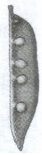
1. Marginal: It is with the placentae along the margin of a unicarpellate ovary. E.g.: Fabaceae.
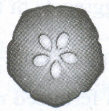
2. Axile: The placentae arise from the column in a compound ovary with septa. E.g.: Hibiscus, tomato, lemon.
3. Superficial: Ovules arise from the surface of the septa. E.g.: Nymphaeaceae.
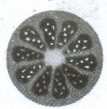
4. Parietal: The placentae are on the ovary walls or upon intruding partitions of a unilocular, compound ovary. E.g.: Mustard, Argemone, cucumber.
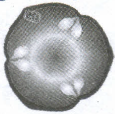
5. Basal: It is the placenta at the base of the ovary. E.g.: Sunflower, Marigold.
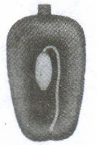
6. Free-central: It is with the placentae along the column in a compound ovary without septa. E.g.: Caryophyllaceae, Dianthus, Primrose.
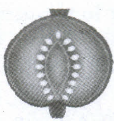
28.
1. The whole plant is not recovered as fossils.
2. Instead organs or parts of the extinct plants are obtained in fragments.
3. Hence the term 'form genera' is used to name fossil plants
29.
1. The thallus is differentiated into leaf-like photosynthetic part' called frond, a stalk like structure called stipe and a holdfast.
2. Apart from Chlorophylls, Carotenoids and Xanthophylls, a golden brown pigment called fucoxanthin is present.
3. Mannitol and Laminarin are the reserve food materials.
30.
1. He is the father of Indian Palaeobotany.
2. He described fossil plants from Rajmahal Hills of Eastern Bihar.
3. He described many form genera.
Eg: Pentoxylon Sahni, Nipani oxylon.
31.
1. The lateral roots of Cycas give rise to vertical branches under the soil.
2. They branch repeatedly to form dichotomously branched coral-like roots called coralloid roots.
3. It contains Blue-green algae, Anabaena which helps in Nitrogen fixation.
32.
(e) Afferent arteriole
(i) Glomerulus
(f) Bowman's capsule
(k) Proximal tubule
(j) Loop of Henle
(h) Distal tubule
(g) Collecting duct
(l) Renal pelvis
33.
Sensory neurons of the parasympathetic autonomic nervous system.
34.
All the blood plasma components without corpuscles.
35.
Distal convoluted tubule (DCT of nephron).

11th Standard Syllabus & Materials
11th Standard
TN 11th Tamil பீடு பெற நில் - செய்யுள் - காவடிச்சிந்து Important Questions And Answers Study Material - QB365 Set A
NEW11th Standard
TN 11th Tamil பீடு பெற நில் - உரைநடை - மலை இடப்பெயர்கள் : ஓர் ஆய்வு Important Questions And Answers Study Material - QB365 Set A
NEW11th Standard
TN 11th Tamil மாமழை போற்றுதும் - துணைப்பாடம் - யானை டாக்டர் Important Questions And Answers Study Material - QB365 Set A
NEW11th Standard
TN 11th Tamil மாமழை போற்றுதும் - செய்யுள் - ஐங்குறுநூறு Important Questions And Answers Study Material - QB365 Set A



Tamilnadu Stateboard 11th Standard Subjects

Maths

Commerce

Economics
Biology

Business Maths and Statistics

Accountancy

Computer Science

Physics

Chemistry
Maths
Biology
Economics
Physics
Chemistry

History
Business Maths and Statistics

Computer Science
Accountancy

Computer Applications
History
Computer Technology
Commerce
Computer Applications
Computer Technology

Tamil

English

French
Tamilnadu Stateboard Standards

