
 100% FREE ACCESS
11th Standard Syllabus & Materials
11th Standard
TN 11th Tamil இயற்கை வேளாண்மை,சுற்றுச்சூழல் -செய்யுள் - மனோன்மணீயம் Important Questions And Answers Study Material - QB365 Set A
NEW11th Standard
TN 11th Tamil என்னுயிர் என்பேன் -துணைப்பாடம் - இசைத்தமிழர் இருவர் Important Questions And Answers Study Material - QB365 Set A
NEW11th Standard
TN 11th Tamil மொழி கலை -செய்யுள் - ஒவ்வொரு புல்லையும் Important Questions And Answers Study Material - QB365 Set A
NEW11th Standard
TN 11th Tamil பீடு பெற நில் - இலக்கணம் - பகுபத உறுப்புகள் Important Questions And Answers Study Material - QB365 Set A
NEW11th Standard
TN 11th Tamil பீடு பெற நில் - துணைப்பாடம் - வாடிவாசல் Important Questions And Answers Study Material - QB365 Set A
NEW11th Standard
TN 11th Tamil பீடு பெற நில் - செய்யுள் - குறுந்தொகை Important Questions And Answers Study Material - QB365 Set A

Published on: 13/09/2019
Download Tamil Nadu 11th Standard Biology question papers, model tests, one-mark questions, important questions, and public exam papers in PDF format. Free study materials and answer keys for TN State Board students.
Questions + Answers key
Take MCQ Biology Test1.
Explain the ABO blood groups.
2.
Name the types of Salivary glands.
3.
What is inspiration?
4.
Give the location of clitellum and spermathecal openings in Lampito mauritii.
5.
Differentiate Homoiomerous and Heteromerous lichens.
6.
Mention two characters shared by gymnosperms and angiosperms.
7.
What is responsible for systole?
Entry of blood in lungs
Entry of blood in heart
Blood flow out of heart
Blood flow out of vein
8.
Which is known as liquid connective tissue?
plasma
blood
serum
Iymph
9.
During inspiration __________
Diaphragm and external muscles relax
Diaphragm and internal intercostal muscles relax
Diaphragm and external intercostal muscles contract
Diaphragm and internal intercostal muscles contract
10.
Secretin and Cholecystokinin are digestive hormone. They are secreted in ___________
Pyloric stomach
Duodenum
Ileum
Oesophagus
11.
The secretion of colleterial glands in cockroach is to produce __________
ova
sperms
pigments
oothoea
12.
________________is not a symptom of glomerulonephritis.
Hypertension
Haematuria
Proteinuria
Renal colic pain
13.
Virus that infects bacteria is called __________
Mycophage
Lactophage
Bacteriophage
Cyanophage
14.
When the root is thick and fleshy, but does not take a definite shape, it said to be _________
Nodulose root
Tuberous root
Moniliform root
Fasciculated root
15.
In an inflorescence where flowers are borne laterally in an acropetal succession the position of the youngest floral bud shall be ______.
Proximal
Distal
Intercalary
Anywhere
16.
______________ is a basic unit of life.
Atoms
Compounds
Soils
Cell
17.
A multicellular organism grows by ____________
budding
cell division
fission
spore formation
18.
___________ are considered as pollution indicators.
Mycorrhiza
Actinomycete
Lichens
Cyanobacteria
19.
Identify the incorrect statement about the Gram positive bacteria.
Teichoic acid absent
High percentage of peptidoglycan is found in cell wall
Cell wall is single layered
Lipopolysaccharide is present in cell wall
20.
Which one of the following statement about virus is correct?
Possess their own metabolic system
They are facultative parasites
They contain DNA or RNA
Enzymes are present
21.
Sequences of which of the following is used to know the phylogeny.
mRNA
rRNA
tRNA
HnRNA
22.
Give a brief account on hiatus hernia or diaphragmatic hernia.
23.
Write a note on Haemodialysis.
24.
25.
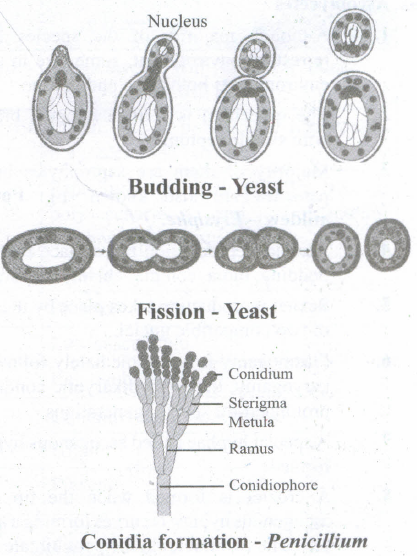
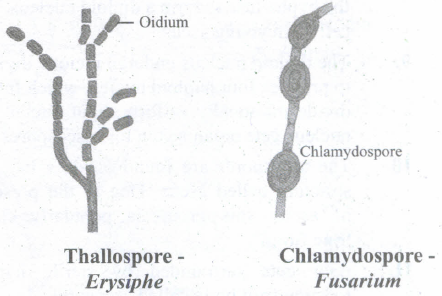
Explain the different methods of asexual reproduction in fungi.
26.
Compare sympodial branching with monopodial branching.
27.
Explain the different types of fleshy fruit with suitable example.
28.
29.
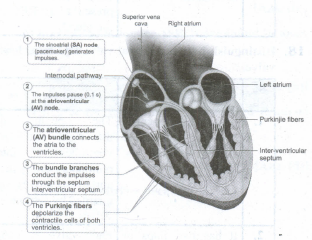
Give a brief account on Cardio Pulmonary Resuscitation (CPR).
30.
Write the characteristics of Bacterial chromosome.
31.
What is cardiac output?
32.
Could the number of eggs or young ones produced by an oviparous and viviparous female be equal? Why?
1.
Depending on the presence or absence of surface antigens on the RBCs, blood group in individual belongs to four different types namely, A, B, AB and O. The plasma of A, B and O individuals have natural antibodies (agglutinins) in them. Surface antigens are called agglutinogens. The antibodies (agglutinin) acting on agglutinogen A is called anti A and the agglutinin acting on agglutinogen B is called anti B. Agglutinogens are absent in a blood group. Agglutinogens A and B are present in AB blood group and do not contain anti A and anti B in them. A, B and O are major allelic genes in ABO systems. All agglutinogens contain sucrose, Dsgalactose, N-acetyl glucosamine and 11 terminal amino acids. The attachments of the terminal amino acids are dependent on the gene products of A and B. The reaction is catalysed by glycosyltransferase.
2.
There are three pairs of salivary glands in the mouth. They are the largest parotids gland in the cheeks, the sub-maxillary/sub-mandibular in the lower jaw and the sublingual beneath the tongue.
3.
The increase in pulmonary volume and decrease in the intrapulmonary pressure forces the fresh air from outside. to enter the air passages into the lungs to equalize the pressure. This process is called inspiration.
4.
(a) Clitellum Location: 14th to 17th segments appears as unsegmented externally
(b) Spermathecal openings: Location 6/7, 7/8 and 8/9 segments.
5.
| Homoiomerous | Heteromerous |
| Algal cells evenly distributed in the thallus | A distinct layer of algae and fungi present |
6.
(i) Presence of well organised plant body which is differentiated into roots, stem and leaves.
(ii) Presence of eustele.
7.
(a)
Entry of blood in lungs
8.
(b)
blood
9.
(c)
Diaphragm and external intercostal muscles contract
10.
(b)
Duodenum
11.
(d)
oothoea
12.
(d)
Renal colic pain
13.
(c)
Bacteriophage
14.
(b)
Tuberous root
15.
(a)
Proximal
16.
(d)
Cell
17.
(b)
cell division
18.
(c)
Lichens
19.
(d)
Lipopolysaccharide is present in cell wall
20.
(c)
They contain DNA or RNA
21.
(b)
rRNA
22.
(i) It is a structural abnormality in which superior part of the stomach protrudes slightly above the diaphragm.
(ii) Muscles are weakened due to injury and other damage in some people.
(iii) Its cause is uncertain.
(iv) Application of repeated high pressure on the smooth muscles around the stomach while coughing, vomiting and staining during bowl movements and lifting heavy object.
(v) Heart burn is the common symptom.
(vi) Under this condition, stomach contents travel back (reverse) into oesophagus or even into buccal cavity. It results in pain at the centre of chest due to eroding nature of acidity (HCl in stomach).
23.
1. Malfunctioning of the kidneys can lead to accumulation of urea and other toxic substances, leading to kidney failure. In such patients toxic urea can be removed from the blood by a process called haemodialysis
2. A dialysing machine or an artificial kidney is connected to the patient's body. A dialysing machine consists of a long cellulose tube surrounded by the dialysing fluid in a water bath.
3. The patient's blood is drawn from a convenient artery and pumped into the dialysing unit after adding an anticoagulant like heparin.
4. The tiny pores in the dialysis tube allows small molecules such as glucose, salts and urea to enter into the water bath, whereas blood cells and protein molecules do not enter these pores.
5. This stage is similar to the filtration process in the glomerulus. The dialysing liquid in the water bath consists of solution of salt and sugar in correct proportion in order to prevent loss of glucose and essential salts from the blood.
6. The cleared blood is then pumped back to the body through a vein.
24.
25.
Asexual reproduction in Fungi:
1. Zoospores : They are flagellate structures produced in zoosporangia. Eg : Chytrids.
2. Conidia : The spores produced on conidiophores. Eg: Aspergillus.
3. Oidia/Thallospores : The hypha divides and develop into spores called oidia. Eg : Erysiphe.
4. Fission : The vegetative cell divides into 2 daughter cells. Eg: Schizosaccharomyces- Yeast.
5. Budding: A small outgrowth is developed on parent cell, which gets detached and becomes independent. Eg: Saccharomyces - Yeast.
6. Chlamydospore: Thick walled resting spores are called chlamydospores Eg: Fusarium.
26.
| S.No | Monopodial Branching | Sympodial branching |
|---|---|---|
| 1 | Indeterminate: The terminal bud grows uninterrupted and produce several lateral branches. This type of growth is also known as monopodial branching. Example: Polyalthia, Swietenia. |
Determinate: The terminal bud ceases to grow after a period of growth and further growth is taken care by successive or several lateral meristem or buds. This type of growth is also known as sympodial branching. Example: Cycas. |
27.
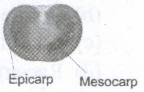
The fruits are derived from single pistil where the pericarp is fleshy, succulent and differentiated into epicarp, mesocarp and endocarp. It is subdivided into the following.
(i) Berry: Fruit develops from bicarpellary or multicarpellary, syncarpous ovary. Here the epicarp is thin, the mesocarp and endocarp remain undifferentiated. They form a pulp in which the seeds are embedded. Eg: Tomato, Grapes, Brinjal.
(ii) Drupe: Fruit develops from monocarpellary, superior ovary. It is usually one seeded. Pericarp is differentiated into outer skinny epicarp, fleshy and pulpy mesocarp and hard and stony endocarp around the seed. Eg: Mango, Coconut.
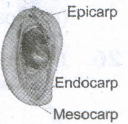
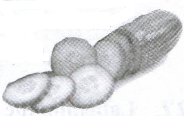
(iii) Pepo: Fruit develops from tricarpellary inferior ovary. Pericarp turns leathery or woody which encloses, fleshy mesocarp and smooth endocarp. Eg: Cucumber, Watermelon, Bottle gourd, Pumpkin.
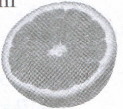
(iv) Hesperidium:Fruit develops from multicarpellary, multilocular, syncarpous, superior ovary. The fruit wall is differentiated into leathery epicarp with oil glands, a middle fibrous mesocarp. The endocarp forms distinct chambers, containing juicy hairs. Eg: Orange, Lemon.
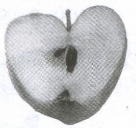
(v) Pome: It develops from multicarpellary, syncarpous, inferior ovary. The receptacle also develops along with the ovary and becomes fleshy, enclosing the true fruit. In pome the epicarp is thin skin like and endocarp is cartilaginous. Eg: Apple, Pear.
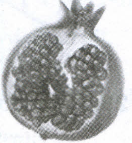
(vi) Balausta: A fleshy indehiscent fruit developing from multicarpellary, multilocular inferior ovary whose pericarp is tough and leathery. Seeds are attached irregularly with testa being the edible portion. Eg: Pomegranate.
28.
29.
(i) The manual method called mouth to mouth for CPR was introduced by James Elam and Peter Safar in 1956.
(ii) It is a life saving process.
(iii) It is performed under emergency conditions when persons feel difficulty in breathing and heart beats.
(iv) CPR is needed when a patient is under treatment due to drowning, electric shock or heart attack.
(v) CPR administrated from mouth practisioner to the mouth of the victim for filling of air in the lungs of victim.
(vi) This practice promotes the circulation of blood to the vital organs.
(vii) The duration of CPR is 4-6 minutes after cessation of breath to prevent brain damage or death.
(viii) Defibrillation is simultaneously done along with CPR.
(ix) Defibrillation means a brief electric shock is given to the heart to recover the function of the heart.
30.
1. The bacterial chromosome is, a single circular DNA molecule, tightly coiled and is not enclosed in a membrane as in Eukaryotes.
2. This genetic material is called Nucleoid or Genophore. It is amazing to note that the DNA of E.coli which measures about Imm long when uncoiled, contains all the genetic information of the organism.
3. The DNA is not bound to histone proteins. The single chromosome or the DNA molecule is circular and at one point it is attached to the plasma membrane and it is believed that this attachment may help in the separation of two chromosomes after DNA replication.
31.
1. The amount of blood pumped out by each ventricle per minute is called cardiac output(CO).
2. It is a product of heart rate (HR) and stroke volume (SV).
32.
(i) Eggs or young ones produced by an oviparous (egg laying)and viviparous (directly yield young ones) female animals may not be equal.
(ii) Numerous eggs are laid by oviparous, so the number of produced offsprings is indefinite.
(iii) Eggs laid by oviparous, female may not develop into adults due to predators.
(iv) Oviparous female includes polyembryony.
(v) Viviparous produced by females need protection from predators associated with parental cares.
(vi) Development of young ones of oviparous female occurs in environment whereas the development of young ones of viviparous female occurs in the female reproductive system of adults.

11th Standard Syllabus & Materials
11th Standard
TN 11th Tamil பீடு பெற நில் - செய்யுள் - காவடிச்சிந்து Important Questions And Answers Study Material - QB365 Set A
NEW11th Standard
TN 11th Tamil பீடு பெற நில் - உரைநடை - மலை இடப்பெயர்கள் : ஓர் ஆய்வு Important Questions And Answers Study Material - QB365 Set A
NEW11th Standard
TN 11th Tamil மாமழை போற்றுதும் - துணைப்பாடம் - யானை டாக்டர் Important Questions And Answers Study Material - QB365 Set A
NEW11th Standard
TN 11th Tamil மாமழை போற்றுதும் - செய்யுள் - ஐங்குறுநூறு Important Questions And Answers Study Material - QB365 Set A



Tamilnadu Stateboard 11th Standard Subjects

Maths

Commerce

Economics
Biology

Business Maths and Statistics

Accountancy

Computer Science

Physics

Chemistry
Maths
Biology
Economics
Physics
Chemistry

History
Business Maths and Statistics

Computer Science
Accountancy

Computer Applications
History
Computer Technology
Commerce
Computer Applications
Computer Technology

Tamil

English

French
Tamilnadu Stateboard Standards

