
 100% FREE ACCESS
11th Standard Syllabus & Materials
11th Standard
TN 11th Tamil இயற்கை வேளாண்மை,சுற்றுச்சூழல் -செய்யுள் - மனோன்மணீயம் Important Questions And Answers Study Material - QB365 Set A
NEW11th Standard
TN 11th Tamil என்னுயிர் என்பேன் -துணைப்பாடம் - இசைத்தமிழர் இருவர் Important Questions And Answers Study Material - QB365 Set A
NEW11th Standard
TN 11th Tamil மொழி கலை -செய்யுள் - ஒவ்வொரு புல்லையும் Important Questions And Answers Study Material - QB365 Set A
NEW11th Standard
TN 11th Tamil பீடு பெற நில் - இலக்கணம் - பகுபத உறுப்புகள் Important Questions And Answers Study Material - QB365 Set A
NEW11th Standard
TN 11th Tamil பீடு பெற நில் - துணைப்பாடம் - வாடிவாசல் Important Questions And Answers Study Material - QB365 Set A
NEW11th Standard
TN 11th Tamil பீடு பெற நில் - செய்யுள் - குறுந்தொகை Important Questions And Answers Study Material - QB365 Set A

Published on: 15/09/2018
Model Paper 2
Download Tamil Nadu 11th Standard Chemistry question papers, model tests, one-mark questions, important questions, and public exam papers in PDF format. Free study materials and answer keys for TN State Board students.
Questions + Answers key
Take MCQ Chemistry Test
1.
Assertion: Permanent hardness of water is removed by treatment with washing soda.
Reason: Washing soda reacts with soluble calcium and magnesium chlorides and sulphates in hard water to form insoluble carbonates
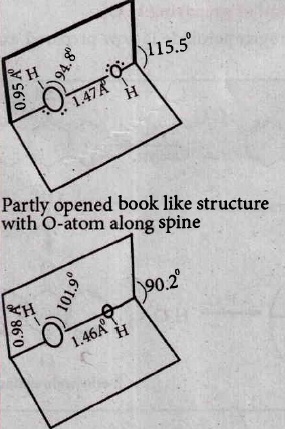
Both assertion and reason are true and reason is the correct explanation of assertion.
Both assertion and reason are true but reason is not the correct explanation of assertion.
Assertion is true but reason is false
Both assertion and reason are false
2.
Lithium shows diagonal relationship with _____________
sodium
magnesium
calcium
aluminium
3.
Find the wrong statement
sodium metal is used in organic qualitative analysis
sodium carbonate is soluble in water and it is used in inorganic qualitative analysis
potassium carbonate can be prepared by solvay process
potassium bicarbonate is acidic salt
4.
In solid ice, oxygen atom is surrounded _____________
tetrahedrally by 4 hydrogen atoms
octahedrally by 2 oxygen and 4 hydrogen atoms
tetrahedrally by 2 hydrogen and 2 oxygen atoms
octahedrally by 6 hydrogen atoms
5.
The reaction H3PO2 + D2O ➝ H2DPO2 + HDO indicates that hypo-phosphorus acid is _____________
tribasic acid
dibasic acid
mono basic acid
none of these
6.
A commercial sample of hydrogen peroxide marked as 100 volume H2O2, it means that _____________
1 ml of H2O2 will give 100 ml O2 at STP
1 L of H2O2 will give 100 ml O2 at STP
1 L of H2O2 will give 22.4 L O2
1 ml of H2O2 will give 1 mole of O2 at STP
7.
Zeolite used to soften hardness of water is hydrated _____________
Sodium aluminium silicate
Calcium aluminium silicate
Zinc aluminium borate
Lithium aluminium hydride
8.
The cause of permanent hardness of water is due to _____________
Ca(HCO3)2
Mg(HCO3)2
CaCl2
MgCO3
9.
Water gas is _____.
H2O(g)
CO + H2O
CO + H2
CO + N2
10.
Which of the following statements about hydrogen is incorrect?
Hydrogen ion, H3O+ exists freely in solution.
Dihydrogen acts as a reducing agent.
Hydrogen has three isotopes of which tritium is the most common.
Hydrogen never acts as cation in ionic salts.
11.
Give the uses of gypsum.
12.
How is plaster of paris prepared ?
13.
When the first element of the periodic table is treated with dioxygen, it gives a compound whose solid state floats on its liquid state. This compound has an ability to act as an acid as well as a base. What products will be formed when this compound undergoes autoionisation ?
14.
Dihydrogen reacts with dioxygen (O2) to form water. Write the name and formula of the product when the isotope of hydrogen which has one proton and one neutron in its nucleus is treated with oxygen. Will the reactivity of both the isotopes be the same towards oxygen? Justify your answer.
15.
An element (A) which is used in metallurgy for the reduction of metal oxide to metal reacts with carbon monoxide and forms an industrial solvent (B). The industrially produced element (A) reacts with nitrogen to form compound (C). Identify A, B, and C.
16.
Compound A is an important peroxide which disproportionates to give oxygen and water. Compound A reacts with ferrous sulphate under the acidic condition to give compound B. Compound A reacts with KMnO4 in basic condition to form (C) and (D) along with water and CO2 What are A, B, C and D ? Write down the equations involved in their formation.
17.
Identify the compound (A) which is a universal solvent. Compound A reacts with chlorine gas to give B and C. Compound A dissolves in an ionic compound of silicon to give compound D. Identify A and write the equations involved in the formation of B, C, and D.
18.
An element (A) belonging to group number 1 and period number 3 react with dihydrogen to form anhydride (B). The element (A) reacts with the universal solvent to give a strong base (C). Identify A, B, and C.
19.
Difference between ortho and para hydrogen
20.
Discuss the uses of hydrogen.
21.
Illustrate the industrial applications of hydrogen depending on
(i) The heat liberated when its atoms are made to combine on the surface of metal.
(ii) Its effect on unsaturated organic system.
(iii) Its ability to combine with nitrogen under specific conditions.
22.
Compare the structures of H2O and H2O2 .
23.
What is Heavy water?
24.
What causes hardness in water?
25.
Explain the reaction of water with halogens.
26.
What happens when steam is passed over hot iron.
27.
Complete the following reactions and balance them:
(i) CO(g) + H2(g)➝
(ii) CH4(g) + H2O(g) \(\overset { 1270K }{ \underset { Ni }{ \rightarrow } } \)
28.
What are the advantages of using hydrogen as fuel?
29.
What is Hydrogenation?
30.
Write a note on Haber's process.
1.
(a)
Both assertion and reason are true and reason is the correct explanation of assertion.
2.
(b)
magnesium
3.
(c)
potassium carbonate can be prepared by solvay process
4.
(a)
tetrahedrally by 4 hydrogen atoms
5.
(c)
mono basic acid
6.
(a)
1 ml of H2O2 will give 100 ml O2 at STP
7.
(a)
Sodium aluminium silicate
8.
(c)
CaCl2
9.
(c)
CO + H2
10.
(c)
Hydrogen has three isotopes of which tritium is the most common.
11.
1. Gypsum is used in making drywalls or plaster boards.
2. Another important use of gypsum is the production of plaster of Paris. Gypsum is heated to about 300 degree Fahrenheit to produce plaster of paris, which is also known as gypsum plaster. It is mainly used as a sculpting material.
3. Gypsum is used in making surgical and orthopedic casts, such as surgical splints and casting moulds.
4. Gypsum plays an important role in agriculture as a soil additive, conditioner, and fertilizer. It helps loosen up compact or clay soil, and provides calcium and sulphur, which are essential for the healthy growth of a plant.
5. Gypsum is used in toothpastes, shampoos, and hair products.
6. Gypsum is a component of portland cement, where it acts as a hardening retarder to control the speed at which concrete sets.
12.
Calcium Sulphate (plaster of paris), CaSO4. 1/2H2O :
It is a hemihydrate of calcium sulphate. It is obtained when gypsum, CaSO4 .2H2O,is heated to 393 K
2(CaSO4.2H2O) ⟶ 2CaSO4,H2O + 3H2O
Above 393 K, no water of crystallisation is left and anhydrous calcium sulphate, CaSO4 is formed. This is a known 'dead burnt plaster'.
It has a remarkable property of setting with water. on mixing with an adequate quantity of water it forms a plastic mass that gets into hard solid in 5 to 15 minutes.
13.
The first element of the periodic table is hydrogen.
2H2 + O2 ➝ 2H2O
The compound formed is water.
Auto - ionization or auto-protolysis of water proceeds as follows
\(\underset { Acid }{ { H }_{ 2 }O(l) } +\underset { Base }{ { H }_{ 2 }O(l) } \longleftrightarrow \underset { Conjugate\quad Acid }{ { H }_{ 3 }O } +(aq)+\underset { Conjugate\quad Acid }{ OH-(aq) } \)
14.
2H2 + O2 ➝ 2H2O
The isotope of hydrogen which has one proton and one neutron in its nucleus is Deuterium.
2D2 + O2 ➝ 2D2O
The product is heavy water (Deuterium oxide). H2O and D2O have same chemical properties but the
reaction velocity of D2O is slightly less due to the difference in the mass number of the isotopes known as isotopic effect. Deuterium is heavier than protium so reacts slowly.
15.
(i) The element (A) is hydrogen reacts with carbon monoxide to form methanol (B).
CO + 2H2 \(\overset{Cu}{\rightarrow}\) CH3OH
(A) (B)
(ii) Hydrogen reacts with nitrogen to form ammonia (C).
\({ N }_{ 2 }+3{ H }_{ 2 }\quad \overset { 380-{ 450 }^{ 0 }C }{ \underset { 200/atm\quad 1le }{ \rightleftharpoons } } 2\underset { (C) }{ { NH }_{ 2 } } \)
| A | H2 | Hydrogen |
| B | CH3OH | Methanol |
| C | NH3 | Ammonia |
16.
(i) A important peroxide is hydrogen peroxide (A).
(ii) H2O2 disproportionates to form oxygen and water.
\(\underset { (A) }{ { H }_{ 2 }{ O }_{ 2 } } \quad \longrightarrow { H }_{ 2 }O+\frac { 1 }{ 2 } { O }_{ 2 }\)
(iii) H2O2 reacts with FeSO4 in acidic condition to form ferric sulphate (B).
2FeSO4 + H2SO4 + H2O2 ➝ Fe2(SO4)3 + 2H2O
(A) (B)
(iv) H2O2 reacts with KMnO4 in basic condition and form Manganese dioxide (C) and potassium hydroxide (D).
2KMnO4 + 3H2O2 ➝ 2MnO2 + 2KOH + 2H2O + 3O2
(A) (C) (D)
| A | H2O2 | Hydrogen peroxide |
| B | Fe2(SO4)3 | Ferric sulphate |
| C | MnO2 | Manganese dioxide |
| D | KOH | Potassium hydroxide |
17.
(i) The universal solvent is water (A).
(ii) Water reacts with chlorine gas to form Hydrochloric acid (B) and Hypochlorous acid (C).
Cl2 + H2O ➝ HCl + HOCl
(A) (B) (C)
(iii) Water reacts with silicon tetrachloride (SiCI4) to give silicon dioxide (D).
SiCl4 + 2H2O ➝ SiO2 + 4HCl
(A) (D) (B)
| A | H2O | Water |
| B | HCl | Hydro chloric acid |
| C | HOCl | Hypo chlorous acid |
| D | SiO2 | Silicon dioxide |
18.
(i) An element (A) belonging to group number 1 and period number 3 is sodium (A).
(ii) Sodium reacts with hydrogen to form sodium hydride (B)
2Na + H2 ➝ 2NaH
(A) (B) (C)
(iii) Sodium reacts with water to form sodium hydroxide (C).
2Na + 2H2O ➝ 2NaOH + H2
(A) (C)
| A | Na | Sodium |
| B | NaH | Sodium hydride |
| C | NaOH | Sodium hydroxide |
19.
Ortho and para hydrogen :
| Ortho Hydrogen | Para Hydrogen | |
| 1. Definition | Hydrogen molecule in which the protons in the nuclei of both H-atoms are known to spin in same direction is termed as ortho hydrogen. | If the protons in the nuclei of both H-atoms spin in opposite direction, it is termed as para Hydrogen |
| 2. Composition | At room temperature ordinary hydrogen consists of about 75% ortho and 25% para form. | As the temperature is lowered, the equilibrium shifts in favour of para hydrogen. At 25K, there is 99% para and 1% ortho hydrogen |
| 3. Melting Point | Melting point of ortho hydrogen is 13.95 K | Melting point of para hydrogen is 13.83K |
| 4. Boiling Point | Boiling point of ortho hydrogen IS 20.39K | Boiling point of para hydrogen 20.26K |
| 5. Vapour Pressure | The vapour pressure of ortho hydrogen is lower | The vapour pressure of liquid para hydrogen is higher than that of ordinary liquid hydrogen. |
| 6. Magnetic Moment | Magnetic moment of ortho is twice than that of a proton | The magnetic moment of para hydrogen is zero since the spins neutralise each other |
| 7. Internal molecular energy | Ortho hydrogen possesses a higher internal molecular energy | Para hydrogen possesses a lower internal molecular energy than ortho form |
20.
(i) Over 90 % hydrogen produced in industry is used for synthetic applications. One such process is Haber process which is used to synthesis ammonia in large scales. Ammonia is used for the manufacture of chemicals such as nitric acid, fertilizers and explosives.
N2 + 3H2 \(\overset { 380-450^{0}C }{ \underset {200atm/Fe }{ \rightleftharpoons } } \) 2NH3
(ii) It can be used to manufacture the industrial solvent, methanol from carbon monoxide using copper as catalyst.
CO + 2H2 \(\overset { Cu }{ \longrightarrow } \) CH3OH
(iii) Unsaturated fatty oils can be converted into saturated fats called Vanaspati (margarine) by the reduction reaction with Pt/H2.
(iv) In metallurgy, hydrogen can be used to reduce many metal oxides to metals at high temperatures.
CuO + H2 ➝ Cu + H2O
WO3 + 3H2 ➝ W + 3H2O
(v) Atomic hydrogen and oxy-hydrogen torches are used for cutting and welding.
(vi) Liquid hydrogen is used as a rocket fuel.
(vii) Hydrogen is also used in fuel cells for generating electrical energy. The reversible uptake of hydrogen in metals is also attractive for rechargeable metal hydride battery.
21.
(i) Hydrogen liberates heat when it comes in contact with a metal. This property of hydrogen is used in atomic hydrogen welding and cutting torch.
(ii) Hydrogen reacts with unsaturated oil (Vegetable oil) in the presence ofNi catalyst. This property is used in the production of vanaspathi ghee.
(iii) Hydrogen combines with nitrogen in the ratio 3:1 in presence of Fe as catalyst and:
Mo as promoter. This property is used in the manufacture of ammonia . (Haber's process).
N2 + 3H2 \(\overset { 673k,200atm }{ \underset { Fe,Mo }{ \rightleftharpoons } } \) 2NH3
22.
| H2O | H2O2 | |
|---|---|---|
| Hybridisation of oxygen |
SP3 | Sp3 (each 0 - atom) |
| Structure | .jpg) |
 |
23.
Heavy water (D2O) is the oxide of heavy hydrogen.
24.
Water containing bicarbonates, sulphates and chlorides of calcium and magnesium is called hard water.
25.
Halogens react with water to give an acidic solution. For example, chlorine forms hydrochloric acid and hypochlorous acid.
Cl2(g) + H2O(l) ➝ HCl (aq) + HOCl(aq)
26.
Steam when passed over hot iron gives iron oxide with the evolution of Hydrogen.
3Fe(s) + 4H2O(l) ➝ Fe3O4(s) + H2(g)
27.
(i) CO(g) + 2H2(g) \(\overset { Cu }{ \longrightarrow } \underset { Methanol }{ { CH }_{ 3 }{ OH }_{ (1) } } \)
(ii) CH4(g) + H2O(g) \(\overset { 1270K }{ \underset { Ni }{ \rightarrow } } \)CO(g) + 3H2(g)
28.
(i) H2 has high energy per unit weight of fuel.
(ii) Burning of H2 will not release any pollutants.
(iii) On combustion it forms water as a byproduct.
(iv) Fuel cells which use H2 as fuel shows 70 to 85% higher efficiency than other fuel cells.
29.
Hydrogenation is an extremely important process in food industry. The addition of hydrogen to an alkene/ alkyne is called hydrogenation.
H2C = CH2(g) \(\longrightarrow\) H3C - CH3(g)
30.
The process of manufacture of ammonia is called Haber process, which is used for manufacturing nitric acid, fertilizers and explosives. Hydrogen combines with nitrogen in the ratio 3: 1 in presence of Fe as catalyst and Mo as promoter.
\({ N }_{ 2 }(g)+{ 3H }_{ 2 }(g)\rightleftarrows 2{ NH }_{ 2 }(g)\)

11th Standard Syllabus & Materials
11th Standard
TN 11th Tamil பீடு பெற நில் - செய்யுள் - காவடிச்சிந்து Important Questions And Answers Study Material - QB365 Set A
NEW11th Standard
TN 11th Tamil பீடு பெற நில் - உரைநடை - மலை இடப்பெயர்கள் : ஓர் ஆய்வு Important Questions And Answers Study Material - QB365 Set A
NEW11th Standard
TN 11th Tamil மாமழை போற்றுதும் - துணைப்பாடம் - யானை டாக்டர் Important Questions And Answers Study Material - QB365 Set A
NEW11th Standard
TN 11th Tamil மாமழை போற்றுதும் - செய்யுள் - ஐங்குறுநூறு Important Questions And Answers Study Material - QB365 Set A



Tamilnadu Stateboard 11th Standard Subjects

Maths

Commerce

Economics

Biology

Business Maths and Statistics

Accountancy

Computer Science

Physics
Chemistry
Maths
Biology
Economics
Physics
Chemistry

History
Business Maths and Statistics

Computer Science
Accountancy

Computer Applications
History
Computer Technology
Commerce
Computer Applications
Computer Technology

Tamil

English

French
Tamilnadu Stateboard Standards
