
 100% FREE ACCESS
11th Standard Syllabus & Materials
11th Standard
TN 11th Tamil இயற்கை வேளாண்மை,சுற்றுச்சூழல் -செய்யுள் - மனோன்மணீயம் Important Questions And Answers Study Material - QB365 Set A
NEW11th Standard
TN 11th Tamil என்னுயிர் என்பேன் -துணைப்பாடம் - இசைத்தமிழர் இருவர் Important Questions And Answers Study Material - QB365 Set A
NEW11th Standard
TN 11th Tamil மொழி கலை -செய்யுள் - ஒவ்வொரு புல்லையும் Important Questions And Answers Study Material - QB365 Set A
NEW11th Standard
TN 11th Tamil பீடு பெற நில் - இலக்கணம் - பகுபத உறுப்புகள் Important Questions And Answers Study Material - QB365 Set A
NEW11th Standard
TN 11th Tamil பீடு பெற நில் - துணைப்பாடம் - வாடிவாசல் Important Questions And Answers Study Material - QB365 Set A
NEW11th Standard
TN 11th Tamil பீடு பெற நில் - செய்யுள் - குறுந்தொகை Important Questions And Answers Study Material - QB365 Set A

Published on: 28/12/2018
+1 First Revision Test
Download Tamil Nadu 11th Standard Commerce question papers, model tests, one-mark questions, important questions, and public exam papers in PDF format. Free study materials and answer keys for TN State Board students.
Questions + Answers key
Take MCQ Commerce Test1.
Write a short note on Central Bank.
2.
What are Cargo Liners?.
3.
What is FDI?
4.
What is International Trade?
5.
Give any two reasons for International business.
6.
7.
Who are called stakeholders?
8.
Define the term "Business" according to H. Haney.
9.
Give two examples of MNC's
10.
For which of the following types of business do you think a sole proprietorship form of organisation would be more suitable, and why?
(a) Grocery Store
(b) Medical store
(c) Craft centre
(d) Legal consultancy
(e) Internet cafe
11.
'Bata' is flourishing in ............country.
France
U.S.A
England
India
12.
In a public limited company, shares are freely____________.
redeemable
convertible
transferable
None of these
13.
The certificate of origin is issued by__________.
The Federation of Indian Chamber of Commerce and Industry
Export Promotion Councils
Trade Associations
All the above
14.
'CFBP' stands for .....................
Council for Fair Business Practices
Central Federation Business Practices
Cottage Federation Beurau Promotion
None of these
15.
MSME Development Act was passed in the year ...........
2000
2002
2006
2007
16.
In_______ Insurance insurable interest must be there at the time of contract as well as at the time of loss.
Life
Fire
Property
Marine
17.
Through___________ money can be drawn at any time at the specified centers.
Blank cheque
ATM
Cross cheque
Credit card
18.
Contracts classified on the basis of performance are_______.
executed contracts
executory contracts
partly executed or partly executory contracts
all of the above
19.
The year in which tax on income is computed and determined is called ______.
Tax year
Current year
Previous year
Assessment year
20.
The industries engaged in extraction of iron ore are known as ___________
Construction Industries
Manufacturing Industries
Extraction Industries
Genetic Industries
21.
The oldest form of organisation in public sector
Public Sector Undertakings
Departmental Undertakings
Multi National Corporations
Statutory Corporation
22.
23.
A partnership is registered with _______.
Registrar of Companies
Registrar of Co-operatives
Registrar of Firms
District Collector
24.
Funds required for purchasing current assets is an example for_____
Fixed Capital requirement
Ploughing back of profit
Working capital requirement
Lease financing
25.
Warehouses removes the hindrance of _________
Person
Time
Risk
Knowledge
26.
Trade middleman who acts as a link between wholesaler and customers refers to a ____________
Producer
Broker
retailer
customer
27.
Cooperative fails because of _______.
Unlimited membership
Cash trading
Mismanagement
Loss-making
28.
The role of Government in logistics management is through _______.
Legislations
Governance
Transport
Distribution
29.
Which bank has the power to issue Bank notes?
Central Bank
Commercial Bank
Co-operative Bank
Foreign Bank
30.
Hindrance of place is removed by _____________
Transport
Warehouse
Salesman
Insurance
31.
Show the classification of contract by a flow chart.
32.
What is the classification of Marine Policies?
33.
Under what circumstances a partnership may be dissolved as per section 42 of Partnership Act?
Dissolution on the happening of certain contingencies (Sec. 42):
34.
Who are all the parties involved in Export Trading House?
35.
Why is Ethics necessary in Business?
36.
What is the role and significance of MSMEs in Indian Economy?
37.
What do you mean by Core Banking Solutions?
38.
When a contract is discharged by the operation of law?
39.
What is Gross Total Income?
40.
What are the services rendered by a wholesaler to the manufacturers?
41.
What are the goods India is exporting and importing?
42.
Take up a recent newspaper clipping about RBI such as the measures taken to reduce NPA etc.
43.
Explain Corporate Social Responsibility in India with an example:
44.
Explain the features of Outsourcing:
45.
Briefly explain the auxiliaries to trade.
46.
Explain the types of Itinerant Traders.
47.
48.
What is Ocean Transport? What are its types?
49.
Point out the objectives of WTO (any 5).
50.
Can a minor is admitted in the Joint Hindu Family business - Why?
51.
Difference between Contract and Agreement.
52.
What are the types of Cooperative Society? (any 5)
53.
List out the various Sources of Financing.
54.
1.
Every country has a Central Bank. It acts as the leader of the money market, supervising, controlling and regulating the activities of commercial banks and other financial institutions.
It is the apex bank. It is the bank of Note-issue. It acts as the banker, agent and advisor to the Government. Such a bank is called the Central Bank. The Reserve Bank of India (RBI)is the Central Bank of India.
2.
Cargo liners are large ocean going ships. They carry large quantities of cargo and a limited number of passengers. They ply regularly according to pre-planned timetable. They cater to the normal demands of the people throughout the year.
3.
Foreign direct investment (FDI) is an investment made by a company or an individual in one country with business interests in another country, in the form of either establishing business operations or acquiring business assets in the other country, such as ownership or controlling interest in a foreign company.
4.
International trade is a trade between a seller and buyer of different countries. It involves the exchange of goods and services of one country with another country.
5.
Uneven Availability of Factors of Production:
The availability of various factors of production namely, land, labour, capital and technology for producing goods and services differ among different countries.
Cost Benefit :
Production cost varies significantly among the countries due to difference in socio economic, geographical, demographical, technical and political environments prevailing therein.
6.
7.
A business organisation is a coalition of several interest groups or stakeholders like shareholders, customers, employees, suppliers, etc.
8.
According to H. Haney "Business" may be defined as a human activity directed towards producing or acquiring wealth through buying and selling of goods.
9.
(i) Bata corporation
(ii) Coca-cola corporation
10.
Legal consultancy - because the organisation would rely solely on an individual's talent and therefore he need not consult anybody else regarding his business.
11.
(d)
India
12.
(c)
transferable
13.
(d)
All the above
14.
(a)
Council for Fair Business Practices
15.
(c)
2006
16.
(d)
Marine
17.
(b)
ATM
18.
(d)
all of the above
19.
(c)
Previous year
20.
(c)
Extraction Industries
21.
(b)
Departmental Undertakings
22.
(d)
23.
(c)
Registrar of Firms
24.
(c)
Working capital requirement
25.
(b)
Time
26.
(c)
retailer
27.
(c)
Mismanagement
28.
(d)
Distribution
29.
(a)
Central Bank
30.
(a)
Transport
31.
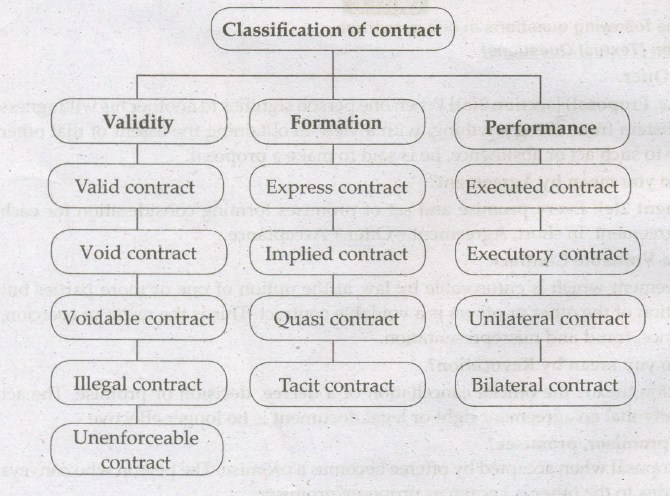
32.
The classification of Marine Policies are:
On the Basis of Subject matter:
The policiesare classifiedinto three categories.They are:
(a) Cargo Insurance:
They deals with the insurance of goods while in transit by ship. This insurance provides protection against various risks such as fire, explosion, collision, theft, storm, jettisoning, etc., The cargo includes wares, merchandise, property, machinery, goods and so on.
(b) Hull Insurance:
The insurance deals with the insurance of ocean going vessels, fishing vessels, yachts, dredgers and. builder's risks when the ship is under construction. This policy covers risk of fire, collision, storm, standing and liabilities against third parties .
(c) Freight Insurance:
Freight is payable for the carriage of cargoes. If the vessel is charted, hiring charges are payable. The carrier will lose the freight, if the cargoes are not delivered at the destination and the insurance company will cover the loss of freight
33.
A partnership may be dissolved on the happening of the following contingencies:
(i) Death of a partner.
(ii) Expiry of the time, if it is for a fixed period.
(iii) Completion of the venture for which firm was formed.
(iv) Adjudication of a partner as an insolvent.
34.
It consists of merchants, exporters, trading companies, export oriented units, units located in export processing zones, electronic hardware technology park etc.
35.
1. All business units have realised that ethics is vitally important for the existence and progress of the business as well as the society.
2. It is very important as it improves public image, earns public confidence, and leads to greater success.
3. Ethics and profits go together in the long run. It enhances the quality of life, standard of living and business.
36.
The MSME sector contributes about 8% to Gross Domestic Product (GDP) besides 45% to the total manufacturing output and 40% to the exports from the country on the production of more than 6000 products. This sector consists of 36 million units and provides employment to over 8 crore people.
37.
1. 'CORE' stands for 'Centralized Online Real time Exchange'.
2. In the centralized server of the bank, all the details of all the accounts of all the branches of the bank are available.
3. A customer can withdraw money through cheque at any branch of that bank throughout the world.
4. Similarly anyone can deposit money into the account.
38.
A contract can be discharged by the operation of law. The operation of law by which the contract can be discharged are as follows :
(i) By Death:
If the contract depends on the personal skill or ability, then such contract may be discharged on the death of the promisor.
(ii) By Merger:
Merger will take place when inferior rights accruing to the same party either under the same or another contract.
(iii) By insolvency:
An insolvent is discharged from all Liabilities incurred prior to his adjudication.
(iv) Unauthorised alteration of the terms of the contract:
If one party makes any material alteration in the contract without the consent of other party, then the other party can avoid the contract.
(v) Rights and Liabilities vesting in the same person:
Where the Rights and Liabilities become vested in the same person, the other parties are discharged.
39.
Income aggregated after adjusting past and present losses and the total so arrived at is known as 'Gross Total Income'.
40.
A wholesaler provides valuable services to manufacturers, producers, retailers and customers.
1. Economies in Large Scale.
2. Assistance in Distribution.
3. Warehousing Facility.
4. Forecasting of Demand
5. Publicity of Goods
6. Financial Assistance.
7. Risk-bearer
8. Link
41.
India's important export and import Items:
| S.No. | Export items | Import items |
|---|---|---|
| (i) | Petroleum products | Mineral fuels including oil |
| (ii) | Jewellery | Gem, precious metals |
| (iii) | Automobile | Electrical machinery and equipments |
| (iv) | Bio-chemicals | Machinery including computers |
| (v) | Pharmaceuticals | Organic chemicals |
42.
The non-performing asset (NPA) situation has been one of the contentious issue in the country over the last few years. Even though demonstration has been issueed. Recently, the issue of NPAs has been at the foremost of the banking fraternity's concerns in the last year. In the context of an ordinance issued by the government to provide more independence to the Rese~e Bank of India (RBI), it is important to understand what can really be done, considering that RBI has more powers to address this issue. The question for the RBI now is "How will it solve the problem?". While experts have commented on various measures, it would also be prudent to look across the border to China to see how to deal with this.
1. The first was to reduce risks by strengthening banks and spearheading reforms to the state-owned enterprises (SOEs) by reducing their level of debt.
2. The second important measure was enacting laws that allowed the creation of assets management companies, equity participation and most importantly asset-based securitization.
3. The third key measure that the China took was to ensure the government had the financial loss of the debt "discounted" and debts equity swaps were allowed in case of growth opportunity.
4. The fourth measure they took was producing incentives like tax breaks, exemption from administrative fees and transparent evaluation norms.
To conclude, it is important to look after some of the key measures taken by other countries to address the NPA issue. India should learn from it, especially is the context of valuations, securitization and more targeted NPA redresal mechanism.
43.
Tata Group is the best example for the corporate social responsibility in India. The Tata Group conglomerate in India carries out various CSR projects, most of which are community improvement and poverty alleviation programs. Through self-help groups, it is engaged in women empowerment activities, income generation, rural community development, and other social welfare programs. In the field of education, the Tata Group provides scholarships and endowments for numerous institutions.
44.
Transferring Non Core Activities to Outsiders:
Companies can outsource those non core activities functions like maintenance, housekeeping, gardening, etc. to outsiders, depending upon the nature of the business and the activities are identified as core or non core activities.
Outsourcing Involves Contracting:
As the companies start outsourcing their activities focusing on their main business, the outside agencies enter into an agreement with the company to perform the routine activities on a contractual basis.
Operational Efficiency through Outsourcing:
Companies specialize in their business system as the time available at their disposal can be utilized for the core activities leading to efficiency improving quality of the product.
Improved Customers Satisfaction:
The number of customers can be increased through timely delivery and high quality services. Outsourcing helps in customer satisfaction and results in repetitive purchase of the same product.
Cost Reduction:
The only way to survive and earn profit is through global competitiveness by fixing a competitive price. Division of labour and specialization along with good quality product reduces the cost. For example outsourcing of research and development, manufacturing, software development etc.
45.
Auxiliaries to Trade:
All activities that facilitate smooth flow of goods from manufacturing centre's to the consumption centre's are called auxiliaries to trade or aids to trade. Auxiliaries to trade may be classified into five categories.
Transportation :
(1) Selling the goods produced at or near the production place is not possible.
(2) Hence, goods are to be sent to different places where they are demanded.
(3) The medium which moves men and materials from one place to another is called transport.
Banking :
(1) Bank is an organization which accepts deposits of money from the public, withdrawals on demand or otherwise, and lends the same to those who need it.
(2) Business activities cannot be undertaken unless funds are available for acquiring assets, purchasing raw materials and meeting other expenses.
(3) Thus, banking helps business activities to overcome the problem of finance.
Insurance:
(1) Business involves various types of risks.
(2) Factory building, machinery, furniture, etc. must be protected against fire, theft and other risks.
(3) Materials and goods held in stock or in transit are subject to the risk of loss or damage.
(4) Employees are also required to be protected against the risks of accident and occupational hazards.
(5) Insurance provides protection in all such cases.
Warehousing:
(1) Usually goods are not sold or consumed immediately after production.
(2) They are held in stock to make them available as and when it is required.
(3) Warehousing helps business firms to overcome the problem of storage and facilitate the availability of goods when needed.
(4) Prices are thereby maintained at a reasonable level through continuous supply of goods.
Advertising:
(1) Advertising is one of the most important methods of promoting the sale of products, particularly, consumers goods like electronic goods, automobiles, Soaps, detergents, etc.
(2) Also there is a need to persuade potential buyers about the uses, quality, prices, competitive information about the goods and services, etc.
(3) Advertising helps in providing information about available goods and services and inducing customers to buy particular item as.
46.
(i) Peddlers and Hawkers :
(1) Peddlers are individuals who sell their goods by carrying on their head or shoulders moving from place to place on foot.
(2) Hawkers are petty retailers who sell their goods at various places such as bus stop, Railway Station, Public park and Gardens, residential areas and other Public places using a convenient vehicle to carry goods from place to place.
(ii) Street Vendors:
The traders sit on the footpath of the road or at the end of the road (pavement) and sell their goods such as fruits, vegetables, books, etc. are called Street vendors.
(iii) Market Traders:
(1) Small Traders open their shops at different places on Fixed days or dates such as every Sunday or alternative Wednesday and so on.
(2) They deal in one particular line of merchandise and in low priced consumer items of daily use. Examples : Pollachi, Manapparai, Ranipet, etc.
(iv) Cheap Jacks :
(1) Those retailers who have independent shops of temporary nature in a business locality are depending upon the potentiality of the area.
(2) They deal in consumer goods and services such as Shoes, and Chappals, Plastic items, Repair of Watches, etc.
47.
48.
(i) Ocean transport has been playing a significant role in development of economic, social and cultural relations among countries of the world. International trade owes its growth to ocean transport.
(ii) Ocean transport enjoys a pride of place in aiding international trade. Cheapness is its great virtue. In the transportation of low-grade, bulky goods among the countries, ocean transport role is commendable.
Types of Ocean Transport:
Ocean Transport may be divided into two categories
(i) Coastal Shipping
(ii) Overseas Shipping
(i) Coastal shipping:
(1) Coastal shipping constitutes an important means of transport in all countries having a long coastline. It is a cheap means of transport for the movement of bulky cargoes like coal, iron ore etc. to domestic ports of country.
(2) Usually, coastal shipping trade of a country is reserved for national shipping. In India, Coastal shipping trade is now exclusively reserved for Indian ships.
(ii) Overseas shipping:
(1) It means the passengers and goods have to cross ocean.
(2) Overseas shipping has an important role in India's International trade. Ocean going ships may further classified as follows:
Liners and Tramps
49.
Objectives of WTO:
The objectives of WTO include the following:
(i) Improving the standard of living of people in member countries.
(ii) Making optimum utilisation of world's resources for sustainable development of member countries.
(iii) Promoting an integrated more viable and durable trading system in the sphere of international business.
(iv) Expansion of trade in goods and services.
(v) Ensuring full employment and large steady growing volume of real income and effective demand.
(vi) Protecting the environment.
50.
1. A Minor can become the member of Joint Hindu Family Business.
2. The membership of the family can be acquired only by birth.
3. As soon as a child is born in the family, that child becomes a member.
4. The business of the Joint Hindu Family is controlled and managed under the Hindu law.
5. Today Hindu Succession Act 2005 is applicable to all male and female members of a HUF.
6. As per the act of HUF by birth a minor can be admitted in the business.
7. In a Joint Hindu Family firm even a new born baby can be a Co-parcener.
51.
| Sl.No | Basis | Contract | Agreement |
| 1 | Definition | A contract is an agreement enforceable by law | An Agreement is every promise or every set of promises forming consideration |
| 2 | Enforceability | Every contract is enforceable | Every promise is not enforceable |
| 3 | Inter-relationship | A contract includes an agreement | An Agreement does not include a contract |
| 4 | Validity | Only legal agreements are called contracts. | An agreement may be both legal and illegal |
| 5 | Legal obligation | Every contract contains a legal obligation | It is not necessary for every agreement to have legal obligation. |
52.
Consumers Cooperative:
Consumer cooperatives are organized by consumers that want to achieve better prices or quality in the goods or services they purchase.
Producers Cooperative:
Producer cooperatives are established and operated by producers. Producers can decide to work together or as separate entities to help increase marketing possibilities and production efficiency.
Marketing Cooperative:
Cooperative marketing societies are associations of small producers formed for the purpose of marketing their produce.
Credit Cooperative:
Cooperative credit societies are societies formed for providing short-term financial help to their members.
Housing Cooperative:
These cooperative housing societies are meant to provide residential accommodation to their members on ownership basis or on rent.
Cooperative Farming Societies:
When various farmers in a village pool their land together and agree to; treat the pooled piece of land as one big farm for the purpose of cultivation, purchase the necessary inputs for the cultivation, and market the crops jointly, they are assumed to have formed a cooperative farming society. Such a society, for its proper working elects its office bearers on the basis of one member-one-vote.
53.
The various sources of Finance can be classified into three categories on the basis of :
(i) Period
(ii) Ownership and
(iii) Source of generation
(i) On the basis of period :
The different source of finance can be further grouped into three categories on the basis of period:
(1) Short-term Finance - Bank overdraft, Commercial paper
(2) Medium-term Finance - Loan from bank, Lease financing.
(3) Long-term Finance - Shares, Debentures, etc.
(ii) On the basis of Ownership:
Business Finance can be divided into two categories based on ownership funds :
(1) Owners Funds - Equity shares, Retained earnings.
(2) Borrowed Funds - Debentures, loan from bank and institutions.
(iii) On the basis of Generation:
The sources of funds can be grouped into two categories based on generation:
(1) Internal sources - Trade debtors and bills receivable.
(2) External sources - Factoring, Leasing, Hire purchasing, etc.
54.

11th Standard Syllabus & Materials
11th Standard
TN 11th Tamil பீடு பெற நில் - செய்யுள் - காவடிச்சிந்து Important Questions And Answers Study Material - QB365 Set A
NEW11th Standard
TN 11th Tamil பீடு பெற நில் - உரைநடை - மலை இடப்பெயர்கள் : ஓர் ஆய்வு Important Questions And Answers Study Material - QB365 Set A
NEW11th Standard
TN 11th Tamil மாமழை போற்றுதும் - துணைப்பாடம் - யானை டாக்டர் Important Questions And Answers Study Material - QB365 Set A
NEW11th Standard
TN 11th Tamil மாமழை போற்றுதும் - செய்யுள் - ஐங்குறுநூறு Important Questions And Answers Study Material - QB365 Set A



Tamilnadu Stateboard 11th Standard Subjects

Maths
Commerce

Economics

Biology

Business Maths and Statistics

Accountancy

Computer Science

Physics

Chemistry
Maths
Biology
Economics
Physics
Chemistry

History
Business Maths and Statistics

Computer Science
Accountancy

Computer Applications
History
Computer Technology
Commerce
Computer Applications
Computer Technology

Tamil

English

French
Tamilnadu Stateboard Standards

