
 100% FREE ACCESS
11th Standard Syllabus & Materials
11th Standard
TN 11th Tamil இயற்கை வேளாண்மை,சுற்றுச்சூழல் -செய்யுள் - மனோன்மணீயம் Important Questions And Answers Study Material - QB365 Set A
NEW11th Standard
TN 11th Tamil என்னுயிர் என்பேன் -துணைப்பாடம் - இசைத்தமிழர் இருவர் Important Questions And Answers Study Material - QB365 Set A
NEW11th Standard
TN 11th Tamil மொழி கலை -செய்யுள் - ஒவ்வொரு புல்லையும் Important Questions And Answers Study Material - QB365 Set A
NEW11th Standard
TN 11th Tamil பீடு பெற நில் - இலக்கணம் - பகுபத உறுப்புகள் Important Questions And Answers Study Material - QB365 Set A
NEW11th Standard
TN 11th Tamil பீடு பெற நில் - துணைப்பாடம் - வாடிவாசல் Important Questions And Answers Study Material - QB365 Set A
NEW11th Standard
TN 11th Tamil பீடு பெற நில் - செய்யுள் - குறுந்தொகை Important Questions And Answers Study Material - QB365 Set A

Published on: 22/09/2018
Model Paper 3
Download Tamil Nadu 11th Standard Computer Science question papers, model tests, one-mark questions, important questions, and public exam papers in PDF format. Free study materials and answer keys for TN State Board students.
Questions + Answers key
Take MCQ Computer Science Test
1.
Pictures on a monitor are formed with pictures elements called ______
Resolution
Software
High Definition
Pixels
2.
Which of the following stored by FAT?
File name
Access mode
File type
All of these
3.
Which notation is similar to programming languages?
Pseudo code
Flowchart
Statements
Decomposition
4.
File Management manages
Files
Folders
Directory systems
All the Above
5.
Expand POST
Post on self Test
Power on Software Test
Power on Self Test
Power on Self Text
6.
Differentiate classes and objects.
7.
What is the syntax to declare two – dimensional array.
8.
What is the output of the following code?
for (int i = 2; i < = 10 ; i + = 2)
cout << i;
9.
What is a Flow-chart?
10.
How do we refine a statement?
11.
What does reboot mean?
12.
What do you mean by Time Sharing OS?
13.
List out any two uses of Operating System?
14.
What is a computer?
15.
List some of the features of modular programming.
16.
For the following structure definition write the user defined function to
accept data through keyboard.
struct date{ int dd,mm,yy};
struct item { int item id;char name[10];float price;date date_manif;}
17.
Write a C++ program to print multiplication table of a given number.
18.
Draw a flowchart that depicts iterative control flow.
19.
Draw a flowchart for -3 case analysis using alternative statements.
20.
Why do we need OS?
21.
What is Machine language?
22.
Explain and list out examples of mobile operating system.
23.
What is an input device? Give two examples.
24.
25.
Write an algorithm to test whether a triangle is right-angled are not.
26.
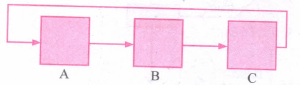
27.
What the Sixth generation computers could be defined as the era of intelligent computers?
28.
29.
Explain the concept of a Distributed Operating System along with its advantages.
1.
(d)
Pixels
2.
(d)
All of these
3.
(a)
Pseudo code
4.
(d)
All the Above
5.
(d)
Power on Self Text
6.
| Class | Object |
| Class is a blue print or template from which objects are created. | Object is an instance of a class. |
| Class doesn't allocate memory when it is created. |
Objects allocate memory when it is created. |
| Class is a logical entity. | Object is a physical entity. |
7.
The declaration of a 2-D array is data-type array_name[row-size][col-size];
In the above declaration, data-type refers to any valid C++ data-type, array_name refers to the name of the 2-D array, row-size refers to the number of rows and col-size refers to the number of columns in the 2-D array.
8.
Output:
2 4 6 8 10.
9.
It is a diagrammatic representation of algorithms.
10.
In refinement, each statement is repeatedly expanded into more detailed statements in the subsequent levels.
11.
It means to reload the operating system.
12.
It allows execution of more than one tasks or processes concurrently. For this, the processor time is divided amongst different tasks. This division of time is also called time sharing.
13.
(i) Keeping track of which portion of memory are currently being used and who is using them.
(ii) Determining which processes (or parts of processes) and data to move in and out of memory.
(iii) Allocation and de-allocation of memory blocks as needed by the program in main memory. (Garbage Collection).
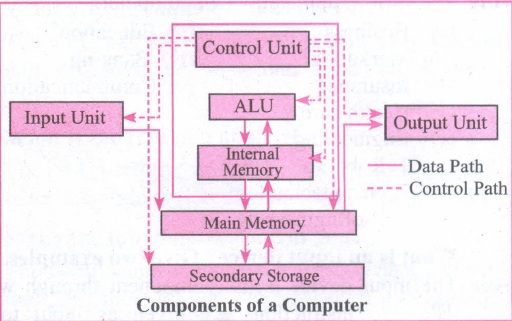
14.
Computer is an Electronic Machine, capable of performing basic operations like addition, multiplication, division etc. Computer accepts data as input, process it, produce output and stores it for future.
15.
Important features of Modular programming:
1. Emphasis on algorithm rather than data
2. Programs are divided into individual modules
3. Each modules are independent of each other and have their own local data
4. Modules can work with its own data as well as with the data passed to it.
Example: Pascal and C.
16.
readData( date d)
void
{
cout << "Enter day" << endl;
cin >> d.dd;
cout << "Enter month" << endl;
cin>>d.mm:
cout << "Enter year" << endl;
cin >> d.yy;
}
void readData(item t)
{
cout << "Enter item id'' << endl;
cin >> t.itemid;
cout << "Enter item name'' << endl:
cin >> t.name;
cout << "Ente item price'' << endl;
cin >> t.price;
cout << "Enter date of manufacuter'' << endl;
cin >> t.date;
}
17.
The syntax of if-else ladder:
#include <iostream>
using namespace std;
int main()
(
int num:
cout<<"Enter Number to find its multiplication table";
cin >> num;
for (int a = 1; a<= 10; a++)
{
cout << num << "*" << a << "=" << num*a << endl;
}
return 0;
}
18.
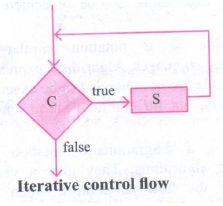
19.
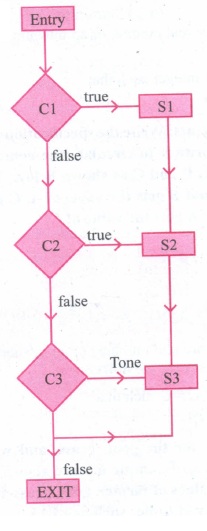
20.
(i) An OS is required to access and use the hardware resources.
(ii) It provides a stable, consistent way for applications to deal with the hardware.
(iii) An OS prepares the computer for taking instructions from the user and converts into machine code and gives into the CPU for execution.
(iv) as only co-ordinates and controls all the activities of a computer system.
21.
(i) Machine language is a collection of binary digits or bits that the computer reads and interprets.
(ii) In first generation, machine language was used.
22.
A mobile operating system controls a mobile device and its design supports wireless communication and different types of mobile applications. It operates on smart phones Tablets and Digital Mobile devices.
(i) Google Android
(ii) Apple iOS
(iii) Blackberry
(iv) Symbian
23.
Input Device:
It is a peripheral device used to provide data and control signals to an information processing system. Eg: Keyboard, Mouse, Scanners, Digital cameras, Joysticks.
24.
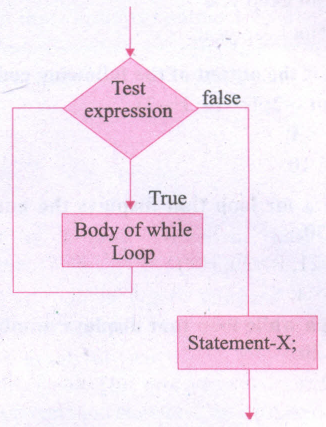
25.
1. right_angled(a, b, c)
2. -- inputs:
3. -- outputs: result = true if c2=a2+b2
4. result = false , otherwise
5. if square (c) = square (a) + square (b)
6. result := true
7. else
8. result := false
26.
27.
(i) The Sixth Generation, computers could be defined as the era of intelligent computers, based on Artificial Neural Networks. This generation gave a start to parallel computing.
(ii) One of the most dramatic changes in the sixth generation will be the explosive growth of wide is a component of artificial intelligence
(iii) Robotics is a branch of engineering that involves the conception, design, manufacture, and operation of robots.
(iv) This field overlaps with electronics, computer science, artificial intelligence, mechatronics, nanotechnology and bioengineering.
(v) Artificial neural networks (ANNs) are computing systems inspired by the biological neural networks that constitute animal brains.
(vi) Such systems learn (progressively improve performance on) tasks by considering examples, generally without task-specific programming.
(vii) An ANN is based on a collection of connected units or nodes called Artificial Neurons (analogous to biological neurons in an animal brain).
(viii) Each connection (synapse) between neurons can transmit a signal from one to another. The receiving neuron can process the signal(s) and then signal neurons connected to it.
(ix) Parallel computing is a type of computation in which many calculations or the execution of processes are carried out simultaneously.
(x) Large problems can often be divided into smaller ones, which can then be solved at the same time. There are several different forms of parallel computing: bit-level, instruction-level, data, and task parallelism.
(xi) Parallelism has been employed for many years, mainly in high-performance computing, but interest in it has grown lately due to the physical constraints preventing frequency scaling.
(xii) As power consumption by computers has become a concern in recent years, parallel computing has become the dominant paradigm in computer architecture, mainly in the form of multi-core processors.
28.
29.
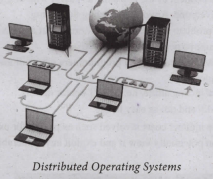
The data and application that are stored and processed on multiple physical locations across the world over the digital network (internet/intranet). The Distributed Operating System is used to access shared data and files that reside in any machine around the world. The user can handle the data from different locations. The users can access as if it is available on their own computer.
The advantages of distributed Operating System are as follows:
1. A user at one location can make use of all the resources available at another location over the network.
2. Many computer resources can be added easily in the network
3. Improves the interaction with the customers and clients.
4. Reduces the load on the host computer.

11th Standard Syllabus & Materials
11th Standard
TN 11th Tamil பீடு பெற நில் - செய்யுள் - காவடிச்சிந்து Important Questions And Answers Study Material - QB365 Set A
NEW11th Standard
TN 11th Tamil பீடு பெற நில் - உரைநடை - மலை இடப்பெயர்கள் : ஓர் ஆய்வு Important Questions And Answers Study Material - QB365 Set A
NEW11th Standard
TN 11th Tamil மாமழை போற்றுதும் - துணைப்பாடம் - யானை டாக்டர் Important Questions And Answers Study Material - QB365 Set A
NEW11th Standard
TN 11th Tamil மாமழை போற்றுதும் - செய்யுள் - ஐங்குறுநூறு Important Questions And Answers Study Material - QB365 Set A



Tamilnadu Stateboard 11th Standard Subjects

Maths

Commerce

Economics

Biology

Business Maths and Statistics

Accountancy
Computer Science

Physics

Chemistry
Maths
Biology
Economics
Physics
Chemistry

History
Business Maths and Statistics

Computer Science
Accountancy

Computer Applications
History
Computer Technology
Commerce
Computer Applications
Computer Technology

Tamil

English

French
Tamilnadu Stateboard Standards
