
 100% FREE ACCESS
11th Standard Syllabus & Materials
11th Standard
TN 11th Tamil இயற்கை வேளாண்மை,சுற்றுச்சூழல் -செய்யுள் - மனோன்மணீயம் Important Questions And Answers Study Material - QB365 Set A
NEW11th Standard
TN 11th Tamil என்னுயிர் என்பேன் -துணைப்பாடம் - இசைத்தமிழர் இருவர் Important Questions And Answers Study Material - QB365 Set A
NEW11th Standard
TN 11th Tamil மொழி கலை -செய்யுள் - ஒவ்வொரு புல்லையும் Important Questions And Answers Study Material - QB365 Set A
NEW11th Standard
TN 11th Tamil பீடு பெற நில் - இலக்கணம் - பகுபத உறுப்புகள் Important Questions And Answers Study Material - QB365 Set A
NEW11th Standard
TN 11th Tamil பீடு பெற நில் - துணைப்பாடம் - வாடிவாசல் Important Questions And Answers Study Material - QB365 Set A
NEW11th Standard
TN 11th Tamil பீடு பெற நில் - செய்யுள் - குறுந்தொகை Important Questions And Answers Study Material - QB365 Set A

Published on: 17/01/2020
Download Tamil Nadu 11th Standard Computer Science question papers, model tests, one-mark questions, important questions, and public exam papers in PDF format. Free study materials and answer keys for TN State Board students.
Questions + Answers key
Take MCQ Computer Science Test
1.
The NOT operator is represented by the symbol _____.
over bar
single apostrophe
a and b
plus
2.
The set of statements that are executed again and again in iteration is called as:
condition
loop
statement
body of loop
3.
The crime stealing tiny amounts of money from transaction is _________.
Salami Slicing
Spyware
Malware
Spam
4.
The first programming language "Ezhil" is designed by ________.
C++
Java
Python
Visual Basic
5.
class vehicle
{ int wheels;
public:
void input_data(float,float);
void output_data();
protected:
int passenger;
};
class heavy_vehicle : protected vehicle {
int diesel_petrol;
protected:
int load;
public:
void read_data(float,float)
void write_data(); };
class bus: private heavy_vehicle {
char Ticket[20];
public:
void fetch_data(char);
void display_data(); };
Which is the base class of the class heavy_vehicle?
Bus
heavy_vehicle
Vehicle
Both (a) and (c)
6.
Which of the following statement is true or false?
(i) Object oriented programs are much smaller than other programs
(ii) Object oriented programs require a lot of work to create.
(iii) Object oriented programs are faster than other programs because of their size
(iv) Object oriented programs are easy to maintain 'and modify the existing code
i-false, ii-false, iii-true, iv-true
i-true, ii-false, iii-false, iv-true
i-false, ii-true, iii-false, iv-true
i-true, ii-true, iii-false, iv-true
7.
Which of the following statement is (are) false?
(i) complicated programs cannot be divided
(ii) It is easier the test, debug the functions
(iii) Programmers can not work on different-functions simultaneously
only (ii)
only (iii)
both (ii) and (iii)
both (i) and (iii)
8.
Which operator is called as compile time operator?
comma
bitwise
Relational
size of
9.
_________statement is used to store a value in a variable.
Assignment
Sequential control flow
Alternative control flow
Iterative
10.
If Fibonacci number is defined recursively as
\(F(n)= \begin{cases}0 \ \mathrm{n}=0 \\ 1 \ \mathrm{n}=1 \\ \mathrm{~F}(\mathrm{n}-1)+\mathrm{F}(\mathrm{n}-2) \text { otherwise }\end{cases}\)
to evaluate F(4), how many times F() is applied?
3
4
8
9
11.
Expansion of VBox is ______
Video Box
Visual Box
Vector Box
Virtual Box
12.
The Main memory also called as ...........
ROM
RAM
Cache
EPROM
13.
If C1 is false and C2 is true, the compound statement
1 if CI
2 SI
3 else
4 if C2
5 S2
6 else
7 S3
executes
S1
S2
S3
none
14.
Which of the following Operating system are support Mobile Devices?
Windows 7
Linux
BOSS
iOS
15.
First generation computers used
Vacuum tubes
Transistors
Integrated circuits
Microprocessors
16.
Define inethods of a class and write its types.
17.
Which determines the functional output of cryptographic algorithm?
18.
19.
What is a Pseudocode?
20.
What is Warm Booting?
21.
Convert the following Octal numbers into Binary numbers. - 472
22.
Name the elements of Application window.
23.
Specify a function to find the minimum of two numbers.
24.
What is multi-processing?
25.
Give the output of the following program.
26.
Explain about parts of a loop.
27.
Customers are waiting in a line at a counter. The man at the counter wants to know how many customers are waiting in the line.
28.
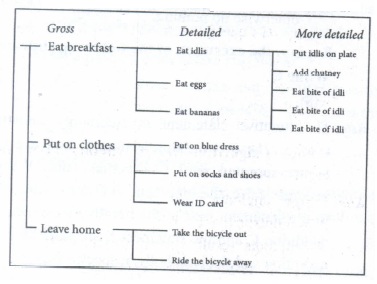
Explain Refinement in detail with example.
29.
Explain the following in detail.
(a) FIFO (b) SJF (c) Round Robin
30.
Draw and compare the icon equivalence in windows and Ubuntu.
31.
Suppose you want to solve the quadratic equation ax2 + bx + c = 0 by an algorithm.
quadratic_solve (a, b, c)
-- inputs : ?
-- outputs: ?
You intend to use the formula and you are prepared to handle only real number roots. Write a suitable specification.
\(x = {-b \pm \sqrt{b^2-4ac} \over 2a}\)
32.
Discuss the various generations of computers.
33.
How the read and write operations are performed by a processor? Explain.
34.
Write a short note on ethics.
35.
Differentiate break and continue statement.
36.
Write a note on 2D array declaration.
37.
What are the familier keyboard used for Tamil typing?
38.
What is difference between the members present in the private visibility mode and the members present in the public visibility mode
39.
What is paradigm? Mention the different types of paradigm.
40.
What is default arguments? Give example.
41.
What are arithmetic operators in C++? Differentiate unary and binary arithmetic operators. Give example for each of them.
42.
How will you convert decimal number into Octal number?
43.
Write the specification format of an algorithm for computing the square root of a number.
1.
(c)
a and b
2.
(d)
body of loop
3.
(a)
Salami Slicing
4.
(c)
Python
5.
(c)
Vehicle
6.
(c)
i-false, ii-true, iii-false, iv-true
7.
(a)
only (ii)
8.
(d)
size of
9.
(a)
Assignment
10.
(a)
3
11.
(d)
Virtual Box
12.
(b)
RAM
13.
(b)
S2
14.
(d)
iOS
15.
(a)
Vacuum tubes
16.
Class comprises of members. Member functions are called as methods. The member functions of a class can be defined in two ways.
(i) Inside the class definition
(ii) Outside the class definition
17.
In cryptography a key is a piece of information (parameter) that determines the functional output of a cryptographic algorithm.
18.
19.
Pseudo code is a notation similar to programming languages.
20.
When the Reset button is pressed it is called as Warm Booting.
21.
4728
= \(\overset { 4 }{ \underset { 100 }{ \downarrow } } \)\(\overset { 7 }{ \underset { 111 }{ \downarrow } } \)\(\overset { 2 }{ \underset { 010 }{ \downarrow } } \)
4728= 100110102
22.
Title bar, Menu bar, Tool bar, Scroll bars, Work area, and Control Buttons.
23.
1. --minimum (a,b)
2. -- inputs: a, b are real numbers.
3. --output: result: minimum (a,b)
24.
Multiprocessing is one of the features of operating system. It has two or more processors for a single running process. Each processor works on different parts of the same task or two or more different tasks.
25.
#include < bit sf std C++.h >
using namespace std;
class Greeks
{
Public:
void func(int x)
{
cout < < "value of';
}
void func(double x)
{
cout < < "value of';
}
void func(int X, int)
{
cout < < "value of';
}
};
int inain ( )
{
Greeks obj 1;
obj 1.func(7);
obj 1.func(9 .132);
obj 1.func(85, 64);
return 0;
}
Output
value of x is 7
value of x is 9.132
value of x and y is 85, 64
26.
Every loop has four elements that are used for different purposes. These elements are:
1. Initialization expression
2. Test expression
3. Update expression
4. The body of the loop
Initialization expression(s): The control variable(s) must be initialized before the control enters into the loop. The initialization of the control variable takes place under the initialization expressions. The initialization expression is executed only once in the beginning of the loop.
Test Expression: The test expression is an expression or condition whose value decides whether the loop-body will be executed or not. If the expression evaluates to true (i.e., 1), the body of the loop is executed, otherwise, the loop is terminated.
In an entry-controlled loop, the test expression is evaluated before entering into a loop whereas in an exit-controlled loop, the test expression is evaluated before exiting from the loop.
Update expression: It is used to change the value of the loop variable. This statement is executed at the end of the loop after the body of the loop is executed.
The body of the loop: A statement or set of statements forms a body of, the loop that is executed repetitively. In an entry-controlled loop, first, the test expression is evaluated and if it is nonzero, the body of the loop is executed otherwise the loop is terminated. In an exit controlled loop, the body of the loop is executed first then the test expression is evaluated. If the test expression is true the body of the loop is repeated otherwise loop is terminated.
27.
Customers are waiting in a line at a counter. The man at the counter wants to know how many customers are waiting in the line.
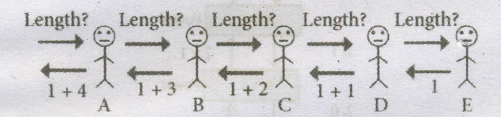
Instead of counting the length himself, he asks customer A for the length of the line with him at the head, customer A asks customer B for the length of the line with customer B at the head, and so on. When the query reaches the last customer in the line, E, since there is no one behind him, he replies 1 to D who asked him. D replies 1 + 1 = 2 to C, C replies 1 + 2 = 3 to B, B replies 1 + 3 = 4 to A, and A replies 1 + 4 = 5 to the man in the counter
28.
(i) After decomposing a problem into smaller subproblems, the next step is either to refine the subproblem or to abstract the subproblem.
(ii) Each subproblem can be expanded into more detailed steps. Each step can be further expanded to still finer steps, and so on. This is known as refinement.
(iii) We can also abstract the subproblem. We specify each subproblem by its input property and the input-output relation. While solving the main problem, we only need to know the specification of the subproblems. We do not need know how the subproblems are solved.
29.
(a) FIFO (First In First Out)Scheduling :
(i) This algorithm is based on queuing technique. Assume that a student is standing in a queue (Row) to get grade sheet from his/her teacher.
(ii) The other student who stands first in the queue gets his/her grade sheet first and leaves from the queue (Row). Followed by the next student in the queue gets it corrected and so on. This is the basic logic of the FIFO algorithm.
(iii) Technically, the process that enters the queue first is executed first by the CPU, followed by the next and so on. The processes are executed in the order of the queue (row).
(b) SJF (Shortest Job First)Scheduling:
(i) This algorithm works based on the size of the job being executed by the CPU.
(ii) Consider two jobs A and B.
(iii) 1) A = 6 kilo bytes 2) B = 9 kilo bytes.
(iv) First the job "A" will be assigned and then job "B" gets its turn.
(c) Round Robin Scheduling :
(i) The Round Robin (RR) Scheduling algorithm is designed especially for time sharing systems.
(ii) Jobs (processes) are assigned and processor time in a circular method.
(iii) For example take three jobs A, B, C. First the job A is assigned to CPU then job B and job C and then again A, Band C and so on.
30.
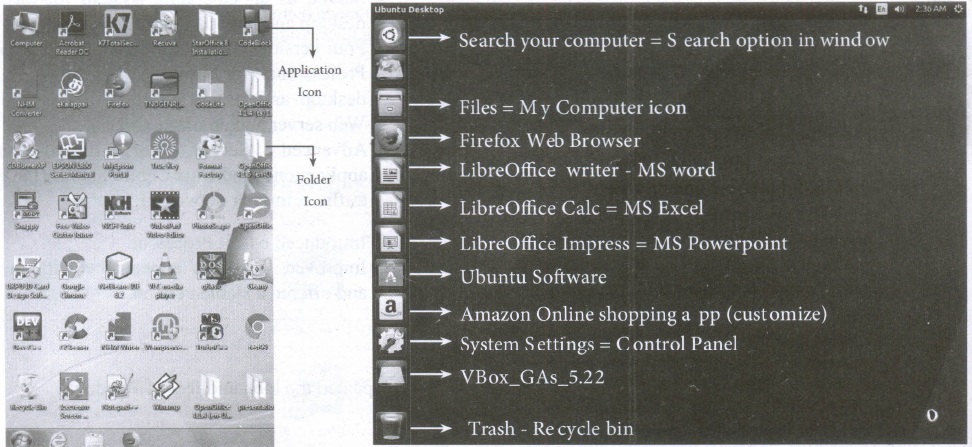
Elements of Ubuntu:
Search your Computer Icon:
This icon is equal to search button in Windows OS. Here, you have to give the name of the File or Folder for searching them.
Files:
This icon is equivalent to My Computer icon. From here, you can directly go to Desktop, Documents and so on.
Firefox Web Browser:
By clicking this icon, you can directly browse the internet. This is equivalent to clicking the Web Browser in Task bar in Windows.
LibreOffice Writer:
This icon will directly take you to document preparation application like MS Word in Windows,
Libre Office Cale:
This icon will open LibreOffice Cale application. It is similar to MS Excel in Windows.
LibreOffice Impress:
By clicking this icon, you can open LibreOffice Impress to prepare any presentations in Ubuntu like MS PowerPoint.
Ubuntu Software Icon:
This icon will let you add any additional applications you want. This can be done by clicking the Update option at the top right corner of that screen.
Online Shopping icon:
Using this icon user can buy and sell any products online.
System Settings Icons:
This icon is similar to the Control panel in the Windows Operating System. But here, you need to authenticate the changes by giving your password. You cannot simply change as you do in Windows.
Trash:
This icon is the equivalent of Recycle bin of windows OS. All the deleted Files and Folders are moved here.
31.
x\(= {-b \pm \sqrt{b^2-4ac} \over 2a}\)
1. Quadratic solve (a, b, c)
2. -- inputs: b²-4ac > = 0 where a, b, c are real numbers, a ≠ 0
3. -- outputs: x1 and x2 are real numbers such that a(x1)² + bx1 + c = 0 and a(x₂)² + bx₂ + c = 0
32.
| Computers size was drastically reduced. S.No | Generation | Period | Main Component used | Merits/ Demerits |
| 1 | First Generation | 1942-1955 | 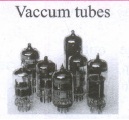 |
Big in size Consumed more power Malfunction due to overheating Machine Language was used Eg : ENIAC, EDVAC, UNIVAC |
| First Generation Computer - ENIAC, EDVAC, UNIVAC 1 ENIAC weighed about 27 tons, size 8 feet x 100 feet x 3 feet, and consumed around 150 watts of power | ||||
| 2 | Second Generation | 1955-1964 | 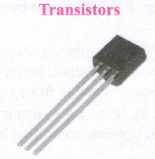 |
Smaller compared to First Generation Generated Less Heat Consumed less power compared to first-generation Punched cards were used. The first operating system was developed Batch Processing and Multiprogramming Operating System Machine language, as well as Assembly language, was used. |
| Second Generation Computers IBM 1404, IBM 1620, UNIVAC 1108 | ||||
| 3 | Third Generation | 1964-1975 | 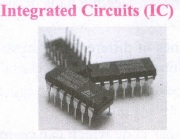 |
Computers were smaller, faster, and more reliable Consumed less power. High-Level Languages were used. |
| Third Generation Computers -IBM ·360 series, Honeywell 6000 series | ||||
| 4 | Fourth Generation | 1975-1980 | 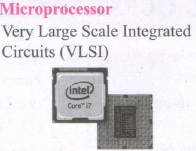 |
Smaller and Faster Microcomputer series such as IBM and APPLE was developed Portable Computers were introduced. |
| 5 | Fifth Generation | 1980-till date | 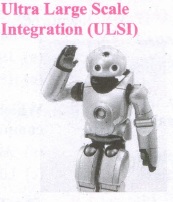 |
Parallel, Processing Superconductors Computers size was drastically reduced. Can recognize Images and Graphics Introduction of Artificial Intelligence and Expert Systems Able to solve highly complex problems including decision making and logical reasoning. |
| 6 | Sixth Generation | In future |  |
Parallel and Distributed computing Computers have become smarter faster and smaller Development of robotics Natural Language Processing Development of Voice Recognition Software. |
33.
1. The Central Processing Unit(CPU) has a Memory Data Register (MDR) and a Memory Address Register (MAR).
2. The Memory Data Register (MDR) keeps the data which is transferred between the Memory and the CPU. The Program Counter (PC) is a special register in the CPU which always keeps the address of the next instruction to be executed.
3. The Arithmetic and Logic unit of CPU places the address of the memory to be fetched, into the Memory Address Register.
4. A bus is a collection of wires used for communication between the internal components of a computer.
5. The address bus is used to point a memory location. A decoder, a digital circuit is used to point to the specific memory location where the word can be located.
6. The address register is connected with the address bus, which provides the address of the instruction. A data bus is used to transfer data between the memory and the CPU.
7. The data bus is bidirectional and the address bus is unidirectional. The control bus controls both read and write operations.
8. The read operation fetches data from memory and transfers to MDR. A single control line performs two operations like Read/Write using 1 or 0.
9. Also, the write operation transfers data from the MDR to memory. This organisation is shown below.
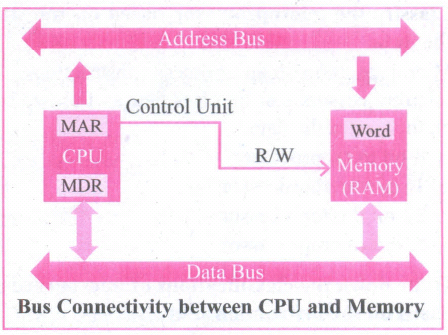
10. The word in the RAM has the same size (no.of bits) as the Memory Data Register (MDR). If the processor is an 8-bit RAM processor like Intel 8085, its MDR and the word in the both have 8 bits.
11. If the size of the MDR is eight bits, which can be connected with a word in the memory which is also eight bits size. The data bus has eight parallel wires to transfer data either from MDR to word or word to MDR based on the control(Read or write).
.png)
13. This control line is labeled as which becomes 1 means READ operation and 0 means WRITE operation.
.png)
14. These pictures show the contents of MDR and the word before and after the READ operation.
i. The read operation transfers the data(bits) from word to Memory Data Register.
ii. The write operation transfers the data(bits) from Memory Data Register to word.
34.
Ethics means "What is wrong and What is Right". It is a set of moral principles that rule the behavior of individuals who use computers. An individual gains knowledge to follow the right behavior, using morals that are also known as ethics. Morals refer to the generally accepted standards of right and wrong in the society. Similarly, in cyber-world, there 'are certain standards such as
1. Do not use pirated software
2. Do not use unauthorized user accounts
3. Do not steal others' passwords
4. Do not hack
35.
| Break | Continue |
|---|---|
| The break is used to terminate the execution of the loop | Continue is not used to terminate the execution of the loop. |
| It breaks the iteration | It skips the iteration |
| When this statement is executed, control will come out from the loop and execute the the statement immediately after the loop. |
When this statement is executed, it will not come out of the loop but moves/jumps to the next iteration of the loop. |
| The break is used with loops as well as switch cases. | Continue is only used in loops, it is not used in switch cases. |
36.
The declaration of a 2-D array is data-type array_name [row-size][col-size];
In the above declaration, data-type refers to any valid C++ data-type, array_name refers to the name of the 2-D array, row-size refers to the number of rows and col-size refers to the number of columns in the 2-D array.
For example: intA[3][4];
37.
(i) NHM Writer, E-Kalappai and Lippikar - are familiar Tamil keyboard interfaces software thai is used for Tamil typing which works on Tamil Unicode, using phonetics.
(ii) Sellinam and Ponmadal - are familiar Tamil Keyboard layouts that works on Android operating system in smart phone using phonetics.
38.
| Members present in the private visibility mode | Members present in the public visibility mode |
| Can be accessed only by the class members. | Can be accessed by the outside members also. |
| By default the members will be in private visibility mode. | Members, to be in public visibility mode has to be specified explicitly. |
| When classes are inherited, private members are not inherited. | When classes are inherited, the public members are inherited as private, protected and public members of the derived class. |
39.
Paradigm means organizing principle of a program. It is an approach to programming. There are different approaches available for problem solving using computer. They are Procedural programming, Modular Programming and Object Oriented Programming.
40.
In C++, one can assign default values to the formal parameters of a function prototype. The Default arguments allows to omit some arguments when calling the function.
When calling a function,
For any missing arguments, complier uses the values in default arguments for the called function.
i. The default value is given in the form of variable initialization.
Example: void defaultvalue(int n1-10. n2=100);
ii. The default arguments facilitate the function call statement with partial or no arguments.
Example: defaultvalue(x,y);
defaultvalue(200,150);
defaultvalue(150);
defaultvalue(x,150);
iii. The default values can be included in the function prototype from right to left, ie, we cannot have a default value for an argument in between the argument list.
Example: void defaultvalue(int n1-10, n2);//invalid prototype
void defaultvalue(int n1, n2 = 10);//valid prototype
41.
Arithmetic operators perform simple arithmetic operations like addition, substraction, multiplication, division etc.
| Unary Operators | Binary Operators |
| Require only one operand | Require two operands |
| Example: +,-, *,/,%, >, < <=, AND, OR | Example: ++ (Plus, Plus) Increment operator, --(Minus, Minus) Decrement operator, NOT, -, |
42.
The Conversion of a decimal number to an octal number can be performed by successively dividing a number by 8 and collect the remainder from top to bottom. The remainders also must be taken in octal
43.
square_root(n)
--inputs: n is a real number, n > O.
--outputs: y is a real number such that y2 = n.

11th Standard Syllabus & Materials
11th Standard
TN 11th Tamil பீடு பெற நில் - செய்யுள் - காவடிச்சிந்து Important Questions And Answers Study Material - QB365 Set A
NEW11th Standard
TN 11th Tamil பீடு பெற நில் - உரைநடை - மலை இடப்பெயர்கள் : ஓர் ஆய்வு Important Questions And Answers Study Material - QB365 Set A
NEW11th Standard
TN 11th Tamil மாமழை போற்றுதும் - துணைப்பாடம் - யானை டாக்டர் Important Questions And Answers Study Material - QB365 Set A
NEW11th Standard
TN 11th Tamil மாமழை போற்றுதும் - செய்யுள் - ஐங்குறுநூறு Important Questions And Answers Study Material - QB365 Set A



Tamilnadu Stateboard 11th Standard Subjects

Maths

Commerce

Economics

Biology

Business Maths and Statistics

Accountancy
Computer Science

Physics

Chemistry
Maths
Biology
Economics
Physics
Chemistry

History
Business Maths and Statistics

Computer Science
Accountancy

Computer Applications
History
Computer Technology
Commerce
Computer Applications
Computer Technology

Tamil

English

French
Tamilnadu Stateboard Standards
