
 100% FREE ACCESS
11th Standard Syllabus & Materials
11th Standard
TN 11th Tamil இயற்கை வேளாண்மை,சுற்றுச்சூழல் -செய்யுள் - மனோன்மணீயம் Important Questions And Answers Study Material - QB365 Set A
NEW11th Standard
TN 11th Tamil என்னுயிர் என்பேன் -துணைப்பாடம் - இசைத்தமிழர் இருவர் Important Questions And Answers Study Material - QB365 Set A
NEW11th Standard
TN 11th Tamil மொழி கலை -செய்யுள் - ஒவ்வொரு புல்லையும் Important Questions And Answers Study Material - QB365 Set A
NEW11th Standard
TN 11th Tamil பீடு பெற நில் - இலக்கணம் - பகுபத உறுப்புகள் Important Questions And Answers Study Material - QB365 Set A
NEW11th Standard
TN 11th Tamil பீடு பெற நில் - துணைப்பாடம் - வாடிவாசல் Important Questions And Answers Study Material - QB365 Set A
NEW11th Standard
TN 11th Tamil பீடு பெற நில் - செய்யுள் - குறுந்தொகை Important Questions And Answers Study Material - QB365 Set A

Published on: 16/09/2019
Download Tamil Nadu 11th Standard Economics question papers, model tests, one-mark questions, important questions, and public exam papers in PDF format. Free study materials and answer keys for TN State Board students.
Questions + Answers key
Take MCQ Economics Test
1.
Explain the law of Equi-marginal utility
2.
3.
4.
"The features of Rural Economy are peculiar"- Argue.
5.
List out the properties of iso-quants with the help of diagrams.
6.
7.
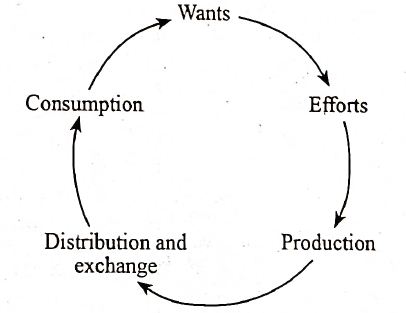
Compare and contrast various definitions of Economics.
8.
9.
Bring out the relationship between AR and MR curves under various price conditions.
10.
Explain the strong features of Indian economy.
1.
Introduction:
(i) The law of diminishing marginal utility was extended and is called Law of Equi-marginal utility
(ii) Law of substitution or Law of consumer's Equilibrium or Gossen's II law or law of maximum satisfaction.
Definition:
Marshall, "If a person has a thing which he can put to several uses, he will distribute it among these uses in such a way that it has the same marginal utility in all. For, if it had a greater marginal utility in one use than another, he would gain by taking away some of it from the second use and applying it to first.
Assumption
(i) Consumer is rational and wants maximum satisfaction.
(ii) Utility is measurable in cardinal numbers.
(iii) Marginal utility of money is constant.
(iv) Income of the consumer is given.
(v) There is perfect competition.
(vi) Price is given.
(vii) Law of diminishing marginal utility operates
Explanation:
(i) The consumer has Rs. 11.
(ii) He wants to spend it on apple ( Rs 1 each) and orange (Rs. 1 each)
(iii) He will be in equilibrium only when he gets maximum satisfaction ie.
\(\mathrm{K}=\frac{\text { Marginal utility of apple }}{\text { Price of apple }}=\frac{\text { Marginal utility of orange }}{\text { Price of orange }}\)
If is \(\frac{\mathrm{MU_A}}{\mathrm{P_A}}\) less than \(\frac{\mathrm{MU_O}}{\mathrm{P_O}}\) he would transfer money from apple to orange till it is equal.
He should buy 6 units of apple & 5 units of oranges. He gets (92 + 58) = 150 units satisfaction.
\(\frac{\mathrm{MU_A}}{\mathrm{P_A}}=\frac{\mathrm{MU_O}}{\mathrm{P_O}}=\frac{4}{1}=\frac{4}{1}\)
| Apple | orange | |||
| Units of Commodities | Total Utility | marginal Utility | Total Utility | marginal Utility |
| 1 | 25 | 25 | 30 | 30 |
| 2 | 45 | 20 | 41 | 11 |
| 3 | 63 | 18 | 49 | 8 |
| 4 | 78 | 15 | 54 | 5 |
| 5 | 88 | 10 | 58 | 4 |
| 6 | 92 | 4 | 61 | 3 |
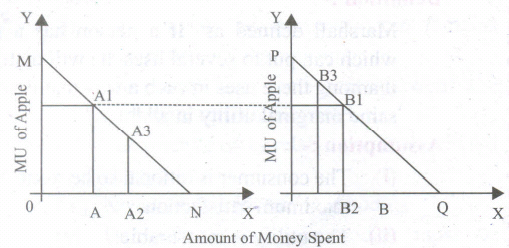
Explanation:
(i) X axis shows amount of money spent
(ii) Y axis shows marginal utility of apple and orange.
(iii) If consumer spends Rs.6 on apple and Rs.5 on orange MU will be equal.
(iv) ie. AA1 = BB1 = 4 = 4. So he gets maximum utility.
Criticisms:
(i) Utility cannot be measured.
(ii) No consumer compares the utility and disutility from each unit of the commodity while buying it.
(iii) This law cannot be applied to durable goods.
Conclusion:
(i) The law of Equi-marginal utility is an improvement over the law of diminishing marginal utility because it can be used for many commodities consumed at the same time.
2.
The concept of economic planning in India was the limited natural resources are utilized skillfully so as to achieve the desired goals.
(i) First Five Year Plan (1951 - 1956) :
Agriculture development of the country.
(ii) Second Five Year Plan (1956 - 1961) :
Industrial Development of the country.
(iii) Third Five Year Plan (1961 - 1966) :
To make the economy independent and to reach self active position to take off.
(iv) Fourth Five Year Plan (1969 - 1974) :
The two main objectives of this plan growth with stability and progressive achievement of self reliance.
(v) Fifth Five year Plan (1974 - 1979) :
In this plan top priority was given to agriculture, next cement industry and mines.
(vi) Sixth Five Year Plan (1980 - 1985) :
Poverty eradication and technological self reliance was the main objective of this plan.
(vii) Seventh Five Year Plan (1986 - 1991) :
The establishment of the self sufficient economy opportunities for productive employment.
(viii) Eighth Five Year Plan (1992 - 1997) :
The top priority was given to development of human resources, employment, education and public health.
(ix) Ninth Five Year Plan (1997 - 2002) :
The main focus of this plan growth with justice and equity
(x) Tenth Five Year Plan (2002- 2007) :
To double the per capita income of India next 10 years.
(xi) Eleventh Five Year Plan (2007 - 2012) :
"Faster and more inclusive growth was the main aim of this plan"
(xii) Twelfth Five Year Plan (2012 - 2017) :
Its main aim is "Faster, more inclusive and sustainable growth".
3.
4.
Introduction:
Rural economy refers to villages and rural community refers to people living in villages.
Features of rural economy:
Village is an institution:
(i) Village is a primary institution and it satisfies almost all the needs of the rural community.
(ii) The rural people have a feeling of belongingness and a sense of unity towards each other.
Dependence on agriculture:
The rural economy depends on nature and agricultural activities.
Life of rural people:
(i) Lifestyle in village is very simple. Education, housing, health and sanitation, transport and communication, banking, roads and markets are limited and unavailable.
(ii) Rural people rely on faith, superstitions and traditional cultural practices.
(iii) The methods of production, social organization, political mobilization, rural sector is extremely weak and backward.
(iv) The incidence of alcohol drinking has gone up.
Population density:
Population density is very low. Houses are scattered in the entire village.
Employment:
There is unemployment, seasonal unemployment and underemployment.
Poverty:
(i) Basic needs of the people like food, clothing and shelter are not met
(ii) About 22 crores of people in rural areas are poor and live below poverty line.
Indebtedness:
(i) People in rural areas are highly indebted owing to poverty, underemployment, lack of farm and non-farm employment opportunities, low wage employment, seasonality in production, poor marketing network.
(ii) Since formal loan facilities are not available to the villagers, they depend on local money lenders who squeeze the villagers.
Rural income
Large proportion of labourers are underemployed and the scope for increasing their income is limited.
Dependency:
Rural households are largely dependent on social grants and remittances from family members working in urban areas.
Dualism:
The co-existence of features of organised and unorganised, traditional and modern, regulated and unregulated, poor and rich, skilled and unskilled is very common in rural areas.
Inequality:
There is inequality in distribution of income, wealth and assets. Land, livestock are owned by a few people. Landlords dominate the rural activities.
Migration:
Rural people migrate from villages to urban areas for gainful employment. Lack of basic amenities in rural areas also push the people to urban areas.
5.
Iso and quant are derived from the Greek language, meaning 'equal' and 'quantity'.
Definition:
Isoquant curve is a locus of points representing various combinations of two inputs capital and labour yielding the same output. It is also called equal product curve or product indifference curve.
Properties:
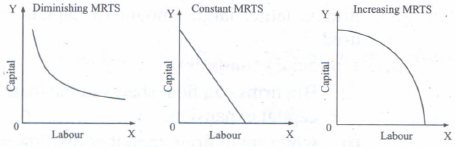
1. The isoquant curve has negative slope:
(i) Capital is being substituted by labour.
(ii) Isoquant has negative slope because of diminishing MRTS.
(iii) Constant MRTS (straight line) and increasing MRTS (concave) are also possible.
(iv) It depends on the nature of isoquant curve
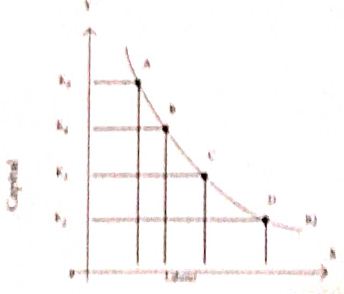
2. Isoquant curve is convex to origin:
The capital substituted per unit of labour goes on decreasing so the isoquant is convex to the origin.
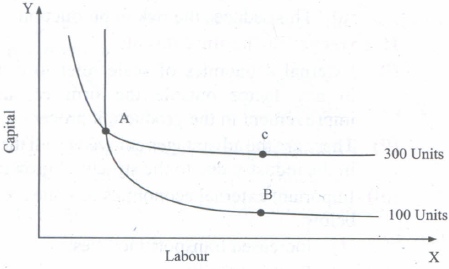
3. Isoquant curves cannot intersect each other:
Point A lies on IQ1 and IQ2, Point C lies on IQ2, showing higher output Point B
lies on IQ1, showing lower output. C = A, B = A But C > B.
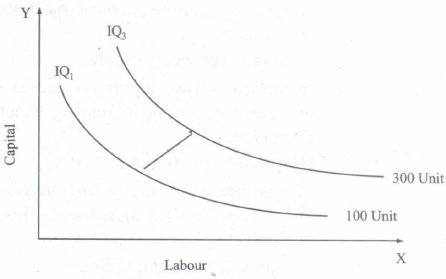
4. Upper isoquant curve represents a higher level of output:
Higher IQ2 shows higher output 200 units. Lower IQ1 shows lower output 100 units. IQ2 means the use of more factors than IQ1. Arrow shows increase in output with a right and upward shift of an isoquant curve.
5. Isoquant curve does not touch either x axis or y axis:
In IQ2 only capital is used and in IQ1 only labour is used.
.JPG)
Conclusion:
These are the properties of isoquant curves.
6.
7.
| Wealth | Welfare | Scarcity | Growth |
| Adam Smith classical era. |
Alfred Marshall- neo classical era. |
Lionel Robbins new age. |
Paul Samuelson modern age. |
| An Inquiry into nature and causes of Wealth of Nations (1776). |
Principles of |
An Essay on the nature and Significance of Economic Science (1932). |
Economics studies how men and society choose with or without the use of money, to employ scarce productive resources which could have alternative uses, to produce various commodities over time and distribute them for consumption now and in the future among various people and groups of society. |
| Economics is the science of wealth. | Economics is a study of mankind in the ordinary business of life, it examines that part of individual and social action which is most closely connected with the attainment and with the use of material requisites of well being. It studies wealth and man. |
Economics is a science which studies human behaviour as a relationship between ends and scarce means which have alternative uses. |
Economics deals with how the society uses the limited resources for alternative uses. |
| Deals with only the goods which are scarce and have money value |
wealth and welfare of man is important. | Human behaviour regarding choice is important. |
It covers production, distribution and consumption. |
| Deals with consumption, production, exchange, distribution of wealth. |
Only material welfare is considered, differentiates between material and immaterial things. |
Economic problem arises because of scarcity of resources. |
Economics is a social science. |
| By introducing welfare, economics becomes inexact. |
Ethical aspects are not considered so Economics is exact |
||
| Welfare definition makes Economics classificatory. | Economics is a positive science. |
||
| Economics is a science of individual behaviour. |
|||
| Both material and immaterial activities are considered. |
8.
9.
| Q | Price Rs | TR | AR | MR |
| 1 | 5 | 5 | 5 | 5 |
| 2 | 5 | 10 | 5 | 5 |
| 3 | 5 | 15 | 5 | 5 |
| 4 | 5 | 20 | 5 | 5 |
| 5 | 5 | 25 | 5 | 5 |
| 6 | 5 | 30 | 5 | 5 |
.JPG)
\(A R=\frac{T R}{Q}\)
\( M R=T R_{n}-T R_{n-1}\)
Constant AR & MR (fixed price)
When price remains constant, MR is also constant and AR / MR curves coincide.
Declining AR and MR
When a firm sells large quantities at lower prices both AR & MR will fall but the fall in MR will be steeper than the fall in AR.
| Q | AR | TR | MR |
| 1 | 10 | 10 | 10 |
| 2 | 9 | 18 | 8 |
| 3 | 8 | 24 | 6 |
| 4 | 7 | 28 | 4 |
| 5 | 6 | 30 | 2 |
| 6 | 5 | 30 | 0 |
| 7 | 4 | 28 | -2 |
.JPG)
(i) MR is lower than AR.
(ii) Both AR and MR slope downwards.
(iii) MR divides the distance between AR curve and axis into 2 equal parts.
(iv) The decline in AR need not be a straight line or linear.
(v) If the prices are declining with the increase in quantity sold, the AR can be nonlinear, taking a shape of concave or convex to the origin.
10.
Introduction:
Indian economy is the seventh largest economy of the world. Its features are:
Mixed economy:
(i) In India private and public sectors co-exist.
(ii) Some fundamental and heavy industries are under public sector.
(iii) Due to liberalization private sector's importance has increased.
Agriculture:
(i) 60 % of Indians depend on agriculture for their livelihood.
(ii) 17 % of GDP is got from agricultural sector.
(iii) Green revolution and inventions in biotechnology have made agriculture self sufficient.
(iv) The export of fruits, vegetables, spices, tobacco, animal skin, vegetable oils also add to foreign exchange earning.
An emerging market:
(i) India has emerged as a vibrant economy sustaining stable GDP growth rate even when there was global downtrend.
(ii) This has attracted foreign capital through FDI and FII.
(iii) India is in the 7th position in terms of nominal GDP and 3rd in terms of purchasing power parity.
(iv) India is one among the G20 countries.
Fast growing economy:
(i) With a growth rate of 7.1% in GDP India is the world's fastest growing economy in 2016-17 next to China.
Fast growing service sector:
(i) There has been growth in technical sectors like Information Technology, BPO.
(ii) These emerging services have helped the country to go global.
Large domestic consumption:
(i) The standard of living has improved a lot. There is rapid increase in domestic consumption.
Rapid growth of urban areas:
(i) There has been a rapid growth of urban areas in India after Independence. Improved connectivity in transport and communication, education and health have speeded up urbanization.
Stable macroeconomy:
(i) India is one of the most stable economies of the world.
(ii) The current year's economic survey represents the Indian economy to be a "heaven of macroeconomic stability, resilience and optimism".
Demographic dividend:
(i) The human capital is young.
(ii) They are young, skilled and trained enough to maximize growth.
(iii) This has invited foreign investments and outsourcing opportunities.

11th Standard Syllabus & Materials
11th Standard
TN 11th Tamil பீடு பெற நில் - செய்யுள் - காவடிச்சிந்து Important Questions And Answers Study Material - QB365 Set A
NEW11th Standard
TN 11th Tamil பீடு பெற நில் - உரைநடை - மலை இடப்பெயர்கள் : ஓர் ஆய்வு Important Questions And Answers Study Material - QB365 Set A
NEW11th Standard
TN 11th Tamil மாமழை போற்றுதும் - துணைப்பாடம் - யானை டாக்டர் Important Questions And Answers Study Material - QB365 Set A
NEW11th Standard
TN 11th Tamil மாமழை போற்றுதும் - செய்யுள் - ஐங்குறுநூறு Important Questions And Answers Study Material - QB365 Set A



Tamilnadu Stateboard 11th Standard Subjects

Maths

Commerce
Economics

Biology

Business Maths and Statistics

Accountancy

Computer Science

Physics

Chemistry
Maths
Biology
Economics
Physics
Chemistry

History
Business Maths and Statistics

Computer Science
Accountancy

Computer Applications
History
Computer Technology
Commerce
Computer Applications
Computer Technology

Tamil

English

French
Tamilnadu Stateboard Standards
