
 100% FREE ACCESS
11th Standard Syllabus & Materials
11th Standard
TN 11th Tamil இயற்கை வேளாண்மை,சுற்றுச்சூழல் -செய்யுள் - மனோன்மணீயம் Important Questions And Answers Study Material - QB365 Set A
NEW11th Standard
TN 11th Tamil என்னுயிர் என்பேன் -துணைப்பாடம் - இசைத்தமிழர் இருவர் Important Questions And Answers Study Material - QB365 Set A
NEW11th Standard
TN 11th Tamil மொழி கலை -செய்யுள் - ஒவ்வொரு புல்லையும் Important Questions And Answers Study Material - QB365 Set A
NEW11th Standard
TN 11th Tamil பீடு பெற நில் - இலக்கணம் - பகுபத உறுப்புகள் Important Questions And Answers Study Material - QB365 Set A
NEW11th Standard
TN 11th Tamil பீடு பெற நில் - துணைப்பாடம் - வாடிவாசல் Important Questions And Answers Study Material - QB365 Set A
NEW11th Standard
TN 11th Tamil பீடு பெற நில் - செய்யுள் - குறுந்தொகை Important Questions And Answers Study Material - QB365 Set A

Published on: 27/11/2019
Trigonometry
Download Tamil Nadu 11th Standard Maths question papers, model tests, one-mark questions, important questions, and public exam papers in PDF format. Free study materials and answer keys for TN State Board students.
Questions + Answers key
Take MCQ Maths Test1.
If \(2cos\theta=x+\frac{1}{x}\) then prove that \(2\theta=\frac{1}{2}(x^2+\frac{1}{x^2})\)
2.
Prove that cos \(\left( {{3\pi}\over{4}}+x\right)-cos\left({{3\pi}\over{4}}-x\right)=-\sqrt{2}sin\ x.\)
3.
Find cos(x - y), given that cos x = \(-\frac{4}{5}\) with \(\pi<x<{{3\pi}\over{2}}\) and \(sin \ y = -{{24}\over{25}}\) with \(\pi<x<{{3\pi}\over{2}}\).
4.
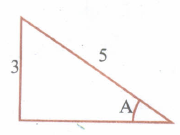
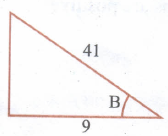
If sin A = \(\frac{3}{5}\) and cos B = \(\frac{9}{41}\), 0 < A < \(\frac{\pi}{2}\), 0 < B < \(\frac{\pi}{2}\). Find the value of sin (A + B)
5.
In a ΔABC if a = 3, b = 5 and c = 7, find cos A and cos B.
6.
Prove that \(\frac { cos9x-cos5x }{ sin17x-sin3x } =-\frac { sin2x }{ cos10x } \)
7.
If cos A = \(\frac { 4 }{ 5 } \), cos B = \(\frac { 12 }{ 13 } ,\frac { 3\pi }{ 2 } \)
8.
Prove that \(\sin { \left( \pi +\theta \right) } =-\sin { \theta } \)
9.
Find the value of tan \(\frac{7\pi}{12}\).
10.
Show that \(\sin ^{ -1 }{ \left( \frac { 12 }{ 13 } \right) } +\cos ^{ -1 }{ \left( \frac { 4 }{ 5 } \right) } +\tan ^{ -1 }{ \left( \frac { 63 }{ 16 } \right) } =\pi \)
11.
If the sides of a \(\triangle\)ABC are a = 4, b = 6, and c = 8, show that \(4\cos { B } +3\cos { C } =2\)
12.
Prove that \(sin\frac { \theta }{ 2 } sin\frac { 7\theta }{ 2 } +sin\frac { 3\theta }{ 2 } sin\frac { 11\theta }{ 2 } =sin2\theta sin5\theta \)
13.
If sin \(\theta\) + cos \(\theta\) = m, show that cos6\(\theta\) + sin6\(\theta\) = \(\frac { 4-3({ m }^{ 2 }-1)^{ 2 } }{ 4 } \), where m2 \(\le \) 2
14.
If a cos \(\theta\) - b sin \(\theta\) = c, show that a sin \(\theta\) + b cos \(\theta\) = \(\pm \sqrt { { a }^{ 2 }+{ b }^{ 2 }-{ c }^{ 2 } } \)
15.
cos p = \(\frac { 1 }{ 7 } \) and cos Q = \(\frac { 13 }{ 14 } \) where P, Q are angles, then P-Q is _______________
\(\frac { \pi }{ 6 } \)
\(\frac { \pi }{ 3 } \)
\(\frac { \pi }{ 4 } \)
\(\frac { 5\pi }{ 12 } \)
16.
If tan A = \(\frac { a }{ a+1 } \) and B = \(\frac { 1 }{ 2a+1 } \) then the value of A + B is ___________
0
\(\frac { \pi }{ 2 } \)
\(\frac { \pi }{ 3 } \)
\(\frac { \pi }{ 4 } \)
17.
\(\frac { sin(A-B) }{ cosAcosB } +\frac { sin(B-C) }{ cosBcosC } +\frac { sin(C-A) }{ cosCcosA } \) is
sin A + sin B + sin C
1
0
cos A + cos B + cos C
18.
cos10 + cos20 + cos30 +: : : + cos1790 =
0
1
-1
89
19.
\(\frac { 1 }{ cos{ 80 }^{ 0 } } -\frac { \sqrt { 3 } }{ sin{ 80 }^{ 0 } } \)=
\(\sqrt{2}\)
\(\sqrt{3}\)
2
4
1.
\(2cos\theta=x+\frac{1}{x}\)
\(\therefore 4cos^2\theta=(x+\frac{1}{x})^2=x^2+\frac{1}{x^2}+2\)
\(4cos^2\theta-2=x^2+\frac{1}{x^2}\)
\(=2(2cos^2\theta-1)=x^2+\frac{1}{x^2}\)
\(\Rightarrow cos2\theta=\frac{1}{2}(x^2+\frac{1}{x^2})\)
2.
LHS \(\begin{aligned}
=\cos \frac{3 \pi}{4} \cos x-\sin \frac{3 \pi}{4} \sin x-\cos \frac{3 \pi}{4} \cos x-\sin \frac{3 \pi}{4} \sin x
\end{aligned}\)
\(\begin{aligned}
=-2 \sin \left(\pi-\frac{\pi}{4}\right) \sin x=-2\left(\frac{1}{\sqrt{2}}\right) \sin x=-\sqrt{2} \sin x
\end{aligned}\)
3.
Since \(\pi,x<{{3\pi}\over{2}},\) x lies in the III quadrant only cot x and tan x are positive
Also \(\pi,x<{{3\pi}\over{2}},\) y is also lies in the III quadrant
Only cot y and tan y are positive
\(sinx=-\frac { 3 }{ 5 } \quad siny=-\frac { 24 }{ 25 } \)
\(cosx=-\frac { 4 }{ 5 } \quad cosy=-\frac { 7 }{ 25 } \)
ஃ cos(x - y) = cosx cosy + sinx siny
\(=\left( -\frac { 4 }{ 5 } \right) \left( -\frac { 7 }{ 25 } \right) +\left( -\frac { 3 }{ 5 } \right) \left( -\frac { 24 }{ 25 } \right) \)
\(=\frac { 28 }{ 125 } +\frac { 72 }{ 125 } =\frac { 100 }{ 125 } =\frac { 4 }{ 5 } \)
4.
Since 0
ஃ All the trigonometric ratios are positive
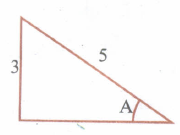
=\(\sqrt { { 5 }^{ 2 }-{ 3 }^{ 2 } } =4\)
=\(\sqrt { { 41 }^{ 2 }-{ 9 }^{ 2 } } \)
=40
\(sinA=\frac { 3 }{ 5 } \quad sinB=\frac { 40 }{ 41 } \)
\(cosA=\frac { 4 }{ 5 } \quad cosB=\frac { 9 }{ 41 } \)
sin (A + B) = sinA cosB + cosA sinB
=\(\frac { 3 }{ 5 } .\frac { 9 }{ 41 } +\frac { 4 }{ 5 } .\frac { 40 }{ 41 } \)
\(=\frac { 27 }{ 205 } +\frac { 160 }{ 205 } =\frac { 187 }{ 205 } \)
5.
cos A = \(\frac { { b }^{ 2 }+{ c }^{ 2 }-{ a }^{ 2 } }{ 2bc } \)
= \(\frac { 25+49-9 }{ 2(5)(7) } =\frac { 65 }{ 70 } =\frac { 13 }{ 14 } \)
cosB = \(\frac { { c }^{ 2 }+{ a }^{ 2 }-{ b }^{ 2 } }{ 2ca } =\frac { 49+9-25 }{ 2(7)(3) } =\frac { 33 }{ 42 } =\frac { 11 }{ 14 } \) .
6.
LHS = \(\frac { cos9x-cos5x }{ sin17x-sin3x } \)
= \(\frac { -2sin\left( \frac { 9x+5x }{ 2 } \right) .sin\left( \frac { 9x-5x }{ 2 } \right) }{ -2sin\left( \frac { 17x-3x }{ 2 } \right) .cos\left( \frac { 17x-3x }{ 2 } \right) } \)
\(\left[ \because cosC-cosD=-2sin\left( \frac { C+D }{ 2 } \right) sin\left( \frac { C-D }{ 2 } \right) sinC-sinD=-2sin\left( \frac { C-D }{ 2 } \right) cos\left( \frac { C+D }{ 2 } \right) \right] \)
= \(\frac { -sin(7x).sin(2x) }{ sin(7x).cos(10x) } =-\frac { -sin2x }{ cos10x } \) = RHS
7.
Given cos A = \(\frac { 4 }{ 5 } \), cos B =\(\frac { 12 }{ 13 } \)
Since A, B both lie in the IV quadrant sin A, sin B are negative.
\(\therefore \ sinA=\sqrt { 1-cos^{ 2 }A } =-\sqrt { 1-\frac { 16 }{ 25 } } =-\sqrt { \frac { 9 }{ 25 } } =-\frac { 3 }{ 5 } \)
\(sinB=-\sqrt { 1-cos^{ 2 }B } =-\sqrt { 1-\frac { 144 }{ 169 } } =-\sqrt { \frac { 25 }{ 169 } } =-\frac { 5 }{ 13 } \)
Now, cos(A+B) = cos A cos B - sin A sin B
=\(\left( \frac { 4 }{ 5 } \right) \left( \frac { 12 }{ 13 } \right) -\left( \frac { -3 }{ 5 } \right) \left( \frac { -5 }{ 13 } \right) =\frac { 48 }{ 65 } -\frac { 15 }{ 65 } =\frac { 33 }{ 65 } \).
8.
\(\sin { \left( \pi +\theta \right) } =-\sin { \theta } \)
\(\sin { \left( \pi +\theta \right) } =\sin { \pi } \cos { \theta } +\cos { \pi } \sin { \theta } \)
\(=\left( 0 \right) \cos { \theta } +\left( -1 \right) \sin { \theta } \)
\(=0-\sin { \theta } \)
\(\sin { \left( \pi +\theta \right) } =-\sin { \theta } \)
9.
\(\tan { \left( \frac { 7\pi }{ 12 } \right) } =\tan { \left( \frac { 7\times 180 }{ 12 } \right) } =\tan { \left( { 105 }^{ o } \right) } =\frac { \sin { { 105 }^{ o } } }{ \cos { { 105 }^{ o } } } \)
\(=\frac { \frac { \sqrt { 3 } +1 }{ 2\sqrt { 2 } } }{ \frac { 1-\sqrt { 3 } }{ 2\sqrt { 2 } } } =\frac { \sqrt { 3 } +1 }{ 2\sqrt { 2 } } \times \frac { 2\sqrt { 2 } }{ 1-\sqrt { 3 } } =\frac { \sqrt { 3 } +1 }{ 1-\sqrt { 3 } } \)
\(=\frac { { \left( \sqrt { 3 } +1 \right) }^{ 2 } }{ { 1 }^{ 2 }-{ \left( \sqrt { 3 } \right) }^{ 2 } } =\frac { 3+1+2\sqrt { 3 } }{ 1-3 } =\frac { \sqrt { 3 } +1 }{ 1-\sqrt { 3 } } \times \frac { 1+\sqrt { 3 } }{ 1+\sqrt { 3 } } \)
\(=-\left( \frac { 4+2\sqrt { 3 } }{ 2 } \right) =-2\left( \frac { 2+\sqrt { 3 } }{ 2 } \right) \)
\(\tan { \left( \frac { 7\pi }{ 2 } \right) } =-\left( 2+\sqrt { 3 } \right) \)
10.
Let sin-1 \(\left( \frac { 12 }{ 13 } \right) +{ cos }^{ -1 }\left( \frac { 4 }{ 5 } \right) +{ tan }^{ -1 }\left( \frac { 63 }{ 16 } \right) =\pi \)
Then \(sin\quad x=\frac { 12 }{ 13 } ,cosy\frac { 4 }{ 5 } ,\quad and\quad tanz\frac { 63 }{ 16 } \)
\(cos\quad x\sqrt { 1-{ sin }^{ 2 }x } =\sqrt { 1-\frac { 144 }{ 169 } } =\sqrt { \frac { 25 }{ 169 } } =\frac { 5 }{ 13 } \)
\(and\quad tan\quad x=\frac { sin\quad x }{ cos\quad x } =\frac { 12 }{ 13 } /\frac { 5 }{ 13 } =\frac { 12 }{ 5 } \)
\(sin\quad y\sqrt { 1-{ cos }^{ 2 }y } =\sqrt { 1-\frac { 16 }{ 25 } } =\sqrt { \frac { 9 }{ 25 } } =\frac { 3 }{ 5 } \)
\(tan\quad y=\frac { sin\quad y }{ cos\quad y } =\frac { \frac { 3 }{ 5 } }{ \frac { 4 }{ 5 } } =\frac { 3 }{ 4 } \)
i.e have tan (x + y) = \(\frac { tan\quad x+tan\quad y }{ 1-tan\quad x.tan\quad y } \)
\(\frac { \frac { 12 }{ 5 } +\frac { 3 }{ 4 } }{ 1-\frac { 12 }{ 5 } \times \frac { 3 }{ 4 } } =\frac { \frac { 48+15 }{ 20 } }{ \frac { 20-36 }{ 20 } } =-\frac { 63 }{ 16 } \)
From (1) and (2), tan (x+y) = -tan z
\(\Rightarrow tan\quad (x+y)=tan\quad (-z)\)
\(\Rightarrow tan(x+y)=tan(\pi -z)\)
\(\Rightarrow x+y= -z\quad or\quad x+y=\pi -z\)
Since x, y, and z are positive, x + y \(\neq \) -z
\(\therefore\) x + y + z = p
\(\Rightarrow { sin }^{ -1 }\left( \frac { 12 }{ 13 } \right) +{ cos }^{ -1 }\left( \frac { 4 }{ 5 } \right) +{ tan }^{ -1 }\left( \frac { 63 }{ 16 } \right) =\pi \)
11.
Given a = 4, b = 6 and c = 8.
By cosine formula, \(\cos { B } =\frac { { a }^{ 2 }+{ c }^{ 2 }-{ b }^{ 2 } }{ 2ac } \)
\(\Rightarrow \cos { B } =\frac { 16+64-36 }{ 2(4)(8) } =\frac { 80-36 }{ 64 } =\frac { 44 }{ 64 } =\frac { 11 }{ 16 } ....(1)\)
Also \(\cos { C } =\frac { { a }^{ 2 }+{ b }^{ 2 }-{ c }^{ 2 } }{ 2ab } =\frac { 16+36-64 }{ 2(4)(6) } \)
\(=\frac { 52-64 }{ 48 } =\frac { -12 }{ 48 } =\frac { -1 }{ 4 }.....(2)\)
Now, LHS = \(4\cos { B } +3\cos { C } \)
\(=4\left( \frac { 11 }{ 16 } \right) +3\left( \frac { -1 }{ 4 } \right) \) [ From (1) and (2) ]
= \(\frac { 11 }{ 4 } -\frac { 3 }{ 4 } =\frac { 11-3 }{ 4 } =\frac { 8 }{ 4 } =2=RHS\)
Hence Proved.
12.
\(LHS=sin\frac { \theta }{ 2 } sin\frac { 7\theta }{ 2 } +sin\frac { 3\theta }{ 2 } sin\frac { 11\theta }{ 2 } \)
\(=\frac { 1 }{ 2 } \left[ cos\left( \frac { \theta }{ 2 } -\frac { 7\theta }{ 2 } \right) -cos\left( \frac { \theta }{ 2 } -\frac { 7\theta }{ 2 } \right) \right] +\frac { 1 }{ 2 } \left[ cos\left( \frac { 3\theta }{ 2 } -\frac { 11\theta }{ 2 } \right) -cos\left( \frac { 3\theta }{ 2 } -\frac { 11\theta }{ 2 } \right) \right] \)
\(=\frac { 1 }{ 2 } \left[ cos(-3\theta )-cos(4\theta )+cos(-4\theta )-cos7\theta \right] \)
\(=\frac { 1 }{ 2 } \left[ cos3\theta -cos4\theta +cos4\theta -cos7\theta \right] \quad \quad \left[ \because cos(-\theta )=cos\theta \right] \)
\(=\frac { 1 }{ 2 } \left[ cos3\theta -cos7\theta \right] =\frac { 1 }{ 2 } \left[ 2sin\left( \frac { 3\theta +7\theta }{ 2 } \right) .sin\left( \frac { 7\theta -3\theta }{ 2 } \right) \right] \)
\(=sin5\theta .sin2\theta =RHS.\)
13.
Given sin θ + cos θ = m
LHS = cos6 θ + sin6θ
= (cos2θ)3+ (sin2 θ)3
= (cos2θ + sin2θ)(cos4θ - cos2θ sin2θ + sin4θ)
= 1(cos4θ - cos2θ sin2θ + sin4θ)
= (cos2θ)2+ (sin2θ)2 - cos2θsin2θ
= (cos2θ)2+ (sin2θ)2- cos2θ sin2θ
= 1 - 3 sin2\(\theta\) cos2\(\theta\) ....(1)
RHS = \(\frac { 4-3{ \left( { m }^{ 2 }-1 \right) }^{ 2 } }{ 4 } \)
= \(\frac { 4-3{ \left[ { \left( sin\theta +cos\theta \right) }^{ 2 }-1 \right] }^{ 2 } }{ 4 } =\frac { 4-3\left[ { sin }^{ 2 }\theta +{ cos }^{ 2 }\theta +2sin\theta cos\theta -1 \right] }{ 4 } \)
= \(\frac { 4-12{ sin }^{ 2 }\theta { cos }^{ 2 }\theta }{ 4 } =\frac { 4 }{ 4 } -\frac { 12 }{ 4 } { sin }^{ 2 }\theta { cos }^{ 2 }\theta \)
= 1 - 3 sin2\(\theta\) cos2\(\theta\) ...(2)
From (1) and (2), LHS = RHS
14.
Given a cos \(\theta\) - b sin \(\theta\) = C
Squaring both sides we get, (a cos \(\theta\) - b sin \(\theta\))2 = c2
\(\Rightarrow \) a2cos2\(\theta\) + b2sin2\(\theta\) - 2ab sin \(\theta\) cos \(\theta\) = c2
\(\Rightarrow \) a2(1 - sin2\(\theta\))+ b2 (1-cos2\(\theta\)) - 2ab sin \(\theta\) cos \(\theta\) = c2
\(\Rightarrow \) a2 - a2 sin2 \(\theta\) + b2 - b2 cos2 \(\theta\) - 2ab sin \(\theta\) cos \(\theta\) = c2
\(\Rightarrow \) -a2 sin2\(\theta\) -b2cos2\(\theta\) - 2ab sin \(\theta\) cos \(\theta\) = c2 -a2 - b2
\(\Rightarrow \) a2sin2\(\theta\) + b2cos2 \(\theta\) + 2ab sin cos = a2+ b2- c2
\(\Rightarrow \) (a sin \(\theta\)+ b cos \(\theta\))2 = a2 + b2 - c2
\(\Rightarrow \) a sin \(\theta\) + b cos \(\theta\) = \(\pm \sqrt { { a }^{ 2 }+{ b }^{ 2 }-{ c }^{ 2 } } \)
Hence proved
15.
(b)
\(\frac { \pi }{ 3 } \)
16.
(d)
\(\frac { \pi }{ 4 } \)
17.
\(\frac{\sin (A-B)}{\cos A \cos B} =\frac{\sin A \cos B-\cos A \sin B}{\cos A \cos B} \)
\(=\tan A-\tan B \)
\(\text { L.H.S } =\tan A-\tan B+\tan B-\tan C+\tan C-\tan A=0\)
18.
\(\cos 1^{\circ}+\cos 2^{\circ}+\cos 3^{\circ}+\ldots \ldots \ldots+\cos 179^{\circ} \)
\(=\left(\cos 1^{\circ}+\cos 179^{\circ}\right)+\left(\cos 2^{\circ}+\cos 178^{\circ}\right)+ ...\)
\(=2 \cos 90^{\circ} \cos 89^{\circ}+2 \cos 90^{\circ} \cos 80^{\circ}+\ldots \ldots . \)
\(=0+0+0 \ldots \ldots=0 \)
19.
\(x =\frac{1}{\cos 80^{\circ}}-\frac{\sqrt{3}}{\sin 80^{\circ}} \)
\(=\frac{\sin 80^{\circ}-\sqrt{3} \cos 80^{\circ}}{\sin 80^{\circ} \cos 80^{\circ}} \)
\(\frac{x}{2} =\frac{\frac{1}{2} \sin 80^{\circ}-\frac{\sqrt{3}}{2} \cos 80^{\circ}}{\frac{1}{2} \sin 80^{\circ} \cos 80^{\circ}} \)
\(=\frac{\sin 80^{\circ} \cos 60^{\circ}-\cos 80^{\circ} \sin 60^{\circ}}{\frac{1}{2} \sin 80^{\circ} \cos 80^{\circ}} \)
\(=\frac{\sin 20^{\circ}}{\frac{1}{2} \sin 80^{\circ} \cos 80^{\circ}} \)
\(=\frac{\sin 160^{\circ}}{\frac{1}{2} \sin 80^{\circ} \cos 80^{\circ}} \)
\(=\frac{2 \sin 80^{\circ} \cos 80^{\circ}}{\frac{1}{2} \sin 80^{\circ} \cos 80^{\circ}}=4 \)

11th Standard Syllabus & Materials
11th Standard
TN 11th Tamil பீடு பெற நில் - செய்யுள் - காவடிச்சிந்து Important Questions And Answers Study Material - QB365 Set A
NEW11th Standard
TN 11th Tamil பீடு பெற நில் - உரைநடை - மலை இடப்பெயர்கள் : ஓர் ஆய்வு Important Questions And Answers Study Material - QB365 Set A
NEW11th Standard
TN 11th Tamil மாமழை போற்றுதும் - துணைப்பாடம் - யானை டாக்டர் Important Questions And Answers Study Material - QB365 Set A
NEW11th Standard
TN 11th Tamil மாமழை போற்றுதும் - செய்யுள் - ஐங்குறுநூறு Important Questions And Answers Study Material - QB365 Set A



Tamilnadu Stateboard 11th Standard Subjects
Maths

Commerce

Economics

Biology

Business Maths and Statistics

Accountancy

Computer Science

Physics

Chemistry
Maths
Biology
Economics
Physics
Chemistry

History
Business Maths and Statistics

Computer Science
Accountancy

Computer Applications
History
Computer Technology
Commerce
Computer Applications
Computer Technology

Tamil

English

French
Tamilnadu Stateboard Standards

