
 100% FREE ACCESS
11th Standard Syllabus & Materials
11th Standard
TN 11th Tamil இயற்கை வேளாண்மை,சுற்றுச்சூழல் -செய்யுள் - மனோன்மணீயம் Important Questions And Answers Study Material - QB365 Set A
NEW11th Standard
TN 11th Tamil என்னுயிர் என்பேன் -துணைப்பாடம் - இசைத்தமிழர் இருவர் Important Questions And Answers Study Material - QB365 Set A
NEW11th Standard
TN 11th Tamil மொழி கலை -செய்யுள் - ஒவ்வொரு புல்லையும் Important Questions And Answers Study Material - QB365 Set A
NEW11th Standard
TN 11th Tamil பீடு பெற நில் - இலக்கணம் - பகுபத உறுப்புகள் Important Questions And Answers Study Material - QB365 Set A
NEW11th Standard
TN 11th Tamil பீடு பெற நில் - துணைப்பாடம் - வாடிவாசல் Important Questions And Answers Study Material - QB365 Set A
NEW11th Standard
TN 11th Tamil பீடு பெற நில் - செய்யுள் - குறுந்தொகை Important Questions And Answers Study Material - QB365 Set A

Published on: 26/07/2019
Books of Prime Entry
Download Tamil Nadu 11th Standard Accountancy question papers, model tests, one-mark questions, important questions, and public exam papers in PDF format. Free study materials and answer keys for TN State Board students.
Questions + Answers key
Take MCQ Accountancy Test
1.
_______ system is the scientific and complete system of recording the financial transactions of a business.
Single Entry
Double Entry
Prime Entry
Journal Entry
2.
_________ is a negotiable instrument.
Cheque
Cash
Discount
Premium
3.
_____ is a statement prepared by the seller who receives back from his customer the goods sold.
Debit Memo
Credit note
Receipts
Pay-in-slip
4.
A debit note is called as _______
debit memo
credit memo
pay-in-slip
receipts
5.
_______ is prepared in duplicate and the original is sent to the seller.
Debit Note
Credit Note
Pay-in-slip
None of these
6.
________ is prepared in three copies.
Debit Note
Credit Note
Receipts
Invoice
7.
Prepaid rent is a
Nominal A/c
Personal A/c
Real A/c
Representative personal A/c
8.
Which one of the following is representative personal account?
Building A/c
Outstanding salary A/c
Mahesh A/c
Balan & Co
9.
'Cash withdrawn by the proprietor from the business for his personal use' causes
Decrease in assets and decrease in owner's capital
Increase in one asset and decrease in another asset
Increase in one asset and increase in liabilities
Increase in asset and decrease in capital
10.
11.
State any three different types of Journal Entries?
12.
State the classification of accounts.
13.
Give the Meaning of Debit note.
14.
What is accounting equation?
15.
What are source documents?
16.
Point out the nature of the following Accounts.
a) Capital A/c;
b) Drawings A/c;
c) Machinery A/c;
d) Purchases A/c;
e) Wages A/c;
f) Bank A/c;
g) Outstanding rent A/c
h) Prepaid insurance A/c;
i) Bad debts A/c
17.
State the different approaches in recording business transactions.
18.
State the principles of double entry system of bookkeeping.
19.
Journalise the following transactions in the journal of Mr. Jesuraja and Raviraja. 2013, October
| Date | Rs. | |
|---|---|---|
| 1 | As partners, Jesuraja and Raviraja started their business with Rs.25,000, Rs. 15,000 respectively | |
| 5 | Opened a current account with bank of India | 40,000 |
| 10 | Paid rent by cheque | 2,500 |
| 15 | Machinery purchased for Rs. 20,000 by cheque | |
| 20 | Amount withdrawn from bank | 3,000 |
| 25 | Received cheque from Mr. Ramamoorthy | 12,000 |
| 28 | Ramamoorthy cheque deposited into bank for collection | 25,000 |
| 5 | Sold goods for cash | |
| 30 | Cheque received from Mr. Sundararajan Rs.7000 and immediately banked. |
20.
Prepare accounting equation for the following transactions.
(a) Murugan commenced business with cash Rs.80,000
(b) Purchased goods for cash Rs.30,000
(c) Paid salaries by cash Rs.5,000
(d) Bought goods from Kumar for Rs.5,000 and deposited the money in CDM.
(e) Introduced additional capital of Rs.10,000
21.
What is double entry system? State its advantages.
22.
Briefly explain about steps in journalising.
23.
Capital account
24.
Expenses account
25.
Revenue account
26.
Liability account
27.
Asset account
1.
(b)
Double Entry
2.
(a)
Cheque
3.
(b)
Credit note
4.
(a)
debit memo
5.
(a)
Debit Note
6.
(d)
Invoice
7.
(d)
Representative personal A/c
8.
(b)
Outstanding salary A/c
9.
(a)
Decrease in assets and decrease in owner's capital
10.
(d)
11.
(i) Simple Journal Entry
(ii) Compound Entry
(iii) Opening Entry
12.
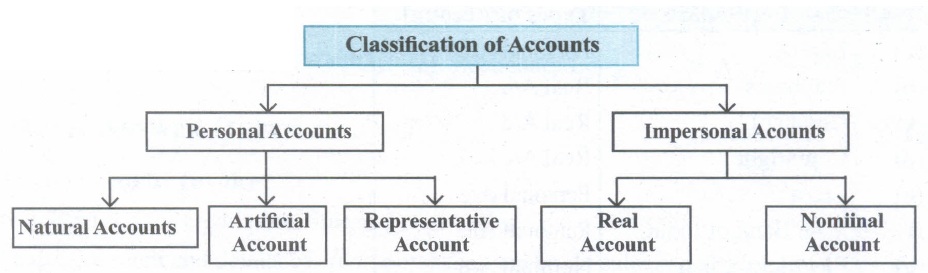
13.
(i) A debit note is prepared by the buyer and it contains the date of the goods returned, name of the supplier, details of the goods returned and reasons for returning the goods.
(ii) Each debit note is serially numbered.
(iii) A duplicate copy or counterfoil of the debit note is retained by the buyer.
14.
(i) Accounting equation is a mathematical expression which shows that the total of assets is equal to the total of liabilities and capital.
(ii) This is based on the dual aspect concept of accounting.
(iii) This means that total claims of outsiders and the proprietor will always be equal to the total of assets of business enterprise.
Assets = Liabilities + Capital + Revenues - Expenses
15.
(i) Source documents are the authentic financial evidence of transactions. These documents show the nature of transaction, the date, the amount and the parties involved.
(ii) Source documents include cash receipt, invoice, debit note, credit note, pay-in-slip, salary bills, wage bills, counterfoils of cheques and any other form of written documentary proof.
16.
a) Capital A/c - Personal Account
b) Drawings A/c - Personal Account
c) Machinery A/c - Real Account
d) Purchases A/c - Real Account
e) Wages A/c - Nominal Account
f) Bank A/c - Personal Account
g) Outstanding Rent A/c - Personal Account
h) Prepaid Insurance A/c - Personal Account
i) Bad Debts A/c - Nominal Account
17.
There are two approaches for recording business transactions, namely,
i) Accounting equation approach and
ii) Traditional approach
(i) Accounting Equation approach :
(a) The relationship of assets with that of liabilities to outsiders and to owners in the equation form is known as accounting equation.
(b) Under the Double entry system of book keeping, every transaction has two fold effects, which causes the changes in assets and liabilities or capital in such a way that an accounting equation is completed and equated
Equity + Liabilities =Assets
(ii) Traditional approach :
(a) Under this approach, the two fold aspects (Debit and Credit) in each transaction are recorded in the journal under double entry system.
(b) For the purpose of recording, the transactions are classified into three categories as
i) Transactions relating to persons,
ii) Transactions relating to assets, properties and liabilities and
iii) Transactions relating to expenses, losses, incomes and gains.
18.
Following are the principles of double entry system:
(i) In every business transaction, there are two aspects
(ii) The two aspects involved are the benefit or value receiving aspect and benefit or value giving aspect.
(iii) These two aspects involve minimum two accounts; at least one debit and at least one credit.
(iv) For every debit, there is a corresponding and equivalent credit. If one account is debited the other account must be credited.
19.
| Date | Particulars | L.F | Debit Rs. | Credit Rs. | |
|---|---|---|---|---|---|
| 1.10.13 | Cash A/c | Dr. | 40,000 | ||
| To Jesuraja's Capital A/c | 25,000 | ||||
| To Raviraja's Capital A/c | 15,000 | ||||
| (Amount invested by Jesuraia and Raviraia) | |||||
| 5.10.13 | Bank of India A/c | Dr. | 40,000 | ||
| To cash A/c | 40,000 | ||||
| (Amount paid into bank) | |||||
| 10.10.13 | Rent A/c | Dr | 2,500 | ||
| To Bank A/c | 2,500 | ||||
| (Rent paid by cheque) | |||||
| 15.10.13 | Machinery A/c | Dr. | 20,000 | ||
| To Bank A/c | 20,000 | ||||
| (Machinery purchased by cheque) . | |||||
| 20.8.13 | Cash A/c | Dr. | 3,000 | ||
| To Bank A/c | 3,000 | ||||
| (Amount withdrawn from bank) | |||||
| 25.10.13 | Cash A/c | Dr. | 12,000 | ||
| To Ramamoorthy A/c | 12,000 | ||||
| (Cheque received) | |||||
| 28.10.13 | Bank A/c | Dr. | 12,000 | ||
| To Cash A/c | 12,000 | ||||
| (Cheque paid into bank) | |||||
| 30.8.13 | Bank A/c | Dr. | 7,000 | ||
| To Sundarajan A/c | 7,000 | ||||
| (Cheque received and immediately banked) . |
20.
| S.No. | Transaction | Cash Rs. | Stock Rs. | Bank Rs. | Furniture Rs. | Total Assets Rs. | = | Total Liabilities Rs. | Capital Rs. |
|---|---|---|---|---|---|---|---|---|---|
| a) | Started business with cash |
+80,000 | +80,000 | ||||||
| Balance | +80,000 | +80,000 | |||||||
| Equation | +80,000 | = | +80,000 | ||||||
| b) | Cash purchases | -30,000 | +30,000 | ||||||
| Balance | +50,000 | +30,000 | +80,000 | ||||||
| Equation | +80,000 | = | +80,000 | ||||||
| c) | Paid salaries by cash | -5,000 | -5,000 | ||||||
| Balance | +45,000 | +30,000 | +75,000 | ||||||
| Equation | +75,000 | = | +75,000 | ||||||
| d) | Deposited money in CDM |
-5,000 | +5,000 | ||||||
| Balance | +40,000 | +35,000 | +75,000 | ||||||
| Equation | +75,000 | = | +75,000 | ||||||
| e) | Introduced additional capital | +10,000 | +10,000 | ||||||
| Balance | +50,000 | +35,000 | +85,000 | ||||||
| Equation | +85,000 | = | +85,000 |
21.
(i) Double entry system of bookkeeping is a scientific and complete system of recording the financial transactions of an organisation.
(ii) According to this system, every transaction has a two fold effect.
(iii) That is, there are two aspects involved, namely, receiving aspect and giving aspect.
(iv) It is denoted by debit (Dr.) and credit (Cr.).
Following are the advantages of double entry system:
(1) Accuracy: In this system, the two aspects of each transaction are recorded in the books of accounts. This helps in checking the accuracy in accounting
(2) Ascertainment of business results: Details regarding expenses, losses, incomes, gains, assets, liabilities, debtors, creditors, etc: are readily available. This helps to ascertain the net profit earned or loss incurred during an accounting period and also to know the financial position as on a particular date.
(3) Comparative study: The business results of the current year can be compared with those of the previous years and also with other business firms. It facilitates business planning for future.
(4) Common acceptance: The business records maintained under this system are accepted by financial institutions, government and others, because it is a systematic and scientific system.
22.
The following steps are followed in journalising
(1) Analyse the transactions and identify the accounts (based on aspects) which are involved in the transaction.
(2) Classify the above accounts under Personal account, Real account or Nominal account
(3) Apply the rules of debit and credit for the above two accounts.
(4) Find which account is to be debited and which account is to be credited by the application of rules of double entry system.
(5) Record the date of transaction in the date column.
(6) Enter the name of the account to be debited in the particulars column very close to the left hand side of the particulars column followed by the abbreviation 'Dr.' at the end in the same line. Against this, the amount to be debited is entered in the debit amount column in the same line.
(7) Write the name of the account to be credited in the second line starting with the word 'To' prefixed a few spaces away from the margin in the particulars column. Against this, the amount to be credited is entered in the credit amount column in the same line.
(8) Write the narration within brackets in the next line in the particulars column.
23.
Owner
24.
Purchase of goods
25.
Rent received
26.
Creditors
27.
Land and buildings

11th Standard Syllabus & Materials
11th Standard
TN 11th Tamil பீடு பெற நில் - செய்யுள் - காவடிச்சிந்து Important Questions And Answers Study Material - QB365 Set A
NEW11th Standard
TN 11th Tamil பீடு பெற நில் - உரைநடை - மலை இடப்பெயர்கள் : ஓர் ஆய்வு Important Questions And Answers Study Material - QB365 Set A
NEW11th Standard
TN 11th Tamil மாமழை போற்றுதும் - துணைப்பாடம் - யானை டாக்டர் Important Questions And Answers Study Material - QB365 Set A
NEW11th Standard
TN 11th Tamil மாமழை போற்றுதும் - செய்யுள் - ஐங்குறுநூறு Important Questions And Answers Study Material - QB365 Set A



Tamilnadu Stateboard 11th Standard Subjects

Maths

Commerce

Economics

Biology

Business Maths and Statistics
Accountancy

Computer Science

Physics

Chemistry
Maths
Biology
Economics
Physics
Chemistry

History
Business Maths and Statistics

Computer Science
Accountancy

Computer Applications
History
Computer Technology
Commerce
Computer Applications
Computer Technology

Tamil

English

French
Tamilnadu Stateboard Standards
