
 100% FREE ACCESS
11th Standard Syllabus & Materials
11th Standard
TN 11th Tamil இயற்கை வேளாண்மை,சுற்றுச்சூழல் -செய்யுள் - மனோன்மணீயம் Important Questions And Answers Study Material - QB365 Set A
NEW11th Standard
TN 11th Tamil என்னுயிர் என்பேன் -துணைப்பாடம் - இசைத்தமிழர் இருவர் Important Questions And Answers Study Material - QB365 Set A
NEW11th Standard
TN 11th Tamil மொழி கலை -செய்யுள் - ஒவ்வொரு புல்லையும் Important Questions And Answers Study Material - QB365 Set A
NEW11th Standard
TN 11th Tamil பீடு பெற நில் - இலக்கணம் - பகுபத உறுப்புகள் Important Questions And Answers Study Material - QB365 Set A
NEW11th Standard
TN 11th Tamil பீடு பெற நில் - துணைப்பாடம் - வாடிவாசல் Important Questions And Answers Study Material - QB365 Set A
NEW11th Standard
TN 11th Tamil பீடு பெற நில் - செய்யுள் - குறுந்தொகை Important Questions And Answers Study Material - QB365 Set A

Published on: 13/03/2019
+1 Public Exam March 2019 Important Creative Questions and Answers
Download Tamil Nadu 11th Standard Accountancy question papers, model tests, one-mark questions, important questions, and public exam papers in PDF format. Free study materials and answer keys for TN State Board students.
Questions + Answers key
Take MCQ Accountancy Test
1.
Explain the various accounting concepts.
2.
What do you mean by materiality-principle?
3.
What is imprest system?
4.
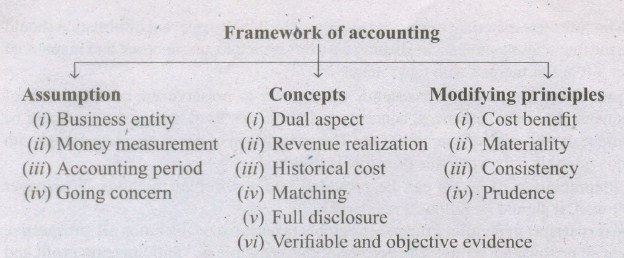
List out the framework of accounting.
5.
Write notes on retiring of a bill.
6.
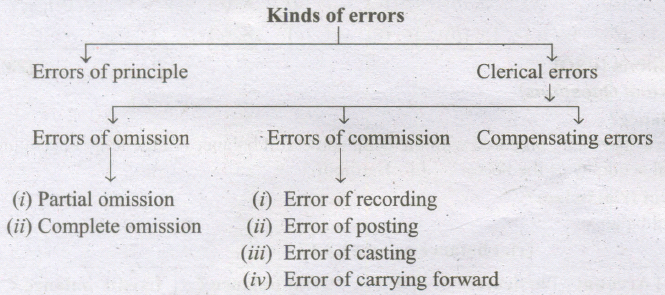
Name the different kinds of errors ..
7.
What is a journal?
8.
What is an opening entry?
9.
Define depreciation.
10.
What is insolvency?
11.
What is a Loose-Leaf Ledger?
12.
Prepare a trading account of Mrs. Divya for the year ended 31st December 2017.
| Particulars | Rs. | Particulars | Rs. |
|---|---|---|---|
| Opening Stock | 5,700 | Sales | 2,62,000 |
| Purchases | 1,58,000 | Sales returns | 600 |
| Purchases returns | 900 | Closing stock | 8,600 |
13.
What do you mean by closing stock?
14.
Define Depreciation.
15.
State any two merits of Straight line method.
16.
What is scrap value of an asset?
17.
State the nature of the following transactions.
i) Expenditure incurred on issue of equity shares.
ii) Cost of formation of anew company.
iii) Cost of Rs.10,000 incurred in increasing the sitting accommodation and Rs.5,000 in repainting of cinema house.
18.
What is Revenue profit?
19.
What is error of commission?
20.
Will his personal bank account serve the purpose of his business transactions?
21.
Cash account cannot have a credit balance. Why?
22.
Write any two limitations of book-keeping.
23.
Does every businessman need accounting knowledge?
24.
Who are researchers?
25.
What is a Voucher?
26.
What are accrued incomes?
27.
What is outstanding expense?
28.
What are mnemonic codes?
29.
What is accounting software?
30.
What is CAS?
31.
A firm acquired a machine on 1st April 2015 at a cost of Rs. 50,000. Its life is 6 years. The firm writes off depreciation @ 30% p.a. on the diminishing balance method. The firm closes its books on 31st December every year. Show the machinery account and depreciation account for three years starting from 1st April 2015.
32.
Rectify the following errors discovered after the preparation of the trial balance:
(a) Rent paid was carried forward to the next page Rs.500 short.
(b) Wages paid was carried forward Rs.250 excess.
33.
What is sinking fund method?
34.
List out the various methods of depreciation.
35.
From the following balances taken from the books of Saravanan, calculate gross profit for the year ended December 31, 2017.
| Particulars | Rs | Particulars | Rs |
|---|---|---|---|
| Opening stock | 1,50,000 | Net sales during the year | 4,00,000 |
| Direct expenses | 8,000 | Net purchases during the year | 1,50,000 |
| Closing Stock | 25,000 |
36.
What is meant by error of partial omission?
37.
Mention any two differences between trial balance and balance sheet.
38.
Compute cost of goods sold from the following information:
| Particulars | Rs |
|---|---|
| Opening stock | 8,000 |
| Purchases | 60,000 |
| Direct expenses | 5,000 |
| Indirect expenses | 6,000 |
| Closing stock | 9,000 |
39.
What is capital expenditure?
40.
State whether the following are capital or revenue items.
i. Rs.5,000 spent towards additions to buildings.
ii. Second-hand motor car purchased for Rs.30,000 and paid Rs.2,000 as repairs immediately.
iii. Rs.10,000 was spent on painting the new factory.
iv. Freight and cartage on the new machine Rs.150, erection charges Rs.200.
v. Rs.150 spent on repairs before using a second hand car purchased recently.
41.
The following errors were detected before preparation of trial balance. Rectify them.
(a) Purchases returns book is undercast by Rs. 500.
(b) Purchases returns book is overcast by Rs. 600.
(c) Sales returns book is undercast by Rs. 700.
(d) Sales returns book is overcast by Rs. 800.
42.
Distinguish between sales book and sales account.
43.
Substitute the following statements with one word/phrase
(a) A copy of customer's account issued by the bank
(b) Debit balance as per bank statement
(c) Statement showing the causes of disagreement between the balance as per cash book and balance as per bank statement
44.
What is bank reconciliation statement?
45.
What do the following Journal Entries mean?
Cash A/c Dr.
To Furniture A/c
46.
Definition of trial balance.
47.
What is Pay-in-Slip?
48.
What is the purpose of a Ledger?
49.
Give the specimen of 'Three column Cash book'.
50.
What is meant by Opening Journal Entry?
51.
What is Compound Journal Entry mean?
52.
What is the difference between IFRS and India GAAP
53.
As per consistency concept a company cannot change an accounting policy. Does this holds true in all instances? Explain.
54.
What is Cash Receipt?
55.
What is trade discount?
56.
What is trade discount?
57.
What is double column cash book?
58.
What is real account?
59.
What are source documents?
60.
Define bill of exchange.
61.
What is sales returns book?
62.
What is purchases book?
63.
What are the different types of cash book?
64.
State whether the balance of the following accounts should be placed in the debit or the credit column of the trial balance
(i) Carriage outwards
(ii) Carriage inwards
(iii) Sales
(iv) Purchases
(v) Bad debts
(vi) Interest paid
(vii) Interest received
(viii) Discount received
(ix) Capital
(x) Drawings
(xi) Sales returns
(xii) Purchase returns
65.
Give the format of trial balance.
66.
What is meant by opening entry?
67.
What is balancing of an account?
68.
What is meant by posting?
69.
What do you mean by Accounting Cycle
70.
What is bad debt?
71.
What is cost accounting?
72.
What is meant by accounting concepts?
73.
Who are the parties interested in accounting information?
74.
Define accounting.
1.
2.
3.
In imprest system advance amount is received by petty cashier to meet various petty payments at the beginning of the particular month.
4.
Framework of accounting. With a view to make the accounting results understood in the same sense by all the interested parties, certain accounting assumption, concepts and principles have been developed.
5.
An acceptor may make the payment of a bill before its due date and discharge his liability, it is called retirement of a bill. Usually the holder of the bill allows a concession called rebate to the drawee for the unexpired period of the bill.
6.
7.
Journal: The books in which a transaction is recorded for the first time from a source document are called "Books of original entry or prime entry". Journal is one of the books of original entry in which transactions are originally recorded in a chronological (day-to-day) order according to the principles of double entry system. Journal is a date-wise record of all the transactions with details of the accounts debited and credited and the amount of each transaction.
8.
Opening entry is an entry which is passed in the beginning of each current year to record the closing balance of assets and liabilities of the previous year.
In this entry, asset accounts are debited and liabilities and capital are credited. If the capital is not given, it will be found out by deducting the total of liabilities from the total of assets.
9.
According to Carter, depreciation is defined as a gradual and permanent decreased in the value of fixed assets due to obsolescence, passage of time, etc.,
10.
Insolvency is the incapability of a person or an enterprise to pay the debts.
11.
The ledger that is normally use in a majority of business concern is a bound notebook. But in bigger concerns, instead of bound note-book, loose-leaf ledger is used. In a loose-leaf ledger, appropriate ruled sheets of thick paper are introduced and fixed up with the help of a binder.
Whenever necessary additional pages may be inserted, completed accounts can be removed and the accounts may be arranged and rearranged in the desired order. This type of ledger is known as Loose-Leaf Ledger.
12.
| Particulars | Rs. | Rs. | Particulars | Rs. | Rs. |
|---|---|---|---|---|---|
| To Opening stock | 5,700 | By Sales | 2,62,000 | ||
| To Purchases | 1,58,000 | Less: Sales returns | 600 | 2,61,400 | |
| Less: Purchase returns | 900 | 1,57,100 | By Closing stock | 8,600 | |
| To Gross profit c/d | 1,07,200 | ||||
| 2,70,000 | 2,70,000 |
13.
The goods remaining unsold at the end of the accounting period are mown as closing stock.
14.
According to spicer and pegler, "Depreciation is the measure of exhaustion of the effective life-of an asset froin any cause during a given period",
15.
(i) Simplicity
(ii) Equality of Depreciation burden
16.
(i) The amount which is expected to be realised at the end of the estimated useful life of an asset is known asscrap value of the asset.
(ii) In determining the scrap value, costs to be incurred fer removal and sale ef the asset should be excluded from the estimated gross realisable value. It is also known as residual value.
17.
| S.No. | Transactions | Classification |
|---|---|---|
| i) | Expenditure incurred on issue of equity shares. | Capital expenditure |
| ii) | Cost of formation of a new company. | Capital expenditure |
| iii) | Cost of Rs.10,000 incurred in increasing the sitting accommodation and Rs.5,000 in repainting of cinema house. | Capital expenditure |
18.
Revenue profit is the Profit which arises from the normal course of the business. i.e., Net profit the excess of revenue receipts over revenue expenditure.
19.
(i) When the accountant has done something which should not have been done, it is known as error of commission.
(ii) It usually occurs due to lack of concentration or carelessness of the accountant.
20.
No, his personal bank account will not serve the purpose of his business transactions.
21.
Cash account can have debit balance only because assets account shows always debit balance.
22.
The limitations of Book-keeping are:
1. Only monetary transactions are recorded in the book accounts.
2. Effects of price level changes are not considered.
23.
No, Every business man does not need accounting knowledge. The business man is called sole trader. If he has little accounting knowledge, is enough, but he should have business skill.
24.
Researchers to carry out their research can use accounting information and make use of the published financial statements for analysis and evaluation.
25.
Any written or printed document in support of a business transaction is called a voucher. Examples: Cash Receipt, Invoice, Cash Memo, Bank Pay-in-slip, etc.
26.
(i) The income which has been earned during the current accounting year but not received till the end of that accounting year is called as accrued income.
(ii) It generally happens in case of amount to be received on account of commission, interest, dividend, etc
27.
(i) Expenses like wages, salaries, rent, etc. which have been incurred in the accounting period but not paid at the end of the accounting year are called outstanding expenses.
(ii) Outstanding expense account is a representative personal account.
28.
A mnemonic code consists of alphabets or abbreviations as symbols to codify a piece of information.
For example:
| CODE | Information |
|---|---|
| SJ | Sales Journals |
| HQ | Head Quarters |
29.
(i) Accounting software is an integral part of the computerised accounting system.
(ii) The main function of computerised accounting system is to perform the accounting activities in an organisation, generate reports as per the requirements of the users.
30.
(i) Computerised accounting system refers to the system of maintaining accounts using computers.
(ii) In other words the processing of accounting transactions through the use of hardware and software in order to keep and produce accounting records and reports.
31.
| Date | Particulars | Amount Rs. |
Date | Particulars | Amount Rs. |
|---|---|---|---|---|---|
| 1.4.2015 | To Bank A/c | 50,000 | 31.12.2015 | By Depreciation Alc | 11,250 |
| (50,000 x \(\frac {30}{100} \times \frac {9}{12}\)) | |||||
| 31.12.2015 | By Balance c/d | 38,750 | |||
| 50,000 | 50,000 | ||||
| 1.1.2016 | To Balance b/d | 38,750 | 31.12.2016 | By Depreciation A/c | 11,625 |
| (38,750 \(\times\) \(\frac {30}{100}\)) | |||||
| 31.12.2016 | By Balance c/d | 27,125 | |||
| 38,750 | 38,750 | ||||
| 1.1.2017 | To Balance b/d | 27,125 | 31.12.2017 | By Depreciation A/c | 8,138 |
| 31.12.2017 | By Balance c/d. | 18,987 | |||
| 27,125 | 27,125 | ||||
| 1.1.2018 | To Balance b/d | 18,987 |
| Date | Particulars | Amount Rs. |
Date | Particulars | Amount Rs. |
|---|---|---|---|---|---|
| 31.12.2015 | To Machinery A/c | 11,250 | 31.12.2015 | By Profit and loss A/c | 11,250 |
| 11,250 | 11,250 | ||||
| 31.12.2016 | To Machinery A/c | 11,625 | 31.12.2016 | By Profit and loss A/c | 11,625 |
| 11,625 | 11,625 | ||||
| 31.12.2017 | To Machinery A/c | 8,138 | 31.12.2017 | By Profit and loss A/c | 8,138 |
| 8,138 | 8,138 |
32.
(a) Rent was should be debited with Rs. 500.
(b) Wages paid should be credited with Rs. 250.
33.
(i) Sinking fund method is adopted especially when it is desired not merely to write off an asset but also to provide enough funds to replace an asset at the end of its working life.
(ii) Under this method, the amount charged as depreciation is transferred to depreciation fund and invested outside the business.
(iii) This method of depreciation is suitable for assets of higher value.
(iv) This method is also known as depreciation fund method
34.
The following are the different methods of providing depreciation:
(i) Straight line method or Fixed instalment method or Original cost method
(ii) Written down value method or Diminishing balance method
(iii) Sum of years of digits method
(iv) Machine hour rate method
(v) Depletion method
(vi) Annuity method
(vii) Revaluation method
(viii) Sinking fund method
(ix) Insurance policy method
35.
| Particulars | Rs. | Particulars | Rs. |
|---|---|---|---|
| To Opening stock | 1,50,000 | By Net sales during the year | 4,00,000 |
| To Direct expenses | 8,000 | By Closing stock | 25,000 |
| To Net purchases | 1,50,000 | ||
| To Gross profit c/d | 1,17,000 | ||
| 4,25,000 | 4,25,000 |
36.
(i) When the accountant has failed to record a transaction partially, it is known as error of partial omission.
(ii) This error usually occurs in posting. This error affects only one account.
37.
| S.No. | Trial Balance | Balance Sheet |
|---|---|---|
| 1. | Trial Balance is a list of ledger balances on a particular date. | Balance sheet is a statement showing the position of assets and liabilities on a particular date. |
| 2. | Balances shown in the trial balance need not be in order. | Balances shown in the balance sheet must be in order. |
38.
Cost of goods sold = Opening stock + Net purchases + Direct expenses – Closing stock
= 8,000 + 60,000 + 5,000 – 9,000
= Rs. 64,000
Note: Indirect expenses do not form part of cost of goods sold.
39.
(i) It is an expenditure incurred during an accounting period, the benefits of which will be available for more than one accounting period.
(ii) It includes any expenditure resulting in the acquisition of any fixed asset or contributes to the revenue earning capacity of the business. It is non- recurring in nature.
40.
i. Rs.5,000 spent towards additions to buildings is capital expenditure.
ii. The entire amount of Rs.32,000 should be treated as capital expenditure.
iii. Rs.10,000 spent on painting the new factory should be treated as capital expenditure.
iv. Freight, cartage and erection charges are capital expenditures.
v. Rs.150 being expense to bring the asset in usable condition, is a capital expenditure.
41.
(a) Purchases returns account should be credited with Rs. 500
(b) Purchases returns account should be debited with Rs. 600
(c) Sales returns account should be debited with Rs. 700
(d) Sales returns account should be credited with Rs. 800
42.
The difference between Sales book and Sales Account are:
| S.No | Sales Book | Sales Account |
| 1 | Sales book is a part of a journal book. | Sales account is a part of a ledger |
| 2 | Sales book does not have debit and credit columns like ledger account. | Sales account has Debit and Credit columns. |
| 3 | In a sales book, only credit sales of goods are recorded. | In a sales account, credit, as well as cash sales of goods, are recorded. |
| 4 | Total amount of sales book is posted to the sales account periodically. | Balance in the sales account is transferred to the trading account. |
43.
(a) A copy of customer's account is regularly sent to the customer by the bank. This is called "Pass Book".
(b) Debit balance as per Pass Book(i.e. overdraft) is given and the balance as per cash book is to be ascertained.
(c) The differences may be caused by either:
(i) Time gap in recording transactions or
(ii) Errors committed in recording transactions.
44.
(i) If entry in the cash book matches with the bank statement, then bank balance will be the same in both the records.
(ii) But, practically it may not be possible. When the balances do not agree with each other, the need for preparing a statement to explain the causes arises. This statement is called bank reconciliation statement (BRS).
45.
Furniture sold
46.
According to J.R. Batliboi, "A trial balance is a statement, prepared with the debit and credit balances of the ledger accounts to test the arithmetical accuracy of the books".
47.
(i) When Cash cheque is deposited in bank, a form is to be filled by a customer and submitted to the banker along with Cash cheque. This is called as pay-in-slip or deposit slip.
(ii) The main part of this will be retained by the bank and the counterfoil duly stamped and signed by the banker is returned to the customer.
48.
The purpose of a ledger account is to classify the transactions according to their nature and item.
49.
| Date | Receipts | L.F. | Amount | Date | Payments | L.F | Amount | ||||
| Discount (Rs) |
Cash (Rs) |
Bank (Rs) |
Discount (Rs) |
Cash (Rs) |
Bank (Rs) |
||||||
50.
An opening entry is a journal entry by the means of which the various balances related to assets, liabilities and capital of the previous accounting period are brought forward in the books of current accounting period.
51.
Compound entries in which more than two accounts are involved. There is either more than one debit / more than one credit or both. Compound entries recorded for the transactions which can be grouped conveniently.
52.
The two principle differences between IFRS and Indian GAAP or Accounting standard are as follows
| IFRS | GAAP |
| 1. IFRS are principle based. | Indian GAAP or accounting standard are rule based |
| 2. IFRS are based on fair values concept | Indian GAAP or accounting standard are based on historical cost concept |
53.
Yes, the method and the rate of depreciation can be changed but only in the following circumstances.
(i) The change is to comply with statutory regulations. or
(ii) The change would help in better understanding of the true financial position of the business. Also, the change and its effect on profit should be disclosed in the financial statements of the enterprise.
54.
(i) Cash Receipt is a document that shows the amount, date and details of cash purchases and cash sales or other cash transactions.
(ii) Business persons receive cash receipt for cash purchases and issue cash receipt for each sales.
55.
(i) Business concerns are always profit motivated and try to increase their sales.
(ii) In order to increase the sales, they may allow a reduction in the selling price when bulk purchases are made. It is known as trade discount.
56.
(i) Trade discount is a deduction given by the supplier to the buyer on the list price or catalogue price of the goods
(ii) It is given as a trade practice or when goods are purchased in large quantities. It is shown as a deduction in the invoice.
(iii) Trade discount is not recorded in the books of accounts. Only the net amount is recorded.
57.
(i) Double column Cash book is a cash book with cash and discount columns. As there are two columns, i.e., discount and cash columns, both on debit and credit sides, the cash book is known as 'double column cash book'.
(ii) The double column cash book is prepared on the lines of simple cash book. It has only one additional column, i.e., discount column on each side.
58.
All accounts relating to tangible and intangible properties and possessions are called real accounts
59.
(i) Source documents are the authentic financial evidence of transactions. These documents show the nature of transaction, the date, the amount and the parties involved.
(ii) Source documents include cash receipt, invoice, debit note, credit note, pay-in-slip, salary bills, wage bills, counterfoils of cheques and any other form of written documentary proof.
60.
According to the Negotiable Instruments Act, 1881, "Bill of exchange is an instrument in writing containing an unconditional order, signed by the maker, directing a certain person to pay a certain sum of money only to, or to the order of a certain person or to the bearer of the instrument".
61.
(i) Goods returned by the customers may also be known as "returns inwards".
(ii) Sales return book has got the same column as Sales Book.
(iii) In this book are recorded the transactions relating to goods sold on credit only.
62.
(i) Purchases book is one of the most important books, in which credit purchases of goods are recorded.
(ii) Purchases book is also known as Bought Day Book.
(iii) Cash purchases of goods, cash and credit purchases of assets are not entered in this book.
63.
The various kinds of Cash book from the point of view of uses are as follows :

64.
(i) Carriage outwards - Debit
(ii) Carriage inwards - Debit
(iii) Sales - Credit
(iv) purchases - Debit
(v) Bad debts - Debit
(vi) Interest paid - Debit
(vii) Interest received - Credit
(viii) Discount received - Credit
(ix) Capital - Credit
(x) Drawings - Debit
(xi) Sales returns - Debit
(xii) Purchase returns - Credit
65.
Trial balance is prepared in the following format under the balance method.
Trial balance As on...............
| S.No | Name of account/particulars | L.F | Debit balance Rs | Credit balance Rs |
|---|---|---|---|---|
66.
(i) Opening entry is an entry which is passed in the beginning of each current year to record the closing balance of assets and liabilities of the previous year.
(ii) In this entry asset accounts are debited and liabilities and capital account are credited.
67.
(i) Balance is the difference between the total debits and the total credits of an account.
(ii) Balancing means the writing of the difference between the amount columns of the two sides in the lighter (smaller total) side, so that the grand totals of the two sides become equal.
68.
The process of transferring the debit and credit items from the journal to the ledger accounts is called posting.
69.
(i) The Accounting Cycle refers to the collective process of recording and processing the accounting information of an organisation.
(ii) The series of steps begin when a transaction occurs and end with its inclusion in the financial statements.
70.
Bad debt is a loss to the business arising out of failure of a debtor in payment of his dues
71.
Cost Accounting involves the collection, recording, classification and appropriate allocation of expenditure for the determination of the costs of products or services and for the presentation of data for the purposes of cost control and managerial decision making.
72.
(i) Accounting concepts are the basic assumptions or conditions upon which accounting has been laid.
(ii) Accounting concepts are the results of broad consensus.
(iii) The word concept means a notion or abstraction which is generally accepted.
(iv) Accounting concepts provide unifying structure to the accounting process and accounting reports.
73.
There are several persons who need the accounting information for various purposes. They can be classified into two.
(i) Internal users:
1. Owners
2. Management
3. Employees
(ii) External users:
1. Creditors and Financial institutions
2. Investors
3. Customers
4. General public
5. Tax authorities and regulatory bodies
6. Government
7. Researchers
74.
American Accounting Association has defined accounting as "the process of identifying, measuring and communicating economic information to permit informed judgments and decisions by users of the information".

11th Standard Syllabus & Materials
11th Standard
TN 11th Tamil பீடு பெற நில் - செய்யுள் - காவடிச்சிந்து Important Questions And Answers Study Material - QB365 Set A
NEW11th Standard
TN 11th Tamil பீடு பெற நில் - உரைநடை - மலை இடப்பெயர்கள் : ஓர் ஆய்வு Important Questions And Answers Study Material - QB365 Set A
NEW11th Standard
TN 11th Tamil மாமழை போற்றுதும் - துணைப்பாடம் - யானை டாக்டர் Important Questions And Answers Study Material - QB365 Set A
NEW11th Standard
TN 11th Tamil மாமழை போற்றுதும் - செய்யுள் - ஐங்குறுநூறு Important Questions And Answers Study Material - QB365 Set A



Tamilnadu Stateboard 11th Standard Subjects

Maths

Commerce

Economics

Biology

Business Maths and Statistics
Accountancy

Computer Science

Physics

Chemistry
Maths
Biology
Economics
Physics
Chemistry

History
Business Maths and Statistics

Computer Science
Accountancy

Computer Applications
History
Computer Technology
Commerce
Computer Applications
Computer Technology

Tamil

English

French
Tamilnadu Stateboard Standards
