
 100% FREE ACCESS
11th Standard Syllabus & Materials
11th Standard
TN 11th Tamil இயற்கை வேளாண்மை,சுற்றுச்சூழல் -செய்யுள் - மனோன்மணீயம் Important Questions And Answers Study Material - QB365 Set A
NEW11th Standard
TN 11th Tamil என்னுயிர் என்பேன் -துணைப்பாடம் - இசைத்தமிழர் இருவர் Important Questions And Answers Study Material - QB365 Set A
NEW11th Standard
TN 11th Tamil மொழி கலை -செய்யுள் - ஒவ்வொரு புல்லையும் Important Questions And Answers Study Material - QB365 Set A
NEW11th Standard
TN 11th Tamil பீடு பெற நில் - இலக்கணம் - பகுபத உறுப்புகள் Important Questions And Answers Study Material - QB365 Set A
NEW11th Standard
TN 11th Tamil பீடு பெற நில் - துணைப்பாடம் - வாடிவாசல் Important Questions And Answers Study Material - QB365 Set A
NEW11th Standard
TN 11th Tamil பீடு பெற நில் - செய்யுள் - குறுந்தொகை Important Questions And Answers Study Material - QB365 Set A

Published on: 14/03/2020
11th Standard Biology English Medium All Chapter Book Back and Creative Two Marks Questions 2020
Download Tamil Nadu 11th Standard Biology question papers, model tests, one-mark questions, important questions, and public exam papers in PDF format. Free study materials and answer keys for TN State Board students.
Questions + Answers key
Take MCQ Biology Test1.
What is the purpose of using barium and iodine in X-rays?
2.
What is modern electronic stethoscope? And write its uses
3.
Write the name of the cycle which converts amino acid to urea?
4.
What is "bundle cap" or "hard bast"?
5.
What are albuminous cells?
6.
How does ABA reduce the rate of transpiration?
7.
Why are plants that consume more than the usual 18ATP to produce one molecule of glucose in the tropical regions?
8.
Define action spectrum.
9.
What is the significance of abscission?
10.
What is the unique feature of wood as a raw material?
11.
What is unique about Neottia and Monotropa.
12.
Explain the RQ of respiratory substrates in case of anaerobic respiration.
13.
Where does citric acid cycle take place? Why?
14.
What are NPK fertilizers?
15.
Draw a schematic diagram to show reverse osmosis.
16.
Give examples of imbibition
17.
Why do anatomists use the word 'porous' to describe wood?
18.
What does a pace maker do?
19.
Write the normal values of total RBC and WBC
20.
Explain the role of Rh factor.
21.
What are the cells of the squamous epithelial cells of the alveoli?
22.
Name some flightless birds.
23.
Differentiate Simple epithelium and Compound epithelium.
24.
What is mycorrhiza?
25.
Draw the structure of transfer RNA.
26.
Why proteins undergo conformational changes after its synthesis?
27.
List out the enzymes of lysosomes.
28.
What are mitotic poisons.
29.
Define Mitogen. Give an example.
30.
What do you understand by independent assortmment?
31.
Enumerate the stages of mitosis
32.
List out the disadvantages of Amitosis.
33.
What is the role of MPF in Cell cycle?
34.
What do you mean by G0 stage?
35.
Name the two types of nuclear division.
36.
Associate the following features with groups in which they first appeared.
(a) Vascular tissues
(b) Seeds inside fruits
(c) Heterospore production
37.
Musa is a monocarpic perennial. Give possible reason.
38.
List out the ways of vegetative propagation by Pteridophytes.
39.
What is cell plate?
40.
What is metaphase plate?
41.
What is equational division?
42.
What are the Drawbacks of Amitosis?
43.
Describe Karyotaxonomy.
44.
Write a note on Balausta fruit.
45.
Classify gamopetalae.
46.
Compare the two forms of holocarpic and eucarpic thallus.
47.
What is Aquatic plants?
48.
Define moulting or ecdysis.
49.
Define "vermiculture."
50.
Why Areolar connective tissue is called tissue fluids.
51.
Define the following:
(i) Morphology
(ii) Anatomy
52.
What is inspiration?
53.
Define family?
54.
Define Anastral condition in cell division.
55.
Explain the term 'Mitogen'
56.
Define interkinesis
57.
What is meant by metaphase plate?
58.
List out various stages of prophase of Meiotic cell division.
59.
Define Amitosis.
60.
Define the term haploid.
61.
What do you know about Helicoid?
62.
What are the parameters used to measure growth of plants?
63.
Two groups (A & B) of bean plants of similar size and same leaf area were placed in identical conditions. Group A was exposed to light of wavelength 400-450nm & Group B to light of wavelength of 500-550nm. Compare the photosynthetic rate of the 2 groups giving reasons.
64.
Plant A in a nutrient medium shows whiptail disease. Plant B in a nutrient medium shows a little leaf disease. Identify mineral deficiency of plant A and B?
65.
In which season the vessels of angiosperms are larger in size, why?
66.
In a forest, if the bark of a tree is damaged by the horn of a deer, How will the plant overcome the damage?
67.
Why the cells of sclerenchyma and tracheids become dead?
68.
How are joints classified?
69.
Name the parts of the organ of equilibrium involved in the following functions.
Linear movement of the body.
70.
Why is the effect of peptide hormones short lived?
71.
Mention two functions of cortisol.
72.
Name the meninges.
73.
74.
Why are we getting running nose while crying?
75.
Write the functions of (CCK) Cholecystokinin.
76.
Comment on homeostasis.
77.
Name some methods employed in aquaponics.
78.
Name the two types of bee hives,
79.
What are the bones that make the pelvic girdle?
80.
81.
Name any two trees on which lac insects grows.
82.
How is rigor mortis happen?
83.
Name the filaments present in the sarcomere.
84.
Why are aquatic animals mostly ammonotelic in nature?
85.
What is the effect of aldosterone on kidneys and where is it produced?
86.
Differentiate cortical from medullary nephrons
87.
Resistance in the airways is typically low. Why? Give two reasons.
88.
Name the respiratory organs of flatworm, earthworm, fish, prawn, cockroach and cat.
89.
Why does our mouth becomes watery when we eat the food of our choice?
90.
Name the endocrine part of the pancreas.
91.
Why are villi present in the intestine and not in the stomach?
92.
What is Pus?
93.
Right ventricular wall is thinner than the left ventricular wall. Why?
94.
Distinguish between mitral valve and semilunar valve.
95.
Name the visual units of the compound eyes of cockroach.
96.
97.
Differentiate white adipose tissue from brown adipose tissue.
98.
99.
List the functions of air bladder in fishes.
100.
What is INOTAXA
101.
102.
What is Holocentric Chromosomes?
103.
Why is meiosis essential in sexually reproducing organisms?
104.
What is closed mitosis?
105.
What are APC?
106.
How root climbers differ from stem climbers?
107.
108.
109.
Distinguish between nitrogenous base and a base found in inorganic chemistry.
110.
Given below is the diagrammatic representation of one of the categories of small molecular weight organic compounds in the living tissues. Identify the category shown & one blank component " X" in it.
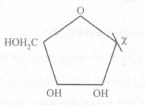
| Category | Compound |
| Cholesterol | Guanine |
| Amino acid | NH2 |
| Nucleotide | Adenine |
| Nucleoside | Uracil |
111.
State the protoplasm theory.
112.
Bring out the significance of Transmission Electron Microscope.
113.
Where will you place the plants which contains two cotyledons with cup shaped thalamus?
114.
Write any three significance of mitosis.
115.
Mention two characters shared by gymnosperms and angiosperms.
116.
Respiratory quotient is zero in succulent plants. Why?
117.
When there is plenty of light and higher concentration of O2, what kind of pathway does the plant undergo? Analyse the reasons.
118.
Write the role of nitrogenase enzyme in nitrogen fixation?
119.
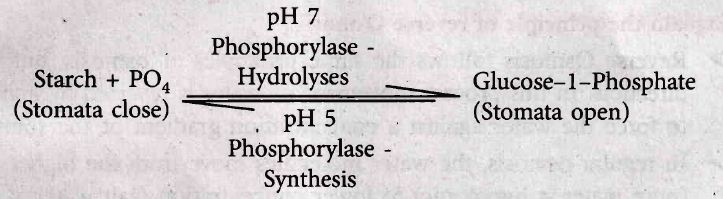
How phosphorylase enzyme open the stomata in starch sugar interconversion theory?
120.
If the concentration of salt in the soil is too high and the plants may wilt even if the field is thoroughly irrigated. Explain
121.
Choose the term that does not belong in the following group and explain why it does not belong?
Notochord, cephalisation, dorsal nerve cord and radial symmetry.
122.
Differentiate between probiotics and pathogenic bacteria.
123.
Why do farmers plant leguminous crops in crop rotations/mixed cropping?
124.
Write the distinguishing features of Monera.
125.
Do you agree with the statement 'Bryophytes need water for fertilization'? Justify your answer.
126.
Compare sympodial branching with monopodial branching.
1.
X-ray is used to visualise hollow organs and blood vessels by filling them with certain chemical formulations containing barium and iodine.
2.
The modem electronic stethoscope is a high precision instrument used to hear with clarity the internal sounds of the human body even in a noisy environment or through the heavy clothing of the patient.
3.
The nitrogenous waste formed as a result of breakdown of amino acid is converted to urea in the liver by the ornithine or urea cycle.
4.
In Dicot stem, a few layers of sclerenchyma cells occur in patches outside the phloem in each vascular bundle. This patch of sclerenchyma is called Bundle cap or Hard bast.
5.
(i) They are analogous to companion cells of phloem (Angiosperms).
(ii) They have cytoplasm, nucleus and are: parenchymatous, seen with sieve cells (Phloem) of Gymnosperms.
6.
It helps in reducing transpiration rate by closing stomata. It inhibits K+ uptake by guard cells and promotes the leakage of malic acid. It results in closure of stomata.
7.
Plants growing in tropical regions are exposed to an optimum temperature of 30°C to 45°C.
Anatomically these plants have Kranz anatomy and dimorphic chloroplasts. The vascular bundles are surrounded by a layer at bundle sheath. Bundle sheath is surrounded by a ring of Mesophyll cells.
Dimorphic Chloroplast :Bundle sheath chloroplast are larger and thylakoids are not arranged in granum.
Mesophyll Chloroplast are small and thylakoids are arranged in granum.
Plants with this kind of anatomy have the C4 cycle or Hatch and slack pathway which takes place in two phases.
First phase in stroma of mesophyll cells and phase II in Bundle sheath cells.
Advantage of this cycle is that fixation of carbon di oxide by such plants can occur ever when the atmospheric carbon di oxide concentration is less than 10ppm.
But the cycle consumes 30 ATPs to produce one glucose molecule.
8.
The curve showing the rate of photosynthesis at different wavelengths of light is called action spectrum.
9.
1) Abscission separates dead parts of the plant like old leaves and ripe fruits.
2) It helps in dispersal of fruits and continuing the life cycle of the plant.
3) Abscission of leaves in deciduous plants helps in water conservation during summer.
10.
(i) It is a poor conductor of heat.
(ii) Can be transported to long distances.
(iii) Wood is able to absorb vibrations and shock and used in making railway sleepers.
(iv) Does not show any rusty spots and tolerates compression, pull, bending etc.
11.
They are angiosperms but follow saprophytic mode of nutrition. They absorb nutrients through mycorrhizal association.
12.
If the respiratory substrate carbohydrate is incompletely oxidised the RQ value will be infinity
\(\underset { Glucose }{ { C }_{ 6 }{ H }_{ 12 }{ O }_{ 6 } } \rightarrow 2C{ O }_{ 2 }\uparrow +\underset { Ethyl\quad alcohol }{ 2{ C }_{ 2 }{ H }_{ 5 }OH+Energy } \)
RQ of glucose Anaerobically = \(\frac { 2 \ molecules \ of \ C{ O }_{ 2 } }{ zero \ molecule \ of \ { O }_{ 2 } } \)
= \(\infty \)(infinity
13.
Citric acid cycle takes place in the inner membrane of the mitochondria. The enzymes necessary for TCA cycle are found in mitochondrial matrix except succinate dehydrogenase enzyme which is found in mitochondrial inner membrane.
14.
Fertilizers containing Nitrogen, Phosphate with Potassium in different proportions are called NPK fertilizers.
15.
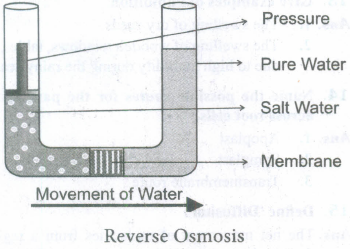
16.
1. The swelling of dry seeds
2. The swelling of wooden windows, tables, doors due to high humidity during the rainy season.
17.
The word "Porous" is used by the wood anatomists to refer to the appearance of the vessels as pores in transverse section.
18.
1. Pacemaker is a medical device which uses electrical impulses, delivered by electrodes contracting the heart muscles, to regulate the beating of the heart.
2. The primary purpose of a pacemaker is to maintain an adequate heart rate, either because the heart's natural pacemaker is not fast enough, or because there is a block in the hearts electrical conducting system.
19.
Normal RBC ranges are:
1. Male: 4.7 to 6.1 million cells per microliter
(cells/mcL ).
2. Female: 4.2 to 5.4 million cells / mcL. .
Normal WBC range: 4.5 to 11.0 x 10⁹/ L
20.
Rh factor is a protein (D antigen) present on the surface of the red blood cells in majority (80%) of humans. This protein is similar to the protein present in Rhesus monkey, hence the term Rh. Individuals who carry the antigen D on the surface of the red blood cells are Rh" (Rh positive) and the individuals who do not carry antigen D, are Rh- (Rh negative). Rh factor compatibility is also checked before blood transfusion. when a pregnant women is Rh and the foetus is Rh" incompatibility (mismatch) is observed. During the first pregnancy, the Rh antigens of the foetus does not get exposed to the mother's blood as both their blood are separated by placenta. However, small amount of the foetal antigen becomes exposed to the mother's blood during the birth of the first child. The mother's blood starts to synthesize D antibodies. But during subsequent pregnancies the Rh antibodies from the mother (Rh") enters the foetal circulation and destroys the foetal RBCs. This becomes fatal to the foetus because the child suffers from anaemia and jaundice. This condition is called erythroblastosis foetalis. This condition can be avoided by administration of anti D antibodies (Rhocum) to the mother immediately after the first child birth.
21.
The thin squamous epithelial cells of the alveoli are composed of Type I and Type II cells. Type I cells are very thin so that gases can diffuse rigidly through them. Type II calls are thicker. They synthesize and secrete a substance called surfactant. It lowers the surface tension in the alveoli and prevents pulmonary edema.
22.
Ostrich, kiwi, penguin.
23.
| Simple epithelium | Compound epithelium |
| 1. It consists of a simple layer. 2. It helps in protection, absorption, filtration, excretion, secretion and sensory reception. |
1. It is multilayered. 2. It provides protection against chemical and mechanical stresses. |
24.
The symbiotic association between fungal mycelium and roots of plants is called as mycorrhiza.
25.

26.
After synthesis, the protein attains conformational change into a specific 3D form for proper functioning.
27.
Acid Hydrolases, Nuclease, Proteases, Glycosidases, Lipases, Phosphatases, Sulphatases, Phospholipidases.
28.
Certain chemical components act as inhibitors of the mitotic cell division and they are called mitotic poisons.
29.
The factors which promote cell cycle proliferation is called mitogen. Example: gibberellin. These increase mitotic rate.
30.
The random distribution of homologous chromosomes in a cell in Metaphase I is called independent assortment.
31.
Mitosis is divided into four stages prophase, metaphase, anaphase and telophase.
32.
Causes unequal distribution of chromosomes.
Can lead to abnormalities in metabolism and reproduction.
33.
Maturation Promoting Factor (MPF) brings about condensation of interphase chromosomes into the mitotic form.
34.
G0 stage is called as quiescent stage, where the cells remain metabolically active without proliferation.
35.
Mitosis and Meiosis.
36.
(a) Vascular tissues - Pteridophytes
(b) Seeds inside fruits- Angiosperms .
(c) Heterospory - Pteridophytes
37.
Musa is a monocarpic perennial since it produces flowers and fruits only once and die after a vegetative growth of several years.
38.
Fragmentation, resting buds, root tubers and adventitious buds.
39.
The first stage of cell wall construction is a line dividing the newly forming cells called a cell plate.
40.
The alignment of chromosome into compact group at the equator of the cell is known as metaphase plate.
41.
The number of chromosomes in the parent and the daughter cells remain the same so it is also called as equational division.
42.
Causes unequal distribution ofchromosomes.
Can lead to abnormalities inmetabolism and reproduction.
43.
1. Chromosomes are the carriers of genetic information. Increased knowledge about the chromosomes have been used for extensive biosystematic studies and resolving many taxonomic problems.
2. Utilization of the characters and phenomena of cytology for the explanation of taxonomic problem is known as cytotaxonomy or karyotaxonomy.
3. The characters of chromosome such as number, size, morphology and behaviour during meiosis have proved to be of taxonomic value.
44.
A fleshy lndehiscent fruit developing from rnulticarpellary, multilocular inferior ovary whose pericarp is tough and leathery. Seeds are attached irregularly with testa being the edible portion. Example: Pomegranate.
45.
1. Series (i) Inferae: The flowers are epigynous and with inferior ovary. Inferae includes 3 orders and 9 families.
2. Series (ii) Heteromerae: The flowers are hypogynous, superior ovary and with more than two carpels. Heteromerae includes 3 orders and 12 families.
3.Series (iii) Bicarpellatae: The flowers are hypogynous, superior ovary and with two" carpels. Bicarpellatae includes 4 orders and 24 families.
46.
In holocarpic forms the entire thallus is converted into reproductive structure whereas in Eucarpic some regions of the thallus are involved in the reproduction other regions remain vegetative.
47.
Plants that are living in water environment are called aquatic plants or hydrophytes.
48.
Body is covered by chitinous exoskeleton for protection and to prevent water loss, It is shed off periodically by a process called moulting or ecdysis.
49.
Lampito mauritti helps in recycling of dead and decayed plant material by feeding on them. Artificial rearing or cultivation of earthworms involves new technology for the betterment of human beings. This process is known as Vermiculture.
50.
The Areolar connective tissue beneath the skin acts as a support framework for epithelium and acts as a reservoir of water and salts for the surrounding body tissues, hence aptly called tissue fluid.
51.
(i) Morphology: Morphology refers to the study of form or externally visible features.
(ii) Anatomy: The word anatomy is used for the study of internal organs in the animals.
52.
The increase in pulmonary volume and decrease in the intrapulmonary pressure forces the fresh air from outside. to enter the air passages into the lungs to equalize the pressure. This process is called inspiration.
53.
It is a taxonomic category which includes a group of related genera with less similarity as compared to genus and species. For example, the family Felidae includes the genus Felis (cats) and the genus, Panthera (lions, tigers, leopards).
54.
This is present only in plant cells. No asters or centrioles are formed only spindle fibres are formed during cell division.
55.
The factors which promote cell cycle proliferation is called mitogen: Plant mitogens include gibberellin, ethylene, Indole acetic acid, kinetin. These increase mitotic rate.
56.
The stage between the two meiotic divisions that is Meiosis I and Meiosis II is called interkinesis which is short lived.
57.
Bivalent (pairs of homologous chromosomes) aligned at the equator of the cell known as metaphase plate.
58.
Leptotene, zygotene, pachytene, diplotene and diakinesis.
59.
Amitosis is also called direct or incipient cell division. Here there is no spindle formation and chromatin material does not condense.
60.
In meiosis, the daughter cells contain half the number of chromosomes of the parent cell and is known as haploid state (n).
61.
Axis develops on only one side and forms a coil structure at least at the earlier development stage. Example: Hamelia, potato
62.
Growth in plants can be measured in terms of,
1) Increase in length or girth (roots and stems)
2) Increase in fresh or dry weight
3) Increase in area or volume (fruits and leaves)
4) Increase in number of cells produced.
63.
(i) Group A shows maximum photosynthesis. chlorophyll pigments of the spectrum is (400 - 450 nm), hence the photosynthesis is high.
(ii) Group B will show negligible amount of photosynthesis, because chlorophyll does not absorb any light in this region (500 - 550nm). It reflects green.
64.
(i) Mineral deficiency of plant A is due to Molybdenum
(ii) Mineral deficiency of plant B is due to Zinc
65.
In the spring season, because cambium is very active and produces a large number of xylary elements having vessels / tracheids with wide lumen.
66.
(i) If the bark of a tree is damaged by the horn of a deer, the tree first seals the damaged region from microbial infection.
(ii) This happens by altering the chemistry of the affected area by forming a callus, which grows and covers the damaged area.
67.
The cells of sclerenchyma & tracheids become dead because they lack protoplasm
68.
Fibrous joints, Cartilaginous joints, Synovial joints.
69.
Linear movement of the body - Utricle and saccule in inner ear.
70.
The effect of peptide hormones like insulin, glucagon, somatotropin are usually short lived because they work through second messenger system
71.
1. Cortisol is a glucocorticoids involved in maintaining cardiovascular and kidney functions.
2. It produces anti-inflammatory reactions and suppresses the immune response
72.
1. Dura mater
2. Arachnoid
3. Pia mater
73.
74.
1. When we cry, tears are secreted by lacrymal gland under the eyelids and drain through the tear ducts which empty into the nose.
2. Tears mix with ntucus and we have a running nose.
75.
(i) CCK is known as Cholecystokinin.
(ii) CCK is secreted by a group of specialized endocrine cells in duodenum in response to the presence of fat and acid in the diet.
(iii) CCK acts on the gall bladder to release bile into duodenum and stimulates the secretion of pancreatic enzymes and its discharges.
76.
(i) Hormones coordinate different physical, physiological, mental activities and maintain homeostasis.
(ii) Maintenance of constant internal environment of the body by the different coordinating system.
77.
1. Deep water culture
2. Media based method
3. Nutrient Film technique
4. Aqua vertical
78.
Langstroth and Newton.
79.
Pelvic girdle-Innominate (Ilium, ischium and pubis fused into one bone).
80.
81.
Trees on which Lac insect grow
1. Acacia catechu [Karanagalli]
2. Schleichera oleosa [Kumbadiri]
82.
The muscle contracts when the myosin shifts. The lack of ATP after death prevents it from relaxing and the muscle remains contracted. Such process occurs in all muscles and the body becomes rigid.
83.
A. I Bands.
84.
The Ammonotelic animals produce ammonia as nitrogenous waste product during excretion. Ammonia dissolves in water easily and hence this type of excretion is common in aquatic animals
85.
Aldosterone maintains renal blood flow to the kidneys. It is produced as medullary adrenal hormone in the adrenal gland of kidney.
86.
| Cortical nephrons | Medullary nephrons |
| Bowman's capsule malpighian capsule is present. | Tubular part of nephrons is present. |
| Glomerular filtration occurs. | Absorption, re-absorption and secretion occurs. |
87.
(i) Entry of air with high pressure may collapse the tracheal tree.
(ii) The smooth muscles which contract and relax to adjust the diameter of air passage with a typical resistance against airways under normal pressure.
88.
| S.No. | Animals | Respiratory organs |
| 1. | Flatworm | Skin or body surface |
| 2. | Earthworm | Moist skin |
| 3. | Fish | Gills |
| 4. | Prawn | Gills |
| 5. | Cockroach | Trachea |
| 6. | Cat | Lungs |
89.
1. The salivary glands present in our mouth produce saliva. Hence our mouth becomes watery.
2. The entry of food into the mouth triggers the brain cells which instructs the salivary gland to produce saliva. Saliva helps to soften the food.
90.
Islets of Langerhans form the endocrine part of the pancreas. They produce hormones called insulin and glucagon.
91.
(i) In stomach digested food is incompletely formed so that cannot be absorbed.
(ii) Finger like projections called villi are not found in the wall of stomach.
(iii) The concentration gradient by active transport cannot be created in stomach.
92.
1. The neutrophils (WBC) are phagocytic in nature and appear in large numbers in and around the infected tissues.
2. The damaged tissues and dead leucocytes are removed from the body in the form of "Pus".
93.
(i) Right ventricular wall is thinner because the pulmonary artery transports deoxygenated blood to lungs so that much force/pressure is not needed.
(ii) Left ventricular wall is thicker because the aorta has to pump out the blood from the heart to supply oxygenated blood to all the parts of the body and needs more pressure.
94.
| S.No. | Mitral Valve | semilunar Valve |
| 1. | Found between left atrium and left ventricle. | Found at the entry of pulmonary artery and aorta. |
| 2. | Has two flaps or cusps. | Has three flaps or cusps. |
| 3. | Appear as flaps. | Appear as half moon shaped. |
| 4. | Prevents the backword flow of oxygenated blood from left ventricle to left atrium. |
Prevents the backward flow of deoxygenated blood into right ventricle and oxygenated blood into left ventricle. |
| 5. | Also called as bicuspid valve. | Also called as pulmonary or aortic valves. |
95.
(i) Ommatidia are the visual units of compound eyes of cockroach.
(ii) Each ommatidium is functional as an eye unit.
(iii) Photoreceptors are dorsally found.
(iv) Each compound eye consists of 2000 simple eyes called ommatidia.
(v) All the visual images captured by ommatidia are made into a single coherent picture by supra oesophageal ganglion (brain).
96.
97.
| White Adipose Tissue | Brown Adipose Tissue |
| 1. Tissue contains less mitochondria. | Tissue contains more mitochondria. |
| 2. Stores nutrients | Converts fats into heat energy which heat the blood stream to warm the body. |
| 3. No non-shivering thermogenesis. | Non-shivering thermogenesis. |
98.
99.
(i) In fishes air bladder may be or may not be connected with alimentary canal/gut.
(ii) It helps in gaseous exchange in lung fishes.
(iii) It also maintain buoyancy in most of the ray finned fishes.
100.
e-Taxonomic resources - INOTAXA is an electronic resource for digital images and description about the species which was developed by Natural History Museum, London. INOTAXA means INtegrated Open TAXonomic Access
101.
102.
1. Holocentric Chromosomes have centromere activity distributed along the whole surface of the Chromosome during mitosis.
2. Holocentric condition can be seen in Caenorhabditis elegans (transparent nematode) and many insects.
103.
1. Meiosis is essential in sexually reproducing organisms because it keeps the chromosome number constant during formation of gametes / spores.
2. This ensures constant number of chromosomes in parent and offspring.
104.
(i) In closed mitosis, the nuclear envelope remains intact and Chromosomes migrate to opposite poles of a spindle within the nucleus.
(ii) Eg: Many single celled eukaryotes like yeast and slime molds.
105.
1. Anaphase-promoting complex cyclosome (APC/C) is a ubiquitin ligase.
2. It is a cluster of proteins that induces breaking down of cohesion proteins thus facilitating the separation of chromatids during mitosis.
106.
(i) Root climbers: Plants climbing with the help of adventitious roots (arising from node). Eg: Piper betel, Piper nigrum, Pothos.
(ii) Stem climbers: These climbers lack specialised structure for climbing and the stem itself coils around the support. Eg: Ipomoea, Clitoria, Quisqualis.
107.
108.

109.
| Nitrogenous base | Inorganic base |
| In nitrogenous base the basic character is because of lone pair electron called lewis base | Inorganic base is because of hydroxyl ion that is Arrhenius base |
| Eg: Pyridine, Pyrimidine | Eg: NaOH |
110.
| Category | Compound |
| Nucleoside | Uracil |
A Nitrogenous base is linked to pentose sugar through a N-glycosidic linkage and forms a nucleoside.
111.
(i) Corti first observed protoplasm Felix Dujardin (1835) observed a living juice in animal cell and called it "Sarcode". Purkinje (1839) coined the term protoplasm for sap inside a plant cell. Hugo Van Mohl (1846) indicated importance of protoplasm.
(ii) Max Schultze (1861) established similarity between Protoplasm and Sarcode and O. Hertwig (1892) proposed a theory which later called the 'protoplasm theory' Huxley (1868) proposed protoplasm as a "physical basis of life".
112.
(i) A beam of electrons passes through the specimen to form an image. It provides two-dimensional image.
(ii) The magnification is 1-3 lakhs times and resolving power is 2 - 10 Å.
113.
Polypetalae: Plants with free petals and dichlamydeous flowers come under polypetalae. It is further divided into three series - (iii) Calyciflorae: It includes plant having flowers with cup shaped thalamus and with inferior or sometimes with half inferior ovary. It includes 5 orders and 27 families.
114.
1. Genetic stability - Daughter cells are genetically identical to parent cells.
2. Growth - As multicellular organisms grow, the number of cells making up their tissue increases. The new cells must be identical to the existing ones.
3. Repair of tissues - Damaged cells must be replaced by identical new cells by mitosis.
115.
(i) Presence of well organised plant body which is differentiated into roots, stem and leaves.
(ii) Presence of eustele.
116.
Because carbohydrates are partially oxidised to organic acid, particularly malic acid without corresponding release of CO2 but O2 is consumed. Hence the RQ value will be zero.
\(\underset { Glucose }{ 2{ C }_{ 6 }{ H }_{ 12 }{ O }_{ 6 }+3{ O }_{ 2 }\rightarrow } \underset { malic\quad acid }{ 3{ C }_{ 4 }{ H }_{ 6 }{ O }_{ 5 }+3{ H }_{ 2 }O+Energy } \)
RQ of glucose in succulents = \(\frac { Zero \ molecule \ of \ { CO }_{ 2 } }{ 3 \ molecules \ of \ { CO }_{ 2 } } \) = 0 (Zero)
117.
The plants undergoes Photorespiration.
(i) It is the excess respiration taking place in photosynthetic cells due to absence of CO2 and increase of O2.
(ii) This condition changes the carboxylase role of RUBISCO into oxygenase.
118.
(i) Nitrogen fixation process requires Nitrogenase enzyme complex, Minerals (Mo, Fe and S), anaerobic condition, ATP, electron and glucose 6 phosphate as H+ donor.
(ii) Nitrogenase enzyme is active only in anaerobic condition.
(iii) To create this anaerobic condition a pigment known as leghaemoglobin is synthesized in the nodules which acts as oxygen scavenger and removes the oxygen.
119.
1. The discovery of enzyme phosphorylase in guard cells by Hanes (1940) greatly supports the starch-sugar interconversion theory.
2. The enzyme phosphorylase hydrolyses starch into sugar and high pH followed by endosmosis and the opening of stomata during light. The vice versa takes place during the night.
120.
High concentration of salt in the soil leads to high osmotic potential, which may a result in wilting of plants due to following reasons.
(a) This may be due to osmotic withdrawal of water from a cell or system when it is placed in a hypertonic solution called Exosmosis.
(b) Exosmosis in a plant cell leads to plasmolysis. As a result of water loss in the cell protoplasm shrinks and the cell membrane is pulled away from the cell wall and finally the cell becomes flaccid.
121.
(i) Invertebrates do not have notochord and presence of notochord is the unique feature of chordates.
(ii) Cephalisation indicates the distinct head in animals
Eg: Arthropods to chordates.
(iii) dorsal nerve cord arises in chordates behind the alimentary canal.
Eg: Hemichordates and chordates but ventral nerve cord arises in non chordates infront of the alimentary canal.
Eg: Annelidans to Echinoderms.
(iv) Radial symmetry is commonly found in coelenterates or cnidarians and in most of animals of other phyla.
122.
| Probiotics | Pathogenic bacteria |
| Probiotic bacteria are beneficial. | Pathogenic bacteria are harmful. |
| Probiotic bacteria may be decomposers, photosynthetic and few may be pathogenic. | All are pathogenic and causing diseases. |
123.
During crop rotations and mixed cropping. Farmers plant leguminous crops to increase the soil fertility.
| S.No | Beneficial aspects | Bacteria | Role |
| 1. | Ammonification |
1. Bacillus ramosus 2. Bacillus mycoides |
Convert complex proteins in the dead bodies of plants and animals into ammonia which is later converted into ammonium salt |
| 2. | Nitrification |
1. Nitrobacter 2. Nitrosomonas |
Convert ammonium salts into nitrites and nitrates |
| 3. | Nitrogen fixation |
1. Azotobacter 2. Clostridium 3. Rhizobium |
(i) Converting atmospheric nitrogen into organic nitrogen |
| (ii) The nitrogenous compounds are also oxidized to nitrogen | |||
| (iii) All these activities of bacteria increase soil fertility |
124.
| S.No | Criteria | Monera |
| 1. | Cell type | Prokaryotic |
| 2. | Level of organization |
Mostly unicellular, rarely Multicellular |
| 3. | Cell wall | Present (made up of peptidoglycan and mucopeptides) |
| 4. | Nutrition | Autotrophic (Phototrophic, Chemoautotrophic) Heterotrophic (Parasitic and Saprophytic) |
| 5. | Motility | Motile or non-motile |
| 6. | Organisms | Archaebacteria, Eubacteria, Cyanobacteria, Actinomycetes and Mycoplasma |
125.
Yes. The antheridia produce biflagellate antherozoids which swim in thin film of water and reach the archegonium and fuse with the egg to form diploid Zygote. Hence they need water for completing their life cycle.
126.
| S.No | Monopodial Branching | Sympodial branching |
|---|---|---|
| 1 | Indeterminate: The terminal bud grows uninterrupted and produce several lateral branches. This type of growth is also known as monopodial branching. Example: Polyalthia, Swietenia. |
Determinate: The terminal bud ceases to grow after a period of growth and further growth is taken care by successive or several lateral meristem or buds. This type of growth is also known as sympodial branching. Example: Cycas. |

11th Standard Syllabus & Materials
11th Standard
TN 11th Tamil பீடு பெற நில் - செய்யுள் - காவடிச்சிந்து Important Questions And Answers Study Material - QB365 Set A
NEW11th Standard
TN 11th Tamil பீடு பெற நில் - உரைநடை - மலை இடப்பெயர்கள் : ஓர் ஆய்வு Important Questions And Answers Study Material - QB365 Set A
NEW11th Standard
TN 11th Tamil மாமழை போற்றுதும் - துணைப்பாடம் - யானை டாக்டர் Important Questions And Answers Study Material - QB365 Set A
NEW11th Standard
TN 11th Tamil மாமழை போற்றுதும் - செய்யுள் - ஐங்குறுநூறு Important Questions And Answers Study Material - QB365 Set A



Tamilnadu Stateboard 11th Standard Subjects

Maths

Commerce

Economics
Biology

Business Maths and Statistics

Accountancy

Computer Science

Physics

Chemistry
Maths
Biology
Economics
Physics
Chemistry

History
Business Maths and Statistics

Computer Science
Accountancy

Computer Applications
History
Computer Technology
Commerce
Computer Applications
Computer Technology

Tamil

English

French
Tamilnadu Stateboard Standards

