
 100% FREE ACCESS
11th Standard Syllabus & Materials
11th Standard
TN 11th Tamil இயற்கை வேளாண்மை,சுற்றுச்சூழல் -செய்யுள் - மனோன்மணீயம் Important Questions And Answers Study Material - QB365 Set A
NEW11th Standard
TN 11th Tamil என்னுயிர் என்பேன் -துணைப்பாடம் - இசைத்தமிழர் இருவர் Important Questions And Answers Study Material - QB365 Set A
NEW11th Standard
TN 11th Tamil மொழி கலை -செய்யுள் - ஒவ்வொரு புல்லையும் Important Questions And Answers Study Material - QB365 Set A
NEW11th Standard
TN 11th Tamil பீடு பெற நில் - இலக்கணம் - பகுபத உறுப்புகள் Important Questions And Answers Study Material - QB365 Set A
NEW11th Standard
TN 11th Tamil பீடு பெற நில் - துணைப்பாடம் - வாடிவாசல் Important Questions And Answers Study Material - QB365 Set A
NEW11th Standard
TN 11th Tamil பீடு பெற நில் - செய்யுள் - குறுந்தொகை Important Questions And Answers Study Material - QB365 Set A

Published on: 12/03/2019
11th Public Exam March 2019 Important Creative Questions and Answers
Download Tamil Nadu 11th Standard Biology question papers, model tests, one-mark questions, important questions, and public exam papers in PDF format. Free study materials and answer keys for TN State Board students.
Questions + Answers key
Take MCQ Biology Test1.
Apical meristem of Root is subterminal. Why?
2.
Mention the most significant function of Bundle sheath.
3.
What is critical day length?
4.
Name the types of fermenation.
5.
Name the roots produced by parasites to obtain nourishment from host.
6.
Differentiate Osmotic pressure and Osmotic ' potential.
7.
Differentiate channel protein and carrier protein.
8.
Differentiate Porous or Hard wood and Non porous or Soft wood ?
9.
How does gaseous exchange take place in the alveoli?
10.
Why viruses are not included in the category of microorganisms?
11.
What are ctenidia?
12.
Classify multicellular exocrine glands based on their structure.
13.
What does'S' refer in a 70S and an 80S ribosomes?
14.
List out the criteria undertaken for Whittaker's classification.
15.
Define magnification. How will you calculate it?
16.
Define C- Value.
17.
Name the body parts of the following plants which is modified for food storage.
18.
Bryophytes maintain soil texture- comment.
19.
Whether parthenocarpic fruits develop endosperm? Why?
20.
Describe the structure of Fabaceae family based on root, stem and leaf.
21.
What is macromolecules?
22.
Describe the modification of decumbent.
23.
Define genera. Give reason.
24.
Define bacteriology. Mention the term 'animalcules'.
25.
Mention the names of Pancreatic enzymes.
26.
What are the parameters used to measure growth of plants?
27.
A tree is believed to be releasing oxygen during night time. Do you believe the truthfulness of this statement? Justify your answer by giving reasons?
28.
Plant A in a nutrient medium shows whiptail disease. Plant B in a nutrient medium shows a little leaf disease. Identify mineral deficiency of plant A and B?
29.
What is the role of antidepressants?
30.
Name the hormones produced by Neurohypophysis.
31.
What is the significance of pineal body?
32.
33.
Write the role of oestrogen in ovulation.
34.
What is harvesting in fish culture?
35.
Which myofilament has the binding sites for calcium?
36.
What is SMGA and what for is it used?
37.
What is seed lac?
38.
Name the filaments present in the sarcomere.
39.
Define Tidal Volume (TV).
40.
Why are aquatic animals mostly ammonotelic in nature?
41.
What vessels carry blood to the kidneys? Is this blood arterial or venous?
42.
Name the enzyme that catalyses the bicarbonate formation in RBCs.
43.
What is succus entericus?
44.
What will happen if the number of platelets is less in the blood?
45.
Why is the blood of cockroach not responsible for transporting respiratory gases?
46.
What is Vermicomposting?
47.
Distinguish between mitral valve and semilunar valve.
48.
49.
What are earthworm casts?
50.
Name two heritable connective tissue disorders
51.
Why blood is considered as a typical connective tissue?
52.
Compare closed and open circulatory system.
53.
54.
What is a Syconus?
55.
What are monoecious plants?
56.
Define Anabolism.
57.
Define 'magnification' of a Microscope.
58.
Name the timber yielding plants of Fabaceae.
59.
What are Coprophilous fungi?
60.
What is Homeostasis?
61.
What are APC?
62.
How root climbers differ from stem climbers?
63.
64.
Differentiate Homoiomerous and Heteromerous lichens.
65.
Distinguish between nitrogenous base and a base found in inorganic chemistry.
66.
State the protoplasm theory.
67.
Where will you place the plants which contains two cotyledons with cup shaped thalamus?
68.
Write any three significance of mitosis.
69.
Name the sex organs seen in Rhodophyceae.
70.
What is plectostele? Give example.
71.
72.
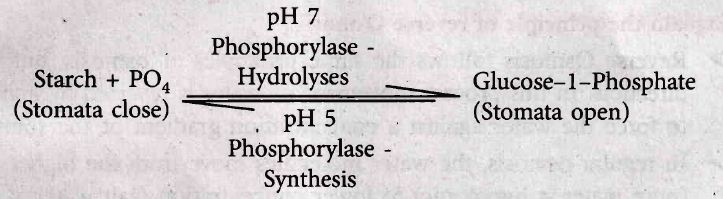
How phosphorylase enzyme open the stomata in starch sugar interconversion theory?
73.
Mention the advantages of MOET.
74.
75.
Write the distinguishing features of Monera.
1.
Root tip is covered by root cap. Therefore the apical meristem is said to be subterminal
2.
(a) Helps in conduction of food materials in dicot leaf.
(b) Protection of the vascular bandle
(c) In some monocots, chloroplast containing bundle sheath participate in C4 cycle (dark reaction of Photosynthesis)
3.
The photoperiod required to induce flowering is called critical day length
4.
1) Alcoholic fermentation
2) Lactic acid fermentation
3) Mixed acid fennenatation.
5.
Haustoria.
6.
| Osmotic pressure | Osmotic potential |
| When a solution and its solvent (pure water)are separated by a semipermeable membrane, pressure is developed in the solution, due to the presence of dissolved solutes. |
It is defined as the ratio between the number of solute particles and the number of solvent particles in a" solution Osmotic potential and osmotic pressure are numerically equal. |
7.
Channel protein and Carrier protein are two types of transport proteins present in cell membrane.
| Channel Protein | Carrier Protein |
| Forms a channel/tunnel in the cell membrane for the easy passage of molecules to enter the cell. Eg: Porin |
Acts as a vehicle to carry molecules from outside of the membrane to inside the cell and vice versa. There are 3 types of carrier protein. |
8.
| Porous wood (or) Hard wood | Non Porous wood (or) Soft wood |
| Common in angiosperms | Common in gymnosperms |
| Porous because it contains vessels | Non-porous because it does not contain vessels |
| Eg: Morus | Eg: Pinus |
9.
The primary site for the exchange of gases is the alveoli. The uptake of O2 and the release of CO2 occur between the blood and tissues by simple diffusion driven by partial pressure gradient of O2 and CO2. Partial pressure is the pressure contributed by an individual gas in a mixture of gases. It is represented as pO2 for oxygen and pCO2 for carbon- dioxide. Due to pressure gradients, O2 from the alveoli enters into the blood and reaches the tissues. CO2 enters into the blood from the tissues and reaches alveoli for elimination. As the solubility of CO2 is 20-25 times higher than that of O2 the partial pressure of CO2 is much higher than that of O2.
10.
Viruses possess characters of both living and non-living and also they does not have well defined body organisation. Hence they are not included in the category of microorganism.
11.
The feather like gills of molluscs are called ctenidia.
12.
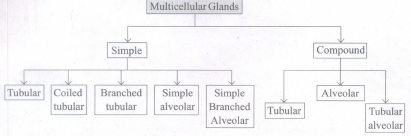
13.
'S' refers to Svedberg units named after Theoder Svedberg. The size of ribosome and their subunits are represented by Svedberg unit.
14.
The criteria adopted for the classification include cell structure, thallus organization, mode of nutrition, reproduction and phylogenetic relationship.
15.
The optical increase in the size of an image is called magnification. It is calculated by the following formula
Magnification=\(\frac { size\ of\ image\ seen\ with\ the\ microscope }{ size\ of\ image\ seen\ with\ normal\ eye } \)
16.
C-Value is the amount in picograms of DNA contained within a haploid nucleus.
17.
| S.No | Plant | Modified part for food storage |
| 1 | Carrot | Root |
| 2 | Colocasia | Stem |
| 3 | Aloe | Leaves |
18.
Bryophytes play a major role in soil formation through succession and help in soil conservation.
19.
No, parthenocarpic fruits are developed without fertilization, but endosperm will form only after fertilization. So parthenocarpic fruits do not have endosperm.
20.
1. Root: Tap root system, roots are nodulated , have tubercles containing nitrogen - fixing bacteria (Rhizobium leguminosarum)
2. Stem: Aerial, herbaceous, woody (dalbergia) twining or climbing Clitoria.
3. Leaf: Leaf simple or unifoliate (Crotalaria juncea) bifoliate (Zornia diphylla,), Trifoliate (Lab/ab purpureus), unipinnate or simple pinnate (Clitoria), alternate, stipulate, leaf base, pulvinate, stipulus 2, free. Leaves showing reticulate venation terminal leaflet modifies into a tendril in Pisum sativum.
21.
Organic molecules may be small and simple. These simple molecules assemble and form large and complex molecules called macromolecules. These include four main classes - carbohydrates, lipids, proteins and nucleic acids
22.
A stem that grows flat but becomes erect during reproductive stage. Example: Portulaca, Tridax, Lindenbergia
23.
The term 'form genera' is used to name the fossil plants because the whole plant is not recovered as fossils instead organs or parts of the extinct plants are obtained in fragments.
24.
The study of Bacteria is called Bacteriology. Bacteria were first discovered by a Dutch scientist, Anton van Leeuwenhoek in 1676 and were called "animalcules".
25.
Bicarbonate neutralizes stomach acid. Trypsin and chymotrypsin digest proteins. Carboxypeptidase digests peptides. Amylase digests starch and glycogen. Lipase digests lipids. Nuclease digests nucleic acids.
26.
Growth in plants can be measured in terms of,
1) Increase in length or girth (roots and stems)
2) Increase in fresh or dry weight
3) Increase in area or volume (fruits and leaves)
4) Increase in number of cells produced.
27.
(i) No. there is no scientific proof for this statement. During day time photosynthesis takes place oxygen is evolved.
(ii) This reaction requires light hence the above statement is incorrect.
28.
(i) Mineral deficiency of plant A is due to Molybdenum
(ii) Mineral deficiency of plant B is due to Zinc
29.
1. Depression is a functional deficiency of serotonin or norepinephrine or both. This disorder is characterized by a pervasive negative mood, loss of interest, an inability to experience pleasure and suicidal tendencies.
2. Antidepressant drugs increase the available concentration of these neurotransmitters in the CNS. Hence depression is treatable.
30.
Oxytocin and vasopressin.
31.
1. It is an endocrine gland found in the diencephalon of the brain.
2. It secretes the hormone melatonin which regulates sleep and wake cycle.
32.
33.
The hormone oestrogen is secreted by the ovaries.
1. It stimulates the pituitary gland to release Luteinizing hormone which induces ovulation and maintains corpus luteum. Ovulation is the release of egg from the ovary by rupture of follicular cells.
2. It stops production of follicular stimulating hormone so that only one egg mature in a cycle.
34.
1. Harvesting is done to capture the fishes from the water.
2. Well grown fishes are taken out for marketing.
3. Different methods of fishing are carried out to harvest fishes. These include Stranding, Angling, Traps, Dipnets, Cast nets, Gill nets, Drag nets and purse nets.
35.
Thin myofilament have binding sites for calcium on the troponin molecules of the filament.
36.
(i) It is the skeletal muscle glycogen analysis.
(ii) It is used to measure in Athlete's sporting performance by taking multiple biopsies.
37.
1. Lac cut from the host plant is called stick lac.
2. The lac present on the twig is scraped and collected.
3. After grinding the unnecessary materials like dust and fine particles are removed.
4. The resultant lac is called seed lac.
38.
A. I Bands.
39.
(i) Definition: It is the amount of air inspired or expired with each normal breath
(ii) Volume: 500 mL (approximately)
(iii) Volume of respiration: 6000 to 8000 mL/minute
(iv) Volume on vigorous exercise: 4-10 times higher than normal
40.
The Ammonotelic animals produce ammonia as nitrogenous waste product during excretion. Ammonia dissolves in water easily and hence this type of excretion is common in aquatic animals
41.
Renal artery supplies (arterial) oxygenated blood and renal vein carries out deoxygenated blood (venous) from kidneys.
42.
RBCs contain an enzyme carbonic anhydrase
(i) It catalyses the carbonic acid (H2CO3) which is unstable and breaks into HCO-3 and H+ ions.
(ii) This enzyme facilitates the reaction in both directions. They are

43.
The secretions of the Brunner's gland along with the secretions of the intestinal glands constitute the intestinal juice or succus entericus. The enzymes in the intestinal juice such as maltase, lactase, sucrase (invertase), dipeptidases, lipases, nucleosidases act on the breakdown products of bile and pancreatic digestion.
44.
The reduction in platelet number can lead to clotting disorders that result in excessive loss of blood from the body
45.
In cockroach, blood is not responsible for transporting respiratory gases because the respiratory pigment is absent in their blood.
46.
1. Artificial rearing or cultivation of earthworms involves new technology for the betterment of human beings. This process is known as Vermiculture.
2. The process of producing compost using earthworms is called Vermicomposting.
47.
| S.No. | Mitral Valve | semilunar Valve |
| 1. | Found between left atrium and left ventricle. | Found at the entry of pulmonary artery and aorta. |
| 2. | Has two flaps or cusps. | Has three flaps or cusps. |
| 3. | Appear as flaps. | Appear as half moon shaped. |
| 4. | Prevents the backword flow of oxygenated blood from left ventricle to left atrium. |
Prevents the backward flow of deoxygenated blood into right ventricle and oxygenated blood into left ventricle. |
| 5. | Also called as bicuspid valve. | Also called as pulmonary or aortic valves. |
48.
49.
(i) The dried solid excreta rich in urea released by pygidium of earthworms are earthworm casts or worm castings or worm pellets
(ii) They are released by anus due to the function of nephridia
(iii) Released worm castings increase the fertility of soil for plant growth
(iv) Worm castings are less released during rainy season
50.
1. Ehlers- Danlos syndrome
2. Stickler syndrome
3. Rhabdomyosarcoma
51.
(i) Blood is a typical fluid connective tissue because it functions as the transport medium for the cardiovascular system.
(ii) Eg: Transport of nutrients and wastes and transport of respiratory gases throughout the body.
52.
The circulatory system is of two types,
1. Open type: The blood remains filled in tissue spaces due to the absence of blood capillaries.
Eg: Arthropods, Molluscs, Echinoderms, and Urochordates
2. Closed type: The blood Is circulated through blood vessels of varying diameters (arteries, veins, and capillaries)
Eg: Annelids, Cephalochordates and Vertebrates.
53.
54.
A multiple fruit which develops from hypanthodium inflorescence. It has a hollow or cup-shaped fleshy receptacle. Eg: Ficus.
55.
When the male flowers and female flowers are produced in the same plant, it is called monoecious plant Eg: Coconut, Palm, Maize etc.
56.
The process of building up or synthesis of complex substances from simpler ones.
Eg: Photosynthesis
57.
Magnification:
1. The optical increase in the size of an image is called magnification. It is calculated by the following formula.
2. Magnification = \(\frac { size\ of\ image\ seen\ with\ the\ microscope }{ size\ of\ the\ image\ seen\ with\ normal\ eye } \)
58.
1. Dalbergia latifolia (Rose wood).
2. Pterocarpus santalinus (Red sandalwood).
59.
Fungi growing on dung are called coprophilous fungi. Eg : Pilobolus.
60.
Property of self-regulation and tendency to maintain a steady state within an external environment which is liable to change is called Homeostasis. It is essential for the living organisms.
61.
1. Anaphase-promoting complex cyclosome (APC/C) is a ubiquitin ligase.
2. It is a cluster of proteins that induces breaking down of cohesion proteins thus facilitating the separation of chromatids during mitosis.
62.
(i) Root climbers: Plants climbing with the help of adventitious roots (arising from node). Eg: Piper betel, Piper nigrum, Pothos.
(ii) Stem climbers: These climbers lack specialised structure for climbing and the stem itself coils around the support. Eg: Ipomoea, Clitoria, Quisqualis.
63.

64.
| Homoiomerous | Heteromerous |
| Algal cells evenly distributed in the thallus | A distinct layer of algae and fungi present |
65.
| Nitrogenous base | Inorganic base |
| In nitrogenous base the basic character is because of lone pair electron called lewis base | Inorganic base is because of hydroxyl ion that is Arrhenius base |
| Eg: Pyridine, Pyrimidine | Eg: NaOH |
66.
(i) Corti first observed protoplasm Felix Dujardin (1835) observed a living juice in animal cell and called it "Sarcode". Purkinje (1839) coined the term protoplasm for sap inside a plant cell. Hugo Van Mohl (1846) indicated importance of protoplasm.
(ii) Max Schultze (1861) established similarity between Protoplasm and Sarcode and O. Hertwig (1892) proposed a theory which later called the 'protoplasm theory' Huxley (1868) proposed protoplasm as a "physical basis of life".
67.
Polypetalae: Plants with free petals and dichlamydeous flowers come under polypetalae. It is further divided into three series - (iii) Calyciflorae: It includes plant having flowers with cup shaped thalamus and with inferior or sometimes with half inferior ovary. It includes 5 orders and 27 families.
68.
1. Genetic stability - Daughter cells are genetically identical to parent cells.
2. Growth - As multicellular organisms grow, the number of cells making up their tissue increases. The new cells must be identical to the existing ones.
3. Repair of tissues - Damaged cells must be replaced by identical new cells by mitosis.
69.
| Male sex organ | - Spermatangium |
| Female sex organ | - Carpogonium |
70.
Xylem plates alternate with phloem plates. Eg: Lycopodium clavatum.
71.
72.
1. The discovery of enzyme phosphorylase in guard cells by Hanes (1940) greatly supports the starch-sugar interconversion theory.
2. The enzyme phosphorylase hydrolyses starch into sugar and high pH followed by endosmosis and the opening of stomata during light. The vice versa takes place during the night.
73.
MOET-Multiple Ovulation embryo transfer technology:
1. Advantage of this technology is to produce high milk yielding females and high-quality meat yielding bulls in a short time.
2. It is applicable in animal husbandry.
3. It is a method of propagation of animals with desirable traits.
4. This method can be applied when the success rate of cross over even in low cost.
74.
75.
| S.No | Criteria | Monera |
| 1. | Cell type | Prokaryotic |
| 2. | Level of organization |
Mostly unicellular, rarely Multicellular |
| 3. | Cell wall | Present (made up of peptidoglycan and mucopeptides) |
| 4. | Nutrition | Autotrophic (Phototrophic, Chemoautotrophic) Heterotrophic (Parasitic and Saprophytic) |
| 5. | Motility | Motile or non-motile |
| 6. | Organisms | Archaebacteria, Eubacteria, Cyanobacteria, Actinomycetes and Mycoplasma |

11th Standard Syllabus & Materials
11th Standard
TN 11th Tamil பீடு பெற நில் - செய்யுள் - காவடிச்சிந்து Important Questions And Answers Study Material - QB365 Set A
NEW11th Standard
TN 11th Tamil பீடு பெற நில் - உரைநடை - மலை இடப்பெயர்கள் : ஓர் ஆய்வு Important Questions And Answers Study Material - QB365 Set A
NEW11th Standard
TN 11th Tamil மாமழை போற்றுதும் - துணைப்பாடம் - யானை டாக்டர் Important Questions And Answers Study Material - QB365 Set A
NEW11th Standard
TN 11th Tamil மாமழை போற்றுதும் - செய்யுள் - ஐங்குறுநூறு Important Questions And Answers Study Material - QB365 Set A



Tamilnadu Stateboard 11th Standard Subjects

Maths

Commerce

Economics
Biology

Business Maths and Statistics

Accountancy

Computer Science

Physics

Chemistry
Maths
Biology
Economics
Physics
Chemistry

History
Business Maths and Statistics

Computer Science
Accountancy

Computer Applications
History
Computer Technology
Commerce
Computer Applications
Computer Technology

Tamil

English

French
Tamilnadu Stateboard Standards

