
 100% FREE ACCESS
11th Standard Syllabus & Materials
11th Standard
TN 11th Tamil இயற்கை வேளாண்மை,சுற்றுச்சூழல் -செய்யுள் - மனோன்மணீயம் Important Questions And Answers Study Material - QB365 Set A
NEW11th Standard
TN 11th Tamil என்னுயிர் என்பேன் -துணைப்பாடம் - இசைத்தமிழர் இருவர் Important Questions And Answers Study Material - QB365 Set A
NEW11th Standard
TN 11th Tamil மொழி கலை -செய்யுள் - ஒவ்வொரு புல்லையும் Important Questions And Answers Study Material - QB365 Set A
NEW11th Standard
TN 11th Tamil பீடு பெற நில் - இலக்கணம் - பகுபத உறுப்புகள் Important Questions And Answers Study Material - QB365 Set A
NEW11th Standard
TN 11th Tamil பீடு பெற நில் - துணைப்பாடம் - வாடிவாசல் Important Questions And Answers Study Material - QB365 Set A
NEW11th Standard
TN 11th Tamil பீடு பெற நில் - செய்யுள் - குறுந்தொகை Important Questions And Answers Study Material - QB365 Set A

Published on: 04/03/2019
11th Public Exam Official Question Paper 2019
Download Tamil Nadu 11th Standard Biology question papers, model tests, one-mark questions, important questions, and public exam papers in PDF format. Free study materials and answer keys for TN State Board students.
Questions + Answers key
Take MCQ Biology Test1.
Explain Bast fibres?
2.
What is Vernalization?
3.
What are pseudocoelomates? Give examples
4.
Define magnification. How will you calculate it?
5.
What is mother axis?
6.
What is aneurysm? How much it is dangerous?
7.
8.
Name the contractile proteins present in the skeletal muscle
9.
What is the effect of aldosterone on kidneys and where is it produced?
10.
What is tubular secretion? Name the substances secreted through the renal tubules.
11.
Head of cockroach is called hypognathous. Why?
12.
13.
14.
Red Drop experiment was done using___________.
Plant
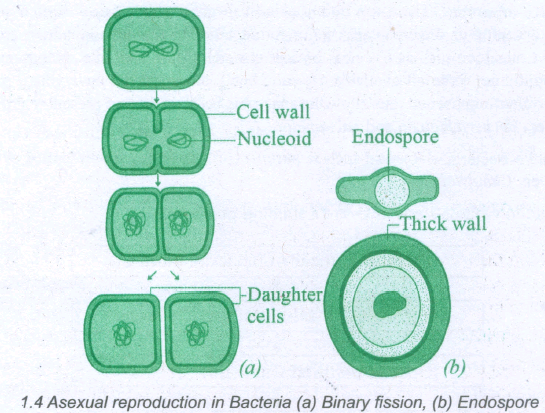
Chlorella
Bacteria
Virus
15.
Experiment with Balsam demonstrates
Translocation of solute
Plasmolysis
Transpiration pull
Ascent of Sap
16.
The muscles associated with the heart of insects are __________
alary
striped
radial
pericazdial
17.
______________________images of structures observed through microscopes can be further magnified.
Cilia
Squash
Microphotograph
Histochemistry
18.
Single seeded dry fruit developing from single carpel with superior ovary ______________.
Achene
Cypsela
Caryopsis
Nut
19.
Select the correctly matched one
| A) Human urine | i) Auxin –B |
| B) Corn gram oil | ii) GA3 |
| C) Fungus | iii) Abscisic acid II |
| D) Herring fish sperm | iv) Kinitin |
| E) Unripe maize grains | v) Auxin A |
| F) Young cotton bolls | vi) Zeatin |
| A | B | C | D | E | F |
| iii | iv | v | vi | i | ii |
| A | B | C | D | E | F |
| v | i | ii | iv | vi | iii |
| A | B | C | D | E | F |
| iii | v | vi | i | ii | iv |
| A | B | C | D | E | F |
| ii | iii | v | vi | iv | i |
20.
Read the following sentences and identify the correctly matched sentences.
i. In exarch condition, the protoxylem lies outside of metaxylem.
ii. In endarch condition, the protoxylem lie towards the centre.
iii. In centarch condition, metaxylem lies in the middle of the protoxylem.
iv. In mesarch condition, protoxylem lies in the middle of the metaxylem.
i, ii and iii only
ii, iii and iv only
i, ii and iv only
All of these
21.
___________ are involved in olfactory reflexes and emotional responses to odour.
Hypothalamus
Epithalamus
Infundibulum
Mammillary bodies
22.
23.
Pearls were cultured for the first time in India in __________
Kerala
Thoothukudi
Tirunelveli
Rameswaram
24.
Which of the following substances in tobacco smoke damage the gas exchange system?
carbon monoxide and carcinogens
carbon monoxide and nicotine
carcinogens and tar
nicotine and tar
25.
A person who is on a long hunger strike and is surviving only on water, will have
Less amino acids in his urine
Macula densa cells
Less urea in his urine
More sodium in his urine
26.
Presence of gills in the tadpole of frog indicates that _______.
fishes were amphibious in the past
fishes evolved from frog -like ancestors
frogs will have gills in future
frogs evolved from gilled ancestor
27.
Cladogram considers the following characters _______.
Physiological and Biochemical
Evolutionary and Phylogenetic
Taxonimic and systematic
None of the above
28.
Vaccination for smallpox was discovered by ________________
d' Herelle
Edward Jenner
Robert Gallo
F.W. Twort
29.
Example for negatively geotropic roots __________
Ipomoea, Dahlia
Asparagus, Ruellia
Vitis, Portulaca
Avicennia, Rhizophora
30.
Mention the agricultural role of gibberellic acids?
31.
Differentiate Phellem and Phelloderm.
32.
How are lichens used?
33.
Write the physiological effects of Cytokinins.
34.
Write the role of nitrogenase enzyme in nitrogen fixation?
35.
Differentiate Aqueous humour and Vitreous humour.
36.
Write the advantages of vermicomposting.
37.
Match the following terms.
| (a) \(\alpha \) -receptor | Afferent arteriole |
| (b) Autoregulation | Basal lamina |
| (c) Bowman's capsule | Capillary blood pressure |
| (d) Capsule fluid pressure | Colloid osmotic Pressure |
| (e) Glomerulus | GFR |
| (f) Podocyte | JG cells |
| (g) Vasoconstriction | Plasma proteins |
38.
Mention the components of saliva.
39.
Draw a neat labelled diagram of the digestive system of frog.
40.
Differentiate – Nucleoside and Nucleotide
41.
Differentiate between aggregate fruit with multiple fruit.
42.
Describe Crassulacean Acid Metabolism (CAM Cycle)?
43.
Explain the recording of electrocardiogram.
44.
Give a concise account on asexual reproduction in bacteria.
45.
Briefly explain the structure of thyroid gland.
46.
List the ICN principles.
1.
The fibres of sclerenchyma associated with phloem are called phloem fibres or Bast fibres. They are narrow, vertically elongated and have small lumen. It Is the only dead tissue in phloem. They give support.
2.
Many species of biennials and perennials are induced to flower by low temperature exposure (ODe to 5DC) in the early stages. This process is called Vernalization. The term Vernalization was first used by T. D. Lysenko (1938).
3.
(i) Nematodes of phylum nematode are triploblastic and bilaterians.
(ii) Coelom of these animals is loosely found with mesenchyme.
(iii) So coelom appears to be false hence it is called as pseudocoelom.
(iv) Eg: Ascaris (Round worm)
Anchylostoma (Hook worm)
Enterobious (Pin/sear worm)
Wucheraria (Filarial worm)
4.
The optical increase in the size of an image is called magnification. It is calculated by the following formula
Magnification=\(\frac { size\ of\ image\ seen\ with\ the\ microscope }{ size\ of\ image\ seen\ with\ normal\ eye } \)
5.
The branch that bears the flower is called mother axis.
6.
Aneurysm the weakened regions of the wall of the artery or veins bulges to form a balloon like sac. Unruptured aneurysm may exert pressure on the adjacent tissues or may burst causing massive haemorrhage.
7.
8.
Actin, myosin, meromyosin, tropomyosin and troponin.
9.
Aldosterone maintains renal blood flow to the kidneys. It is produced as medullary adrenal hormone in the adrenal gland of kidney.
10.
Occurs in distal convoluted tubule of nephron potassium is excreted and sodium is absorbed.
11.
(i) The head is small, triangular and lies at right angle to the longitudinal axis of the body.
(ii) The mouth parts are directed downwards so it is hypognathous.
12.
13.
14.
(b)
Chlorella
15.
(d)
Ascent of Sap
16.
(a)
alary
17.
(c)
Microphotograph
18.
(a)
Achene
19.
(b)
| A | B | C | D | E | F |
| v | i | ii | iv | vi | iii |
20.
(c)
i, ii and iv only
21.
(d)
Mammillary bodies
22.
(d)
23.
(b)
Thoothukudi
24.
(c)
carcinogens and tar
25.
(c)
Less urea in his urine
26.
(b)
fishes evolved from frog -like ancestors
27.
(b)
Evolutionary and Phylogenetic
28.
(b)
Edward Jenner
29.
(d)
Avicennia, Rhizophora
30.
Agricultural role:
1. Formation of seedless fruits'without fertilization is induced by gibberellins Example: Seedless tomato, apple and cucumber.
2. It promotes the formation of male flowers in cucurbitaceae. It helps in crop improvement.
3. Uniform bolting and increased uniform seed production
4. Improves number and size of fruits in grapes
5. Promotes elongation of inter-node in sugarcane without decreasing sugar content.
6. Promotion of flowering in long day plants even under short day conditions.
31.
| Phellem (Cork) | Phelloderm (Secondary cortex) | |
| 1. | It is formed on the outer side of phellogen. | It is fonned on the inner side of phellogen. |
| 2. | Cells are compactly arranged in regular tires and rows without intercellular spaces. | Cells are loosely arranged with intercellular spaces. |
| 3. | Protective in function. | As it contains chloroplast, it synthesises and stores food. |
| 4. | Consists of non-living cells with suberized walls. | Consists of living cells, parenchymatous in nature and does not have suberin. |
| 5. | Lenticels are present | Lenticels are absent |
32.
1. Usnic acid produced from lichens show antibiotic properties.
2. Lichens are sensitive to air pollutants especially to sulphur-di-oxide. Therefore, they are considered as pollution indicators.
3. The dye present in litmus paper used as acid base indicator in the laboratories is obtained from Roccella montagnei. Cladonia rangiferina (Reindeer moss) is used as food for animals living in Tundra regions.
33.
Physiological effect:
1) Cytokinin promotes cell division in the presence of auxin (IAA).
2) Induces cell enlargement associated with IAA and gibberellins
3) Cytokinin can break the dormancy of certain light-sensitive seeds like tobacco and induces seed germination.
4) Cytokinin promotes the growth of lateral bud in the presence of apical bud.
5) Application of cytokinin delays the process of aging by nutrient mobilization.
6) It is known as Richmond Lang effect.
7) Cytokinin
(i) increases rate protein synthesis
(ii) induces the formation of inter-fascicular cambium
(iii) overcomes apical dominance
(iv) induces formation of new leaves, chloroplast and lateral shoots.
8) Plants accumulate solutes very actively with the help of cytokinins.
34.
(i) Nitrogen fixation process requires Nitrogenase enzyme complex, Minerals (Mo, Fe and S), anaerobic condition, ATP, electron and glucose 6 phosphate as H+ donor.
(ii) Nitrogenase enzyme is active only in anaerobic condition.
(iii) To create this anaerobic condition a pigment known as leghaemoglobin is synthesized in the nodules which acts as oxygen scavenger and removes the oxygen.
35.
| Aqueous humour | Vitreous humour |
| The space between the cornea and the lens is called aqueous chamber. It contains a thin watery fluid called aqueous humour. |
The space between the lens and retina is called vitreous chamber. It is filled with transparent gel called vitreous humour. |
36.
Advantages of Vermicomposting:
1. Vermicompost is rich in essential plant nutrients.
2. It improves soil structure texture, aeration, and water holding capacity and prevents soil erosion.
3. Vermicompost is a rich in nutrients and an ecofriendly amendment to soil for farming and terrace gardening.
4. It enhances seed germination and ensures good plant growth.
37.
| (a) \(\alpha \) -receptor | Capillary blood pressure |
| (b) Autoregulation | GFR |
| (c) Bowman's capsule | Afferent arteriole |
| (d) Capsule fluid pressure | Plasma proteins |
| (e) Glomerulus | Colloid osmotic Pressure |
| (f) Podocyte | Basal lamina |
| (g) Vasoconstriction | JG cells |
38.
The saliva contains water, electrolytes (Na+, K+, Cl-, HCO3), salivary amylase (ptyalin), antibacterial agent lysozyme and a lubricating agent mucus (a glycoprotein).
39.
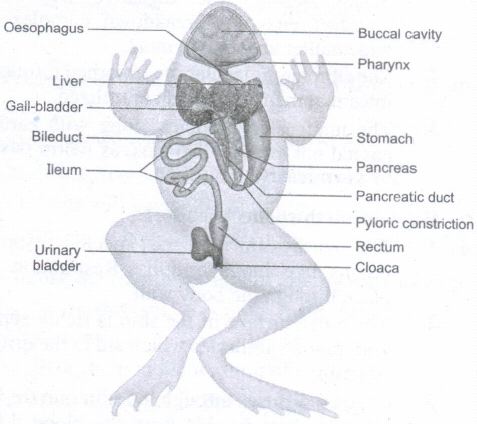
40.
| S.No | Nucleoside | Nucleotide |
| 1 | It is a combination of Nitrogenous base and sugar. | It is a combination of nucleoside and phosphoric acid |
| 2 | Eg: Adenosine = Adenine + Ribose. | Eg: Adenylic acid = Adenosine + Phosphoric acid |
41.
| S.No. | Aggregate fruit | Multiple fruit |
| 1 | Aggregate fruits develop from a single flower having an apocarpous pistil. Each of the free carpel develops into a simple fruitlet. A collection of simple fruitlets makes an Aggregate fruit. An individual ovary develops into a drupe, achene, follicle or berry | A Multiple or composite fruit develops from the whole inflorescence along with its peduncle on which they are borne |
| 2 | Eg: Polyalthia | Eg: Pineapple |
42.
1. It is one of the carbon pathways identified in succulent plants growing in semi-arid or xerophytic condition. This was first observed in Crassulaceae family plants like Bryophyllum, Sedum, Kalanchoe, etc. and is the reason behind the name of this cycle. It is also noticed in plants from other families Examples., Agave, Opuntia, Pineapple, Orchids, etc.,
2. The stomata are closed during day and are open during night (Scotoactive). This reverse stomatal rhythm helps to conserve water loss through transpiration and will stop the fixation of CO2 during the day time.
3. At night time CAM plants fix CO2 with the help of Phospho Enol Pyruvic acid (PEP) and produce Oxalo Acetic Acid (OAA). Subsequently OAA is converted into Malic acid like C4 Cycle and gets accumulated in vacuole increasing the acidity.
4. During the day time stomata are closed and Malic acid is decarboxylated into Pyruvic acid resulting in the decrease of acidity. CO2 thus formed enters into Calvin Cycle and produces carbohydrates
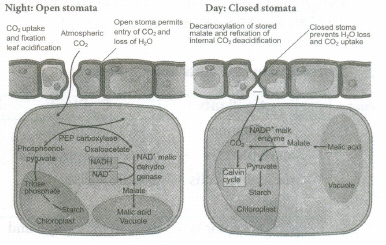
Significance of CAM Cycle:
1) It is advantageous for succulent plants to obtain CO2 from malic acid when stomata are closed.
2) During day time stomata are closed and CO2 is not taken but continue their photosynthesis.
3) Stomata closed during the day time and help the plants to avoid transpiration and water loss.
43.
An electrocardiogram (ECG) records the electrical activity of the heart over a period of time using electrodes placed on the skin, arms, legs, and chest. It records the changes in electrical potential across the heart during one cardiac cycle. The special flap of muscle which initiates the heart beat is called as sinu-auricular node or SA node in the right atrium. It spreads as a wave of contraction in the heart. The waves of the ECG are due to depolarization and not due to contraction of the heart. This wave of depolarisation occurs before the beginning of contraction of the cardiac muscle. A normal ECG shows 3 waves designated as P wave, QRS complex and T wave.
P Wave (atrial depolarisation): It is a small upward wave and indicates the depolarisation of the atria. This is the time taken for the excitation to spread through atria from SA node. Contraction of both atria lasts for around 0.8-1.0 sec.
PQ Interval (AV node delay): It is the onset of P wave to the onset of QRS complex. This is from the start of depolarisation of the atria to the beginning of ventricular depolarisation. It is the time taken for the impulse to travel from the atria to the ventricles (0.12-0.21sec). It is the measure of AV conduction time.
QRS Complex (ventricular depolarisation): No separate wave for atrial depolarisation in the ECG is visible. Atrial depolarisation occurs simultaneously with the ventricular depolarisation. The normal QRS complex lasts for 0.06-0.09 sec. QRS complex is shorter than the P wave because depolarisation spreads through the Purkinjie fibres. Prolonged QRS wave indicates delayed conduction through the ventricle, often caused due to ventricular hypertrophy or due to a block in the branches of the bundle of His.
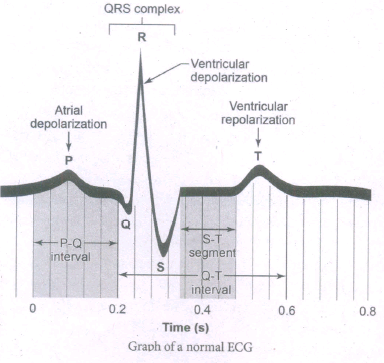
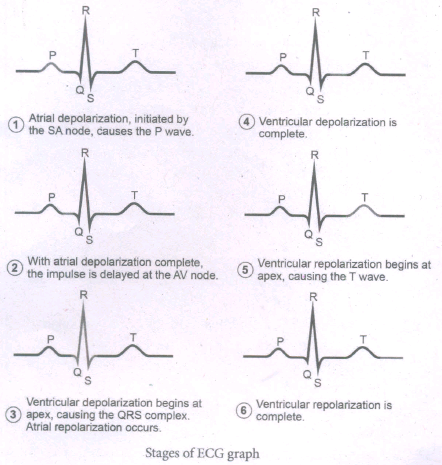
ST Segment: It lies between the QRS complex and T wave. It is the time during which all regions of the ventricles are completely depolarised and reflects the long plateau phase before repolarisation. In the heart muscle, the prolonged depolarisation is due to retardation of K+ efflux and is responsible for the plateau. The ST segment lasts for 0.09 sec.
T wave (ventricular depolarisation): It represents ventricular depolarisation. The duration of the T wave is longer than QRS complex because repolarisation takes place simultaneously throughout the ventricular depolarisation.
44.
Bacteria reproduces asexually by Binary fission, conidia and endospore formation. Among these Binary fission is the most common one.
Binary fission: Under favourable conditions the cell divides into two daughter cells. The nuclear material divides first and it is followed by the formation of a simple median constriction which finally results in the separation of two cells.
Endospores: During unfavourable condition bacteria produce endospores. Endospores are produced in Bacillus megaterium, Bacillus sphaericus and Clostridium tetani. Endospores are thick walled resting spores. During favourable condition, they germinate and form bacteria.
45.
Structure of thyroid gland:
Thyroid gland is the largest endocrine gland in the body.
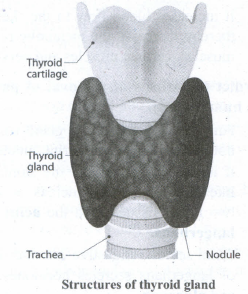
1. It is a butterfly shaped, bilobed gland located below the larynx on either side of upper trachea.
2. The two lateral lobes are connected by a median tissue mass called isthmus.
3. Each lobe is made up of many lobules. The lobules consist of follicles called acini.
4. Each acinus is lined with glandular, cuboidal or squamous epithelial cells. The lumen of acinus is filled with colloid, a thick glycoprotein mixture consisting of thyroglobulin molecules.
5. It secretes two hormones namely tri-iodothyronine [T3] and thyroxine or tetra- iodothyronine [T4].
6. The parafollicular cells or 'C' cells of thyroid gland secrete a hormone called thyrocalcitonin.
7. Iodine is essential for the normal synthesis of thyroid hormone.
8. Thyroid hormones shows a negative feedback effect on the hypothalamus and pituitary.
46.
ICN Principles:
International Code of Nomenclature is based on the following six principles.
1. Botanical nomenclature is independent of zoological and bacteriological nomenclature.
2. Application of names of taxonomic group is determined by means of nomenclatural types.
3. Nomenclature of a taxonomic group is based on priority of publication.
4. Each taxonomic group with a particular circumscription, position and rank can bear only one correct name, the earliest that is in accordance with the rules except in specified cases.
5. Scientific names of taxonomic groups are treated as Latin regardless of their derivation.
6. The rules of nomenclature are retroactive unless expressly limited.

11th Standard Syllabus & Materials
11th Standard
TN 11th Tamil பீடு பெற நில் - செய்யுள் - காவடிச்சிந்து Important Questions And Answers Study Material - QB365 Set A
NEW11th Standard
TN 11th Tamil பீடு பெற நில் - உரைநடை - மலை இடப்பெயர்கள் : ஓர் ஆய்வு Important Questions And Answers Study Material - QB365 Set A
NEW11th Standard
TN 11th Tamil மாமழை போற்றுதும் - துணைப்பாடம் - யானை டாக்டர் Important Questions And Answers Study Material - QB365 Set A
NEW11th Standard
TN 11th Tamil மாமழை போற்றுதும் - செய்யுள் - ஐங்குறுநூறு Important Questions And Answers Study Material - QB365 Set A



Tamilnadu Stateboard 11th Standard Subjects

Maths

Commerce

Economics
Biology

Business Maths and Statistics

Accountancy

Computer Science

Physics

Chemistry
Maths
Biology
Economics
Physics
Chemistry

History
Business Maths and Statistics

Computer Science
Accountancy

Computer Applications
History
Computer Technology
Commerce
Computer Applications
Computer Technology

Tamil

English

French
Tamilnadu Stateboard Standards

