
 100% FREE ACCESS
11th Standard Syllabus & Materials
11th Standard
TN 11th Tamil இயற்கை வேளாண்மை,சுற்றுச்சூழல் -செய்யுள் - மனோன்மணீயம் Important Questions And Answers Study Material - QB365 Set A
NEW11th Standard
TN 11th Tamil என்னுயிர் என்பேன் -துணைப்பாடம் - இசைத்தமிழர் இருவர் Important Questions And Answers Study Material - QB365 Set A
NEW11th Standard
TN 11th Tamil மொழி கலை -செய்யுள் - ஒவ்வொரு புல்லையும் Important Questions And Answers Study Material - QB365 Set A
NEW11th Standard
TN 11th Tamil பீடு பெற நில் - இலக்கணம் - பகுபத உறுப்புகள் Important Questions And Answers Study Material - QB365 Set A
NEW11th Standard
TN 11th Tamil பீடு பெற நில் - துணைப்பாடம் - வாடிவாசல் Important Questions And Answers Study Material - QB365 Set A
NEW11th Standard
TN 11th Tamil பீடு பெற நில் - செய்யுள் - குறுந்தொகை Important Questions And Answers Study Material - QB365 Set A

Published on: 18/02/2019
+1 Second Revision Test 2019
Download Tamil Nadu 11th Standard Biology question papers, model tests, one-mark questions, important questions, and public exam papers in PDF format. Free study materials and answer keys for TN State Board students.
Questions + Answers key
Take MCQ Biology Test1.
Explain "Sunken Stomata"?
2.
What is 'Agent orange'?
3.
Describe the Shapes of apopetalous actinomorphic in corolla.
4.
Which type of WBC increase in its amount during allergic reactions? Write a few words of it.
5.
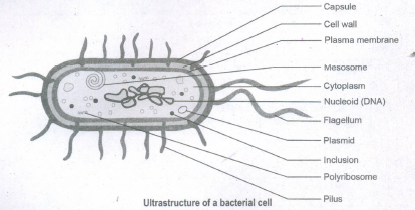
Define mesokaryotes.
6.
What happens to the drones after mating flight?
7.
Name the filaments present in the sarcomere.
8.
What vessels carry blood to the kidneys? Is this blood arterial or venous?
9.
Which segment is the site of secretion and regulated reabsorption of ions and pH homeostasis?
10.
Give the location of clitellum and spermathecal openings in Lampito mauritii.
11.
Name the visual units of the compound eyes of cockroach.
12.
Why are Echinoderms so-called?
13.
14.
A plant growing in a tree as epiphyte accumulates malic acid in dark and cells contains large storage vacuoles. Identify the of type of pathway that takes place in this plant.
C4pathway
Glycolate Metabolic pathway
Di carboxylic acid pathway
CAM pathway
15.
Embolism during ascent of sap refers _________
cavitation in phloem
gas bubble replacing the water in xylem
disappearance of gas from xylem
undisturbed water column
16.
Fused tepaIs are called ______________.
Personate
Ligulate
Apotepalous
Syntepalous
17.
The term "Bacteriophage" is coined by ____________.
Twort
Luria
d' Herelle
Pasteur
18.
The second largest animal phylum is ___________
Ctenophora
Arthropoda
Mollusca
Coelenterata
19.
Seed dormancy allows the plants to
overcome unfavourable climatic conditions
develop healthy seeds
reduce viability
prevent deterioration of seeds
20.
When a leaf trace extends from a vascular bundle in a dicot stem, what would be the arrangement of vascular tissues in the veins of the leaf?
Xylem would be on top and the phloem on the bottom
Phloem would be on top and the xylem on the bottom
Xylem would encircle the phloem
Phloem would encircle the xylem
21.
Severe hearing loss occurs with frequent or prolonged exposure to sound with intensities greater than _____________
100dB
90dB
120dB
120dB
22.
Spermatogenesis in mammalian testes is controlled by ______.
Luteinising hormone
Follicle stimulating hormone
FSH and Prolactin
GH and Prolactin
23.
__________ is not a characteristic of leghorn.
Small size
Meat production
Single comb
Wattles with brown colour
24.
After a long deep breath, we do not respire for some seconds due to ______.
more CO2 in the blood
more O2 in the blood
less CO2 in the blood
less O2 in the blood
25.
26.
Presence of gills in the tadpole of frog indicates that _______.
fishes were amphibious in the past
fishes evolved from frog -like ancestors
frogs will have gills in future
frogs evolved from gilled ancestor
27.
A living organism is differentiated from non-living structure based on _______.
Reproduction
Growth
Metabolism
All the above
28.
Which organelle is associated in the formation of basal granules, cilia and flagella?
Golgi apparatus
Centrosome
Mitochondria
Lysosome
29.
When the root is thick and fleshy, but does not take a definite shape, it said to be _________
Nodulose root
Tuberous root
Moniliform root
Fasciculated root
30.
Name the plant growth regulators?
31.
How are barks classified?
32.
Define BMI with example.
33.
Who is called as founder of modern bacteriology? Mention his contribution?
34.
Explain the different types of placentation with example.
35.
Write the role of nitrogenase enzyme in nitrogen fixation?
36.
What is the significance of melanin?
37.
38.
Identify the biological term
Excretion, glomerulus, urinary bladder, glomerular filtrate, ureters,urine, Bowman’s capsule, urinary system, reabsorption, micturition, osmosis, proteins.
a. A liquid which gathers in the bladder.
b. Produced when blood is filtered in a Bowman’s capsule.
c. Temporary storage of urine.
d. A ball of intertwined capillaries.
e. Removal of unwanted substances from the body.
f. Each contains a glomerulus.
g. Carry urine from the kidneys to the bladder.
h. Scientific term for urination.
i. Regulation of water and dissolved substances in blood and tissue fluid.
j. Consists of the kidneys, ureters and bladder.
k. Removal of useful substances from glomerular filtrate.
l. What solute the blood contains that are not present in the glomerular filtrate?
39.
Write a short note on Chitin.
40.
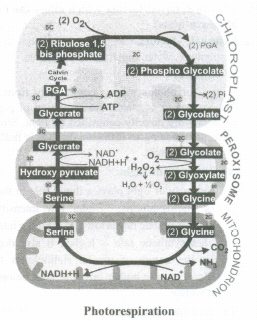
Explain the process of photo respiration / C2 cycle.
41.
42.
What does the following term defines.
(i) Heart beat
(ii) Systole
(iii) Diastole
(iv) 'Iub' and 'dub' sound of the heart
(v) Cardiac cycle.
43.
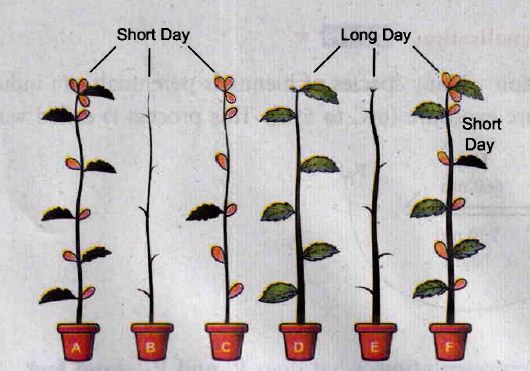
Describe the mechanism of photoperiodic induction of flowering.
44.
Write the causes for diabetes mellitus and diabetes insipidus.
45.
How respiration takes place in cockroach?
46.
What is the significance of Molecular taxonomy?
1.
In some Xerophytic plants (Example: Nerium), stomata is sunken beneath the abaxial leaf surface within stomatal crypts. The sunken stomata reduce water loss by transpiration.
2.
Mixture of two phenoxy herbicides 2,4-D and 2,4,5- T is given the name 'Agent orange' which was used by USA in Vietnam war for defoliation of forest (chemical warfare).
3.
1. Cruciform: Four petals arranged in the form of a cross. Example: Brassica, mustard, radish, cauliflower.
2. Caryophyllaceous: Five petals with long claws with limb at right angles to the claw. Example: Caryophyllaceae. Dianthus.
3. Rosaceous : Five to many sessile or minutely clawed petals with radiating limbs. Example: Rose, Tea.
4.
(i) Eosinophils increase during certain types of parasitic infections and allergic reactions.
(ii) Eosinophils have distinctly bilobed nucleus and the lobes are joined by thin strands. They are non - phagocytic and constitute about 2 - 3% of the total WBCs.
5.
These organisms which shares some of the characters of both prokaryotes and eukaryotes. In other words these are organisms intermediate between pro and eukaryotes.
6.
(i) The drone is the functional male member of the colony.
(ii) The sole duty of the drone is to fertilize the virgin Queen hence called "King of the Colony"
(iii) During swarming the process of leaving the colony by the Queen with a large group of worker bees to form a new colony the drones follows the Queen, copulates and dies after copulation.
7.
A. I Bands.
8.
Renal artery supplies (arterial) oxygenated blood and renal vein carries out deoxygenated blood (venous) from kidneys.
9.
Distal convoluted tubule (DCT of nephron).
10.
(a) Clitellum Location: 14th to 17th segments appears as unsegmented externally
(b) Spermathecal openings: Location 6/7, 7/8 and 8/9 segments.
11.
(i) Ommatidia are the visual units of compound eyes of cockroach.
(ii) Each ommatidium is functional as an eye unit.
(iii) Photoreceptors are dorsally found.
(iv) Each compound eye consists of 2000 simple eyes called ommatidia.
(v) All the visual images captured by ommatidia are made into a single coherent picture by supra oesophageal ganglion (brain).
12.
The term 'Echinos' means spiny and 'dermos' means skin. These animals have a mesodermal endoskeleton of calcareous ossicles and hence they are called echinoderms or spiny skinned animals.
13.
14.
(d)
CAM pathway
15.
(b)
gas bubble replacing the water in xylem
16.
(d)
Syntepalous
17.
(a)
Twort
18.
(c)
Mollusca
19.
(a)
overcome unfavourable climatic conditions
20.
(a)
Xylem would be on top and the phloem on the bottom
21.
(b)
90dB
22.
(a)
Luteinising hormone
23.
(b)
Meat production
24.
(b)
more O2 in the blood
25.
(a)
26.
(b)
fishes evolved from frog -like ancestors
27.
(d)
All the above
28.
(b)
Centrosome
29.
(b)
Tuberous root
30.
Five major groups of hormones viz., auxins, gibberellins, cytokinins, ethylene and abscisic acid are presently known to coordinate and regulate growth and development in plants.
31.
(i) If the phellogen forms a complete cylinder around the stem, it gives rise to ring barks. Eg: Quercus.
(ii) When the bark is formed in overlapping scale like layers, it is known as scale bark. Eg Guava.
(iii) While ring barks normally do not peel off, scale barks peel off.
32.
Degree of obesity is assessed by body mass index (BMI). A normal BMI range for adult is 19-25; above 25 is considered as obese. BMI is calculated as body weight in Kg, divided by the square of body height in meters. For example, a 50 Kg person with a height of 160 ems would have a BMI of 19.5. That is BMI = 50/1.62 = 19.5
33.
Robert Heinrich Hermann Koch is considered as the founder of modem bacteriology. He identified the causal organism for Anthrax, Cholera and Tuberculosis. He proved experimental evidence for the concept of infection (Koch's postulates).
34.
| 1. Marginal (i) It is with the placentae along the margin of a unicarpellate ovary. (ii) Eg: Fabaceae. |
4. Axile (i) The placentae arises from the column in a compound ovary with septa. (ii) Eg: Hibiscus, tomato lemon |
| 2. Superficial (i) Ovules arise from the surface of the septa. (ii) Eg: Nymphaeaceae |
5. Parietal (i) It is the placentae on the ovary walls or upon intruding partitions of a unilocular, compound Ovary. (ii) Eg: Mustard, Argemone, cucumber. |
| 3. Free-central (i) It is with the placentae along the column in a compound ovary without septa. (ii) Eg: Caryophyllaceae, Dianthus, Primrose |
6. Basal (i) It is the placenta at the base of the ovary. (ii) Eg: Sunflower(Asteraceae) Marigold |
35.
(i) Nitrogen fixation process requires Nitrogenase enzyme complex, Minerals (Mo, Fe and S), anaerobic condition, ATP, electron and glucose 6 phosphate as H+ donor.
(ii) Nitrogenase enzyme is active only in anaerobic condition.
(iii) To create this anaerobic condition a pigment known as leghaemoglobin is synthesized in the nodules which acts as oxygen scavenger and removes the oxygen.
36.
Melanocytes are the cells responsible for-producing the skin pigment, melanin, which gives skin its colour and protects it from the sun's UV rays.
37.
38.
(a) Urine
(b) Glomerular filtrate
(c) Urinary bladder
(d) afferent and efferent arterioles and venules of renel artery and renel vein.
(e) Excretion
(f) Bowman's capsule
(g) Ureters
(h) Micturition
(i) Balance of electrolytes minerals and organics
(j) excretory system
(k) micturition
(l) glucose, amino acid and liquids
39.
1. Chitin is a homopolysaccharide with amino acids added to form mucopolysaccharide.
2. The basic unit is a nitrogen-containing glucose derivative known as N-acetyl glucosamine.
3. It forms the exoskeleton of insects and other arthropods. It is also present in the cell walls of fungi.
40.
1. Chloroplast: Photorcspiration is the excess respiration taking place in photosynthetic cells due to absence of CO2 and increase of 02. This condition changes the carboxylase role of RUISCO into oxygenase. C2 Cycle takes place in Chloroplast, Peroxisome and Mitochondna. RUBP is converted into PGA and a 2C- compound Phosphoglycolate by Rubisco enzyme in chloroplast. Since the first product is a 2C- compound, this cycle is known as C2 Cycle. Phosphoglycolate by loss of Phosphate becomes Glycolate.
2. Chloroplast: Glycolate formed in Chloroplast enters into Peroxisome to form Glyoxylate and Hydrogen peroxide. Glyoxylate is converted I into Glycine and transferred into Mitochondria.
3. Mitochondria: Two molecules of Glycine combine to form Serine. Serine enters into Peroxisome to form Hydroxy pyruvate. Hydroxy pyruvate with help of NADH + H+ becomes Glyceric acid. Glyceric acid is cycled back to Chloroplast utilising ATP and becomes Phosphoglyceric acid (PGA) and enters into the Calvin Cycle (PCR Cycle). Photorespiration does not yield any free energy in the form of ATP. Under certain conditions 50% of the Photosynthetic potential is lost because of Photorespiration.
Significance of photorespiration:
1) Glycine and Serine synthesised during this process are precursors of many biomolecules like chlorophyll, proteins, nucleotides, etc.
2) It consumes excess NADH + H+ generated.
3) Glycolate protects cells from Photo oxidation.
41.
42.
(i) Rhythmic contraction and expansion of heart is called heart beat.
(ii) The contraction of the heart is called systole.
(iii) The relaxation of the heart is called diastole.
(iv) The first heart sound (lub) is associated with the closure of the tricuspid and bicuspid valves whereas second heart sound (dub) is associated with the closure of the semilunar valves.
(v) The events that occur at the beginning of heart beat and lasts until the beginning of next beat is called cardiac cycle.
43.
Photoperiodic induction
1) An appropriate photoperiod in 24 hours cycle constitutes one inductive cycle. Plants may require one or more inductive cycles for flowering.
2) The phenomenon of conversion of leaf primordia into flower primordia under the influence of suitable inductive cycles is called photoperiodic induction.
Example: Xanthium (SDP) - 1 inductive cycle and Plantago (LDP)- 25 inductive cycles.
Site of Photoinductive perception
1) Photoperiodic stimulus is perceived by the leaves.
2) Floral hormone is synthesised in leaves and translocated to the apical tip to promote flowering.
3) This can be explained by a simple experiment on Cocklebur (Xanthium pensylvanicum), a short day plant.
4) Usually Xanthium will flower under short day conditions. If the plant is defoliated and kept under short day conditions it will not flower.
5) Flowering will occur even when all the leaves are removed except one leaf.
6) If a cocklebur plant is defoliated and kept under long day conditions, it will not flower.
7) If one of its leaves is exposed to short day condition and rest are in long day condition, flowering will occur.
44.
Diabetes mellitus:
1. It is otherwise known as hyperglycaemia.
2. It is caused due to lower secretion of insulin. By this process blood glucose level is elevated. There are two types of diabetes mellitus. Types I and Type II.
3. Type I diabetes is known Insulin dependent diabetes, caused by the lack of insulin secretion due to illness or some viral infections.
4. Type II diabetes is also known as Non-Insulin dependent diabetes, caused due to lower secretion of insulin.
5. The half life period of insulin [in plasma] is only 6 minutes.
6. Symptoms of diabetes includes polyurea, polyphagia, polydipsia [excessive consumption of liquid due to thirst] ketosis [Breakdown of fat into glucose result in accumulation of ketone bodies in blood.]
Diabetes insipidus:
1. Diabetes insipidus is caused due to hypo secretion of vasopressin [ADH] from neuro hypophysis
2. The symptom includes frequent urination [Polyurea] and excessive consumption of liquid due to thirst [polydipsia]
45.
1. The respiratory system of cockroach is well developed compared with other terrestrial insects.
2. Branched tubes known as trachea open through 10 pairs of small holes called spiracles or stigmata, present on the lateral side of the body.
3. Terminal branches of tracheal tubes are called tracheoles which carry oxygen to the entire body. The spiracles open and close by valves regulated by sphincter or spiracular muscles. Each tracheole is filled with a watery fluid through which exchange of gases takes place.
4. During high muscular activity, a part of the fluid is drawn into the tissues to enable more oxygen intake and rapid diffusion.
5. The passage of air in the tracheal system is:

46.
Significance of Molecular Taxonomy:
1. It helps to identify a very large number of species of plants and animals by the use of conserved molecular sequences.
2. Using DNA data evolutionary patterns of biodiversity are now investigated.
3. DNA taxonomy plays a vital role in phytogeography, which ultimately helps in genome mapping and biodiversity conservation.
4. DNA-based molecular markers used for designing DNA based molecular probes, have also been developed under the branch of molecular systematics.

11th Standard Syllabus & Materials
11th Standard
TN 11th Tamil பீடு பெற நில் - செய்யுள் - காவடிச்சிந்து Important Questions And Answers Study Material - QB365 Set A
NEW11th Standard
TN 11th Tamil பீடு பெற நில் - உரைநடை - மலை இடப்பெயர்கள் : ஓர் ஆய்வு Important Questions And Answers Study Material - QB365 Set A
NEW11th Standard
TN 11th Tamil மாமழை போற்றுதும் - துணைப்பாடம் - யானை டாக்டர் Important Questions And Answers Study Material - QB365 Set A
NEW11th Standard
TN 11th Tamil மாமழை போற்றுதும் - செய்யுள் - ஐங்குறுநூறு Important Questions And Answers Study Material - QB365 Set A



Tamilnadu Stateboard 11th Standard Subjects

Maths

Commerce

Economics
Biology

Business Maths and Statistics

Accountancy

Computer Science

Physics

Chemistry
Maths
Biology
Economics
Physics
Chemistry

History
Business Maths and Statistics

Computer Science
Accountancy

Computer Applications
History
Computer Technology
Commerce
Computer Applications
Computer Technology

Tamil

English

French
Tamilnadu Stateboard Standards

