
 100% FREE ACCESS
11th Standard Syllabus & Materials
11th Standard
TN 11th Tamil இயற்கை வேளாண்மை,சுற்றுச்சூழல் -செய்யுள் - மனோன்மணீயம் Important Questions And Answers Study Material - QB365 Set A
NEW11th Standard
TN 11th Tamil என்னுயிர் என்பேன் -துணைப்பாடம் - இசைத்தமிழர் இருவர் Important Questions And Answers Study Material - QB365 Set A
NEW11th Standard
TN 11th Tamil மொழி கலை -செய்யுள் - ஒவ்வொரு புல்லையும் Important Questions And Answers Study Material - QB365 Set A
NEW11th Standard
TN 11th Tamil பீடு பெற நில் - இலக்கணம் - பகுபத உறுப்புகள் Important Questions And Answers Study Material - QB365 Set A
NEW11th Standard
TN 11th Tamil பீடு பெற நில் - துணைப்பாடம் - வாடிவாசல் Important Questions And Answers Study Material - QB365 Set A
NEW11th Standard
TN 11th Tamil பீடு பெற நில் - செய்யுள் - குறுந்தொகை Important Questions And Answers Study Material - QB365 Set A

Published on: 30/10/2019
Download Tamil Nadu 11th Standard Biology question papers, model tests, one-mark questions, important questions, and public exam papers in PDF format. Free study materials and answer keys for TN State Board students.
Questions + Answers key
Take MCQ Biology Test1.
2.
The bundle of muscle fibres is called _____.
Myofibrils
fascicle
sarcomere
sarcoplasm
3.
4.
The end product of Ornithine cycle is _____.
carbon dioxide
uric acid
urea
ammonia
5.
Choose the incorrect sentence from the following:
Bile juice emulsifies the fat.
Chyme is a digestive acidic food in stomach.
Pancreatic juice converts lipid into fatty acid and glycerol.
Enterokinase stimulates the secretion of pancreatic juice.
6.
Which one of the following plasma proteins is involved in the coagulation of blood?
Globulin
Fibrinogen
Albumin
Serum amylase
7.
The ciliated epithelium lines the _______.
Skin
Digestive tract
Gall bladder
Trachea
8.
In which of the following organisms, self fertilization is seen.
Fish
Round worm
Earthworm
Liver fluke
9.
Which of the following is not present in same rank?
Primata
Orthoptera
Diptera
Insecta
10.
11.
Gynoecium with united carpels is termed as ______.
Apocarpous
Multicarpellary
Syncarpous
None of the above
12.
Which one of the following statement about virus is correct?
Possess their own metabolic system
They are facultative parasites
They contain DNA or RNA
Enzymes are present
13.
Proteins perform many physiological functions. For example some functions as enzymes. One of the following represents an additional function that some proteins discharge:
Antibiotics
Pigment conferring colour to skin
Pigments making colours of flowers
Hormones
14.
Sequences of which of the following is used to know the phylogeny.
mRNA
rRNA
tRNA
HnRNA
15.
If mitotic division is restricted in G1 phase of the cell cycle then the condition is known as _____.
S Phase
G2 Phase
M Phase
G0 Phase
16.
The haploid number of chromosome for an Angiosperm is 14, the number of chromosome in its endosperm would be
7
14
42
28
17.
How is urea formed in the human body?
18.
Distinguish between mitral valve and semilunar valve.
19.
What are earthworm casts?
20.
List the features that all vertebrates show at some point in their development.
21.
What is the difference between a Zoo and Wild Life Sanctuary?
22.
Why lateral roots are endogenous?
23.
State the protoplasm theory.
24.
Write any three significance of mitosis.
25.
What is plectostele? Give example.
26.
Explain the different types of placentation with example.
27.
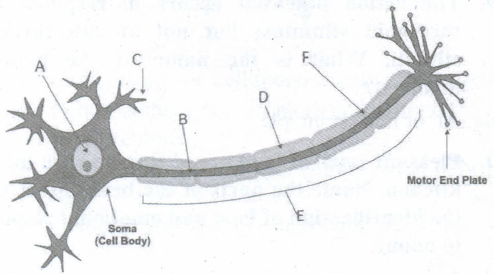
Label the parts of the neuron.
28.
29.
List any five salient features of the family Felidae.
30.
Differentiate between probiotics and pathogenic bacteria.
31.
32.
33.
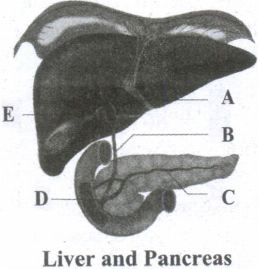
Label the given diagram.
34.
Explain the different types of fleshy fruit with suitable example.
1.
(d)
2.
(b)
fascicle
3.
(b)
4.
(c)
urea
5.
(d)
Enterokinase stimulates the secretion of pancreatic juice.
6.
(b)
Fibrinogen
7.
(d)
Trachea
8.
(d)
Liver fluke
9.
(d)
Insecta
10.
(a)
11.
(c)
Syncarpous
12.
(c)
They contain DNA or RNA
13.
(d)
Hormones
14.
(b)
rRNA
15.
(d)
G0 Phase
16.
(c)
42
17.
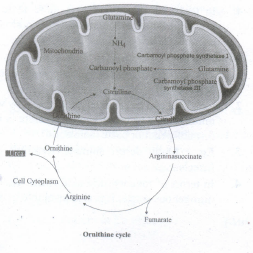
The nitrogenous waste formed as a result of breakdown of amino acids is converted to urea in the liver by the Ornithine cycle or urea cycle
18.
| S.No. | Mitral Valve | semilunar Valve |
| 1. | Found between left atrium and left ventricle. | Found at the entry of pulmonary artery and aorta. |
| 2. | Has two flaps or cusps. | Has three flaps or cusps. |
| 3. | Appear as flaps. | Appear as half moon shaped. |
| 4. | Prevents the backword flow of oxygenated blood from left ventricle to left atrium. |
Prevents the backward flow of deoxygenated blood into right ventricle and oxygenated blood into left ventricle. |
| 5. | Also called as bicuspid valve. | Also called as pulmonary or aortic valves. |
19.
(i) The dried solid excreta rich in urea released by pygidium of earthworms are earthworm casts or worm castings or worm pellets
(ii) They are released by anus due to the function of nephridia
(iii) Released worm castings increase the fertility of soil for plant growth
(iv) Worm castings are less released during rainy season
20.
(i) All the vertebrates commonly have dorsal nervous system
(ii) At the stage of development they have blastopore of embryo
(iii) Heart is developed ventrally
(iv) All vertebrates are three layered
(a) Ectoderm
(b) Mesoderm and
(c) Endoderm
(v) All verteberates are bilaterians
(vi) All verteberates are enterocoelomates
21.
| Zoo | Wild life sanctuary |
| Wild animals kept in protected environments under human care Eg: Zoological parks | Wild animals are maintained in the protected areas under various projects for various animals and maintained by the services of Government. |
22.
Lateral roots develop as extensions of the cells of pericycle in the anatomy of the root. Therefore they are said to be endogenous in origin.
23.
(i) Corti first observed protoplasm Felix Dujardin (1835) observed a living juice in animal cell and called it "Sarcode". Purkinje (1839) coined the term protoplasm for sap inside a plant cell. Hugo Van Mohl (1846) indicated importance of protoplasm.
(ii) Max Schultze (1861) established similarity between Protoplasm and Sarcode and O. Hertwig (1892) proposed a theory which later called the 'protoplasm theory' Huxley (1868) proposed protoplasm as a "physical basis of life".
24.
1. Genetic stability - Daughter cells are genetically identical to parent cells.
2. Growth - As multicellular organisms grow, the number of cells making up their tissue increases. The new cells must be identical to the existing ones.
3. Repair of tissues - Damaged cells must be replaced by identical new cells by mitosis.
25.
Xylem plates alternate with phloem plates. Eg: Lycopodium clavatum.
26.
| 1. Marginal (i) It is with the placentae along the margin of a unicarpellate ovary. (ii) Eg: Fabaceae. |
4. Axile (i) The placentae arises from the column in a compound ovary with septa. (ii) Eg: Hibiscus, tomato lemon |
| 2. Superficial (i) Ovules arise from the surface of the septa. (ii) Eg: Nymphaeaceae |
5. Parietal (i) It is the placentae on the ovary walls or upon intruding partitions of a unilocular, compound Ovary. (ii) Eg: Mustard, Argemone, cucumber. |
| 3. Free-central (i) It is with the placentae along the column in a compound ovary without septa. (ii) Eg: Caryophyllaceae, Dianthus, Primrose |
6. Basal (i) It is the placenta at the base of the ovary. (ii) Eg: Sunflower(Asteraceae) Marigold |
27.
A- Nucleus with nucleolus'
B- Myelin sheath
C- Dendrites
D- Nucleus
E- Schwann cell
F- Node of Ranvier
28.
29.
(i) This family consists of more than one species in the genus it is known as polytypic genus.
(ii) Species are intrageneric
(iii) A single genus is Felis which has a number of closely related species.
(iv) Different species of a single genus show the same morphological characteristics but their behavior varies
(v) Eg: Felis domestica (Domestic cat)
Felis margarita (Jungle cat)
Felis silvestris (Wild cat)
30.
| Probiotics | Pathogenic bacteria |
| Probiotic bacteria are beneficial. | Pathogenic bacteria are harmful. |
| Probiotic bacteria may be decomposers, photosynthetic and few may be pathogenic. | All are pathogenic and causing diseases. |
31.
32.
33.
A. Common hepatic duct
B. Common bile duct
C. Pancreatic duct (duct of Wirsung)
D. Sphincter of Oddi
E. Cystic duct
34.
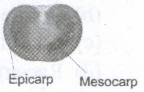
The fruits are derived from single pistil where the pericarp is fleshy, succulent and differentiated into epicarp, mesocarp and endocarp. It is subdivided into the following.
(i) Berry: Fruit develops from bicarpellary or multicarpellary, syncarpous ovary. Here the epicarp is thin, the mesocarp and endocarp remain undifferentiated. They form a pulp in which the seeds are embedded. Eg: Tomato, Grapes, Brinjal.
(ii) Drupe: Fruit develops from monocarpellary, superior ovary. It is usually one seeded. Pericarp is differentiated into outer skinny epicarp, fleshy and pulpy mesocarp and hard and stony endocarp around the seed. Eg: Mango, Coconut.
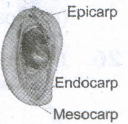
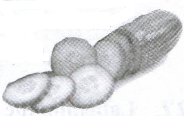
(iii) Pepo: Fruit develops from tricarpellary inferior ovary. Pericarp turns leathery or woody which encloses, fleshy mesocarp and smooth endocarp. Eg: Cucumber, Watermelon, Bottle gourd, Pumpkin.
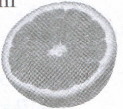
(iv) Hesperidium:Fruit develops from multicarpellary, multilocular, syncarpous, superior ovary. The fruit wall is differentiated into leathery epicarp with oil glands, a middle fibrous mesocarp. The endocarp forms distinct chambers, containing juicy hairs. Eg: Orange, Lemon.
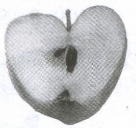
(v) Pome: It develops from multicarpellary, syncarpous, inferior ovary. The receptacle also develops along with the ovary and becomes fleshy, enclosing the true fruit. In pome the epicarp is thin skin like and endocarp is cartilaginous. Eg: Apple, Pear.
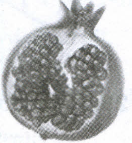
(vi) Balausta: A fleshy indehiscent fruit developing from multicarpellary, multilocular inferior ovary whose pericarp is tough and leathery. Seeds are attached irregularly with testa being the edible portion. Eg: Pomegranate.

11th Standard Syllabus & Materials
11th Standard
TN 11th Tamil பீடு பெற நில் - செய்யுள் - காவடிச்சிந்து Important Questions And Answers Study Material - QB365 Set A
NEW11th Standard
TN 11th Tamil பீடு பெற நில் - உரைநடை - மலை இடப்பெயர்கள் : ஓர் ஆய்வு Important Questions And Answers Study Material - QB365 Set A
NEW11th Standard
TN 11th Tamil மாமழை போற்றுதும் - துணைப்பாடம் - யானை டாக்டர் Important Questions And Answers Study Material - QB365 Set A
NEW11th Standard
TN 11th Tamil மாமழை போற்றுதும் - செய்யுள் - ஐங்குறுநூறு Important Questions And Answers Study Material - QB365 Set A



Tamilnadu Stateboard 11th Standard Subjects

Maths

Commerce

Economics
Biology

Business Maths and Statistics

Accountancy

Computer Science

Physics

Chemistry
Maths
Biology
Economics
Physics
Chemistry

History
Business Maths and Statistics

Computer Science
Accountancy

Computer Applications
History
Computer Technology
Commerce
Computer Applications
Computer Technology

Tamil

English

French
Tamilnadu Stateboard Standards

