
 100% FREE ACCESS
11th Standard Syllabus & Materials
11th Standard
TN 11th Tamil இயற்கை வேளாண்மை,சுற்றுச்சூழல் -செய்யுள் - மனோன்மணீயம் Important Questions And Answers Study Material - QB365 Set A
NEW11th Standard
TN 11th Tamil என்னுயிர் என்பேன் -துணைப்பாடம் - இசைத்தமிழர் இருவர் Important Questions And Answers Study Material - QB365 Set A
NEW11th Standard
TN 11th Tamil மொழி கலை -செய்யுள் - ஒவ்வொரு புல்லையும் Important Questions And Answers Study Material - QB365 Set A
NEW11th Standard
TN 11th Tamil பீடு பெற நில் - இலக்கணம் - பகுபத உறுப்புகள் Important Questions And Answers Study Material - QB365 Set A
NEW11th Standard
TN 11th Tamil பீடு பெற நில் - துணைப்பாடம் - வாடிவாசல் Important Questions And Answers Study Material - QB365 Set A
NEW11th Standard
TN 11th Tamil பீடு பெற நில் - செய்யுள் - குறுந்தொகை Important Questions And Answers Study Material - QB365 Set A

Published on: 31/07/2019
Botany - Reproductive Morphology
Download Tamil Nadu 11th Standard Biology question papers, model tests, one-mark questions, important questions, and public exam papers in PDF format. Free study materials and answer keys for TN State Board students.
Questions + Answers key
Take MCQ Biology Test1.
Cymule means __________
Simple cyme
Simple Dichasium
Polychasial cyme
Head inflorescence
2.
Specialised inflorescence is seen in __________
Asteraceae
Fabaceae
Arecaceae
Musaceae
3.
4.
Aggregate fruit develops from _____.
Multicarpellary, apocarpous ovary
Multicarpellary, syncarpous ovary
Multicarpellary ovary
Whole inflorescence
5.
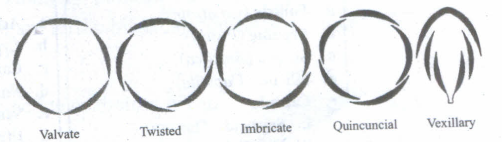
Vexillary aestivation is characteristic of the family _____.
Fabaceae
Asteraceae
Solanaceae
Brassicaceae
6.
What is the green part of Brinjal fruit? Have you seen it in any other fruit?
7.
What is Coenanthium?
8.
Mention the types of Mixed inflorescence.
9.
Mention the types of special inflorescence.
10.
11.
Explain the different types of placentation with example.
12.
List out the differences between spike and spadix?
13.
Define Umbel.
14.
Define Corymb.
15.
Explain the types of placentation with examples.
16.
Write a note on multiple / Composite fruits.
17.
18.
Write a note on Schizocarpic fruits.
19.
Explain the different types of fleshy fruit with suitable example.
1.
(b)
Simple Dichasium
2.
(a)
Asteraceae
3.
(a)
4.
(a)
Multicarpellary, apocarpous ovary
5.
(a)
Fabaceae
6.
1. The persistent calyx is the green part forming a cup at the base of the fruit in Brinjal.
2. A persistent calyx is also seen in Tomato, Lady's finger.
7.
It is a special inflorescence. A circular disc-like fleshy open receptacle bears pistillate flowers at the center and staminate flowers at the periphery. Eg: Dorstenia.
8.
Thyrsus and Verticillaster
9.
1. Cyathium
2. Hypanthodium
3. Coenanthium
10.

11.
| 1. Marginal (i) It is with the placentae along the margin of a unicarpellate ovary. (ii) Eg: Fabaceae. |
4. Axile (i) The placentae arises from the column in a compound ovary with septa. (ii) Eg: Hibiscus, tomato lemon |
| 2. Superficial (i) Ovules arise from the surface of the septa. (ii) Eg: Nymphaeaceae |
5. Parietal (i) It is the placentae on the ovary walls or upon intruding partitions of a unilocular, compound Ovary. (ii) Eg: Mustard, Argemone, cucumber. |
| 3. Free-central (i) It is with the placentae along the column in a compound ovary without septa. (ii) Eg: Caryophyllaceae, Dianthus, Primrose |
6. Basal (i) It is the placenta at the base of the ovary. (ii) Eg: Sunflower(Asteraceae) Marigold |
12.
| S.No | Spike | Spadix |
| 1 | It is an unbranched indeterminate inflorescence with sessile flowers. | An inflorescence with fleshy axis bearing unisexual sessile flowers. |
| 2 | The flowers are exposed. | The flowers are covered by a bract called spathe. |
| 3 | Flowers are generally bisexual. Eg: Wheat | Flowers are generally unisexual. Eg: Cocos |
13.
1. An inflorescence with the indeterminate central axis and pedicellate flowers arise from the common point of the peduncle at the apex.
2. Compound umbel inflorescence is a branched umbel.
3. Each such umbel is called an umbellet.
4. Eg: Daucus carota (carrot).
14.
1. It is a type of racemose inflorescence. In corymb, the main axis is elongated.
2. The pedicel is of unequal length.
3. The older flowers have long pedicels and the young flowers have short pedicels. So all flowers appear at the same level.
4. Eg: Caesalpinia.
15.
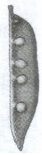
Placentation: The mode of distribution of placenta inside the ovary is called placentation. (Placenta bears the ovules.) It is of different types as follows:
1. Marginal: It is with the placentae along the margin of a unicarpellate ovary. E.g.: Fabaceae.
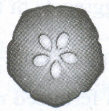
2. Axile: The placentae arise from the column in a compound ovary with septa. E.g.: Hibiscus, tomato, lemon.
3. Superficial: Ovules arise from the surface of the septa. E.g.: Nymphaeaceae.
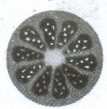
4. Parietal: The placentae are on the ovary walls or upon intruding partitions of a unilocular, compound ovary. E.g.: Mustard, Argemone, cucumber.
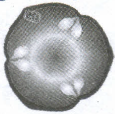
5. Basal: It is the placenta at the base of the ovary. E.g.: Sunflower, Marigold.
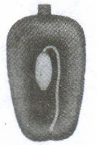
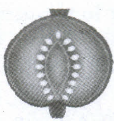
6. Free-central: It is with the placentae along the column in a compound ovary without septa. E.g.: Caryophyllaceae, Dianthus, Primrose.
16.
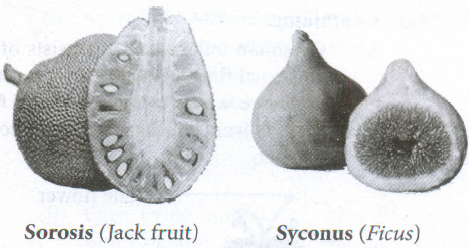
A multiple or composite fruit develops from the whole inflorescence along with its peduncle on which they are borne.
a) Sorosis: A fleshy multiple fruit which develops from a spike or spadix. The flowers fused together by their succulent perianth and at the same time, the axis bearing them become fleshy or juicy and the whole inflorescence forms a compact mass. Eg: Pineapple, Jackfruit, Mulberry
b) Syconus: A multiple fruit which develops from hypanthodium inflorescence. The receptacle develops further and converts into fleshy fruit which encloses a number of true fruit or achenes which develops from female flower of hypanthodium inflorescence. Eg: Ficus
17.
18.
Schizocarpic Fruit:
This fruit type is intermediate between dehiscent and indehiscent fruit. The fruit instead of dehiscing rather splits into a number of segments, each containing one or more seeds. They are of following types.
1. Cremocarp: Fruit develops from bicarpellary, syncarpous inferior ovary and splitting into two, one-seeded segments known as mericarps. Eg: Coriander, Carrot.
2. Carcerulus: Fruit develops from bicarpellary, syncarpous superior ovary and splitting into four one-seeded segments known as nutlets. Eg: Leucas, Ocimum.
3. Lomentum: A leguminous fruit, constricted between the seeds to form a number of one-seeded compartments, separating at maturity. Eg: Desmodium, Arachis, Mimosa.
4. Regma: Fruit develops from multicarpellary syncarpous ovary and splitting into one-seeded cocci. Eg: Ricinus, Geranium.
19.
The fruits are derived from single pistil where the pericarp is fleshy, succulent and differentiated into epicarp, mesocarp and endocarp. It is subdivided into the following.
(i) Berry: Fruit develops from bicarpellary or multicarpellary, syncarpous ovary. Here the epicarp is thin, the mesocarp and endocarp remain undifferentiated. They form a pulp in which the seeds are embedded. Eg: Tomato, Grapes, Brinjal.
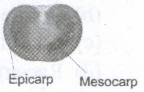
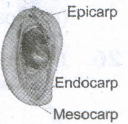
(ii) Drupe: Fruit develops from monocarpellary, superior ovary. It is usually one seeded. Pericarp is differentiated into outer skinny epicarp, fleshy and pulpy mesocarp and hard and stony endocarp around the seed. Eg: Mango, Coconut.
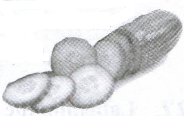
(iii) Pepo: Fruit develops from tricarpellary inferior ovary. Pericarp turns leathery or woody which encloses, fleshy mesocarp and smooth endocarp. Eg: Cucumber, Watermelon, Bottle gourd, Pumpkin.
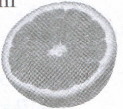
(iv) Hesperidium:Fruit develops from multicarpellary, multilocular, syncarpous, superior ovary. The fruit wall is differentiated into leathery epicarp with oil glands, a middle fibrous mesocarp. The endocarp forms distinct chambers, containing juicy hairs. Eg: Orange, Lemon.
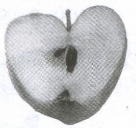
(v) Pome: It develops from multicarpellary, syncarpous, inferior ovary. The receptacle also develops along with the ovary and becomes fleshy, enclosing the true fruit. In pome the epicarp is thin skin like and endocarp is cartilaginous. Eg: Apple, Pear.
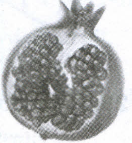
(vi) Balausta: A fleshy indehiscent fruit developing from multicarpellary, multilocular inferior ovary whose pericarp is tough and leathery. Seeds are attached irregularly with testa being the edible portion. Eg: Pomegranate.

11th Standard Syllabus & Materials
11th Standard
TN 11th Tamil பீடு பெற நில் - செய்யுள் - காவடிச்சிந்து Important Questions And Answers Study Material - QB365 Set A
NEW11th Standard
TN 11th Tamil பீடு பெற நில் - உரைநடை - மலை இடப்பெயர்கள் : ஓர் ஆய்வு Important Questions And Answers Study Material - QB365 Set A
NEW11th Standard
TN 11th Tamil மாமழை போற்றுதும் - துணைப்பாடம் - யானை டாக்டர் Important Questions And Answers Study Material - QB365 Set A
NEW11th Standard
TN 11th Tamil மாமழை போற்றுதும் - செய்யுள் - ஐங்குறுநூறு Important Questions And Answers Study Material - QB365 Set A



Tamilnadu Stateboard 11th Standard Subjects

Maths

Commerce

Economics
Biology

Business Maths and Statistics

Accountancy

Computer Science

Physics

Chemistry
Maths
Biology
Economics
Physics
Chemistry

History
Business Maths and Statistics

Computer Science
Accountancy

Computer Applications
History
Computer Technology
Commerce
Computer Applications
Computer Technology

Tamil

English

French
Tamilnadu Stateboard Standards

