
 100% FREE ACCESS
11th Standard Syllabus & Materials
11th Standard
TN 11th Tamil இயற்கை வேளாண்மை,சுற்றுச்சூழல் -செய்யுள் - மனோன்மணீயம் Important Questions And Answers Study Material - QB365 Set A
NEW11th Standard
TN 11th Tamil என்னுயிர் என்பேன் -துணைப்பாடம் - இசைத்தமிழர் இருவர் Important Questions And Answers Study Material - QB365 Set A
NEW11th Standard
TN 11th Tamil மொழி கலை -செய்யுள் - ஒவ்வொரு புல்லையும் Important Questions And Answers Study Material - QB365 Set A
NEW11th Standard
TN 11th Tamil பீடு பெற நில் - இலக்கணம் - பகுபத உறுப்புகள் Important Questions And Answers Study Material - QB365 Set A
NEW11th Standard
TN 11th Tamil பீடு பெற நில் - துணைப்பாடம் - வாடிவாசல் Important Questions And Answers Study Material - QB365 Set A
NEW11th Standard
TN 11th Tamil பீடு பெற நில் - செய்யுள் - குறுந்தொகை Important Questions And Answers Study Material - QB365 Set A

Published on: 04/10/2019
Botany - Taxonomy and Systematic Botany
Download Tamil Nadu 11th Standard Biology question papers, model tests, one-mark questions, important questions, and public exam papers in PDF format. Free study materials and answer keys for TN State Board students.
Questions + Answers key
Take MCQ Biology Test1.
What is the role of national gardens in conserving biodiversity - Discuss.
2.
Mention any three roles of Botanical gardens
3.
What is Botanical nomenclature? Explain the international code of botanical nomenclature
4.
What is APG Classification?
5.
What do you know about Dr. E.K. Janaki Ammal?
6.
Write the different types of inflorescence found in Solanaceae.
7.
Give the systematic position of Solanaceae.
8.
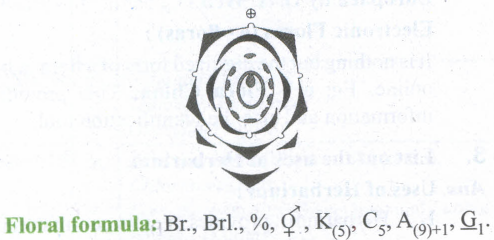
Draw the floral diagram and write the floral formula of Pisum sativum
9.
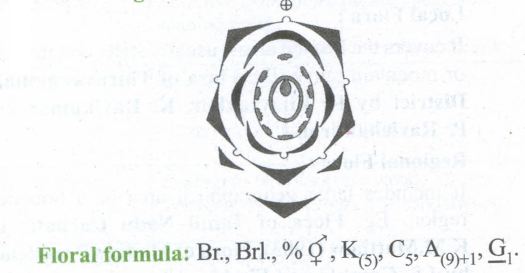
Draw the floral diagram and write the floral formula of Clitoria ternatea
10.
What is the need for cladistics?
1.
Role of Botanical Garden:
Botanical Gardens play the following important roles.
1. Gardens have a wide range of species and supply taxonomic material for botanical research.
2. It can integrate information of diverse fields like Anatomy, Embryology, Phytochemistry, Cytology, Physiology and Ecology.
3. Act as a conservation centre for diversity, rare and endangered species.
4. It offers annual list of available species and a free exchange of seeds.
5. Botanical garden gives information about method of propagation, sale of plant material to the general public.
2.
(i) Gardens with aesthetic value which attract a large number of visitors. For example, the Great Banyan Tree (Ficus benghalensis) in the Indian Botanical Garden at Kolkata.
(ii) Gardens have a wide range of species and supply taxonomic material for botanical research. ,
(iii) It can integrate information of diverse fields like Anatomy, Embryology, Phytochemistry, Cytology, Physiology and Ecology.
3.
Assigning name for a plant is known as Nomenclature. This is based on the rules and recommendations of the International Code of Botanical Nomenclature. ICB deals with the names of existing (living)and extinct (fossil) organisms. The elementary rule of naming of plant was first proposed by Linnaeus in 1737and 1751 in his Philo sophia Botanica. In 1813 a detailed set of rules regarding plant nomenclature was given by A.P. de Candolle in his famous work "Theorie elementaire de la botanique". Then the present ICBN was evolved by following the same rules of Linnaeus, A.P. de Candolle and his son Alphonse de Candolle.
4.
1. The most recent classification of flowering plants which was based on phylogenetic data was set in the last decade of twentieth century.
2. Four versions of Angiosperm Phylogeny Group classification (APG I, APG II, APG III & APG IV) have been published in 1998, 2003, 2009 and 2016 respectively.
3. APG system is an evolving system that might undergo change periodically based on the new sets of data from various disciplines of Botany.
4. It is the currently accepted system across the world.
5. It is yet to percolate into the Indian botanical curriculum.
5.
She was the first officer on special duty who took charge of Botanical survey of India with headquarters at Calcutta. Jammu Tavi Botanical Garden has been named after Dr. E. K. Janaki Ammal.
6.
Types of inflorescence:
1. Axillary or Terminal cymose (Solanum)
2. Solitary Flowers (Datura stramonium)
3. Extra axillary scorpiod cyme (Solanum nigrum)
4. Umbellate cyme (Withania somnifera)
7.
Class - Dicotyledonae
Sub-class - Gamopetalae
Series - Bicarpellatae
Order - Polemoniales
Family - Solanaceae
8.
Floral Diagram of Pisum Sativum :
9.
Floral Diagram of Clitoria ternatea:
10.
Need for cladistics:
1. Cladistics is now the most commonly used and accepted method for creating phylogenetic system of classifications.
2. Cladistics produces a hypothesis about the relationship of organisms to predict the morphological characteristics of organism.
3. Cladistics helps to elucidate 'mechanism of evolution.

11th Standard Syllabus & Materials
11th Standard
TN 11th Tamil பீடு பெற நில் - செய்யுள் - காவடிச்சிந்து Important Questions And Answers Study Material - QB365 Set A
NEW11th Standard
TN 11th Tamil பீடு பெற நில் - உரைநடை - மலை இடப்பெயர்கள் : ஓர் ஆய்வு Important Questions And Answers Study Material - QB365 Set A
NEW11th Standard
TN 11th Tamil மாமழை போற்றுதும் - துணைப்பாடம் - யானை டாக்டர் Important Questions And Answers Study Material - QB365 Set A
NEW11th Standard
TN 11th Tamil மாமழை போற்றுதும் - செய்யுள் - ஐங்குறுநூறு Important Questions And Answers Study Material - QB365 Set A



Tamilnadu Stateboard 11th Standard Subjects

Maths

Commerce

Economics
Biology

Business Maths and Statistics

Accountancy

Computer Science

Physics

Chemistry
Maths
Biology
Economics
Physics
Chemistry

History
Business Maths and Statistics

Computer Science
Accountancy

Computer Applications
History
Computer Technology
Commerce
Computer Applications
Computer Technology

Tamil

English

French
Tamilnadu Stateboard Standards

