
 100% FREE ACCESS
11th Standard Syllabus & Materials
11th Standard
TN 11th Tamil இயற்கை வேளாண்மை,சுற்றுச்சூழல் -செய்யுள் - மனோன்மணீயம் Important Questions And Answers Study Material - QB365 Set A
NEW11th Standard
TN 11th Tamil என்னுயிர் என்பேன் -துணைப்பாடம் - இசைத்தமிழர் இருவர் Important Questions And Answers Study Material - QB365 Set A
NEW11th Standard
TN 11th Tamil மொழி கலை -செய்யுள் - ஒவ்வொரு புல்லையும் Important Questions And Answers Study Material - QB365 Set A
NEW11th Standard
TN 11th Tamil பீடு பெற நில் - இலக்கணம் - பகுபத உறுப்புகள் Important Questions And Answers Study Material - QB365 Set A
NEW11th Standard
TN 11th Tamil பீடு பெற நில் - துணைப்பாடம் - வாடிவாசல் Important Questions And Answers Study Material - QB365 Set A
NEW11th Standard
TN 11th Tamil பீடு பெற நில் - செய்யுள் - குறுந்தொகை Important Questions And Answers Study Material - QB365 Set A

Published on: 16/03/2019
+1 Public Exam March 2019 Important Creative 3 Mark Questions and Answers
Download Tamil Nadu 11th Standard Chemistry question papers, model tests, one-mark questions, important questions, and public exam papers in PDF format. Free study materials and answer keys for TN State Board students.
Questions + Answers key
Take MCQ Chemistry Test
1.
Calculate the boiling point of a solution which is prepared by dissolving 68.4g of solute 8 in one kilogram of water. (Molar mass of solute 8 is 342 g mol1, Tb= 373.1K and Kb( water) = 0.52 K kg mol1.
2.
(i) Calculate the bond order of H2 and B2
(ii) Show how the bond order is related to stability and bond length of the molecule.
3.
What happens when the' concentration of H2 and I2 are increased in the reaction \({ H }_{ 2 }+{ I }_{ 2 }\rightleftharpoons 2HI?\)
4.
NaOH and HCI react to form NaCI and H20 (a) What volume of 0.250 M NaOH solution contains 0.110 mol of NaOH (b) What of volume of 0.20 M NaOH is required to exactly react with 0.150mol HCI?
5.
Discuss the equilibrium involving dissolution of solids or gases in liquids.
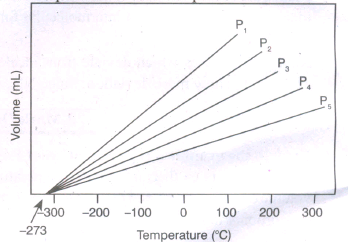
6.
Comment on the following statements. .
(i) BF3 is planar but NH3 is not.
(ii) SiF4 and C/O-4 are tetrahedral
(iii) HSH bond angle in H2S is 92° and HOH bond angle in H20 is 104.5.
7.
Which of the following compounds will not exist as resonance hybrid? Give reason for your answer.
(i) CH3 - OH
(ii) R-CONH2
(iii) CH3-CH = CH-CH2NH2
8.
List out few examples of irreversible reactions (changes) taking place in our daily life activity.
9.
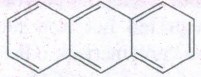
Among anthracene and cyclopentadiene which is aromatic? Give reason for your answer.
10.
A sample of 56g of ethanol is dissolved in 36g of. water. Calculate the mole fraction of ethyl alcohol
11.
Explain the isomerism exhibited by alkenes.
12.
Suggest and explain the method suitable to purify the organic compounds depending on their boiling points.
13.
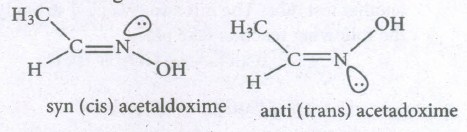
Write a note on cis-trans isomerism in oximes and azo compounds.
14.
Write a short note on homologous series.
15.
While writing the resonance structures, what are the rules to be followed ?
16.
What is covalent bond? Give suitable examples to represent single, double and triple covalent bonds.
17.
Bring out the differences between classical and photochemical smog
18.
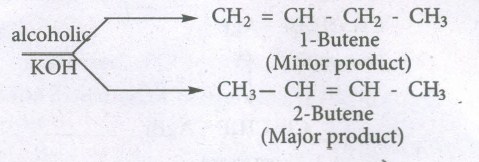
Haloalkanes produce mixture of olefins- say true or false and justify yoyr answer,
19.
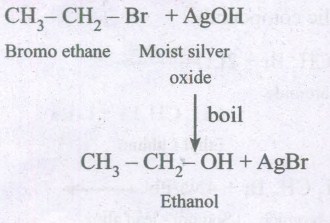
How does bromo ethane react with the following?
(i) Silver Oxide(moist)
(ii) Sodium hydrogen sulphide
(iii) Potassium cyanide
20.
Two isomers (A) and (B) have the same molecular formula C2H4Cl2. Compound (A) reacts with aqueous KOH gives compound (C) of molecular formula C2H4O. Compound (B) reacts with aqueous KOH gives compound(D) of molecular formula C2H6O2. Identify (A), (B), (C) and (D).
21.
0.16 g of an organic compound was heated in a carius tube and H2SO4 acid formed was precipitated with BaCl2. The mass of BaSO4 was 0.35g. Find the percentage of sulphur [30.04]
22.
Ethylene glycol (C2H6O2) can be at used as an antifreeze in the radiator of a car. Calculate the temperature when ice will begin to separate from a mixture with 20 mass percent of glycol in water used in the car radiator. Kf for water = 1.86 K Kg mol-1 and molar mass of ethylene glycol is 62 g mol-1.
23.
The value of Kc for the following reaction at 717 K is 48.
24.
How much volume of chlorine is required to form 11.2 L of HCI at 273 K and 1 atm pressure?
25.
Determine the empirical formula of an oxide of iron which has 69.9% iron and 30.1% oxygen by mass
26.
Copper and chlorine compounds makes blue fire work. Why?
27.
Explain how alkali metal oxide reacts with water?
28.
Define equivalent mass of a salt.
29.
What are metallic hydrides? Explain about it.
30.
Explain the graphical representation of Charles law.
31.
Explain Charles' law with an experimental illustration.
32.
Explain about the salient features of metals.
33.
Explain about the classification of elements based on electronic configuration.
34.
Draw a simplified form of periods and elements present in modern period table.
35.
Explain the different methods of preparation of Tritium with equation.
36.
Explain the meaning of the symbol 4f2. Write all the four quantum numbers for these electrons.
37.
What is the amount of silver oxide formed when 11.04g of silver carbonate is strongly heated ? Write the balanced chemical equation for the .reaction.
Ag2C03 \(\rightarrow\)2AgO + CO2.
38.
Given N2(g) + 3H2(g) \(\rightarrow\) 2NH3(g); \(\Delta \)H°=-92.4 kJ mol-1. What is the standard enthalpy of formation of NH3(g)?
39.
The relative abundance of 6C12,6C13 and 6C14 are 98.892%, 1.108% and 2 x 10⁻¹⁰respectively. Calculate the average atomic mass of carbon.
40.
What are informations do you get from the thermo chemical equations?
41.
Calculate the kinetic energy of a moving electron which has a wavelength 4.8 pm. (mass of electron = 9.11 x 10⁻³¹ kg, h = 6.63 x 10⁻³⁴ JS)
42.
One mol of SO2 gas occupies a volume of 500 ml at 27°C and 50 atm pressure. Calculate the compressibility factor of the gas. Comment on the type of deviation shown by the gas from the ideal behaviour.
43.
Give a brief account of the action of water on non metals
44.
Define entropy of fusion.
45.
What is the need for second Law of thermodynamics.
46.
Balance the following reaction:
P+ HNO3\(\rightarrow\) H3PO4 + NO2 + H2O
47.
How would you explain the following observation? BeO is almost insoluble but BeSO4 is soluble in water.
48.
Calculate the equivalent mass of barium hydroxide
49.
Calculate the number of moles present in the following 19.5g of potassium
50.
Calculate the oxidation number of underlined atoms \({ C }_{ \underline { 6 } }{ H }_{ 12 }{ O }_{ 6 }\)
51.
IE2 values of alkaline earth metals are much smaller than those of alkali metals. Explain
52.
Calculate the equivalent mass of potassium dichromate in acid medium
[K2Cr2O7 + 4H2SO4 )\(\rightarrow\)K2SO4 + Cr2(SO4)3 +4H2O + 3(O) 3 x 16 = 48 294 g]
53.
30.4 kJ is required to melt one mole of sodium chloride. The entropy change during melting is 28.4 JK-1 mol-1. Calculate the melting point of sodium chloride.
54.
What kind of compounds can be dissolved and hydrolysed in water?
55.
Calculate the oxidation number of underlined atoms of the following:
K2CrO4
56.
What is Stark effect?
57.
Predict the position of the element having an electron configuration(n -1) d1 ns2 for n = 4.
58.
Why is the density of potassium less than that of sodium?
59.
Describe in brief Lothar Meyer's classification of elements.
60.
Explain the shapes of p orbitals
61.
How do you expect the metallic hydrides to be useful for hydrogen storage?
62.
State Boyle's law.
63.
Using s, p, d notations, describe the orbital with the following quantum numbers.
(i) n =1 ,l = 0
(ii) n = 3, l= 1
(iii) n = 4, l= 2
(iv) n =4 , l = 3
64.
Justify that the fifth period of the periodic table should have 18 elements on the basis of quantum numbers.
65.
Describe the Aufbau principle
66.
How much volume of 6 M solution of NaOH is required to prepare 500 mL of 0.250 M NaOH solution ?
67.
From where does ozone come in the photo chemical smog ?
68.
Calculate ΔHr0 for the reaction CO2(g) + H2(g) ⟶ CO(g) + H2O (g) given that ΔHf0 for CO2 (g), CO (g) and H2O (g) are - 393.5, - 111.31 and - 242 kJ mol-1 respectively.
69.
Define work.
70.
Write the chemical equations for the reactions involved in solvay process of preparation of sodium carbonate.
1.
W1 = 1 kg
W2 = 68.4g
M2 = 342 g mol-1
Tb = 373.1K
Kb = 0.52K.kg mol-1
T-TO = Kbm
M = 0.2
T - TO = Kb x m
T - TO = 0.52 x 0.2
T - TO = 0.104
T - 373 .1 = 0.104
T = 0.104 + 373.1
T = 373 .204
2.
| Molecule | No. of electrons | Electonic configuration | Bond order | Magnetic nature |
| Li2 | 6 | \((\sigma_{1s})^2(\sigma^*_{1s})^2(\sigma_{2s})^2\) | \({1\over2}(4-2)=1\) | Diamagnetic |
| B2 | 10 | \((\sigma_{1s})^1(\sigma^*_{1s})^2(\sigma_{2s})^2(\sigma^*_{2s})^1(\pi_2p_x)^1(\pi_2p_y)^1\) | \({1\over2}(6-4)=1\) | Paramagnetic |
(ii) Bond order \(\alpha\) Stability
Greater the bond order, more stable the molecule is
Eg: N2(B.O = 3) is much stable than O2(B.O = 2)
Bond order \(\alpha {1\over Bond \ length}\)
Greater the bond order shorter is the bond length.
Eg: Nitrogen: B.O. = 3; Bond length =110pm Oxygen: B.O. = 2; Bond length = 121pm.
3.
According to Le Chatelier's principle, the effect of increase in concentration of a substance is to shift the equilibrium in a direction that consumes the added substance.
Let us consider the reaction
\({ H }_{ 2 }\left( g \right) +{ I }_{ 2 }\left( g \right) \rightleftharpoons 2HI\left( g \right) \)
The addition of H2 or I2to the equilibrium mixture, disturbs the equilibrium. In order to minimize the stress, the system shifts the reaction in a direction where H2 and I2 are consumed i.e., the formation of additional HI would balance the effect of added reactant. Hence, the equilibrium this to the right (forward direction) i.e. the forward reaction takes place until the equilibrium is re established. Similarly, removal of HI (product) also favours the forward reaction.
4.
(a) Molarity = \(\frac { Number\ of\ moles\ of\ solute }{ Volume\ of\ the\ solution\ in\ L } \)
Given Molarity(m) = 0.250M
No. of moles = 0.110 mol
Volume of solution = ?
Volume of the Solution in L = \(\frac { 0.110 }{ 0.250 } \) = 0.44 L
(b) Molarity = \(\frac { Number\ of\ moles\ of\ solute }{ Volume\ of\ the\ solution\ in\ L } \)
Molarity (M) = 0.20 M
No. of moles(m) = 0.150m
Volume of the solution = ?
Voilume of solution in Litre = \(\frac { 0.150 }{ 0.20 } \)
= 0.75 L
= 750 ml
5.
Solid in liquids:
1.When you add sugar to water at a particular temperature, it dissolves to form sugar solution. If you continue to which the added sugar remains as solid and the resulting solution is called a saturated solution. Here, as in the previous cases a dynamic equilibrium is established between the solute molecules in the solid phase and in the solution phase.
Sugar (Solid) In this process \(\rightleftharpoons \) Sugar (Solution)
Rate of dissolution of solute =Rate of crystallisation of solute
Gas in liquids:
1.When a gas dissolves in a liquid under a given pressure, there will be an equilibrium between gas molecules in the gaseous state and those dissolved in the liquid.
2. In carbonated beverages the following equilibrium exist
\({ CO }_{ 2 }\left( g \right) \rightleftharpoons { CO }_{ 2 }\left( s \right) \)
3. Henry's law is used to explain such gas-solution equilibrium processes
6.
(i) The B-in BF3 undergoes sp2 hybridisation and has a triangular planar geometry. The N-in NH3 undergoes sp3 hybridisation and has pyramidal shape with one lone pair on N-atom.
(ii) Both S in SiF4 and CI in ClO; undergo sp3 hybridisation.
(iii) Since the electronegativity of s is less than 0, H2S possess a lower bond angle then H20.
7.
(i) CH3 - OH : Does not exist as resonance hybrid due to absence of π-electrons.
(ii) R-CO NH2 : Can exist as resonance hybrid due to the presence of non-bonding electrons on N and n-electrons on C = O bond.
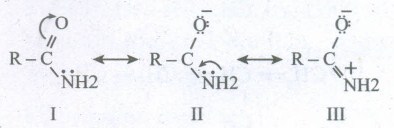
(iii) CH3-CH = CH-CH2NH2: Does not exist as resonance hybrid, because the lone pair on N-atom is not conjugated with n-electrons of the double bond
8.
(i) Ripening of fruits and vegetables in few days.
(ii) Tarnishing of silver in few months.
(iii) Rusting of iron slowly.
9.
Among anthracene and cyclopentadiene - anthracene is aromatic in nature.
| Anthracene | Cyclopentadiene | |
|---|---|---|
 |
 |
|
| 1. | Planar structure | Planar structure |
| 2. | Contains 14 delocalised \(\pi\) electrons (4n + 2 = 14\(\pi\)e-) | Contains 4 non-delocalised \(\pi\) electrons |
| 3. | Hence aromatic | Hence non-aromatic |
10.
Mole fraction of solute = \(\frac { Moles\ of\ the\ component }{ Total\ number\ of\ moles\ of\ all } \)
No.of moles = \(\frac { Mass }{ Molecular\ mass } \)
No. of moles of ethanol = \(\frac { 56 }{ 46 } \) = 1.28 moles
No. of moles of water = \(\frac { 36 }{ 18 } \) = 2 moles
No. of moles fraction of ethyl/alchohol = \(\frac { 1.28 }{ \left( 1.28+2 \right) \quad } \)
= \(\frac { 1.28 }{ 3.28 } \) = 0.39
11.
Isomerism:
Presence of double bond in alkene provides the possibility of both structural and geometrical isomerism.
Structural Isomerism:
The first two member's ethene C2H4 and propene C3H6 do not have isomers because the carbon atoms in the molecules can be arranged only one distinct way.
However from the third member of alkene family butene C4H10 structural isomerism exists.
(i) CH3-CH = CH-CH3 1-Butene
(ii) CH2=CH-CH2-CH3 2-Butene
(iii) \({ CH }_{ 2 }=\overset { \underset { | }{ { CH }_{ 3 } } }{ C } -{ CH }_{ 3 }\) 2-Methyl-1-propene
structures (i) & (ii) are position isomers. structures (i) & (iii), (ii) & (iii) are chain isomers.
Geometrical isomerism:
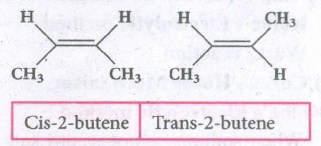
It is a type of stereoisomerism and it is also called cis-trans isomerism. Such type of isomerism results due to the restricted rotation of doubly bounded carbon atoms.
if the similar groups lie on the same side, then the geometrical isomers are called C is-isomers. When the similar groups lie on the opposite side, it is called a Trans isomer.
for example: the geometrical isomers of 2-Butane is expressed as follow
12.
This method is to purify liquids from non-volatile impurities, and used for separating the constituents of a liquid mixture which differ in their boiling points.
There are various methods of distillation depending upon the difference in the boiling points of the constituents. The methods are
(i) simple distillation
(ii) fractional distillation and
(iii) steam distillation.
The process of distillation involves the impure liquid when boiled gives out vapour and the vapour so formed is collected and condensed to give back the pure liquid in the receiver. is method is called simple distillation. Liquids with large difference in boiling point (about 40K) and do not decompose under ordinary pressure can be purified by simply distillation Eg. The mixture of C6H5NO2 (b.p 484K) & C6H6(354K) and mixture of diethyl ether (b.p 308K) and ethyl alcohol (b.p 351K)
13.
Restricted rotation around C=N (oximes) gives rise· to geometrical isomerism in oximes. Here 'syn' and 'anti' are used instead of cis and trans respectively. In the syn isomer the H atom of a doubly bonded carbon and -OH group of doubly bonded nitrogen lie on the same side of the double bond, while in the anti isomer, they lie on the opposite side of the double bond. For Eg:
14.
Homologous series: A series of organic compounds each containing a characteristic functional group and the successive members differ from each other in molecular formula by a CH2 group is called homologous series.
Alkanes: Methane (CH4), Ethane (C2H6), Propane (C3H8) etc.
Alcohols: Methanol (CH3OH), Ethanol (C2H5OH) Propanol (C3H7OH) etc. Compounds of the homologous series are represented by a general formula.
Alkanes CnH2n+2, Alkenes CnH2n, Alkynes CnH2n-2 and can be prepared by general methods. They show regular gradation in physical properties but have almost similar chemical property.
15.
(i) The arrangement of atoms must be identical or almost same in every resonance structure.
(ii) The energy content of all the canomical forms must be almost same.
(iii) Each canocial form must have the same number of unpaired electrons.
16.
The type of mutual sharing of one or more pairs of electrons between two combining atoms results in the formation of a chemical bond called a covalent bond. If two atoms share just one pair of electron a single covalent bond is formed as in the case of hydrogen molecule. If two or three electron pairs are shared between the two combining atoms, then the covalent bond is called a double bond or a triple bond, respectively
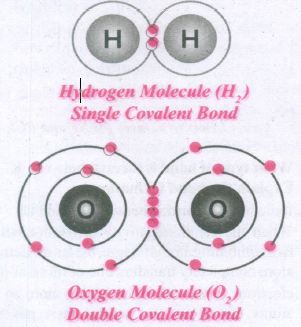
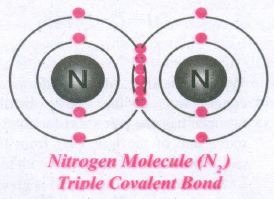
17.
| CLASSICAL SMOG | PHOTO CHEMICAL SMOG |
|---|---|
| (i) Classical smog was first observed in London in December 1952 and hence it is also known as London smog. | Photo Chemical smog was first observed in Los Angels in 1950. It occurs in warm, dry and sunny climate. |
| (ii) It consists of coal smoke and fog. | This type of smog is formed by the combination of smoke, dust and fog with air pollutants like oxides of nitrogen and hydrocarbons in the presence of sunlight. |
| (iii) It occurs in cool humid climate. This atmospheric smog found in many large cities. The chemical composition is the mixture of SO2, SO3 and humidity. It generally occurs in the morning and becomes worse when the sun rises | It forms when the sun shines and becomes worse in the afternoon. |
| (iv) Chemically it is reducing in nature because of high concentration of SO2 and so it is also called as reducing smog. | Chemically it is oxidizing in nature because of high concentration of oxidizing agents NO2 and O3, so it is also called as oxidizing smog. |
| (v) It causes bronchial irritation. | It causes irritation to eyes, skin and lungs throat infection, chest pain and difficulty in breathing. |
18.
True.
Some haloalkanes yield a mixture of olefins in different amounts. It is explained by Saytzeff's Rule, which states that 'In a dehydrohalogenation reaction, the preferred product is that alkene which has more number of alkyl groups attached to the doubly bonded carbon (more substituted double bond is formed).
\({ CH }_{ 3 }-\underset { \overset { | }{ Br } }{ CH } -{ CH }_{ 2 }-{ CH }_{ 3 }\)
2-Bromopropane
19.
(i) Silver Oxide(moist):
(ii) Sodium hydrogen sulphide:
\(\underset { Bromo \ ethane }{ { CH }_{ 3 }{ CH }_{ 2 }Br+NaSH } \overset { alcohol/{ H }_{ 2 }O }{ \underset { \triangle }{ \longrightarrow } } \underset { Ethan \ ethiol }{ { CH }_{ 3 }{ CH }_{ 2 }SH+NaBr } \)
(iii) Potassium cyanide :
\(\underset { Bromo \ ethane }{ { CH }_{ 3 }{ CH }_{ 2 }-Br+KCN } \longrightarrow \underset { Ethyl \ cryanide }{ { CH }_{ 3 }{ CH }_{ 2 }-CN+KBr } \)
20.
\(\overset { \underset { | }{ Cl } }{ \underset { \overset { | }{ Cl } }{ CH } } -{ CH }_{ 3 }\quad (A)\) 1, 1,-dichloro ethane
\(\underset { \overset { | }{ Cl } }{ { CH }_{ 2 } } -\underset { \overset { | }{ Cl } }{ { CH }_{ 2 } } \) (B) 1, 2, dichloro ethane
\(\overset { \underset { | }{ Cl } }{ \underset { \overset { | }{ Cl } }{ CH } } -{ CH }_{ 3 }\underset { aq\quad KOH }{ \longrightarrow } \left[ \overset { \underset { | }{ OH } }{ \underset { \overset { | }{ OH } }{ CH } } -{ CH }_{ 3 } \right] \underset { -{ H }_{ 2 }) }{ \longrightarrow } { CH }_{ 3 }CHO\)
(A) (C)
1, 1, dichloro ethane Acetaldhyde
\(A \ \ \overset { \underset { | }{ Cl } }{ \underset { \overset { | }{ Cl } }{ CH } } -{ CH }_{ 3 }\) -1,1 dichloro ethane
B \(\underset { \overset { | }{ Cl } }{ { CH }_{ 2 } } -\underset { \overset { | }{ Cl } }{ { CH }_{ 2 } } \)-1, 2 dichloro ethane
C CH3CHO -Acetaldehyde
D \(\underset { \overset { | }{ OH } }{ { CH }_{ 2 } } -\underset { \overset { | }{ OH } }{ { CH }_{ 2 } } \)-Ethyleneglycol
21.
(w) = 0.16 g
(x) = 0.35 g
\(\% S=\frac{32}{233} \times \frac{x}{\mathrm{w}} \times 100=\frac{32}{233} \times \frac{0.35}{0.16} \times 100=30.04 \%\)
22.
Weight of solute (W2) = 20 mass percent of solution means 20 g of ethylene glycol
Weight of solvent (water) W1 = 100 - 20 = 80 g
ΔTf = Kf m
\(={K_f\times W_2\times 1000\over M_2\times W_1}\)
\(={1.86\times 20\times 1000\over 62\times 80}\)
= 7.5 K
The temperature at which the ice will begin to separate is the freezing of water after the addition of solute i.e 7.5 K lower than the normal freezing point of water (273 - 7.5K) = 265.5 K
23.
H2(g) + I2(g) \(\rightleftharpoons \) 2HI(g)
At a particular instant, the concentration of H2, I2and HI are found to be 0.2 mol L-1, 0.2 mol L-1 and 0.6 mol L-1 respectively. From the above information we can predict the direction of reaction as follows.
\(Q={[HI]^2\over[H_2][I_2]}={0.6\times 0.6\over 0.2\times 0.2}=9\)
Since Q < Kc, the reaction will proceed in the forward direction.
24.
The balanced equation for the formation of HCI is,
H2(g) + CI2(g) \(\rightarrow\) 2 HCI (g)
As per the stoichiometric equation, under given conditions,
To produce 2 moles of HCI, 1 mole of chlorine gas is required.
To produce 44.8 litres of HCI, 22.4 litres of chlorine gas are required.
\(\therefore\) To produce 11.2 litres of HCI,
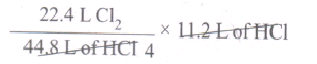
= 5.6 litres of chlorine are required.
25.
| Element | Percentage | Atomic mass | Relative No. of atoms | Simple ratio | Simplest whole number ratio |
|---|---|---|---|---|---|
| Fe | 69.9% | 55.85 | \(\frac { 69.9 }{ 55.85 } =1.25\) | \(\frac { 1.25 }{ 1.25 } =1\) | 1 x 2 = 2 |
| O | 30.1% | 16 | \(\frac { 30.1 }{ 16 } =1.88\) | \(\frac { 1.88 }{ 1.25 } =1.5\) | \(\frac { 3 }{ 2 } \times 2=3\) |
\(\therefore\) The empirical formula is Fe2O3.
26.
(i) To produce colours, fireworks experts bum the metal and chlorine together in a vapour, where the two elements are gases instead of solid
(ii) The burning excites the electron pushing them into a higher than normal energy level. As the electrons returns to their normal level, they release their extra energy as a colourful burst of light.
(iii) True blue fireworks are the hardest to make since the compound copper chloride breaks down in a hot flame.
27.
Alkali metal oxides M2O, M2O2 and MO2 are easily hydrolyzed by water to form the hydroxides according to the following reactions:
M2O + H2O ⟶ 2M+ + 2OH-
M2O2 + 2H2O ⟶ 2M+ + 2OH- + H2O2
2MO2 + 2H2O ⟶ 2M+ + 2OH- + H2O2 + O2
28.
Equivalent mass of a salt:
It is defined as the number of parts by mass of the salt that is produced by the neutralization of one equivalent of an acid by a base. Therefore the equivalent mass of the salt is equal to its molar mass.
29.
(i) Metallic hydrides are obtained by hydrogenation of metals and alloys in which hydrogen occupies the interstitial sites (voids). Hence, they are called interstitial hydrides.
(ii) The hydrides show properties similar to parent metals and hence they are also known as metallic hydrides.
(iii) They are mostly non-stoichiometric with variable composition (TiH1.5-1.8 and PdH0.6-0.8)
(iv) Some are relatively light, inexpensive and thermally unstable which makes them useful for hydrogen storage applications. Example, TiH2, ZrH2, ZnH2.
30.
(i) Variation of volume of the gas sample with temperature at constant
(ii) Each line (iso bar) represents the variation of volume with temperature at certain pressure. The pressure increases from P1 to P5.
(iii) i.e. P1 < P2 < P3 < P4 < P5 When these lines are extrapolated to zero volume, they intersect at a temperature of -273.15°C.
(iv) All gases are becoming liquids if they are cooled to sufficiently low temperatures.
(v) In other words, all gases occupy zero volume at absolute zero. So the volume of a gas can be measured over only a limited temperature range.
31.
Charles' law states that for a fixed mass of a gas at constant pressure, the volume is directly proportional to temperature (K).
\(V\propto T\) (or) = \(\frac{V}{T}\) Constant
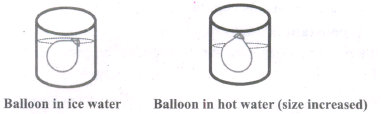
Volume vs Temperature:
If a balloon is moved from an ice water bath to a boiling water bath, the gas molecules inside move faster due to increased temperature and hence the volume increases.
32.
(i) Metals comprise more than 78% of all known elements.They are present on the left side of the periodic table.
(ii) They are usually solids at room temperature. [Mercury is an exception (Hg-liquid), gallium (303K) and cesium (302K) also have very low melting points].
(iii) Metals usually have high melting and boiling points.
(iv) They are good conductors of heat and electricity.
(v) They are malleable and ductile, and also can be flattened into thin sheets by hammering and drawn into thin wires.
33.
(i) The distribution of electrons into orbitals, s, p, d and f of an atom is called its electronic configuration. The electronic configuration of an atom is characterized by a set of four quantum numbers, n, 1, m and s. Of these the principal quantum number (n) defines the main energy level known as shells.
(ii) The position of an element in the periodic table is related to the configuration of that element and thus reflects the quantum numbers of the last orbital filled.
(iii) The electronic configuration of elements in the periodic table can be studied along the periods and groups separately for the best classification of elements.
(iv) Elements placed in a horizontal row of a periodic table is called a period. There are seven periods.
(v) A vertical column of the periodic table is called a group. A group consists of a series of elements having similar configuration of the outermost shell. There are 18 groups in periodic table.
34.
| Period number | Number of elements | Nature of period | Elements present |
| 1 | 2 | Very short | 1H and 2He |
| 2 | 8 | Short | 3Li to 10Ne |
| 3 | 8 | Short | 11Na to 18Ar |
| 4 | 18 | Long | 19K to 36Kr |
| 5 | 18 | Long | 37Rb to 54Xe |
| 6 | 32 | Very long | 55Cs to 86Rn |
| 7 | 19 | Incomplete | 87Fr to Contd. |
35.
It occurs naturally as a result of nuclear reactions induced by cosmic rays in the upper atmosphere.
\(_{ 7 }^{ 14 }{ N }+_{ 0 }^{ 1 }{ n }\rightarrow _{ 6 }^{ 12 }{ C }+_{ 1 }^{ 3 }{ H }\)
\(_{ 1 }^{ 2 }{ H }+_{ 1 }^{ 2 }{ H }\rightarrow _{ 1 }^{ 3 }{ H }+_{ 1 }^{ 1 }{ H }\)
\(_{ 3 }^{ 6 }{ Li }+_{ 0 }^{ 1 }{ n }\rightarrow _{ 2 }^{ 4 }{ He }+_{ 1 }^{ 3 }{ H }\)
36.
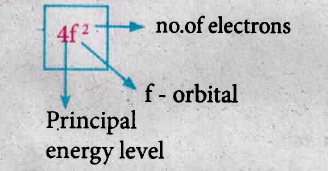
n = 4; f orbital l = 3 \(\Rightarrow\) m1= - 3, -2,-1, 0, +1, +2, +3
out of two electrons, one electron occupies 4f orbital with m1 = -3 and another electron occupies 4f orbital with m1 = -2.
All the four quantum numbers for the two electrons are
| Electron | n | l | m1 | m |
| 1e- | 4 | 3 | -3 | +1/2 |
| 2e- | 4 | 3 | -2 | +1/2 |
37.
Molar mass of A g2CO3 = \(\{2\times atomic\ mass\ of \ Ag+atomic\ mass\ of\ C +3\times atomic\ mass \ of\ 'O'\)
= 2 x 10⁸ + 12 + 3 x 16
= 276 u
Molar mass of AgO = atomic mass of Ag+ atomic mass of '0'
= 108 + 16 = 124g mol-1
When silver carbonate is heated, carbon dioxide leaves as gas and silver oxide remains as a residue.
According to the equation,
One mol of Ag2C03leaves = 2 mol of AgO as residue
276 g of Ag20 = 124g of AgO
\(11.04 \ of \ Ag_2O={124\over276}\times 11.04g \ of \ AgO\)
= 4.96g
38.
The given reaction is N2(g) + 3H2(g) \(\rightarrow\) 2NH3(g); \(\Delta\)H° = -92.4 kJ mol-1
\(\Delta { H }^{ ° }=2\Delta { H }_{ f }^{ o }({ NH }_{ 3 })-[\Delta { H }_{ f }^{ o }({ N }_{ 2 })+3\Delta { H }_{ f }^{ o }({ H }_{ 2 })]\)
By definition, the standard enthalpy of formation of elements is equal to zero.
-92.4 = 2\(\Delta \)\({ H }_{ f }^{ o }\)(NH3)-(0+3\(\times\)0)
i.e., for 2 mol of NH3 2\(\Delta\)\({ H }_{ f }^{ o }\)(NH3)-90+3\(\times\)0)
i.e., for 2 mol of NH3 2 \(\Delta\)\({ H }_{ f }^{ o }\)(NH3) = -92.4
for 1 mol of NH3 \(\Delta\)\({ H }_{ f }^{ o }\) (NH3) = \(\frac { -92.4 }{ 2 } =46.2\) kJ mol-1
39.
\(Average \ atomic \ mass \ of \ carbon ={12\times \%abundance \ of \ C^{12}+13 \times \% \ abundance \ of \ C^{13}+14\% abundance of c^{14} \over 100} \)
given % abundances Of C12 = 98.892
C13 = 1.108
CI4 = 2 x 10⁻¹⁰
Since 2 x 10⁻¹⁰is so small compound to 100, it can be neglected .
\(Average \ atomic \ mass \ of \ carbon ={12\times 98.892 +13 \times 1.108 \over 100} \)
= 12.01 a.m.u
40.
(i) The coefficients in a balanced thermochemical equation refer to number of moles of reactants and products involved in the reaction.
(ii) The enthalpy change of the reaction \(\Delta\)Hr has to be specified with appropriate sign and unit.
(iii) When the chemical reaction is reversed, the value of \(\Delta\)H is reversed in sign with the same magnitude.
(iv) The physical states (gas, liquid, aqueous, solid in brackets) of all species are important and must be specified in a thermochemical reaction, since \(\Delta\)H depends on the physical state of reactants and products.
(v) If the thermochemical equation is multiplied throughout by a number, the enthalpy change is also multiplied by the same number.
(vi) The negative sign of \(\Delta\)Hr indicates that the reaction is exothermic and the positive sign of \(\Delta\)Hr indicates an endothermic reaction.
41.
\(\lambda =\frac{h}{\sqrt{2KEm}}\ \lambda=\frac{h}{mv}or \frac{h}{p}\)
E = Kinetic energy
m = mass of particle
\(\lambda\) = 4.8 pm = 4.8 x 10⁻¹² m
h = 6.63 x 10⁻³⁴ J.S.
m = 9.11 x 10⁻³¹ kg
4.8 x 10-12 = \(\frac{6.63\times 10^{-34}}{\sqrt{12\times E\times 9.11\times 10^{-31}}}\)
E = 1.047 x 10⁻¹⁴ J.
42.
Compressibility factor (Z) = \(\frac{PV}{nRT}\)
Given: n = 1; P = 50 atm; V = 350 x 10-3 L = 0.35 L R = 0.0821 L atm K-1 mol-1 ;
T = 27 + 273 = 300 K
Substituting these values in the above equation
\(Z=\frac{(50 atm) (0.35 L)}{(1 mol (0.821 Latm K^{-1} mol^{-1})(300K)}\)
= 0.711
Since, Z < 1, the gas shows negative deviation from ideal behaviour.
43.
(i) Fluorine decomposes cold water.
\(2F_2+2H_2O_2 \rightarrow2H_2F_2+O_2 \\ 3F_2+3H_2O_2 \rightarrow 2H_2F_2+O_3(Ozonised \ oxygen)\)
(ii) Chlorine decomposes cold water forming HCI and HCIO (hypo chlorous acid
\(Cl_2+H_2O\rightarrow2HCl+HClO\)
44.
The heat absorbed, when one mole of a solid melts at its melting point reversibly, is called molar heat of fusion. The entropy change is given by
\({ \triangle S }_{ f }=\frac { { \triangle H }_{ f } }{ { T }_{ f } } \).
Where ΔHf is molar .heat of fusion. Tf is melting point.
45.
(i) The second law of thermodynamics helps us to predict whether the reaction is feasible or not
(ii) It tells about the direction of the flow of heat.
(iii) It also tells that energy cannot be completely converted into equivalent work.
46.
P+ HNO3\(\rightarrow\) H3PO4 + NO2 + H2O
.png)
Equalise the increase I decrease in O N by multiplying P species by +1 and N species by +5
47.
(l) BeO is almost insoluble in water because Be2+ is a small cation with high polarising power and O2- is small anion.
∴ the lattice energy very high.
When BeO is dissolved in water, the hydration energy of its ions is not sufficient to overcome high lattice energy.
(ii) On the other hand, Be2+ is a small cation and is a large anion. Hence Be2+ can easily polarize, \(SO_4^{2-}\) ions, making BeSO4 unstable the lattice energy of BeSO4 is not very high and so it is soluble in water.
48.
Equivalent mass of Ba(OH)2
Molar mass of Ba(OH)2 = 171.34 g/mol
Acidity of the Ba(OH)2 = 2
Equivalent mass of the Ba(OH)2 = \(\frac { Molar \ mass \ of \ the \ base }{Acidity \ of \ the \ base}\)
\(=\frac{171.34}{2}=85.5\)
49.
Atomic mass of potassium = 39
No. of moles = \(\frac { Mass }{ Molar\ mass } \)
No.of moles = \(\frac { 19.5 }{ 39 } \) = 0.5 moles
50.
6x + 12(1) + 6(-2) = 0
6x + 12 -12 = 0
6x = 0
x = 0
Oxidation number of C in C6H12O6 is zero.
51.
(i) Although IE1 values of alkaline earth metals are higher than that of alkali metals, the IE2 values of alkaline earth metals are much smaller than those of alkali metals.
(ii) This occurs because in alkali metals the second electron is to be removed from a cation, which has already acquired a noble gas configuration.
(iii) In the case of alkaline earth metals the second electron is to be removed from a monovalent cation, which still has one electron in the outermost shell.
(Iv) Thus, the second electron can be removed more easily in the case of group 2 elements than in group 1 elements
52.
48 parts by mass of oxygen are made available from 294 parts by mass of K2Cr2O7
∴ 8 parts by mass of oxygen will be furnished by =\(\frac{294\times8}{48}=49\)
Equivalent mass of K2Cr2O7 = 49 g equiv-1
53.
ΔHf (NaCl)=30.4 kJ = 30400 J mol-1
ΔSf (NaCl)=28.4 JK-1mol-1
Tf=?
ΔSf =\(\frac { \Delta { H }_{ f } }{ { T }_{ f } } \)
Tf=\(\frac { \Delta { H }_{ f } }{ \Delta { S }_{ f } } \)
Tf=\(\frac { 30400J{ mol }^{ -1 } }{ 28.4J{ K }^{ -1 }mol^{ -1 } } \)
Tf=1070.4K
54.
Water can easily dissolve all ionic compounds. Due to H-bonding with polar molecules, even covalent molecules like alcohols and carbohydrates dissolve in water.
Water can hydrolyse many metallic and nonmetallic oxides, hydrides, phosphides and other salts.
P4O10(s) + 6H2O ➝ 4H3PO4(aq)
55.
K2CrO4
2(1) + x + 4(-2) = 0
2 + x - 8 = 0
x - 6 = 0
x = +6
Oxidation number of Cr in K2CrO4 is +6
56.
If a substance which gives a line emission spectrum is placed in an external electric field, its lines get split into a number of closely spaced lines. This phenomenon is known as Stark effect.
57.
Electronic configuration of the element is 3d1 4S2.
The element belongs to fourth period and group 3.
The element is scandium (Z = 21).
58.
In a group, the density increases with increase in atomic number. But the density of 19K is less than 11Na.
Reason:
Atomic volume ofK is nearly twice of Na, but its mass (39) is not exactly double of Na (23).
Since density is inversely related to volume, the greater volume K has lower density than Na
59.
(i) Lothar Meyer plotted the physical properties such as atomic volume, melting point and boiling point against atomic weight and obtained a periodically repeated pattern.
(ii) Lothar Meyer observed a change in length of that repeating pattern.
(iii) In 1868, Lothar Meyer had developed a table of the elements that closely resembles the modern periodic table.
60.
p-orbitals :
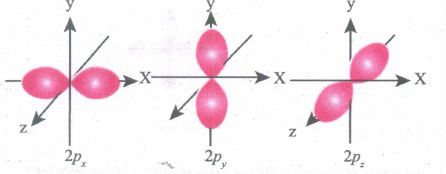
(a) For p orbitals l = 1 and the corresponding m values are -1,0 and + 1. The angular distribution functions are quite complex
(b) The three different m values indicates that there are three different orientations possible for p orbitals. These orbitals are designated as px,py and pz and the angular distribution for these orbitals shows that the lobes are along the x, y and z axis respectively.
(c) The 2p orbitals have one nodal plane
61.
Metal Hydride (Hydrogen Sponge):
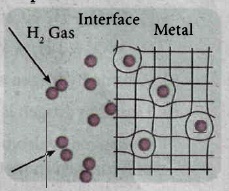
The best studied binary hydrides are the palladium - hydrogen system. Hydrogen interacts with palladium in a unique way, and forms a limiting monohydride, PdH. Upon heating, H atoms diffuse through the metal to the surface and recombine to form molecular hydrogen. Since no other gas behaves this way with palladium, this process has been used to separate hydrogen gas from other gases.
\(2 \mathrm{Pd}(\mathrm{s})+\mathrm{H}_{2}(\mathrm{~g}) \rightarrow 2 \mathrm{PdH}(\mathrm{s})\)
The hydrogen molecule readily adsorbs on the palladium surface, where it dissociates into atomic hydrogen. The dissociated atoms dissolve into the interstices or voids (octahedral/tetrahedral) of the crystal lattice.
Technically, the formation of metal hydride is by chemical reaction but it behaves like a physical storage method, i.e., it is absorbed and released like a water sponge. Such a reversible uptake of hydrogen in metals and alloys is also attractive for hydrogen storage and for rechargeable metal hydride battery applications.
62.
At a given temperature the volume occupied by a fixed mass of a gas is inversely proportional to its pressure.
\(V\alpha \frac { 1 }{ P }\) at constant T& n.
Mathematical form: P1V1 = P2 V2 = K
63.
| S.No | n | l | Subshell notation |
| (i) | 1 | 0 | 1s |
| (ii) | 3 | 1 | 3p |
| (iii) | 4 | 2 | 4d |
| (iv) | 4 | 3 | 4f |
64.
(i) According to aufbau's principle 5th period has nine orbital (one 5s, five 4d and three 6p) to be filled.
(ii) Nine orbitals can accommodate a maximum of 18 electrons. Hence fifth period of the periodic table should has 18 elements from rubidium (2 = 37) to Xenon (Z = 54).
65.
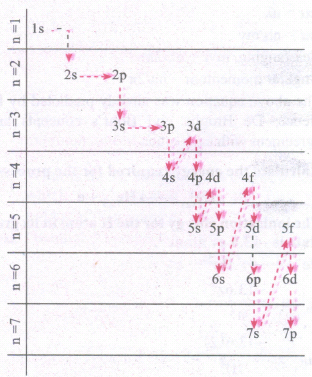
The word Aufbau in German means 'building up'. In the ground state of the atoms, the orbitals are filled in the order of their increasing energies. That is the electrons first occupy the lowest energy orbital available to them.
Once the lower energy orbitals are completely filled, then the electrons enter the next higher energy orbitals. The order of filling of various orbitals as per the Aufbau principle which is in accordance with (n + l) rule.
66.
C1 V1 = C2 V2
6M(V1) = 0.25 M x 500 ml
\(\mathrm{V}_{1}=\frac{0.25 \times 500}{6}\)
V1 = 20.83 ml
67.
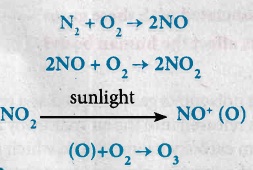
Ozone is formed by a series of reactions that occur from the sun shines
68.
ΔHf0 CO2 = -393.5 kJ mol-1
ΔHf0 CO = -111.31 kJ mol-1
ΔHf0 (H2O) = - 242 kJ mol-1
CO2(g) + H2(g) - CO(g) + H2O(g)
ΔHf0 = ?
ΔHf0 = Σ(ΔHf0)products-Σ(ΔHf0)reactions
ΔHf0 = [ΔHf0(CO) + ΔHf0(H2O)] - [ΔHf0(CO2) + ΔHf0(H2)]
ΔHf0 = [-111.31 + (-242)] - [-393.5 + (0)]
ΔHf0 = [-353.31] + 393.5
ΔHf0 = 40.19
ΔHf0 = +40.19 kJ mol-1.
69.
Work is defined as the force (F) multiplied by the displacement(x).
-w = F.x.
70.
2NH3 + H2O + CO2 ⟶ (NH4)2 CO3
(NH4)2 CO3 + H2O + CO2 ⟶ 2NH4 HCO3
2NH4HCO3 + NaCl ⟶ NH4Cl + NaHCO3
2NaH CO3 ⟶ Na2 CO3 + CO2 + H2O.

11th Standard Syllabus & Materials
11th Standard
TN 11th Tamil பீடு பெற நில் - செய்யுள் - காவடிச்சிந்து Important Questions And Answers Study Material - QB365 Set A
NEW11th Standard
TN 11th Tamil பீடு பெற நில் - உரைநடை - மலை இடப்பெயர்கள் : ஓர் ஆய்வு Important Questions And Answers Study Material - QB365 Set A
NEW11th Standard
TN 11th Tamil மாமழை போற்றுதும் - துணைப்பாடம் - யானை டாக்டர் Important Questions And Answers Study Material - QB365 Set A
NEW11th Standard
TN 11th Tamil மாமழை போற்றுதும் - செய்யுள் - ஐங்குறுநூறு Important Questions And Answers Study Material - QB365 Set A



Tamilnadu Stateboard 11th Standard Subjects

Maths

Commerce

Economics

Biology

Business Maths and Statistics

Accountancy

Computer Science

Physics
Chemistry
Maths
Biology
Economics
Physics
Chemistry

History
Business Maths and Statistics

Computer Science
Accountancy

Computer Applications
History
Computer Technology
Commerce
Computer Applications
Computer Technology

Tamil

English

French
Tamilnadu Stateboard Standards
