
 100% FREE ACCESS
11th Standard Syllabus & Materials
11th Standard
TN 11th Tamil இயற்கை வேளாண்மை,சுற்றுச்சூழல் -செய்யுள் - மனோன்மணீயம் Important Questions And Answers Study Material - QB365 Set A
NEW11th Standard
TN 11th Tamil என்னுயிர் என்பேன் -துணைப்பாடம் - இசைத்தமிழர் இருவர் Important Questions And Answers Study Material - QB365 Set A
NEW11th Standard
TN 11th Tamil மொழி கலை -செய்யுள் - ஒவ்வொரு புல்லையும் Important Questions And Answers Study Material - QB365 Set A
NEW11th Standard
TN 11th Tamil பீடு பெற நில் - இலக்கணம் - பகுபத உறுப்புகள் Important Questions And Answers Study Material - QB365 Set A
NEW11th Standard
TN 11th Tamil பீடு பெற நில் - துணைப்பாடம் - வாடிவாசல் Important Questions And Answers Study Material - QB365 Set A
NEW11th Standard
TN 11th Tamil பீடு பெற நில் - செய்யுள் - குறுந்தொகை Important Questions And Answers Study Material - QB365 Set A

Published on: 09/10/2019
Distribution Analysis
Download Tamil Nadu 11th Standard Economics question papers, model tests, one-mark questions, important questions, and public exam papers in PDF format. Free study materials and answer keys for TN State Board students.
Questions + Answers key
Take MCQ Economics Test
1.
Loanable Funds Theory of Interest is called as
Classical Theory
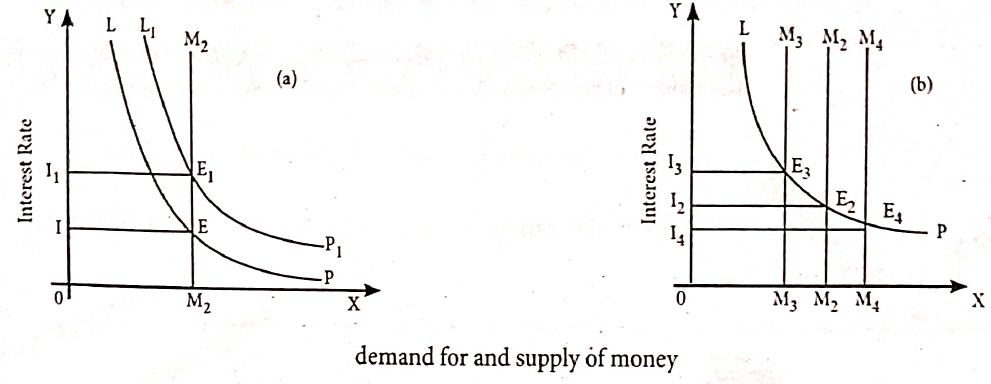
Modern Theory
Traditional Theory
Neo-Classical Theory
2.
Abstinence Theory of Interest was propounded by
Alfred Marshall
N.W. Senior
Bohm-Bawerk
Knut Wicksell
3.
4.
Profit is the reward for
Land
Organization
Capital
Labour
5.
According to the Loanable Funds Theory, supply of loanable funds is equal to
S + BC + DH + DI
I + DS + DH + BM
S + DS + BM + DI
S + BM + DH + DS
6.
The reward given for the use of capital
rent
wage
interest
profit
7.
8.
The Classical Theory of Rent was propounded by
Ricardo
Keynes
Marshall
Walker
9.
Theory of distribution is popularly known as,
Theory of product-pricing
Theory of factor-pricing
Theory of wages
Theory of interest
10.
In Economics, distribution of income is among the
factors of production
Individual
firms
traders
11.
What is net profit?
12.
13.
What is profit?
14.
Distinguish between real and money wages.
15.
Mention the types of distribution.
16.
17.
Explain the kinds of profit.
18.
19.
State the Dynamic Theory of profit.
20.
Distinguish between rent and quasi-rent.
21.
22.
What are the motives of demand for money?
23.
24.
Explain the Marginal Productivity Theory of Distribution.
1.
(d)
Neo-Classical Theory
2.
(b)
N.W. Senior
3.
(a)
4.
(b)
Organization
5.
(a)
S + BC + DH + DI
6.
(c)
interest
7.
(b)
8.
(a)
Ricardo
9.
(b)
Theory of factor-pricing
10.
(a)
factors of production
11.
Net profit = Gross Profit - Implicit costs.
12.
13.
(i) Profit is earned by the entrepreneur for his entrepreneurial function.
(ii) It is the amount left with the entrepreneur after he has paid for all the other factors.
14.
(i) Nominal or money wages are the wages paid in terms of money.
(ii) Real wages are the wages paid in terms of goods & services.
15.
Personal distribution - the distribution of national income among individuals.
Functional distribution - the distribution of income among four factors of production.
16.
17.
(a) Gross profit: Gross profit is the surplus which accrues to a firm when its total expenditure is subtracted from its total revenue.
(b) Net Profit:
(i) Net (or) pure (or) economic (or) true profit is the residual left with entrepreneur after deducting all expenses.
(ii) Net Profit = Gross Profit - Implicit cost
(c) Normal Profit: It refers to the minimum expected return to stay in business.
(d) Super Normal Profit: Super Normal Profits are over and above the normal profit.
18.
19.
(i) According to Clark profit is the difference between price and cost of production.
(ii) Profit is the reward for dynamic changes in society-like increase in population, increase in volume of capital, improvement in methods of production, change in forms of industrial organisation and increase in wants of consumers.
20.
| SI.No | Rent | Quasi Rent |
|---|---|---|
| 1 | Rent accrues to land | Quasi - Rent accrues to man made appliances |
| 2 | The supply of land is fixed forever. | The supply of man made appliances is fixed for a short period only. |
| 3 | It enters into price. | It does not enter into price. |
| 4 | It is temporary. |
21.
22.
Transaction motive:
(i) The desire of the people to hold cash for the current transactions.
(ii) The amount kept for this motive depends on the income. Mt = f(y)
Precautionary motive:
(i) The desire of the people to hold cash to meet unexpected expenditure such as sickness, accidents.
(ii) The amount for this purpose depends on income. Mp = f(y)
Speculative motive:
(i) The desire of the people to hold cash in order to take advantage of the future changes in price of bonds and securities.
(ii) The amount for this purpose depends on the rate of interest. Ms = f(i)
23.
24.
Introduction:
(i) Marginal productivity theory of distribution was developed by Clark, Wicksteed and Walras.
(ii) This theory explains how the prices of various factors of production are determined.
Assumptions
(i) All the factors of production are homogeneous, can be substituted for each other and are perfectly mobile.
(ii) There is perfect competition in the factor & product market.
(iii) There is full employment with no technological change.
(iv) The theory is applicable only in long run.
(vi) The entrepreneurs aim at profit maximisation.
(vii) There is no government intervention in fixing the price of a factor.
Explanation:
(i) The reward for any factor of production is equal to the marginal productivity of that factor.
(ii) The greater the productivity of a factor higher will be its reward.
(iii) The price of a factor of production depends upon its productivity.
(vi) The price will be equal to marginal revenue product of that factor.
(v) Under certain conditions, the price of a factor will be equal to both the average and marginal products of that factor.
Marginal productivity under perfect competition:
.JPG)
(i) fig (a) x axis represents factor units.
(ii) y axis shows factor price & revenue.
MRP = Marginal revenue product curve.
ARP = Average revenue product curve.
AFC = Average factor cost curve.
MFC = Marginal factor cost curve.
(iii) AFC is horizontal & MFC coincides with it.
(iv) The firm is in equilibrium (maximum profit) when MFC = MRP at Q by employing ON units of factors & paying (OP price or NQ) where MFC = MRP = ARP.
(v) The price paid to the factor NQ is equal to MRP (NQ) and ARP (NQ) beyond Q no employer will employ factors because after that point, the price paid to the factor is more than MRP and ARP.
Marginal productivity under Imperfect competition:
.JPG)
(i) fig(b) AFC represents the price paid to the factors. It increases as the number of factors demanded by the employer increases.
(ii) As AFC rises, MFC lies above AFC. It represents the MC paid to the factors.
(iii) At the point Q, MFC = MRP, where the employer attains his maximum profit and so he stops employment of the factors at the point.
(iv) But the AC paid is NRSO and AR is NQ or OP
(v) Total revenue is NQPO.
(vi) Exploitation per unit of factor is RQQ
(vii) But the total number of factors is ON. Thus the total exploitation of factor by the employer is RQ XSR = PQRS (shaded area).
Criticisms:
(i) Factors of production are not homogeneous.
(ii) They cannot be substituted for each other.
(iii) It cannot be applied in the short run.
Conclusion:
This theory is also called "General Theory of Distribution" or "National Dividend Theory of distribution".

11th Standard Syllabus & Materials
11th Standard
TN 11th Tamil பீடு பெற நில் - செய்யுள் - காவடிச்சிந்து Important Questions And Answers Study Material - QB365 Set A
NEW11th Standard
TN 11th Tamil பீடு பெற நில் - உரைநடை - மலை இடப்பெயர்கள் : ஓர் ஆய்வு Important Questions And Answers Study Material - QB365 Set A
NEW11th Standard
TN 11th Tamil மாமழை போற்றுதும் - துணைப்பாடம் - யானை டாக்டர் Important Questions And Answers Study Material - QB365 Set A
NEW11th Standard
TN 11th Tamil மாமழை போற்றுதும் - செய்யுள் - ஐங்குறுநூறு Important Questions And Answers Study Material - QB365 Set A



Tamilnadu Stateboard 11th Standard Subjects

Maths

Commerce
Economics

Biology

Business Maths and Statistics

Accountancy

Computer Science

Physics

Chemistry
Maths
Biology
Economics
Physics
Chemistry

History
Business Maths and Statistics

Computer Science
Accountancy

Computer Applications
History
Computer Technology
Commerce
Computer Applications
Computer Technology

Tamil

English

French
Tamilnadu Stateboard Standards
