
 100% FREE ACCESS
11th Standard Syllabus & Materials
11th Standard
TN 11th Tamil இயற்கை வேளாண்மை,சுற்றுச்சூழல் -செய்யுள் - மனோன்மணீயம் Important Questions And Answers Study Material - QB365 Set A
NEW11th Standard
TN 11th Tamil என்னுயிர் என்பேன் -துணைப்பாடம் - இசைத்தமிழர் இருவர் Important Questions And Answers Study Material - QB365 Set A
NEW11th Standard
TN 11th Tamil மொழி கலை -செய்யுள் - ஒவ்வொரு புல்லையும் Important Questions And Answers Study Material - QB365 Set A
NEW11th Standard
TN 11th Tamil பீடு பெற நில் - இலக்கணம் - பகுபத உறுப்புகள் Important Questions And Answers Study Material - QB365 Set A
NEW11th Standard
TN 11th Tamil பீடு பெற நில் - துணைப்பாடம் - வாடிவாசல் Important Questions And Answers Study Material - QB365 Set A
NEW11th Standard
TN 11th Tamil பீடு பெற நில் - செய்யுள் - குறுந்தொகை Important Questions And Answers Study Material - QB365 Set A

Published on: 28/06/2021
QB365 provides detailed and simple solution for every Creative Questions in class 11 Biology Subject. It will helps to get more idea about question pattern in every Creative questions with solution.
Download Tamil Nadu 11th Standard Biology question papers, model tests, one-mark questions, important questions, and public exam papers in PDF format. Free study materials and answer keys for TN State Board students.
Questions + Answers key
Take MCQ Biology Test1.
Explain the nuclear characters of Mesokaryotes.
2.
Distinguish between root climbers and stem climbers
3.
Name the three types of Adventitious buds
4.
Explain Bilateral symmetry.
5.
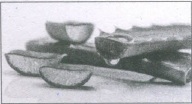
Can you identify this?
(a) Name the family
(b) Write the binomial
(c) List the economic uses
6.
Explain about Monochasial Cyme inflorescence.
7.
Explain Main axis flattened based on branching pattern?
8.
Define Aerobic respiration of bacteria.
9.
Write the characteristics of Bacterial chromosome.
10.
Describe the Structure of viruses.
11.
Write the characters of non - living things.
12.
Distinguish between Karyokinesis and cytokinesis.
13.
Tabulate the time duration in hours of the different phases of cell cycle
14.
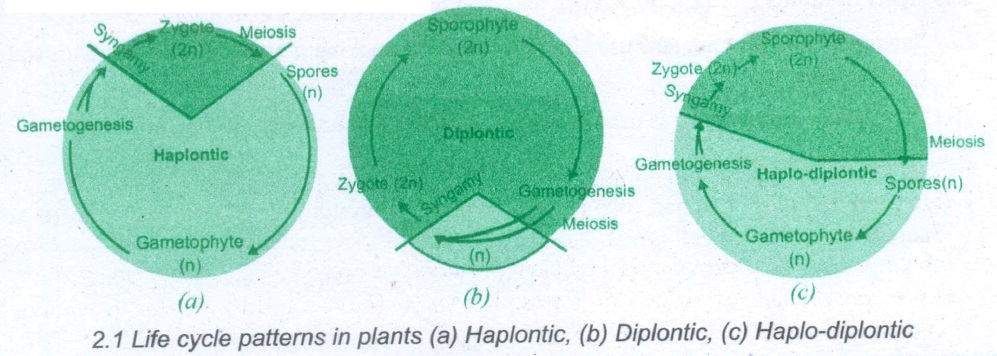
List the life cycle patterns in plants.
15.
List out some Human diseases caused by Fungi
16.
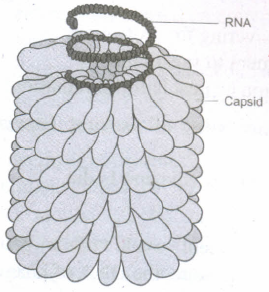
Draw the structure of TMV and label the parts.
17.
What are the symptoms of Tobacco Mosaic disease?
18.
Write down the living characteristic features of virus.
19.
What is the need for cladistics?
20.
How are cladistic groups classified?
21.
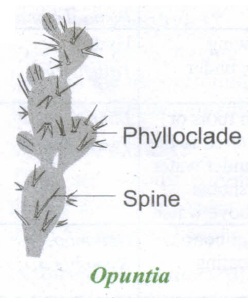
Draw a phylloclade and label the parts?
22.
What are Stilt / Brace roots?
23.
What is flip flopping?
24.
The term 'form genera' is used to name fossil plants - Explain.
25.
Differentiate Gymnosperms from Angiosperms.
1.
Mesokaryotes contains well organized nucleus with nuclear membrane and the DNA is organized into chromosomes but without histone protein components divide through amitosis similar with prokaryotes.
2.
| Root-climbers | Stem climbers |
| Plants climbing with the help of adventitious roots (arise from nodes). | These climbers lack specialised structure for climbing and the stem itself coils around the support. |
| e.g., Piper betel, Piper nigrum, Hedera helix, Pothos, Hoya | e.g., Ipomoea, Convolvulus, Dolichos, ei,itoria Quisqualis. |
3.
(i) Radical buds
(ii) Foliar buds
(iii) Cauline buds
4.
In bilateral symmetry the flower can be divided into equal halves in only one plane. Zygomorphic flower can efficiently transfer pollen grains to visiting pollinators. Example: Pisum.
5.
(a) Liliaceae family
(b) Aloe vera
(c) The gel-like part of Aloe vera contain proteole enzymes which repairs and rejunuveates the skin.
It acts as a great conditioner for hair. Aloe juice acts as coolant and soothes gastric problems like ulcer.
6.
The main axis ends with a flower.
1. From two lateral bracts, only one branch grows further.
2. It may be helicoid (bostryx) or Scorpiod (cincinnus) Helicoid.
3. Axis develops on only one side. and forms a coil structure atleast at the earlier development stage. Example: Hamelia, potato, Scorpiod.
4. AXis develops .on alternate sides and often becomes a coil structure. Example: Heliotropium.
7.
The main axis of inflorescence is mostly flattened (convex or concave) or globose.
1. A head or capitulum is a determinate or indeterminate, group of sessile or subsessile flowers arising on a receptacle, often subtended by an involucre.
2. A head is a characteristic inflorescence of Asteraceae and is also found in some members of Rubiaceae.
3. Acacia nilotica, Albizia lebbeck, Mimosa pudica (sensitive plant). Torus contains two types of florets:
(i) Disc floret or tubular floret.
(ii) Ray floret or ligulate floret. Heads are classified into two types.
8.
1. These bacteria require oxygen as terminal acceptor and will not grow under anaerobic conditions (i.e. in the absence of O2) Example: Streptococcus Obligate aerobes of bacteria.
2. Some Micrococcus species are obligate aerobes (i.e. they must have oxygen to survive).
9.
1. The bacterial chromosome is, a single circular DNA molecule, tightly coiled and is not enclosed in a membrane as in Eukaryotes.
2. This genetic material is called Nucleoid or Genophore. It is amazing to note that the DNA of E.coli which measures about Imm long when uncoiled, contains all the genetic information of the organism.
3. The DNA is not bound to histone proteins. The single chromosome or the DNA molecule is circular and at one point it is attached to the plasma membrane and it is believed that this attachment may help in the separation of two chromosomes after DNA replication.
10.
1. Electron microscopic studies have revealed that TMV is a rod shaped helical virus measuring about 280\(\times\)150 μm with a molecular weight of 39 \(\times\) 106 Daltons.
2. The virion is made up of two constituents, a protein coat called capsid and a core called nucleic acid.
3. The protein coatis made up of approximately 2130 identical protein subunits called capsomeres which are present around a central single stranded RNA molecule.
4. The genetic information necessary for the formation of a complete TMV particle is contained in its RNA. The RNA consists of 6,500 nucleotides.
11.
1. Can be crystallized.
2. Absence of metabolism.
3. Inactive outside the host.
4. Do not show functional autonomy.
5. Energy producing enzyme system is absent.
12.
| Karyokinesis | Cytokinesis |
| Involves division of nucleus. | Involves division of cytoplasm. |
| Nucleus develops a constriction at the center and becomes dumbell shaped. | Plasma membrane develops a constriction along nuclear constriction. |
| Constriction deepens and divides the nucleus into two. | It deepens centripetally and finally divides the cell into two cells. |
13.
| Phase | Time duration (in hrs) |
| G1 | 11 |
| S | 8 |
| G2 | 4 |
| M | 1 |
14.
15.
| S.No | Human diseases | Causal Organism |
|---|---|---|
| 1. | Athlete's foot | Epidermophyton floccosum |
| 2. | Candidiasis | Candida albicans |
| 3. | Coccidioidomy-cosis | Coccidioides immitis |
| 4. | Aspergillosis | Aspergillus fumigatus |
16.
17.
1. Discolouration of leaf colour along the veins.
2. Typical yellow and green mottling which is the mosaic symptom.
3. Downward curling of young apical leaves.
4. Stunted growth
18.
1. Presence of nucleic acid and protein.
2. Capable of mutation.
3. Ability to multiply within living cells.
4. Ability to infect and cause diseases in living beings.
5. Show irritability.
6. Host-specific.
19.
Need for cladistics:
1. Cladistics is now the most commonly used and accepted method for creating phylogenetic system of classifications.
2. Cladistics produces a hypothesis about the relationship of organisms to predict the morphological characteristics of organism.
3. Cladistics helps to elucidate 'mechanism of evolution.
20.
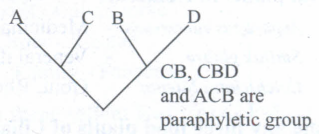
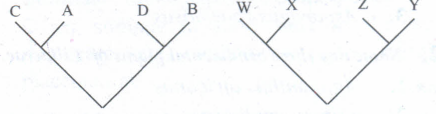
Represent diagrammatically
1. Monophyletic group: Taxa comprising all the descendants of a common ancestor.
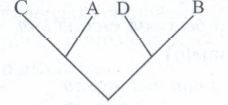
2. Paraphyletic group: Taxon that includes an ancestor but not all of the descendants of that ancestor.
3. Polyphyletic group: Taxa that includes members from two different lineages
21.
22.
These are thick roots growing obliquely from the basal nodes of the main stem. These provide mechanical support. Eg: Saccharum officinarum, Zea mays.
23.
In cell membrane the movement of membrane lipids from one side of the membrane to the other side by vertical movement is called flip flopping or flip flop movement. This movement takes place more slowly than lateral diffusion of lipid molecule.
24.
1. The whole plant is not recovered as fossils.
2. Instead organs or parts of the extinct plants are obtained in fragments.
3. Hence the term 'form genera' is used to name fossil plants
25.
| S.No | Gymnosperms | Angiosperms |
| 1. | Vessels are absent [except Gnetales] | Vessels are present |
| 2. | Phloem lacks companion cells | Companion cells are present |
| 3. | Ovules are naked | Ovules are enclosed within the ovary |
| 4. | Wind pollination only | Insects, wind, water, animals, etc., act as pollinating agents |
| 5. | Double fertilization is absent | Double fertilization is present |
| 6. | Endosperm is haploid | Endosperm is triploid |
| 7. | Fruit formation is absent | Fruit formation is present |
| 8. | Flowers absent | Flowers present |

11th Standard Syllabus & Materials
11th Standard
TN 11th Tamil பீடு பெற நில் - செய்யுள் - காவடிச்சிந்து Important Questions And Answers Study Material - QB365 Set A
NEW11th Standard
TN 11th Tamil பீடு பெற நில் - உரைநடை - மலை இடப்பெயர்கள் : ஓர் ஆய்வு Important Questions And Answers Study Material - QB365 Set A
NEW11th Standard
TN 11th Tamil மாமழை போற்றுதும் - துணைப்பாடம் - யானை டாக்டர் Important Questions And Answers Study Material - QB365 Set A
NEW11th Standard
TN 11th Tamil மாமழை போற்றுதும் - செய்யுள் - ஐங்குறுநூறு Important Questions And Answers Study Material - QB365 Set A



Tamilnadu Stateboard 11th Standard Subjects

Maths

Commerce

Economics
Biology

Business Maths and Statistics

Accountancy

Computer Science

Physics

Chemistry
Maths
Biology
Economics
Physics
Chemistry

History
Business Maths and Statistics

Computer Science
Accountancy

Computer Applications
History
Computer Technology
Commerce
Computer Applications
Computer Technology

Tamil

English

French
Tamilnadu Stateboard Standards



