
 100% FREE ACCESS
11th Standard Syllabus & Materials
11th Standard
TN 11th Tamil இயற்கை வேளாண்மை,சுற்றுச்சூழல் -செய்யுள் - மனோன்மணீயம் Important Questions And Answers Study Material - QB365 Set A
NEW11th Standard
TN 11th Tamil என்னுயிர் என்பேன் -துணைப்பாடம் - இசைத்தமிழர் இருவர் Important Questions And Answers Study Material - QB365 Set A
NEW11th Standard
TN 11th Tamil மொழி கலை -செய்யுள் - ஒவ்வொரு புல்லையும் Important Questions And Answers Study Material - QB365 Set A
NEW11th Standard
TN 11th Tamil பீடு பெற நில் - இலக்கணம் - பகுபத உறுப்புகள் Important Questions And Answers Study Material - QB365 Set A
NEW11th Standard
TN 11th Tamil பீடு பெற நில் - துணைப்பாடம் - வாடிவாசல் Important Questions And Answers Study Material - QB365 Set A
NEW11th Standard
TN 11th Tamil பீடு பெற நில் - செய்யுள் - குறுந்தொகை Important Questions And Answers Study Material - QB365 Set A

Published on: 13/05/2022
QB365 provides detailed and simple solution for every Creative Questions in class 11 Biology Subject. It will helps to get more idea about question pattern in every Creative questions with solution.
latest Creative QuestionsDownload Tamil Nadu 11th Standard Biology question papers, model tests, one-mark questions, important questions, and public exam papers in PDF format. Free study materials and answer keys for TN State Board students.
Questions + Answers key
Take MCQ Biology Test1.
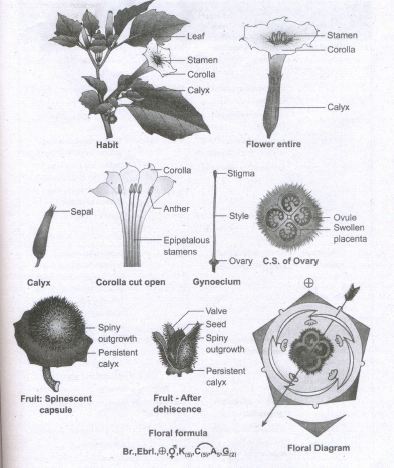
Write the Botanical Description of Datura metal.
2.
Explain the Taxonomic Hierarchy
3.
Write briefly about Cladistic analysis.
4.
Describe the method of preparation of herbarium specimen
5.
Describe a papilionaceous corolla.
1.
Habit:
Large, erect and stout herb.
Root:
Branched tap root system.
Stem:
Stem is hollow, green and herbaceous with strong odour.
Leaf:
Simple, alternate, petiolate, entire or deeply lobed, glabrous exstipulate showing unicostate reticulate venation.
Inflorescence:
Solitary and axillary cyme.
Flower:
Flowers are large, greenish white, bracteate, ebracteolate, pedicellate, complete, heterochlamydeous, pentamerous, regular, actinomorphic, bisexual and hypogynous.
Calyx:
Sepals 5, green synsepalous showing valvate aestivation. calyx is mostly persistant, odd sepal is posterior in position.
Corolla:
petals 5,greenish white, sympetalous, plicate (folded like a fan) showing twisted aestivation, funnel shaped with wide mouth and 10 lobed.
Androecium:
Stamens 5, free from one another, epipetalous, alternlpetalous and are inserted in the middle of the corolla tube. Anthers are basifixed, dithecous, with long filament, introse and longitudinally dehiscent.
Gynoecium:
Ovary bicarpellary, syncarpous superior ovary, basically biloculear but.tetralocular due to the formation of false septum. carpels are obliquely placed and ovules on swollen axile placentation. Style simple long and filiform, stigma two lobed.
Fruit:
Spinescent capsule opening by four apical valves with persistent calyx.
Seed:
Endospermous.
Floral Formula:

2.
Taxonomic hierarchy was introduced by Carolus Linnaeus. It is the arrangement of various taxonomic levels in descending order starting from kingdom up to species.
Species is the lowest of classification and shows the high level of similarities among the organisms. For example, Helianthus annuus and Helianthustuberosus. These two species differ in their morphology. Both of them are herbs but Helianthus tuberosus is a perennial herb,
Genus consist of multiple species which have similar characters but differ from the species of another genus.
Example: Helianthus, Tridax.
Family comprises a number of genera which share some Family comprises a number of genera which share some similarities among them. Example: Asteraceae.
Order includes group of families which show less similarities among them.
Class consists of group of orders which share few similarities.
Division is the next level of classification that consists of number of classes. Example: Magnoliophyta.
Kingdom is the highest level or rank of the classification. Example: Plantae
3.
(i) Cladistics is one of the primary methods of constructing phylogenies or evolutionary histories. Cladistics uses shared; derived characters to group organisms into clades.
(ii) These clades have atleast one shared, derived character found in their most recent common ancestor that is not found in other groups hence they are considered more closely related to each other.
(iii) These shared characters can be morphological such as, leaf, flower, fruit, seed and so on; behavioural, like opening of flowers nocturnal/diurnal; molecular like DNA or protein sequence and more.
(iv) Cladistic accepts only monophyletic groups. Paraphyletic and polyphyletic taxa are occasionally considered when such taxa conveniently treated as one group for practical purposes.
eg. dicots, Sterculiaceae. Polyphyletic groups are rejected by cladistic ..
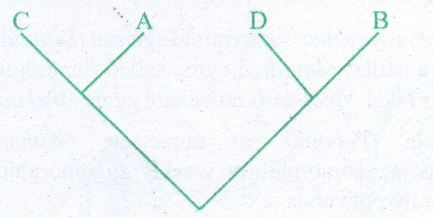
(a) Monophyletic group: Taxa comprising all the descendants of a common ancestor.
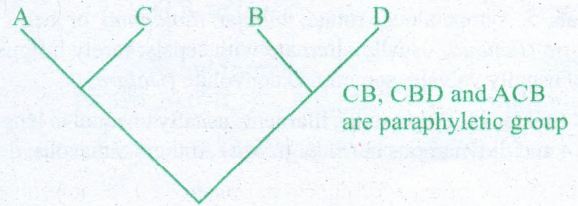
(b) Paraphyletic group: Taxon that includes an ancestor but not all of the descendants of that ancestor.
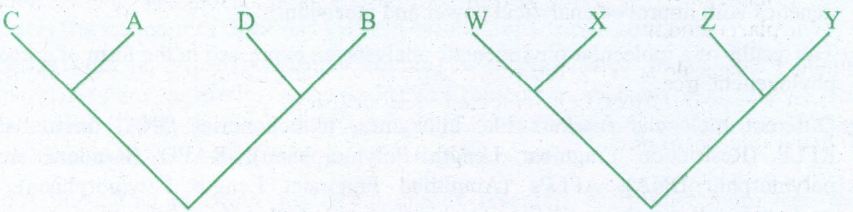
(c) Polyphyletic group: Taxa that includes members from two different lineages.
Need for cladistics:
(i) Cladistics is now the most commonly used and accepted method for creating phylogenetic system of classifications.
(ii) Cladistics' produces a hypothesis about the relationship of organisms to predict the morphological characteristics of organism.
(iii) Cladistics helps to elucidate mechanism of evolution.
4.
(i) Plant Collection: Plant specimen with flower or fruit is collected.
(ii) Documentation of field site data: Certain data are to be recorded at the time of plant collection. It includes date, time, country, state, city, specific locality information, latitude, longitude, elevation and land mark information. These data will be typed onto a herbarium label.
(iii) Preparation of plant specimen: Plant specimen collected from the field is pressed immediately with the help of portable field plant press. Plant specimen is transferred to a standard plant press (12" x 18") which between two outer 12" x 18" frames and secured by two straps.
(iv) Mounting herbarium specimen: The standard size of herbarium sheet is used for mounting the specimen (29cm x 41cm). specimens are affixed to herbarium sheet with standard white glue or solution of Methylcellulose.
(v) Herbarium label: Herbarium label size is generally 4-5" wide and 2-3" tall. A typical label contains all information like habit, habitat, vegetation type, land mark information, latitude, longitude, image document, collection number, date of collection and name of the collector.
(vi) Protection of herbarium sheets against mold and insects: Application of 2% Mercuric chloride, Naphthalene, DDT, carbon disulphide. Fumigation using formaldehyde. Presently deep freezing(-20°C) method is followed throughout the world.
5.
1. Petals 5, apopetalous, unequal and papilionaceous, vexillary or descendingly imbricate aestivation. All petals have a claw at the base.
2. The outermost petal is large called standard petal or vexillum. Lateral 2 petals are lanceolate and curved. They are called wing petals or alae.
3. Anterior two petals are partly fused and are called keel petals or carina which encloses the stamens and pistil. It is said to be butterfly shaped.

11th Standard Syllabus & Materials
11th Standard
TN 11th Tamil பீடு பெற நில் - செய்யுள் - காவடிச்சிந்து Important Questions And Answers Study Material - QB365 Set A
NEW11th Standard
TN 11th Tamil பீடு பெற நில் - உரைநடை - மலை இடப்பெயர்கள் : ஓர் ஆய்வு Important Questions And Answers Study Material - QB365 Set A
NEW11th Standard
TN 11th Tamil மாமழை போற்றுதும் - துணைப்பாடம் - யானை டாக்டர் Important Questions And Answers Study Material - QB365 Set A
NEW11th Standard
TN 11th Tamil மாமழை போற்றுதும் - செய்யுள் - ஐங்குறுநூறு Important Questions And Answers Study Material - QB365 Set A



Tamilnadu Stateboard 11th Standard Subjects

Maths

Commerce

Economics
Biology

Business Maths and Statistics

Accountancy

Computer Science

Physics

Chemistry
Maths
Biology
Economics
Physics
Chemistry

History
Business Maths and Statistics

Computer Science
Accountancy

Computer Applications
History
Computer Technology
Commerce
Computer Applications
Computer Technology

Tamil

English

French
Tamilnadu Stateboard Standards



