
 100% FREE ACCESS
11th Standard Syllabus & Materials
11th Standard
TN 11th Tamil இயற்கை வேளாண்மை,சுற்றுச்சூழல் -செய்யுள் - மனோன்மணீயம் Important Questions And Answers Study Material - QB365 Set A
NEW11th Standard
TN 11th Tamil என்னுயிர் என்பேன் -துணைப்பாடம் - இசைத்தமிழர் இருவர் Important Questions And Answers Study Material - QB365 Set A
NEW11th Standard
TN 11th Tamil மொழி கலை -செய்யுள் - ஒவ்வொரு புல்லையும் Important Questions And Answers Study Material - QB365 Set A
NEW11th Standard
TN 11th Tamil பீடு பெற நில் - இலக்கணம் - பகுபத உறுப்புகள் Important Questions And Answers Study Material - QB365 Set A
NEW11th Standard
TN 11th Tamil பீடு பெற நில் - துணைப்பாடம் - வாடிவாசல் Important Questions And Answers Study Material - QB365 Set A
NEW11th Standard
TN 11th Tamil பீடு பெற நில் - செய்யுள் - குறுந்தொகை Important Questions And Answers Study Material - QB365 Set A

Published on: 25/06/2021
QB365 provides detailed and simple solution for every Creative Questions in class 11 Biology Subject. It will helps to get more idea about question pattern in every Creative questions with solution.
Download Tamil Nadu 11th Standard Biology question papers, model tests, one-mark questions, important questions, and public exam papers in PDF format. Free study materials and answer keys for TN State Board students.
Questions + Answers key
Take MCQ Biology Test1.
Describe the Botanical description of Clitoria ternatea (Sangu pushpam)
2.
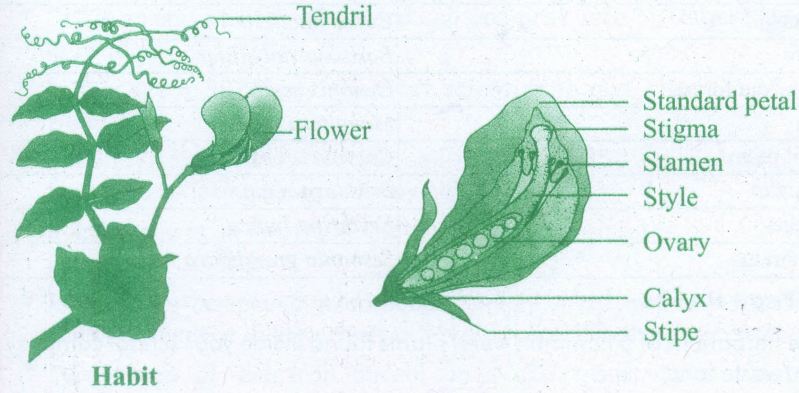
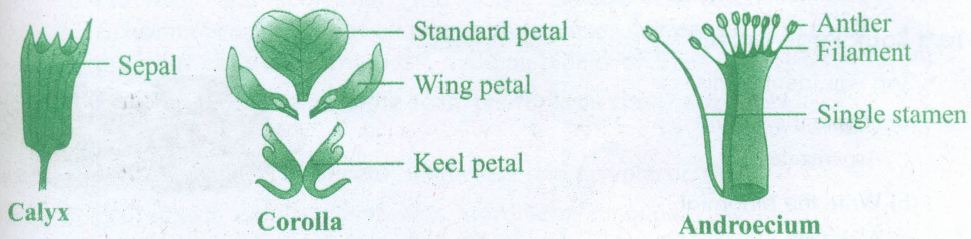
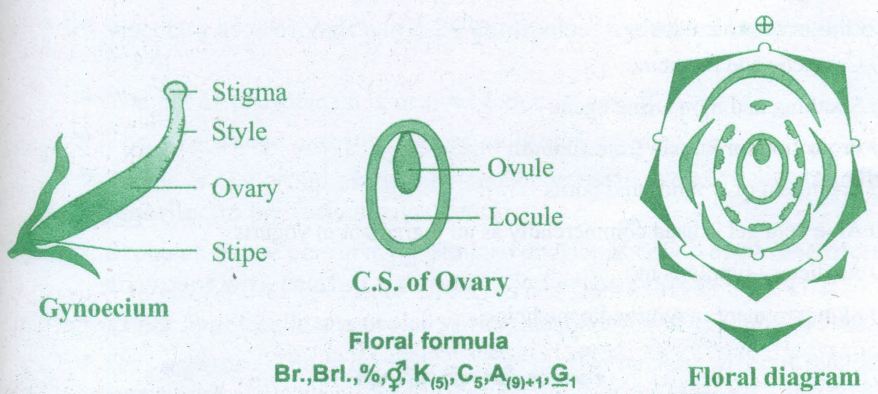
Give the floral characters of Pisum sativum.
3.
Explain the basis of molecular taxonomy with its uses.
4.
Explain clearly. A plant may have different names in different regions of the country or world. How do botanists solve this problem?
5.
Explain Bentham and Hooker system of classification?
1.
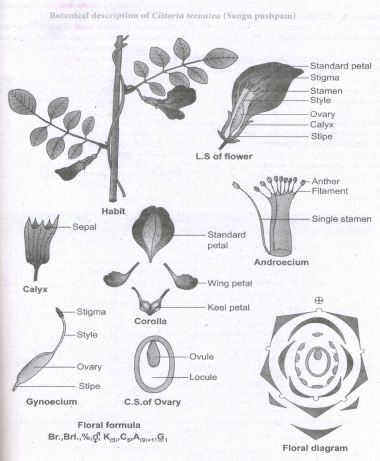
Habit:
Twining climber
Root:
Branched tap root system having nodules.
Stem:
Aerial, weak stem and a twiner
Leaf:
imparipinnately compound, alternate, stipulate showing reticulate venation. Leaflets are stipellate. Petiolate and stipels are pulvinated.
Inflorescence:
Solitary and axillary
Flower:
Bracteate, bracteolate, bracteoles usually large, pedicellate, heterochlamydeous, complete, bisexual, pentamerous, zygomorphic and hypogynous
Calyx:
Sepals 5, synsepalous, green showing valvate aestivation. Odd sepal is anterior in position.
Corolla:
Petals 5, white .or blue apopetalous, irregular papilionaceous corolla showing, descendingly imbricate aestivation.
Androecium:
Stamens 10, diadelphous (9)+ 1 nine stamens fused to form a bundle and the. tenth stamen is free. Anthers are dithecous, basifixed, introrse and dehiscing by longitudinal slits.
Gynoecium:
Monocarpellary, unilocular, with many ovules on marginal placentation, ovary superior, style simple and in curved with feathery stigma.
Fruit:
Legume
Seed:
Non-endospermous, reniform.
Floral Formula:

2.
3.
(i) Molecular Taxonomy is the branch of phylogeny that analyses hereditary molecular differences, mainly in DNA sequences, to gain information and to establish genetic relationship between the members of different taxonomic categories.
(ii) The advent of DNA cloning and sequencing methods have contributed immensely to the development of molecular taxonomy and population genetics over the years.
(iii) These modem methods have revolutionised the field of molecular taxonomy and population genetics with improved analytical power and precision.
(iv) The results of a molecular phylogenetic analysis are expressed in the form of a tree called phylogenetic tree.
(v) Different molecular markers like allozymes, mitochondrial DNA, microsatellites, RFLP (Restriction Fragment Length Polymorphism), RAPD (Random amplified polymorphic DNA); AFLPs (Amplified Fragment Length Polymorphism), single nucleotide polymorphism-SNP, microchips or arrays are used in analysis.
Uses of molecular taxonomy:
(i) Molecular taxonomy helps in establishing the relationship of different plant groups at DNA level.
(ii) It unlocks the treasure chest of information on evolutionary history of organisms.
4.
1. Botanists use binomial nomenclature to solve this problem.
2. A scientific name is given to the plant based on certain principles and criteria.
3. The scientific name of a particular plant is the same all over the world and is not given to any other plant.
5.
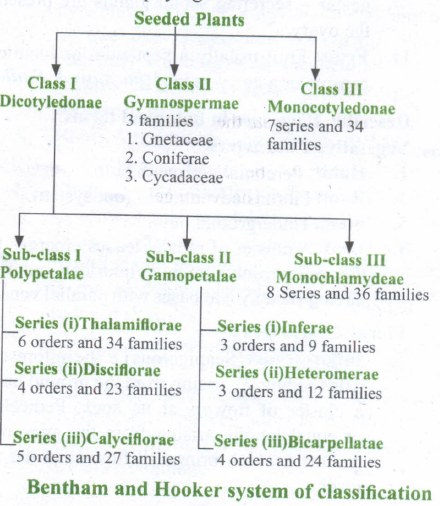
A widely followed natural system of classification considered the best was proposed by two English botanists George Bentham (1800 - 1884) and Joseph Dalton Hooker (1817-1911).
They described 202 families, 7569 genera and 97,205 species. In this system the seeded plants were classified into 3 major classes such as Dicotyledonae, Gymnospermae and Monocotyledonae.
Class I Dicotyledonae:
Plants contain two cotyledons in their seed, leaves with reticulate venation, tap root system and tetramerous or pentamerous flowers come under this class. It includes three sub-classes - Polypetalae, Gamopetalae and Monochlamydeae
Sub-class 1. Polypetalae:
Free petals and dichlamydeous flowers. It is further divided into three series - Thalamiflorae, Disciflorae and Calyciflorae.
Series (i) Thalamiflorae:
Flowers with dome or conical shaped thalamus and superior ovary. It includes 6 orders and 34 families.
Series (ii) Disciflorae:
Prominent disc shaped thalamus with superior ovary It includes 4 orders and 23 families.
Series (iii) Calyciflorae:
Flowers with cup shaped thalamus and with inferior or sometimes with half inferior
ovary. Calyciflorae includes 5 orders and 27 families
Sub-class 2. Gamopetalae:
United petals, which are either partially or completely fused to one another and dichlamydeous. It is further divided into three series - Inferae, Heteromerae and Bicarpellatae
Series (i) Inferae:
The flowers are epigynous and with inferior ovary. Inferae includes 3 orders and 9 families.
Series (ii) Heteromerae:
The flowers are hypogynous, superior ovary and with more than two carpels. Heteromerae includes 3 orders and 12 families.
Series (iii) Bicarpellatae:
The flowers are hypogynous, superior ovary and with two carpels. Bicarpellatae includes 4 orders and 24 families.
Sub-class 3. Monochlamydeae:
Incomplete flowers either apetalous or with undifferentiated calyx and corolla are placed under Monochlamydeae. The sepals and petals are not distinguished and they are called perianth. Sometimes both the whorls are absent. Monochlamydeae includes 8 series and 36 families.
Class II Gymnospermae:
Plants that contain naked seeds come under this class. Gymnospermae includes three families - Gnetaceae, Coniferae and Cycadaceae.
Class III Monocotyledonae:
Plants contain only one cotyledon in their seed, leaves with parallel venation, fibrous root system and trimerous flowers come under this class. The Monocotyledonae has 7 series and 34 families.
Merits:
(i) Description of plants is quite accurate and reliable because it is mainly based on personal studies from actual specimens and not mere comparisons of known facts.
(ii) As it is easy to follow, it is used as a key for the identification of plants in several herbaria of the world. Though it is a natural system, this system was not intended to be phylogenetic.

11th Standard Syllabus & Materials
11th Standard
TN 11th Tamil பீடு பெற நில் - செய்யுள் - காவடிச்சிந்து Important Questions And Answers Study Material - QB365 Set A
NEW11th Standard
TN 11th Tamil பீடு பெற நில் - உரைநடை - மலை இடப்பெயர்கள் : ஓர் ஆய்வு Important Questions And Answers Study Material - QB365 Set A
NEW11th Standard
TN 11th Tamil மாமழை போற்றுதும் - துணைப்பாடம் - யானை டாக்டர் Important Questions And Answers Study Material - QB365 Set A
NEW11th Standard
TN 11th Tamil மாமழை போற்றுதும் - செய்யுள் - ஐங்குறுநூறு Important Questions And Answers Study Material - QB365 Set A



Tamilnadu Stateboard 11th Standard Subjects

Maths

Commerce

Economics
Biology

Business Maths and Statistics

Accountancy

Computer Science

Physics

Chemistry
Maths
Biology
Economics
Physics
Chemistry

History
Business Maths and Statistics

Computer Science
Accountancy

Computer Applications
History
Computer Technology
Commerce
Computer Applications
Computer Technology

Tamil

English

French
Tamilnadu Stateboard Standards



