
 100% FREE ACCESS
11th Standard Syllabus & Materials
11th Standard
TN 11th Tamil இயற்கை வேளாண்மை,சுற்றுச்சூழல் -செய்யுள் - மனோன்மணீயம் Important Questions And Answers Study Material - QB365 Set A
NEW11th Standard
TN 11th Tamil என்னுயிர் என்பேன் -துணைப்பாடம் - இசைத்தமிழர் இருவர் Important Questions And Answers Study Material - QB365 Set A
NEW11th Standard
TN 11th Tamil மொழி கலை -செய்யுள் - ஒவ்வொரு புல்லையும் Important Questions And Answers Study Material - QB365 Set A
NEW11th Standard
TN 11th Tamil பீடு பெற நில் - இலக்கணம் - பகுபத உறுப்புகள் Important Questions And Answers Study Material - QB365 Set A
NEW11th Standard
TN 11th Tamil பீடு பெற நில் - துணைப்பாடம் - வாடிவாசல் Important Questions And Answers Study Material - QB365 Set A
NEW11th Standard
TN 11th Tamil பீடு பெற நில் - செய்யுள் - குறுந்தொகை Important Questions And Answers Study Material - QB365 Set A

Published on: 08/06/2021
QB365 provides detailed and simple solution for every book back questions in class 11 Biology subject.It will helps to get more idea about question pattern in every book back questions with solution.
Download Tamil Nadu 11th Standard Biology question papers, model tests, one-mark questions, important questions, and public exam papers in PDF format. Free study materials and answer keys for TN State Board students.
Questions + Answers key
Take MCQ Biology Test1.
A person suffering from severe fever, head ach and fatigue so he visits his doctor. What type of diagnosing procedure does the doctor recommended for him. Name the medical equipment is used for it?
2.
Explain the working of MRI
3.
Classify receptors based on type of stimuli
4.
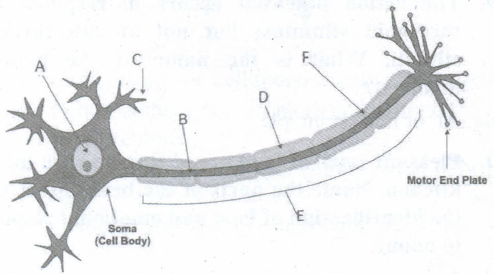
Label the parts of the neuron.
5.
Write a detailed account of gastro intestinal tract hormones.
6.
Predict the effects of removal of pancreas from the human body.
7.
8.
Write the symptoms of cretinism
9.
List any three common uses of shellac.
10.
What are the main duties of a worker bee?
11.
Name the different types of movement
12.
How do proteins differ from fats in their energy value and their role in the body?
13.
Which of these functions could or could not be carried out by a red blood cell? Briefly justify your answer.
a. Protein synthesis
b. Cell division
c. Lipid synthesis
d. Active transport
Protein synthesis
Cell division
Lipid synthesis
Active transport
14.
List the characteristic features that distinguish cartilaginous fishes with living jawless fishes.
15.
Compare Schizocoelom with enterocoelom.
16.
17.
What is ANS? Explain the components of ANS.
18.
Hormones are known as chemical messengers. Justify.
19.
Give the economic importance of prawn fishery
20.
Name the bones of the skull.
21.
If the afferent arteriole of the nephron constricts, what happens to the GFR in that nephron? If the efferent arteriole constricts what happens to the GFR in that nephron? Assume that no auto regulation takes place.
22.
In which segment of the nephron most of the re-absorption of substances takes place?
23.
Name the three filtration barriers that solutes must come across as they move from plasma to the lumen of Bowman's capsule. What components of the blood are usually excluded by these layers?
24.
Differentiate between tergum and a sternum.
25.
1.
1. Headaches are common, but if its occur with fever, we must see doctor for a proper diagnosis.
2. The combination of a fever and a head ache may be a sign of a serious infection, that is localized to your brain or spinal cord, which forms central nervous system.
3. Some examples of central nervous system infections are meningitis, encephalitis or brain abscess.
4. Medical equipment can be used for it is EEG - Electroencephalogram.
2.
1. MRI does not utilize ionizing radiation.
2.MRI uses a powerful magnetic field, radio frequency pulses and a computer to produce detailed pictures of organs, soft tissues, bone and virtually all other internal body structures.
3..The radio frequency pulses re-align hydrogen atoms that naturally exist within the body while the patient is in the scanner without causing any chemical changes in the tissues.
4.As the hydrogen atoms return to their usual alignment, they emit different amounts of energy that vary according to the type of body tissue from which they come.
5.The MR scanner captures this energy and creates a picture of the tissues scanned based on this information.
6. The magnetic field is produced by passing an electric current through wire coils in most MRI units
7. Other coils, located in the machine and in some cases, are placed around the part of the body being imaged, send and receive radio waves, producing signals that are detected by the coils. The electric current does not come in contact with the patient.
8. A computer then processes the signals and generates a series of images, each of which shows a thin slice of the body.
9. The images can then be studied from different angles and interpreted by a radiologist.
3.
| Receptors | Stimulus | Effector organs |
| Mechanoreceptors | Pressure and vibration | Mechanoreceptors are present in the cochlea of the inner ear and the semicircular canal and utriculus. |
| Chemoreceptors | Chemicals | Taste buds in the tongue and Nasal epithelium. |
| Thermoreceptors | Temperature | Skin |
| Photoreceptors | Light | Rod and cone cells of the retina in the eye. |
4.
A- Nucleus with nucleolus'
B- Myelin sheath
C- Dendrites
D- Nucleus
E- Schwann cell
F- Node of Ranvier
5.
1. A group of specialized endocrine cells present in gastro intestinal tract secretes hormones such as gastrin, cholecystokinin, secretin and gastric inhibitory peptides.
2. Gastrin acts on the gastric glands and stimulates the secrete of HCI and pepsinogen.
3. Cholecystokinin [CCK] is secreted by duodenum in response to the presence of fat and acid in the diet.
4. Secretin acts on acini cells of pancreas to secrete bicarbonate ions and water to neutralize the acidity.
5. Gastric inhibitory peptide [GIP] inhibits gastric secretion and motility.
6.
(i) Pancreas is a dual hormone which performs both the function of exocrine and endocrine glands.
(ii) It is a leaf like structure composed of two major tissues such as acini and islets of Langerhans.
(iii) Insulin is a peptide hormone and play an important role in glucose homeostasis.
(iv) When entire pancreas is removed, the body is left without the cells that produce insulin and hormones that help maintain safe blood sugar level. This leads to diabetes.
7.
8.
Cretinism is due lower secretion of growth hormone in infants; [ie] hypothyroidism.
Symptoms of Cretinism:
In infants, hypothyroidism causes cretinism .A cretin shows
1. Retarded skeletal growth
2. Absence of sexual maturity.
3. Retarded mental ability.
4. Thick wrinkled skin.
5. Protruded enlarged tongue.
6. Bloated face.
7. Thick and short limbs occurs
9.
1 Lac cut from the host plant is called 'Stick lac'.
2. The lac present on the twig is scraped and collected.
3. After grinding, the unnecessary materials like dusts and fine particles are removed.
4. The resultant lac is called 'seed lac'.
5. The seed lac is sun dried and then melted to produce 'shellac'.
Uses:
1. It is used as sealing wax.
2. It is used as filling material for gold ornaments.
3. It is used in preparation of shoe and leather polishes.
10.
(i) Worker bees are sterile females and smallest
(ii) They live in a chamber called "Worker Cell' and they perform different types of work in her life span.
(iii) During the first life span, she becomes a nurse bee attending indoor duties such as secretion of royal jelly, prepare bee bread to feed the larvae, take care of the queen and drones, secretes beeswax, builds combs, clean and fans the bee hives.
(iv) In the second life span she becomes soldier and guards the bee hive. She searches and gathers the pollen, nectar, propolis and water.
11.
Types of movement: The different types of movements that occur in the cells of our body are amoeboid, ciliary, flagellar and muscular movement.
1. Amoeboid movement:
Cells such as macrophages exhibit amoeboid movement for engulfing pathogens by pseudopodia formed by the streaming movement of the cytoplasm.
2. Ciliary movement:
This type of movement occurs in the respiratory passages and genital tracts which are lined by ciliated epithelial cells.
3. Flagellar movement:
This type of movement occurs in the cells which are having flagella or whip-like motile organelle. The sperm cells show flagellar movement.
4. Muscular movement:
The movement of hands, legs, jaws, tongue are caused by the contraction and relaxation of the muscle which is termed as the muscular movement.
12.
| S.No | Proteins | Fats |
| 1 | Yield energy if carbohydrates and fats are not available. |
Yield secondary concentrated source of energy. |
| 2. | Nitrogenous wastes are mostly formed. | Less formed. |
| 3. | Involve in growth and repair of the body. |
Involve in growth of the body and serve as the reserve food. |
| 4. | The caloric value and physiological fuel value of one gram of protein are 5.65 kcal and 4 kcal are respectively ICMR and WHO suggested that. |
The caloric value of 9.45 kcal and a physiological fuel value of 9 kcal per gram. |
| 5. | 1 gm/1kg of body weight needs proteins. |
4 gm/60 kg of body weight needs |
13.
Reason : None of these functions can be carried out by RBC. Red Blood Cells (RBC) contain haemoglobin pigment and play a major role in transport of respiratory gases.
14.
| Cartilaginous fishes | Living jawless fishes |
| 1. These belong to Gnathostomata | They belong to agnatha |
| 2. Paired appendages are found | Absent |
| 3.Notochord is replaced by cartilaginous skeleton | Notochord in persistent |
| 4.Includes jawed vertebrates | Includes jawless aquatic vertebrates |
15.
1. Eucoelom or true coelom is a fluid-filled cavity that develops within the mesoderm and is lined by mesodermal epithelium called peritoneum.
2. Such animals with a true body cavity are called eucoelomates
3. Based on the mode of formation of coelom, the eucoelomates are classified into two types,
i) Schizocoelomate animals - In these animals the body cavity is formed by splitting of mesoderm. Eg: Annelids, Arthropods, Molluscs.
ii) Enterocoelomate animals - In these animals the body cavity is formed from the mesodermal pouches of archenteron. Eg: Echinoderms, hemichordates and chordates.
16.
17.
1. The ANS autonomic neural system is auto functioning and self-governed.
2. It is a part of the peripheral neural system that innervates smooth muscles, glands and cardiac muscle. This system controls and coordinates the involuntary activities of various organs.
3. ANS controlling centre is in the hypothalamus.
18.
(i) The hormones are chemical messengers released into the blood and circulated as chemical signals.
(ii) They influence the metabolic activities of the body by means of hormones.
(iii) Deficiency or excess secretion of hormones will lead to disorders.
(iv) Thus hormones act as chemical messenger and coordinate different physical, physiological mental activities and maintain homeostasis.
19.
Economic importance of prawn:
(i) Prawn is a very tasty proteinaceous food.
(ii) Economic growth can be achieved by prawn at a low cost.
(iii) It is profitable to cultivate prawns in fresh water at a low cost.
(iv) By Exporting prawns can also bring a lot of foreign currency to the country.
20.
Cranium, facial bone, Bones of middle, ear, and Hyoid bone.
21.
(i) Blood supply to kidney's is reduced.
(ii) Disposal of blood from the kidney's is reduced.
(iii) Auto regulation of micturition is disturbed.
22.
Henle's loop
23.
1. Podocytes end in foot processes found in the openings between the foot processes (Filtration slits).
2. Malpighian body/renal corpuscle.
3. Blood cells like RBCs, WBCs and platelets.
24.
| S.No. | Tergum | Sternum |
| (1) | Dorsal surface is formed. | Ventral surface is formed. |
| (2) | Sclerites are also called tergites. | Sclerites are also called sternites 7th 8th and 9th |
| (3) | Male genital pouch is formed by 9th, 10th tergal and 9th sterna sclerites. |
Sternites form female genital pouch. |
25.

11th Standard Syllabus & Materials
11th Standard
TN 11th Tamil பீடு பெற நில் - செய்யுள் - காவடிச்சிந்து Important Questions And Answers Study Material - QB365 Set A
NEW11th Standard
TN 11th Tamil பீடு பெற நில் - உரைநடை - மலை இடப்பெயர்கள் : ஓர் ஆய்வு Important Questions And Answers Study Material - QB365 Set A
NEW11th Standard
TN 11th Tamil மாமழை போற்றுதும் - துணைப்பாடம் - யானை டாக்டர் Important Questions And Answers Study Material - QB365 Set A
NEW11th Standard
TN 11th Tamil மாமழை போற்றுதும் - செய்யுள் - ஐங்குறுநூறு Important Questions And Answers Study Material - QB365 Set A



Tamilnadu Stateboard 11th Standard Subjects

Maths

Commerce

Economics
Biology

Business Maths and Statistics

Accountancy

Computer Science

Physics

Chemistry
Maths
Biology
Economics
Physics
Chemistry

History
Business Maths and Statistics

Computer Science
Accountancy

Computer Applications
History
Computer Technology
Commerce
Computer Applications
Computer Technology

Tamil

English

French
Tamilnadu Stateboard Standards



