
 100% FREE ACCESS
11th Standard Syllabus & Materials
11th Standard
TN 11th Tamil இயற்கை வேளாண்மை,சுற்றுச்சூழல் -செய்யுள் - மனோன்மணீயம் Important Questions And Answers Study Material - QB365 Set A
NEW11th Standard
TN 11th Tamil என்னுயிர் என்பேன் -துணைப்பாடம் - இசைத்தமிழர் இருவர் Important Questions And Answers Study Material - QB365 Set A
NEW11th Standard
TN 11th Tamil மொழி கலை -செய்யுள் - ஒவ்வொரு புல்லையும் Important Questions And Answers Study Material - QB365 Set A
NEW11th Standard
TN 11th Tamil பீடு பெற நில் - இலக்கணம் - பகுபத உறுப்புகள் Important Questions And Answers Study Material - QB365 Set A
NEW11th Standard
TN 11th Tamil பீடு பெற நில் - துணைப்பாடம் - வாடிவாசல் Important Questions And Answers Study Material - QB365 Set A
NEW11th Standard
TN 11th Tamil பீடு பெற நில் - செய்யுள் - குறுந்தொகை Important Questions And Answers Study Material - QB365 Set A

Published on: 13/05/2022
QB365 provides detailed and simple solution for every Creative Questions in class 11 Biology Subject. It will helps to get more idea about question pattern in every Creative questions with solution.
latest Creative QuestionsDownload Tamil Nadu 11th Standard Biology question papers, model tests, one-mark questions, important questions, and public exam papers in PDF format. Free study materials and answer keys for TN State Board students.
Questions + Answers key
Take MCQ Biology Test1.
What type of circulatory system is found in amphibians?
2.
Is chymotrypsin responsible for hydrolysis of peptide bonds?
3.
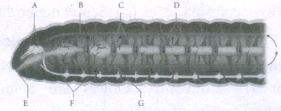
Label the parts A, B, C, D, E and F in the given diagram.
4.
Give a brief account on the features of cephalochordata.
5.
Write the general characters of hem ichor data.
6.
Write the general characters of the phylum arthropoda.
7.
Name some Automated species identification tools or cyber tools.
8.
What are the taxonomical tools used for the study of plants and animals
9.
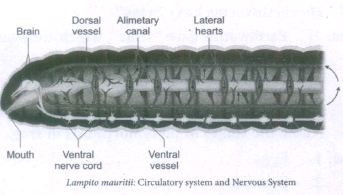
Describe the anatomy of earthworm.
10.
Mention the functions of frontal and temporal lobes of the Brain.
11.
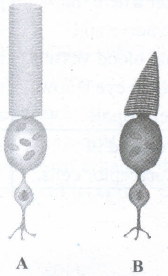
Identify A and B. Write the significance of each.
12.
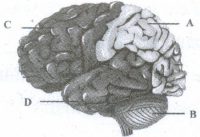
Label the following parts in the diagram given below:
13.
What is the significance of melanin?
14.
What is castle's intrinsic factor?
15.
Suggest why arteries close to the heart have more elastic fibres in their walls than arteries further away from the heart?
16.
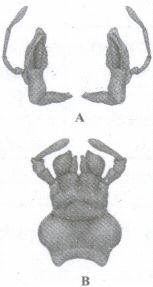
Identify the following.
17.
Distinguish between Neurons and Neuroglia
18.
An overweight high school student is overheard telling her friend that she is going to research how she can transform some of her white fat to brown fat. What is her rationale here (assuming it is possible)?
19.
Distinguish Bone and Cartilage.
20.
Name the Exoskeletal structures found in the following animals.
21.
Give a brief account on the comparison of chordates and Non-chordates.
22.
List four features common to all chordates
23.
How can we save endangered species?
24.
What is the Significance of Bhupathy's purple frog?
25.
What is trinomial nomenclature?
1.
1. Amphibians have two auricles and one ventricle and no inter ventricular septum whereas reptiles except crocodiles have two auricles and one ventricle and an incomplete inter ventricular septum.
2. Thus mixing of oxygenated and deoxygenated blood takes place in the ventricles.
3. This type of circulation is called incomplete double circulation.
2.
1. Chymotrypsin occurs in an inactive form called chymotrypsinogen which is activated by Trypsin.
2. Chymotrypsin hydrolyses peptide bonds associated with specific amino acid.
3. It is a pancreatic enzyme and is proteolytic in nature. It plays a role in digestion of food in the duodenum.
3.
4.
(i) Animals exclusively live in marine.
(ii) They lead burrowing mode of life.
(iii) They resemble fishes.
(iv) Presence of notochord, dorsal tubular nerve cord and pharyngeal gill slits are persistant.
(v) Closed circulatory system is found lacking of heart.
(vi) Protonephridia aid in excretion.
(vii) Unisexual and fertilization is external.
(viii) Development is indirect.
Eg: Branchio stoma (Amphioxus or Lancelet).
5.
1. The Hemichordates have both invertebrate and vertebrate characters.
2. They are worm like, tubicolous animals.
3. They are bilaterally symmetrical, triploblastic coelomate animals with organ system level of organisation.
4. They body is divided into proboscis, collar and trunk.
5. They are ciliary feeders.
6. Circulatory system is simple and open.
7. Excretion is by a single proboscis gland or glomerulus situated in the proboscises.
8. Sexes are separate.
9. Fertilization is external.
10. Development is indirect with tornaria larva. e.g., Balanoglossus.
6.
1. These are bilaterally symmetrical, triploblastic, schizocoelomate, segmented animals.
2. They have organ system grade of organization.
3. They have jointed appendages.
4. Body is covered by chitinous exoskeleton. The body is divided into head, thorax, and abdomen.
5. Body cavity is filled with colorless blood. It is called hemocoel.
6. Respiratory organs are gills, book gills, book lungs, trachea.
7. Open-type circulation is seen.
8. Sense organs are present.
9. Fertilization is internal. e.g., humulus, insects.
7.
ALIS: Automated leaf hopper identification system.
DAISY: Digital automated identification system.
ABIS: Automatic Bee identification system.
SPIDA: Species Identified Automatically (spiders, wasp, bee wing characters)
Draw wing: Honeybee wing identification
8.
Herbarium and Botanical garden may be used as tools for the plant taxonomy. Museum, Taxonomical keys and Zoological parks are Classical tools for animal studies. Field visits, survey, identification, classification, preservation and documentation are the important components of taxonomical tools.
9.
The body wall of the earthworm is very moist, thin, soft, skinny, elastic and consists of the cuticle, epidermis, muscles and coelomic epithelium. The epidermis consists of supporting cells, gland cells, basal cells and sensory cells. A spacious body cavity called the coelom is seen between the alimentary canal and the body wall. The coelom contains the coelomic fluid and serves as a hydrostatic skeleton, in which the coelomocytes are known to playa major role in regeneration, immunity and wound healing. The coelomic fluid of the earthworm is milky, which consits of granulocytes or eleocytes, amoebocytes mucocytes and alkaline, leucocytes.
10.
Frontal lobe - Behaviour, Intelligence, Memory, Movement
Temporal lobe - Speech, Hearing, Memory
11.
A- Rod cell, B- Cone cell
A- Rods are photoreceptor cells responsible for vision in dim light in the human eye.
B- The cones are photoreceptor cells responsible for colour vision in the human eye
12.
Lobes of cerebral hemisphere
A- Parietal lobe
B- Cerebellum
C- Frontal lobe
D- Temporal lobe
13.
Melanocytes are the cells responsible for-producing the skin pigment, melanin, which gives skin its colour and protects it from the sun's UV rays.
14.
The parietal cells in the wall of the stomach secrete an intrinsic factor called castle's intrinsic factor. It is responsible for the absorption of vitamin B12.
15.
1. Elastic fibres allow the artery to stretch and recoil as blood passes through it.
2. Arteries closer to the heart experience more pressure than arteries further away from the heart.
3. Therefore arteries close to the heart have more elastic fibres in their walls to cope with high pressure of blood coming from the heart.
16.
Mouth parts of cockroach
A- Maxilla
B- Labium
17.
| Neuron | Neuroglia |
| 1. They have two types of process - axon and dendron | They have only one process |
| 2. They have synapse | Do not have synapse |
| 3. No power of division | Have power of division |
| 4. conduct nerve impulses. | They are nutritive and defensive in function and serve as packing cells. |
18.
1. White fat is said to be 'Bad fat' since it hoards calories and contributes to obesity.
2. Brown fat is said to be 'good fat' which helps burn calories.
3. Research has proved that this conversion of white fat to brown fat is possible, so that calories will be burnt and accumulation of fat leading to obesity and related health issues can be avoided.
19.
| Bone | Cartilage |
| 1. It is hard and inflexible. | It is comparatively soft and flexible. |
| 2. Bone cells called osteocytes are present in spaces called Lacunae | Cells called chondrocytes are enclosed in small cavities within the matrix secreted by them. |
| 3. Marrow is present. | Marrow is absent. |
20.
a) Cockroach -Chitinous outer covering exoskeleton
b) Human being - Epidermal hair, nails
c) Garden lizard - Epidermal scales
d) Snail - Calcareous Shell
e) Dog - Epidermal hair, nails, hoofs.
21.
| Chordates | Non-chordates |
|
1. Notochord is present |
Absence of notochord |
| 2. Dorsal, hollow and single nerve cord | Double ventral solid nerve cord |
| 3. Pharynx perforated by gill slits | Gill slits absent |
| 4. Heart is ventrally placed | Heart is dorsal or laterally placed or absent |
| 5. A post-anal tail is present | Post-anal tail is absent |
| 6. Alimentary canal placed ventral to the nerve cord | Alimentary canal is placed dorsal to the nerve cord |
22.
1. All chordates possess a notochord.
2. All chordates possess a dorsal, hollow, nerve cord.
3. All chordates possess pharyngeal gill clefts in some stage of their life cycle.
4. Possess a post-anal tail.
23.
Saving Endangered Species:
1. The greatest threat to survival is destruction of habitat. It is important to conserve the habitat or the special places where the species live.
2. The animals must have places to find food, shelter, and care for their young ones.
3. Setting up Zoological parks and nature reserves will help to conserve the species.
4. Mutual agreement between countries can help to save forests and species in coastal waters.
5. Scientists are setting up gene banks to conserve animals of a species.
6. Several organisations are also working for the protection of endangered species.
7. Hot spots/areas with high biodiversity must be protected from human intervention to conserve the animal and plant species.
24.
1. Purple pig-nosed Frog was discovered in the Western Ghats.
2. It has shiny purple skin and spends its entire adult life underground.
3. It is called Bhupathy's purple frog by the scientists in memory of Subramaniam Bhupathy a respectable herpetologist who lost his life in the Western Ghats.
25.
The naming of an organism is followed by the three words 1st word is genus (starts with the capital letter) 2nd word is species (starts with the small letter) and 3rd word is sub-species (starts with the small letter).

11th Standard Syllabus & Materials
11th Standard
TN 11th Tamil பீடு பெற நில் - செய்யுள் - காவடிச்சிந்து Important Questions And Answers Study Material - QB365 Set A
NEW11th Standard
TN 11th Tamil பீடு பெற நில் - உரைநடை - மலை இடப்பெயர்கள் : ஓர் ஆய்வு Important Questions And Answers Study Material - QB365 Set A
NEW11th Standard
TN 11th Tamil மாமழை போற்றுதும் - துணைப்பாடம் - யானை டாக்டர் Important Questions And Answers Study Material - QB365 Set A
NEW11th Standard
TN 11th Tamil மாமழை போற்றுதும் - செய்யுள் - ஐங்குறுநூறு Important Questions And Answers Study Material - QB365 Set A



Tamilnadu Stateboard 11th Standard Subjects

Maths

Commerce

Economics
Biology

Business Maths and Statistics

Accountancy

Computer Science

Physics

Chemistry
Maths
Biology
Economics
Physics
Chemistry

History
Business Maths and Statistics

Computer Science
Accountancy

Computer Applications
History
Computer Technology
Commerce
Computer Applications
Computer Technology

Tamil

English

French
Tamilnadu Stateboard Standards



