
 100% FREE ACCESS
11th Standard Syllabus & Materials
11th Standard
TN 11th Tamil இயற்கை வேளாண்மை,சுற்றுச்சூழல் -செய்யுள் - மனோன்மணீயம் Important Questions And Answers Study Material - QB365 Set A
NEW11th Standard
TN 11th Tamil என்னுயிர் என்பேன் -துணைப்பாடம் - இசைத்தமிழர் இருவர் Important Questions And Answers Study Material - QB365 Set A
NEW11th Standard
TN 11th Tamil மொழி கலை -செய்யுள் - ஒவ்வொரு புல்லையும் Important Questions And Answers Study Material - QB365 Set A
NEW11th Standard
TN 11th Tamil பீடு பெற நில் - இலக்கணம் - பகுபத உறுப்புகள் Important Questions And Answers Study Material - QB365 Set A
NEW11th Standard
TN 11th Tamil பீடு பெற நில் - துணைப்பாடம் - வாடிவாசல் Important Questions And Answers Study Material - QB365 Set A
NEW11th Standard
TN 11th Tamil பீடு பெற நில் - செய்யுள் - குறுந்தொகை Important Questions And Answers Study Material - QB365 Set A

Published on: 26/06/2021
QB365 provides detailed and simple solution for every Creative Questions in class 11 Biology Subject. It will helps to get more idea about question pattern in every Creative questions with solution.
Download Tamil Nadu 11th Standard Biology question papers, model tests, one-mark questions, important questions, and public exam papers in PDF format. Free study materials and answer keys for TN State Board students.
Questions + Answers key
Take MCQ Biology Test1.
Write a short note on the life cycle of earthworm.
2.
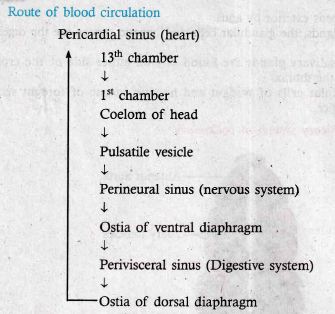
Explain the circulatory system of cockroach.
3.
Explain the morphology of earthworm, Lampito mauritii.
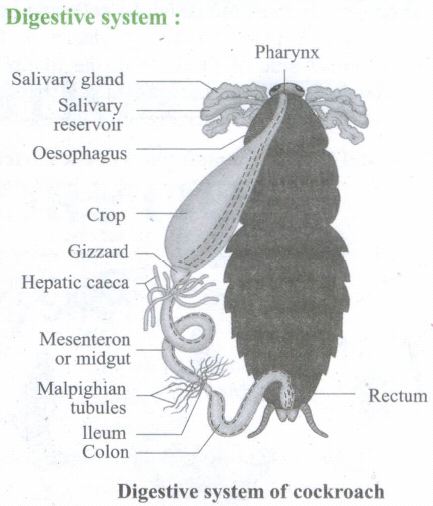
4.
5.
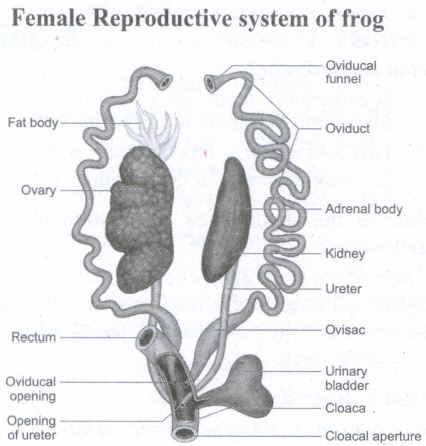
Draw the female reproductive system of frog & label the parts.
1.
Lampito mauritii begins its life cycle, from the fertilized eggs. The eggs are held in a protective cocoon. These cocoons have an incubation period of about 14- 18 days after which they hatch to release juveniles (Figure). The juveniles undergo changes into nonclitellate forms in phase - I after about 15 days, which then develops a clitellum, called the clitellate at the end of the growth phase - II taking 15 - 17 days to complete. During the reproductive stage, earthworms copulate, and later shed their cocoons in the soil after about 10 days. The life cycle of Lampito mauritii takes about 60 days to complete.
2.
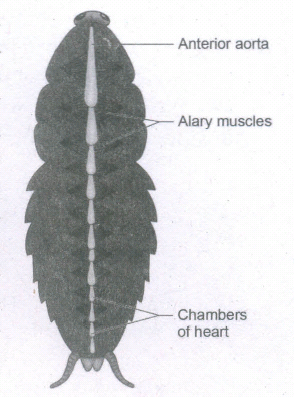
(i) The circulatory system is open type.
(ii) There is poor development of blood vessels so that blood transport does not occur by vessels but they open into haemocoel.
(iii) The blood or haemolymph flows freely in sinuses.
(iv) Haemolymph bathe the visceral organs found in haemocoel.
(v) Haemolymph is colourless and consists of plasma and haemocytes like plasmatocytes and proleucocytes.
(vi) Proleucocytes are phagocytic.
(vii) A tubular 13 chambered heart lies mid dorsally lying below the thorax.
(viii) The wall of the heart is muscular.
(ix) Each heart is conical having a paired lateral and basal ostia but basal ostia are absent in 13th chamber of heart.
(x) The blood from sinuses enters the heart through the ostia.
(xi) Blood is pumped anteriorly within the heart (13th chamber to 1st chamber) or (aorta) and the pumped blood from the heart returns to sinuses.
(xii) The triangular fan shaped 13 paired muscle are responsible for blood circulation.
(xiii) One pair of these muscles is found in each segment on either side of the heart.
(xiv) The coelom of base of antenna of head has an accessory pulsatile vesicle which also pumps blood from the coelom of head to the perineural sinus.
3.
(i) Lampito mauritii has a long and cylindrical narrow body which is laterally symmetrical.
(ii) It is light brown in colour with purplish length at the anterior end.
(iii) The body is divided into 165 -190 segments.
(iv) The dorsal surface of the body is marked by a dark mid-dorsal line along the longitudinal axis of the body. The ventral surface has genital opening.
(v) The mouth is found in the centre of the first segment called peristomium. Overhanging the mouth is a small flag called upper lip or prostomium.
(vi) The last segment called pygidium has the anus.
(vii) The segments 14-17 are swollen with a glandular thickening of the skin called the clitellum.
(viii) The body of earthworm is divided into pre citellar region (1-13), citellar region (14--17) and post citellar region (after 17).
(ix) Chitinous body safe are present in all segments except the first, last and citellar segments.
They are locomoting in function.
(x) The dorsal pores are present from the 10th segment onwards. The coolomic fluid communicates to the exterior through these pores and keeps the body surface moist and free from harmful microorganism.
(xi) Between the segment 6/7, 7/8 and 8/9, supernatural openings are present. The female genital aperture lies on the ventral side in the 14th segment and a pair of male genital apertures are situated determinately in the 18th segment.
(xii) Nephrosclerosis are numerous and found throughout the body except a free anterior segments.
4.
5.

11th Standard Syllabus & Materials
11th Standard
TN 11th Tamil பீடு பெற நில் - செய்யுள் - காவடிச்சிந்து Important Questions And Answers Study Material - QB365 Set A
NEW11th Standard
TN 11th Tamil பீடு பெற நில் - உரைநடை - மலை இடப்பெயர்கள் : ஓர் ஆய்வு Important Questions And Answers Study Material - QB365 Set A
NEW11th Standard
TN 11th Tamil மாமழை போற்றுதும் - துணைப்பாடம் - யானை டாக்டர் Important Questions And Answers Study Material - QB365 Set A
NEW11th Standard
TN 11th Tamil மாமழை போற்றுதும் - செய்யுள் - ஐங்குறுநூறு Important Questions And Answers Study Material - QB365 Set A



Tamilnadu Stateboard 11th Standard Subjects

Maths

Commerce

Economics
Biology

Business Maths and Statistics

Accountancy

Computer Science

Physics

Chemistry
Maths
Biology
Economics
Physics
Chemistry

History
Business Maths and Statistics

Computer Science
Accountancy

Computer Applications
History
Computer Technology
Commerce
Computer Applications
Computer Technology

Tamil

English

French
Tamilnadu Stateboard Standards



