
 100% FREE ACCESS
11th Standard Syllabus & Materials
11th Standard
TN 11th Tamil இயற்கை வேளாண்மை,சுற்றுச்சூழல் -செய்யுள் - மனோன்மணீயம் Important Questions And Answers Study Material - QB365 Set A
NEW11th Standard
TN 11th Tamil என்னுயிர் என்பேன் -துணைப்பாடம் - இசைத்தமிழர் இருவர் Important Questions And Answers Study Material - QB365 Set A
NEW11th Standard
TN 11th Tamil மொழி கலை -செய்யுள் - ஒவ்வொரு புல்லையும் Important Questions And Answers Study Material - QB365 Set A
NEW11th Standard
TN 11th Tamil பீடு பெற நில் - இலக்கணம் - பகுபத உறுப்புகள் Important Questions And Answers Study Material - QB365 Set A
NEW11th Standard
TN 11th Tamil பீடு பெற நில் - துணைப்பாடம் - வாடிவாசல் Important Questions And Answers Study Material - QB365 Set A
NEW11th Standard
TN 11th Tamil பீடு பெற நில் - செய்யுள் - குறுந்தொகை Important Questions And Answers Study Material - QB365 Set A

Published on: 13/05/2022
QB365 provides detailed and simple solution for every
Creative Questions in class 11 Chemistry Subject. It will
helps to get more idea about question pattern in every Creative questions with solution.
Download Tamil Nadu 11th Standard Chemistry question papers, model tests, one-mark questions, important questions, and public exam papers in PDF format. Free study materials and answer keys for TN State Board students.
Questions + Answers key
Take MCQ Chemistry Test1.
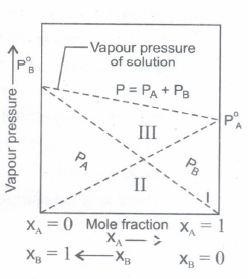
What are ideal and non-ideal solutions ? Explain with suitable diagram the behaviour of ideal solutions.
2.
Derive the Kp and Kc for the following equilibrium reaction.
\({ H }_{ 2\left( g \right) }+{ I }_{ 2\left( g \right) }\rightleftharpoons { 2HI }_{ \left( g \right) }\)
3.
Given the bona lengths of H2, Cl2, C - C bond in diamond, Si - C bond in carborundum and C - CI bond in CCl4 are 0.74, 1.9, 1.54, 1.93 and 1.76A respectively, find the covalent radius of hydrogen, chlorine, carbon in diamond, silicon and carbon in CCI4.
4.
Explain the preparation and uses of the following compounds of calcium.
5.
Calculate the entropy change in the engine that receives 957.5 kJ of heat reversibly at 110°C temperature.
6.
Find the pressure of 5 mole CI2 gas filled in a 2 litre vessel at 27 °C temperature.
7.
Compare the structures of ice & water
8.
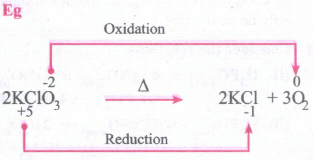
Write note on decomposition reaction
9.
Write a note on limitations of Bohr's atom model.
10.
Draw the lewis structure for
Phosphoric acid
1.
Ideal solutions: The solutions which obey Raoult's law over the entire range of concentration are known as ideal solutions. Ideal solutions are formed by mixing the two components which are identical in molecular size, in structure and have almost identical intermolecular forces.
Examples:
(i) Benzene and toluene
(ii) n-Hexane and n-Heptane
(iii) Chlorobenzene and bromobenzene.
Characteristics:
(i) They must obey Raoult's law.
(ii) ΔH mixing should be zero.
(iii)ΔV mixing should be zero, i.e. volume change on mixing is zero.
Non-ideal solutions : The solutions which do not obey Raoult's law are called non-ideal solutions. In case of non-ideal solutions there is change in volume and heat energy when the two componnts are mixed.
Characterstics :
(i) They does not Rault's law.
(ii)△V = mix ≠ 0
(iii) △H mix ≠ 0
Behaviour of Ideal Solutions: A plot of PI or P2 versus the mole fraction x1 and x2 for an ideal solution gives a linear plot. These Lines (I and II) pass through the points and respectively when x I and x2 is equal to unity. Similarly the plot (Line III) of Ptotal versus x2 is also linear. The minimum value of Ptotal is Ptotal and the maximum value is P20, assuming that component I is less volatile than component 2, i.e. P1 O < P2 O
2.
Let us consider the formation of HI in which, 'a' moles of hydrogen and 'b' moles of iodine gas are allowed to react in a container of volume V. Let 'x' moles of each of H2 and I2react together to form 2x moles of HI.
\({ H }_{ 2\left( g \right) }+{ I }_{ 2\left( g \right) }\rightleftharpoons { 2HI }_{ \left( g \right) }\)
| H2 | I2 | HI | |
| Initial number of moles | a | b | 0 |
| Number of moles reached | x | x | 0 |
| Number of moles at equilibrium | a-x | b-x | 2x |
| Active mass or molar concentration at equilibrium | \(\cfrac { a-x }{ V } \) | \(\cfrac { b-x }{ V } \) | \(\cfrac { 2x }{ V } \) |
Applying law of mass action,
\({ K }_{ C }=\cfrac { { \left[ HI \right] }^{ 2 } }{ { \left[ H \right] }_{ 2 }\left[ { I }_{ 2 } \right] } \)
= \(\cfrac { \left( \cfrac { 2x }{ V } \right) ^{ 2 } }{ \left( \cfrac { a-x }{ V } \right) \left( \cfrac { b-x }{ v } \right) } =\cfrac { { 4x }^{ 2 } }{ \left( a-x \right) \left( b-x \right) } \)
The equilibrium constant Kp can also be calcu•lated as follows:
We know }he \rer~tionship between the Kc and Kp
Here the \(\Delta n_{ g }\)=np -nr = 2 - 2 =0
Hence K = Kc ;\({ K }_{ p }=\cfrac { { 4x }^{ 2 } }{ \left( a-x \right) \left( b-x \right) } \)
3.
(i) Bond length (dH-H) in hydrogen molecule = 0.74A
\(\therefore\) Covalent radius of hydrogen = \(\frac { d_{ H-H } }{ 2 } -\frac { 0.74 }{ 2 } =.37A\)
(ii) Bond length (dCI-Cl) in chlorine molecule = 1.98A
\(\therefore\) Covalent radius of chlorine = \(\frac { d_{ cl-CL } }{ 2 } =\frac { 1.98 }{ 2 } =0.99A\)
(iii) Bond length (C - C) in diamond = 1.54A
\(\therefore\) Covalent radius of carbon = \(\frac { 1.54 }{ 2 } =0.77A\)
(iv) Bond length of (dsi-c) in carborundum = 1.93A
\({ d }_{ si-c }={ r }_{ si }+{ r }_{ c }\)
\(1.93\quad =\quad { r }_{ si }+0.77\)Refer (iii)
\({ r }_{ si }=1.93-0.77=1.16A\)
(v) Bond length (dC-CI) in CCl4 = 1.76A
\({ d }_{ c-cl }={ d }_{ c }+{ d }_{ cl }\)
1.76 \(=r_{ c }+0.99\) Refer (ii)
\({ r }_{ c }=1.76-0.99=0.77A\)
4.
(i) Quick lime :
Preparation :
It is produced on a commercial scale by heating limestone in a lime kiln at 1173K (1070-1270).
\(CaCO_3\leftrightharpoons CaO + CO_2\)
Uses: Calcium oxide is used
(i) to manufacture cement, mortar and glass.
(ii) in the manufacture of sodium carbonate and slaked lime.
(iii) in the purification of sugar.
(iv) as drying agent
(ii) Slaked lime :
Preparation: Calcium hydroxide is prepared by adding water to quick lime, CaO.
CaO + H2O ⟶ Ca(OH)2
Uses: Calcium hydroxide is used
(I) in the preparation of mortar, a building material.
(ii) in white wash due to its disinfectant nature.
(iii) in glass making, in tanning industry, for the preparation of bleaching powder and for purification of sugar
5.
q = 957.7 kJ
T = 110+273 = 383 K
ΔS= \(\frac { { q }_{ rev } }{ T } \)
ΔS = \(\frac { 957.7 }{ 383 } \)
ΔS =2.5 kJ K-1
6.
n = 5; V = 2 Iitre;T= 27 + 273 = 300 K
\(P=\frac { nRT }{ V } [\because PV=nRT]\)
\(P=\frac { 5\times 8.314\times 300 }{ 2 } =62.355\quad bar\)
\(\therefore\) The pressure of CI2 gas will be 62.355 bar.
7.
(i) Water molecules form strong hydrogen bonds with one another. For example, each water molecule is linked to four others through hydrogen bonds The strong hydrogen bonding prevails over a short range and therefore the denser packing in water.
(ii) In ice, each atom is surrounded tetrahedrally by four water molecules through hydrogen bonds. That is, the presence of two hydrogen atoms and two lone pairs of electron on oxygen atoms,in each water molecule allows formation of a three-dimensional structure. This arrangement creates an open structure, which accounts for the lower density of ice compared with water at 0oC.
8.
Decomposition reaction: Redox reactions in which a compound breaks down into two or more components are called decomposition reactions. These reactions are opposite to combination reactions. In these reactions, the oxidation number of the different elements in the same substance is changed.
9.
Limitation of Bohr's atom model:
(a) The Bohr's atom model is applicable only to species having one electron such as hydrogen, Li2+ etc ... and not applicable to multi electron atoms.
(b) It was unable to explain the splitting of spectral lines in the presence of magnetic field (Zeeman effect) or an electric field (Stark effect).
(c) Bohr's theory was unable to explain why the electron is restricted to revolve around the nucleus in a fixed orbit in which the angular momentum of the electron is equal to nh/2π
10.
.jpg)

11th Standard Syllabus & Materials
11th Standard
TN 11th Tamil பீடு பெற நில் - செய்யுள் - காவடிச்சிந்து Important Questions And Answers Study Material - QB365 Set A
NEW11th Standard
TN 11th Tamil பீடு பெற நில் - உரைநடை - மலை இடப்பெயர்கள் : ஓர் ஆய்வு Important Questions And Answers Study Material - QB365 Set A
NEW11th Standard
TN 11th Tamil மாமழை போற்றுதும் - துணைப்பாடம் - யானை டாக்டர் Important Questions And Answers Study Material - QB365 Set A
NEW11th Standard
TN 11th Tamil மாமழை போற்றுதும் - செய்யுள் - ஐங்குறுநூறு Important Questions And Answers Study Material - QB365 Set A



Tamilnadu Stateboard 11th Standard Subjects

Maths

Commerce

Economics

Biology

Business Maths and Statistics

Accountancy

Computer Science

Physics
Chemistry
Maths
Biology
Economics
Physics
Chemistry

History
Business Maths and Statistics

Computer Science
Accountancy

Computer Applications
History
Computer Technology
Commerce
Computer Applications
Computer Technology

Tamil

English

French
Tamilnadu Stateboard Standards



