
 100% FREE ACCESS
11th Standard Syllabus & Materials
11th Standard
TN 11th Tamil இயற்கை வேளாண்மை,சுற்றுச்சூழல் -செய்யுள் - மனோன்மணீயம் Important Questions And Answers Study Material - QB365 Set A
NEW11th Standard
TN 11th Tamil என்னுயிர் என்பேன் -துணைப்பாடம் - இசைத்தமிழர் இருவர் Important Questions And Answers Study Material - QB365 Set A
NEW11th Standard
TN 11th Tamil மொழி கலை -செய்யுள் - ஒவ்வொரு புல்லையும் Important Questions And Answers Study Material - QB365 Set A
NEW11th Standard
TN 11th Tamil பீடு பெற நில் - இலக்கணம் - பகுபத உறுப்புகள் Important Questions And Answers Study Material - QB365 Set A
NEW11th Standard
TN 11th Tamil பீடு பெற நில் - துணைப்பாடம் - வாடிவாசல் Important Questions And Answers Study Material - QB365 Set A
NEW11th Standard
TN 11th Tamil பீடு பெற நில் - செய்யுள் - குறுந்தொகை Important Questions And Answers Study Material - QB365 Set A

Published on: 09/06/2021
QB365 provides detailed and simple solution for every book back questions in class 11 Computer Science subject.It will helps to get more idea about question pattern in every book back questions with solution.
Download Tamil Nadu 11th Standard Computer Science question papers, model tests, one-mark questions, important questions, and public exam papers in PDF format. Free study materials and answer keys for TN State Board students.
Questions + Answers key
Take MCQ Computer Science Test
1.
Explain the function of digital signature.
2.
Explain the different types of encryption.
3.
Write the different types of cyber attacks.
4.
What is piracy? Mention the types of piracy? How can it be prevented?
5.
What are the various crimes happening using computer?
1.
Digital signature:
(i) Digital signatures are based on asymmetric cryptography and can provide assurances of evidence to origin, identity and status of an electronic document, transaction or message, as well as acknowledging informed by the signer.
(ii) To create a digital signature, signing software (email) Creates a one-way hash of the electronic data to be signed.
(iii) The user's private key to encrypt the hash, returning a value that is unique to the hashed data. The encrypted hash, along with other information such as the hashing algorithm, forms the digital signature. Any change in the data, even to a single bit, results in a different hash value.
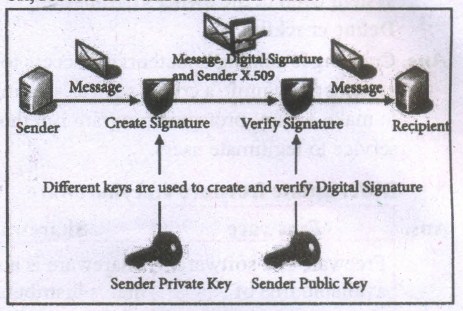
(iv) This attribute enables others to validate the integrity of the data by using the signer's public key to decrypt the hash. If the decrypted hash matches a second computed hash of the same data, it proves that the data hasn't changed since it was signed.
(v) If the two hashes don't match, the data has either been tampered with in some way (indicating a failure of integrity) or the signature-was created with a private key that doesn't correspond to the public key presented by the signer (indicating a failure of authentication).
2.
Types of Encryption :
There are two types of encryption schemes as listed below: Symmetric Key encryption, Public Key encryption.
(i) Symmetric Key Encryption:
Symmetric encryption is a technique to use the same key for both encryption and decryption. The main disadvantage of the symmetric key encryption is that all authorized persons involved, have to exchange the key used to encrypt the data before they can decrypt it. If anybody intercepts-the key information, they may read all message. Depicts the working of symmetric key encryption.
(ii) Public Key Encryption:
Public key encryption is also called Asymmetric encryption. It uses the concept of a key value pair, a different key is used for the encryption and decryption process. One of the keys is typically known as the private key and the other is known as the public key. The private key is kept secret by the owner and the public key is either shared amongst authorized recipients or made available to the public at large. The data encrypted with the recipient's public key can only be decrypted with the corresponding private key. public key encryption
3.
| Cyber Attack | Function |
| Virus | A virus is a small piece of computer code that can repeat itself and spreads from one computer to another by attaching itself to another computer file. One of the most common virus is Trojan. |
| Worms | Worms are self- repeating and do not require a computer program to attach themselves. Worms continually look for vulnerabilities and report back to the author of the worm when weaknesses are discovered. |
| Spyware | Spyware can be installed on the computer automatically when the attachments are open, by clicking on links or by downloading infected software. |
| Ransomware | Ransomware is a type of malicious program that demands payment after launching a cyber-attack on a computer system. This type of malware has become increasingly popular among criminals and costs the organizations millions each year. |
4.
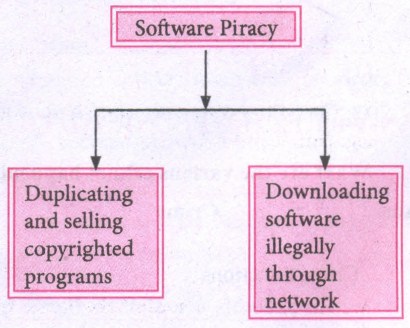
Software Piracy is about the copyright violation of software created originally by an individual or an institution. It includes:
(i) stealing of codes / programs and other information illegally and creating duplicate copies by unauthorized means and utilizing this data either for one's own benefit or for commercial profit.
(ii) Downloading software from illegal network sources.
An entirely different approach to software piracy is called shareware, acknowledges the futility of trying to stop people from copying software and instead relies on people's honesty.
Shareware publishers encourage users to give copies of programs to friends and colleagues but ask everyone who uses that program regularly to pay a registration fee to the program's author directly.
To prevent unauthorized access, Firewalls, Intrusion Detection Systems (IDS), Virus and Content Scanners, Patches and Hot fixes are used.
5.
| Crime | Function |
| Crime Functions | Hacking, threats, and blackmailing towards a business or a person. |
| Cyberstalking | Harassing through online. |
| Malware | Malicious programs that can perform a variety of functions including stealing, encrypting or deleting sensitive data, altering or hijacking core computing functions and monitoring user's computer activity without their permission. |
| Harvesting | A person or program collects login and password information from a legitimate user to illegally gain access to others, account(s). |
| Identity theft | It is a crime where the criminals impersonate individuals, usually for financial gain. |
| Intellectual property theft |
Stealing practical or conceptual information. developed by another person or company |
| Salami slicing | Stealing tiny amounts of money from each transaction. |

11th Standard Syllabus & Materials
11th Standard
TN 11th Tamil பீடு பெற நில் - செய்யுள் - காவடிச்சிந்து Important Questions And Answers Study Material - QB365 Set A
NEW11th Standard
TN 11th Tamil பீடு பெற நில் - உரைநடை - மலை இடப்பெயர்கள் : ஓர் ஆய்வு Important Questions And Answers Study Material - QB365 Set A
NEW11th Standard
TN 11th Tamil மாமழை போற்றுதும் - துணைப்பாடம் - யானை டாக்டர் Important Questions And Answers Study Material - QB365 Set A
NEW11th Standard
TN 11th Tamil மாமழை போற்றுதும் - செய்யுள் - ஐங்குறுநூறு Important Questions And Answers Study Material - QB365 Set A



Tamilnadu Stateboard 11th Standard Subjects

Maths

Commerce

Economics

Biology

Business Maths and Statistics

Accountancy
Computer Science

Physics

Chemistry
Maths
Biology
Economics
Physics
Chemistry

History
Business Maths and Statistics

Computer Science
Accountancy

Computer Applications
History
Computer Technology
Commerce
Computer Applications
Computer Technology

Tamil

English

French
Tamilnadu Stateboard Standards


