
 100% FREE ACCESS
11th Standard Syllabus & Materials
11th Standard
TN 11th Tamil இயற்கை வேளாண்மை,சுற்றுச்சூழல் -செய்யுள் - மனோன்மணீயம் Important Questions And Answers Study Material - QB365 Set A
NEW11th Standard
TN 11th Tamil என்னுயிர் என்பேன் -துணைப்பாடம் - இசைத்தமிழர் இருவர் Important Questions And Answers Study Material - QB365 Set A
NEW11th Standard
TN 11th Tamil மொழி கலை -செய்யுள் - ஒவ்வொரு புல்லையும் Important Questions And Answers Study Material - QB365 Set A
NEW11th Standard
TN 11th Tamil பீடு பெற நில் - இலக்கணம் - பகுபத உறுப்புகள் Important Questions And Answers Study Material - QB365 Set A
NEW11th Standard
TN 11th Tamil பீடு பெற நில் - துணைப்பாடம் - வாடிவாசல் Important Questions And Answers Study Material - QB365 Set A
NEW11th Standard
TN 11th Tamil பீடு பெற நில் - செய்யுள் - குறுந்தொகை Important Questions And Answers Study Material - QB365 Set A

Published on: 10/06/2021
QB365 provides detailed and simple solution for every book back questions in class 11 Economics subject.It will helps to get more idea about question pattern in every book back questions with solution.
Download Tamil Nadu 11th Standard Economics question papers, model tests, one-mark questions, important questions, and public exam papers in PDF format. Free study materials and answer keys for TN State Board students.
Questions + Answers key
Take MCQ Economics Test1.
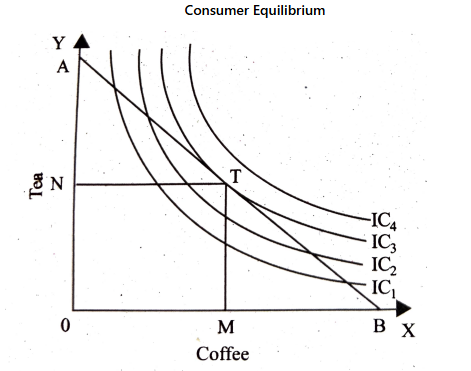
Explain the concept of consumer's equilibrium with a diagram.
2.
Describe the feature of human wants
3.
Give a note on Twelfth Five Year Plan.
4.
State the reasons for nationalisation of commercial banks.
5.
The Handicrafts declined in India in British Period. Why?
6.
Explain the causes for Rural Backwardness.
7.
Describe briefly the Innovation Theory of Profit.
8.
Write a note on Foreign investment policy?
9.
How do you justify the merits of Privatisation?
10.
Briefly explain the Subsistence Theory of Wages.
11.
12.
State the features of the duopoly.
13.
Mention the similarities between perfect competition and monopolistic competition.
14.
Describe the degrees of price discrimination.
15.
What are the features of a market?
16.
Distinguish between microeconomics and macroeconomics.
17.
18.
What are the crucial decisions involved in 'what to produce'?
19.
Write a short note on Marginal Revenue.
20.
Define opportunity cost and provide an example.
21.
State the differences between money cost and real cost.
22.
Explain social infrastructure.
23.
Write the V.K.R.V. Rao's contribution on macroeconomics.
24.
25.
Define Economic Development.
1.
(i) The consumer reaches equilibrium at the point where the budget line is tangent on the indifference curve.
(ii) T is the point of equilibrium as budget line AB is tangent on indifference curve IC3 the upper IC which implies maximum possible level of satisfaction.
(iii) At equilibrium point, the slope of IC refers to MRSXY and the slope of BL (Budget Line) refers to ratio of price of X to price of Y ie PX/Py. Therefore MRSx,y = PX/Py.
2.
Characteristics
Wants are unlimited
(i) Wants are countless and various in kinds.
(ii) When one want is satisfied another want arises.
Wants become habits
(i) When a man starts reading newspaper in the morning it becomes a habit.
Wants are satiable
(i) We can satisfy particular wants at a given time.
(ii) When one feels hungry, he takes food and that want is satisfied.
Wants are alternative
(i) There are alternative ways to satisfy a particular want (eg) idly, dosa.
Wants are competitive
(i) There is competition among wants.
(ii) So we have to choose more urgent wants and satisfy them first.
Wants are complementary
(i) Satisfaction of a particular want requires the use of more than one commodity. (eg) car and petrol.
Wants are recurring
(i) Some wants occur again and again. For ex. if we feel hungry, we take food and satisfy our want.
(ii) But after some time we again feel hungry and want food.
3.
(i) Twelfth Five Year Plan period was 2012 - 2017.
(ii) Its main theme is "Faster, more inclusive and sustainable growth".
(iii) Its growth rate target is 8%.
4.
(i) After Independence, the government adopted planned economic development.
(ii) The main objective of planning was social welfare.
(iii) Before Independence commercial banks were in the private sector.
(iv) These banks did not help the government to achieve the social objectives of planning.
(v) So the government nationalised 14 major commercial banks on 19th July 1969 and 6 more banks in 1980.
5.
(i) Indian handicraft products had worldwide market. India exported hand-woven cotton and silk fabrics, Calicoes, artistic wares, wood carving.
(ii) Through discriminatory tariff policy, the British government purposefully destroyed the handicrafts.
(iii) With the disappearance of nawabs and kings, there was no one to protect the Indian handicrafts.
(iv) The Indian products could not compete with machine-made products.
(v) The introduction of railways in India increased the domestic market for British goods.
6.
(i) The distribution of land is highly skewed in rural areas. Majority of rural people work as hired labour to support their families.
(ii) Lack of non-farm employment: The excess supply of labour in rural areas reduce the wages and increases the incidence of poverty
(iii) Lack of public sector investment: The root cause of rural poverty in our country is lack of public sector investment on human resource development.
(iv) Inflation: Steady increase in prices affects the purchasing power of the rural poor leading to rural poverty.
(v) Low Productivity: Low Productivity of rural labour and farm activities is a cause and effect of poverty.
(vi) Unequal benefit of growth: The gaîns of economic development are enjoyed by the urban rich people leading to concentration of wealth. Due to defective economic structure and policies, the gains of growth are not reaching the poor.
(vii) Low rate of economic growth: The rate of growth of India is always below the target and it has benefited the rich. The poor are always denied of the benefits of growth.
(viii) More emphasis on large industries: Huge investment in large industries catering to the needs of middle and upper classes in urban areas. Such industries are capital intensive and so do not create more jobs. The poor are not in a position to get employment or to come out of social evils. Social evils like customs, beliefs increase unproductive expenditure.
7.
(i) According to Schumpeter profit is the reward for innovation.
(ii) Innovation means invention put into commercial practice.
(iii) Innovation may consist of introduction of a new product or a new method of production or opening a new market or discovery of new raw materials or reorganisation of an industry.
(iv) The cost of production decreases and so profit increases.
(v) Innovation should be done continuously.
8.
(i) Foreign investment and foreign technology enhanced the industrial competition and improved business environment in India.
(ii) Foreign investment including FDI and FPI were allowed. In 1991 automatic permission was granted for foreign direct investment in a specified list of high technology and high investment priority industries up to 51 % foreign equity.
(iii) The limit was raised to 74 % and later 100 %.
(iv) Foreign Investment Promotion Board negotiates with international firms and approves FDI.
9.
(i) When compared to public enterprises, private sector shows better results in revenue, efficiency and productivity.
(ii) Best human talent of entrepreneurs are brought out.
(iii) Financial deficits and debts are reduced.
(iv) Provides better and prompt services to customers.
10.
(i) Wage is equal to the subsistence level of the labourer ie the minimum amount of food, clothing & shelter which workers & their family require for existence
(ii) If workers are paid higher wages than the subsistence level, the workers would be better off & so population increases.
(iii) So wages come down & vice versa.
(iv) So wages should not be above or below the subsistence level of the labourer.
11.
12.
(i) In duopoly there are only two sellers.
(ii) Each seller is fully aware of his rival's motive and actions.
(iii) Both sellers may collude.
(iv) They may enter into cut-throat competition.
(v) There is no product differentiation.
(vi) They fix the price to get maximum profit.
13.
| Perfect Competition | Monopolistic competition |
| 1. The cost curve is 'U' shaped | 1. The cost curve is 'U' shaped |
| 2. There are large number of sellers | 2. There are many sellers |
| 3. There are large number of buyers | 3. There are large number of buyers. |
| 4. There is free entry & exit of firms | 4. There is free entry & exit of firms. |
| 5. There is abnormal profit or loss in the short run. | 5. There is abnormal profit or loss in the short run. |
| 6. There is normal profit in the long run. | 6. There is normal profit in the long run. |
14.
First degree price discrimination:
(i) A monopolist charges the maximum price that a buyer is willing to pay.
(ii) This is perfect price discrimination.
(iii) Consumer's surplus is zero.
Second degree price discrimination:
(i) Price charged is such that a part of consumer's surplus is taken away by the sellers.
(ii) This is called imperfect discriminating monopoly.
(iii) Buyers are divided into groups and a different price is charged for each group. (eg) cinema theaters charge different price for the same film for different class.
Third degree price discrimination
(i) The entire market is split into a few sub markets and different prices are charged in each sub market.
(ii) The division is done based on age, sex, location. (eg) senior citizens pay lower fares in railways.
15.
(i) Buyers and sellers of a commodity or a service. A commodity is bought and sold.
(ii) Price agreeable to buyer and seller.
(iii) Direct exchange and indirect exchange.
16.
| S.No | Micro Economics | Macro Economics |
| 1 | Micro Economics is that branch of economics which deals with the economic decision-making of individual economic agents such as the producer, the consumer etc. | Macro Economics is that branch of economics which deals with aggregates and averages of the entire economy. E.g., aggregate output, national income, aggregate savings and investment, etc. |
| 2 | It takes into account small components of the whole economy. | It takes into consideration the economy of the country as a whole. |
| 3 | It deals with the process of price determination in case of individual products and factors of production. | It deals with general price-level in any economy |
| 4 | It is known as price theory | It is also known as the income theory. |
| 5 | It is concerned with the optimization goals of individual consumers and producers | It is concerned with the optimization of the growth process of the entire economy. |
17.
18.
(i) Whether to produce more of food, or clothing or housing or luxury goods.
(ii) Whether to produce more agricultural or industrial goods and services.
(iii) Whether to use more resources in education and health or military services.
(iv) Whether to have more consumption goods or investment goods.
(v) Whether to spend more on basic education or higher education.
19.
Marginal revenue is the addition to the total revenue by the sale of an additional unit of a commodity. It is got by dividing change in TR by the change in quantity sold.
\(M R=\frac{\Delta T R}{\Delta Q}\), where MR = Marginal revenue.
\(M R=T R_{n}-T R_{n-1} \quad \Delta T R=\text { change in total revenue. } \)
\(M R=T R_{n+1}-T R_{n} \quad \Delta Q=\text { change in total quantity. } \)
\(T R_{n}=\text { total revenue of } n^{\text {th }} \text { item } \)
\(T R_{n-1}=\text { total revenue of } n-1^{\text {th }} item\)
\(T R_{n+1}=\text { total revenue of } n+1^{\text {th }}item\)
20.
(i) It refers to the cost of next best alternative use.
(ii) It is the value of the next best alternative foregone
(iii) It is also called alternative cost or transfer cost.
(vi) (eg) A farmer can cultivate paddy or sugarcane in his land.
(v) If he cultivates paddy the opportunity cost of paddy output is the amount of sugarcane output given up.
21.
| S.No | Money cost | Real cost |
| 1 | Cost is expressed in money. It includes the expenditures such as cost of raw materials, payment of rent, interest on capital, expenses on fuel and power, expenses on transportation and other types of production related costs. | Cost is expressed in the form of efforts, pain and sacrifices incurred by the factor owners for their services in production |
| 2 | Also called prime cost, nominal cost, accounting cost, explicit cost, out-of-pocket cost. | Adam Smith regarded pain and sacrifices as real cost. |
22.
Social infrastructure refers to those structures which improve the quality of manpower and contribute indirectly towards the growth of an economy.
Education:
(i) Education is in Concurrent List.
(ii) The Ministry of Human Resource Development decides the education budget and education policy.
(iii) India follows a six-level system - nursery, primary, secondary, higher secondary, graduation and post-graduation.
(iv) We have the 10 +2 pattern.
(v) The education department consists of schools, colleges and universities imparting education to all.
(vi) Though the budget share of education is 3% of GDP yet the per pupil expenditure for school students is the lowest.
Health:
(i) Health is a state-government responsibility.
(ii) The Central Council of Health and Welfare formulates various health care projects.
(iii) India has the ayurvedic medicine, unani, homeopathy, allopathy and yoga.
(iv) Medical practicing needs a licensing from the Ministry of Health. All medical systems now are under one ministry viz AYUSH.
(v) Health status is better in Kerala but generally India's health status is not satisfactory
23.
Rao's examination of the "interrelation between investment, income and multiplier in an underdeveloped economy" (1952) was his major contribution to macroeconomic theory.
24.
25.
It refers to an improvement in citizens' quality of life and well-being of a country which is measured by per capita income along with several other development indicators like Human Development Index, Physical Quality of Life Index and Gross National Happiness Index.

11th Standard Syllabus & Materials
11th Standard
TN 11th Tamil பீடு பெற நில் - செய்யுள் - காவடிச்சிந்து Important Questions And Answers Study Material - QB365 Set A
NEW11th Standard
TN 11th Tamil பீடு பெற நில் - உரைநடை - மலை இடப்பெயர்கள் : ஓர் ஆய்வு Important Questions And Answers Study Material - QB365 Set A
NEW11th Standard
TN 11th Tamil மாமழை போற்றுதும் - துணைப்பாடம் - யானை டாக்டர் Important Questions And Answers Study Material - QB365 Set A
NEW11th Standard
TN 11th Tamil மாமழை போற்றுதும் - செய்யுள் - ஐங்குறுநூறு Important Questions And Answers Study Material - QB365 Set A



Tamilnadu Stateboard 11th Standard Subjects

Maths

Commerce
Economics

Biology

Business Maths and Statistics

Accountancy

Computer Science

Physics

Chemistry
Maths
Biology
Economics
Physics
Chemistry

History
Business Maths and Statistics

Computer Science
Accountancy

Computer Applications
History
Computer Technology
Commerce
Computer Applications
Computer Technology

Tamil

English

French
Tamilnadu Stateboard Standards



