
 100% FREE ACCESS
11th Standard Syllabus & Materials
11th Standard
TN 11th Tamil இயற்கை வேளாண்மை,சுற்றுச்சூழல் -செய்யுள் - மனோன்மணீயம் Important Questions And Answers Study Material - QB365 Set A
NEW11th Standard
TN 11th Tamil என்னுயிர் என்பேன் -துணைப்பாடம் - இசைத்தமிழர் இருவர் Important Questions And Answers Study Material - QB365 Set A
NEW11th Standard
TN 11th Tamil மொழி கலை -செய்யுள் - ஒவ்வொரு புல்லையும் Important Questions And Answers Study Material - QB365 Set A
NEW11th Standard
TN 11th Tamil பீடு பெற நில் - இலக்கணம் - பகுபத உறுப்புகள் Important Questions And Answers Study Material - QB365 Set A
NEW11th Standard
TN 11th Tamil பீடு பெற நில் - துணைப்பாடம் - வாடிவாசல் Important Questions And Answers Study Material - QB365 Set A
NEW11th Standard
TN 11th Tamil பீடு பெற நில் - செய்யுள் - குறுந்தொகை Important Questions And Answers Study Material - QB365 Set A

Published on: 07/06/2021
QB365 provides detailed and simple solution for every book back questions in class 11 Maths subject.It will helps to get more idea about question pattern in every book back questions with solution.
Download Tamil Nadu 11th Standard Maths question papers, model tests, one-mark questions, important questions, and public exam papers in PDF format. Free study materials and answer keys for TN State Board students.
Questions + Answers key
Take MCQ Maths Test1.
Given that P(A) =0.52, P(B)=0.43, and P(A∩B)=0.24, find
\(P(\overline { A } \cup \overline { B } )\)
2.
Integrate the following with respect to x : x11
3.
Calculate \(lim_{x \rightarrow \infty}{1-x^3\over 3x+2}\)
4.
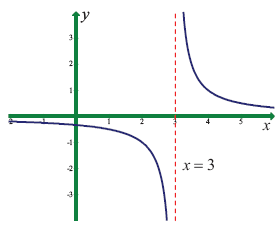
Use the graph to find the limits (if it exists). If the limit does not exist, explain why?
\(lim_{x\rightarrow3}{1\over x-3}\)
5.
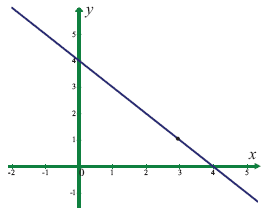
Use the graph to find the limits (if it exists). If the limit does not exist, explain why?
\(lim_{x\rightarrow3}(4-x)\).
6.
Complete the table using calculator and use the result to estimate the limit.
\(lim_{x\rightarrow{2}}{x-2\over x^2-4}\)
| x | 1.9 | 1.99 | 1.999 | 2.001 | 2.01 | 2.1 |
| f(x) | 0.25641 | 0.25062 | 0.250062 | 0.24993 | 0.24937 | 0.24390 |
7.
Show that x2 - y2 + x - 3y - 2 = 0 represents a pair of straight lines. Find also angle between the lines.
8.
Find the equation of the line through (1, 2) and which is perpendicular to the line joining (2, -3) (-1, 5)..
9.
If (-2, -3) is a point on the terminal side of \(\theta\). Find all the trigonometrical ratios.
10.
Find the principal value of tan-1 \(({-1\over\sqrt{3}})\)
11.
Evaluate: 8P4.
12.
Write the first 6 terms of the sequences whose nth terms are given below and classify them as arithmetic progression, geometric progression, arithmetic -geometric progression, harmonic progression and none of them 2018
13.
Evaluate \(\frac { n! }{ r!(n-r)! } \) when n = 10, r = 3
14.
Express each of the following as a product.
cos 65o + cos 15o
15.
Discuss the following relations for reflexivity, symmetricity and transitivity :
On the set of natural numbers, the relation R is defined by "xRy if x + 2y = 1".
16.
Find the degree measure corresponding to the following radian measure; \(\frac { 2\pi }{ 5 } \)
17.
Express each of the following angles in radian measure
1350
18.
Represent the following inequalities in the interval notation:
\(x\ge -1\) and \(x<4\)
19.
Solve for x \(\left| x \right| -10<-3\)
20.
Write the following in roster form.
\(\left\{ x:\frac { x-4 }{ x+2 } =3,x\in R-\{ -2\} \right\} \)
21.
Write the following in roster form {x\(\in \)N : 4x + 9 < 52}
22.
Give your own examples of matrices satisfying the following conditions in each case:
(i) A and B such that AB \(\neq\) BA.
(ii) A and B such that \(A B=O=B A, A \neq O \text {and } B \neq O \text {. }\)
(iii) A and B such that \(A B=O \text {and } B A \neq O\)
23.
Let X = {a, b, c, d}, and R = {(a, a) (b, b) (a, c)}. Write down the minimum number of ordered pairs to be included to R to make it
(i) reflexive
(ii) symmetric
(iii) transitive
(iv) equivalence
24.
Find the direction cosines and direction ratios for the following vectors. \(\hat{i}\) - \(\hat{k}\)
25.
Find the direction cosines and direction ratios for the following vectors. 5\(\hat{i}\) - 3\(\hat{j}\) - 48\(\hat{k}\)
1.
\(P(\overline { A } \cup \overline { B } )\)=\(\left( \overline { A\cap B } \right) \)(By de Morgan's law)
1-P(A∩B)=1-0.24
=0.76
2.
\(\int x^{11} d x=\frac{x^{11+1}}{11+1}+c=\frac{x^{12}}{12}+c\)
3.
Dividing by x, we get
\({1-x^3\over 3x+2}={{1\over x}-x^2\over 3+{2\over x}}\rightarrow -\infty \ as x\rightarrow \infty\)
Therefore the limit does not exist.
4.
\(\frac{1}{x-3}\) can be made arbitrarily large by choosing x suficiently close to 1 on the right side but not equal to 1.
\(\therefore \frac{1}{x-3}\) does not approach any value when x approaches 3 from the right.
\(\therefore \lim _{x \rightarrow 3^{+}} \frac{1}{x-3}=x\) and hence the limit does not exist.
5.
\(lim_{x\rightarrow3}(4-x)\)
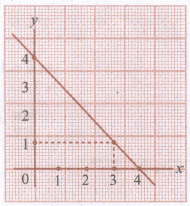
At x = 3, the value of the curve on y-axis is 1.
\(\therefore lim_{x\rightarrow3}(4-x)=1\)
6.
Let \(
f(x)=\frac{x-2}{x^2-4}=\frac{x-2}{(x-2)(x+2)}=\frac{1}{x+2}
\)
\( \therefore \lim _{x \rightarrow 2} \frac{x-2}{x^2-4}=\lim _{x \rightarrow 2} \frac{1}{x+2}=\frac{1}{4}=0.25
\)
7.
90°
8.
3x - 8y + 13= 0
9.
\(-{3\over \sqrt{13}}\)
\(cos \theta=-{2\over\sqrt{13}}\)
\(tan\theta={3\over 2}\)
\(cosec \theta=-{\sqrt{13}\over3}\)
\(sec\theta=-{\sqrt{13}\over2}\)
\(cot \theta={2\over3}\)
10.
Let tan-1 \(({-1\over\sqrt{3}})\) = y, where -\({\pi\over 2}\le y \le {\pi\over 2}\)
\(tan \ y=-{1\over \sqrt{3}} \Rightarrow tan \ y =tan (-{\pi\over 6})\Rightarrow y =-{\pi\over6}\)
Thus the principal value of tan-1 \(({-1\over\sqrt{3}})=-{\pi\over6}\)
11.
8P4 = 8 \(\times\)7 \(\times\) 6 \(\times\) 5 = 1680
12.
2018
Let an = 2018
then the first 6 terms are 2018, 2018, 2018, 2018, 2018, 2018
It is not an AP, GP, AGP and HP.
13.
∴ \(\frac { n! }{ r!(n-r)! } =\frac { 10! }{ 3!(10-3)! } =\frac { 10! }{ 3!7! } \)
= \(\frac { 10\times 9\times 8\times 7! }{ 3\times 2\times 7! } =\frac { 10\times 9\times 8 }{ 3\times 2 } \) = 120
14.
cos 65o + cos 15o = \(2\cos { \left( \frac { 65+15 }{ 2 } \right) } .\cos { \left( \frac { 65-15 }{ 2 } \right) } \)
= 2 cos 40o cos 25o
15.
The relation R is defined by xRy if x + 2y = 1 for x, y \(\in \) N.
Reflexivity : Let x, y \(\in \) N
xRx \(\Rightarrow\) x + 2x = 1 \(\Rightarrow\) 3x = 1 \(\Rightarrow\) x = \(\frac { 1 }{ 3 } \notin N\)
\(\therefore\) R is reflexive.
Symmetricity: xRy \(\Rightarrow\) yRx for x, y \(\in \) N
xRy \(\Rightarrow\) x + 2y = 1 which is not possible for any values of x, Y \(\in \) N
\(\therefore\) R is not symmetric
Transitivity: xRy and yRz \(\Rightarrow\) xRz.
xRy and yRz are not possible for any values of x, y, z \(\in \) N
\(\therefore\) R is not transitive.
\(\therefore\) R is neither reflexive, nor symmetric and not transitive.
16.
\(\frac { 2\pi }{ 5 } \)
\(\frac { 2\pi }{ 5 } \) \(\times\) \(\frac { 180 }{ \pi } \) = 2 \(\times\) 360 = 720
17.
1350
1350 = 135\(\times\) \(\frac { \pi }{ 180 } =\frac { 3\pi }{ 4 } \)
18.
x > - 1 and x < 4.
⇒ x ∈ (-1, 4)
.png)
19.
.png)
Given |x| - 10 < -3
⇒ |x| < -3 + 1
⇒ |x| < 7
This means -7 < x < 7.
\(\therefore\) The Solution set is (-7, 7)
20.
\(\left\{ x:\frac { x-4 }{ x+2 } =3,x\in R-\{ -2\} \right\} \)
Let D = \(\left\{ x:\frac { x-4 }{ x+2 } =3,x\in R-\{ -2\} \right\} \)
\(\Rightarrow\) D = {x: x - 4 = 3x + 6, x \(\in \) R}
\(\Rightarrow\) D = {x:-4-6 = 3x-x, x \(\in \) R}
\(\Rightarrow\) D = {x:2x = -10, x \(\in \) R}
\(\Rightarrow\) D = {x:x = -5, x\(\in \)R}
\(\Rightarrow\) D = {-5}
21.
{x \(\in \) N : 4x + 9 < 52}
Let C = {x\(\in \)N:4x + 9 < 52}
\(\Rightarrow\) C = {x\(\in \)N:4x < 52 - 9}
\(\Rightarrow\) C = {x\(\in \)N: 4x < 43}
\(\Rightarrow\) C = \(\left\{ x\in N:x<\frac { 43 }{ 4 } \right\} \) \(\Rightarrow\) C = {x \(\in \) N : x < 10.75}
\(\Rightarrow\) C = {1,2,3,4,5,6,7,8,9,10}.
22.
\((i) \text {Let } A=\left[\begin{array}{ll} 1 & 2 \\ 3 & 4 \end{array}\right] \text { and } B=\left[\begin{array}{cc} 1 & -1 \\ 0 & 2 \end{array}\right]\)
\(A B=\left[\begin{array}{cc} 1 & 2 \\ 3 & 4 \end{array}\right]\left[\begin{array}{cc} 1 & -1 \\ 0 & 2 \end{array}\right]=\left[\begin{array}{cc} 1+0 & -1+4 \\ 3+0 & -3+8 \end{array}\right]=\left[\begin{array}{ll} 1 & 3 \\ 3 & 5 \end{array}\right]\)
\(B A=\left[\begin{array}{cc} 1 & -1 \\ 0 & 2 \end{array}\right]\left[\begin{array}{cc} 1 & 2 \\ 3 & 4 \end{array}\right]=\left[\begin{array}{cc} 1-3 & 2-4 \\ 0+6 & 0+8 \end{array}\right]=\left[\begin{array}{cc} -2 & -2 \\ 6 & 8 \end{array}\right]\)
\(\therefore A B \neq B A\)
\(\text {(ii)Let } A=\left[\begin{array}{ll}
0 & 0 \\
0 & 1
\end{array}\right] \neq 0, B=\left[\begin{array}{ll}
1 & 0 \\
0 & 0
\end{array}\right] \neq 0\)
\(A B=\left[\begin{array}{ll}
0 & 0 \\
0 & 1
\end{array}\right]\left[\begin{array}{ll}
1 & 0 \\
0 & 0
\end{array}\right]=\left[\begin{array}{ll}
0+0 & 0+0 \\
0+0 & 0+0
\end{array}\right]=\left[\begin{array}{ll}
0 & 0 \\
0 & 0
\end{array}\right]=0\)
\(B A=\left[\begin{array}{ll}
1 & 0 \\
0 & 0
\end{array}\right]\left[\begin{array}{ll}
0 & 0 \\
0 & 1
\end{array}\right]=\left[\begin{array}{ll}
0+0 & 0+0 \\
0+0 & 0+0
\end{array}\right]=\left[\begin{array}{ll}
0 & 0 \\
0 & 0
\end{array}\right]=0\)
\(\therefore A B=0=B A\)
\(\text { (iii) } A=\left[\begin{array}{ll}
0 & 0 \\
0 & 1
\end{array}\right], \quad B=\left[\begin{array}{ll}
0 & 1 \\
0 & 0
\end{array}\right]\)
\(A B=\left[\begin{array}{ll}
0 & 0 \\
0 & 1
\end{array}\right]\left[\begin{array}{ll}
0 & 1 \\
0 & 0
\end{array}\right]=\left[\begin{array}{ll}
0+0 & 0+0 \\
0+0 & 0+0
\end{array}\right]=\left[\begin{array}{ll}
0 & 0 \\
0 & 0
\end{array}\right]=0\)
\(B A=\left[\begin{array}{ll}
0 & 1 \\
0 & 0
\end{array}\right]\left[\begin{array}{ll}
0 & 0 \\
0 & 1
\end{array}\right]=\left[\begin{array}{ll}
0+0 & 0+1 \\
0+0 & 0+0
\end{array}\right]=\left[\begin{array}{ll}
0 & 1 \\
0 & 0
\end{array}\right] \neq 0\)
\(\therefore A B =0\)
\(B A \neq 0
\)
23.
X = {a, b, c, d}
R = {(a, a), (b, b), (a, c)}
(i) To make R reflexive we need to include (c, c) and (d, d)
(ii) To make R symmetric we need to include (c, a)
(iii) R is transitive
(iv) To make R reflexive we need to include (c, c)
To make R symmetric we need to include (c, c) and (c, a) for transitive
∴ The relation now becomes
R = {(a, a), (b, b), (a, c), (c, c), (c, a)}
∴ R is equivalence relation.
24.
The given vector is \(\hat{i}\) - \(\hat{k}\)
The direction ratio are 1, 0, -1
x = \(\sqrt{x^2+y^2+z^2}=\sqrt{1^2+0^2+(-1)^2}=\sqrt{2}\)
Hence, the direction cosines are \({1\over\sqrt{2}},{0\over\sqrt{2}},{-1\over\sqrt{2}}\Rightarrow {1\over\sqrt{2}},0,{-1\over\sqrt{2}}\)
25.
The given vector is 5\(\hat{i}\) - 3\(\hat{j}\) - 48\(\hat{k}\)
The direction ratios are 5, -3, -48.
r = \(\sqrt{x^2+y^2+z^2}=\sqrt{5^2+(-3)^2+(-48)^2}\)
\(=\sqrt{25+9+2304}=\sqrt{2338}\)
Hence, the direction cosines are \({5\over \sqrt{2338}},{-3\over \sqrt{2338}},{-48\over \sqrt{2338}}\)

11th Standard Syllabus & Materials
11th Standard
TN 11th Tamil பீடு பெற நில் - செய்யுள் - காவடிச்சிந்து Important Questions And Answers Study Material - QB365 Set A
NEW11th Standard
TN 11th Tamil பீடு பெற நில் - உரைநடை - மலை இடப்பெயர்கள் : ஓர் ஆய்வு Important Questions And Answers Study Material - QB365 Set A
NEW11th Standard
TN 11th Tamil மாமழை போற்றுதும் - துணைப்பாடம் - யானை டாக்டர் Important Questions And Answers Study Material - QB365 Set A
NEW11th Standard
TN 11th Tamil மாமழை போற்றுதும் - செய்யுள் - ஐங்குறுநூறு Important Questions And Answers Study Material - QB365 Set A



Tamilnadu Stateboard 11th Standard Subjects
Maths

Commerce

Economics

Biology

Business Maths and Statistics

Accountancy

Computer Science

Physics

Chemistry
Maths
Biology
Economics
Physics
Chemistry

History
Business Maths and Statistics

Computer Science
Accountancy

Computer Applications
History
Computer Technology
Commerce
Computer Applications
Computer Technology

Tamil

English

French
Tamilnadu Stateboard Standards



