
 100% FREE ACCESS
11th Standard Syllabus & Materials
11th Standard
TN 11th Tamil இயற்கை வேளாண்மை,சுற்றுச்சூழல் -செய்யுள் - மனோன்மணீயம் Important Questions And Answers Study Material - QB365 Set A
NEW11th Standard
TN 11th Tamil என்னுயிர் என்பேன் -துணைப்பாடம் - இசைத்தமிழர் இருவர் Important Questions And Answers Study Material - QB365 Set A
NEW11th Standard
TN 11th Tamil மொழி கலை -செய்யுள் - ஒவ்வொரு புல்லையும் Important Questions And Answers Study Material - QB365 Set A
NEW11th Standard
TN 11th Tamil பீடு பெற நில் - இலக்கணம் - பகுபத உறுப்புகள் Important Questions And Answers Study Material - QB365 Set A
NEW11th Standard
TN 11th Tamil பீடு பெற நில் - துணைப்பாடம் - வாடிவாசல் Important Questions And Answers Study Material - QB365 Set A
NEW11th Standard
TN 11th Tamil பீடு பெற நில் - செய்யுள் - குறுந்தொகை Important Questions And Answers Study Material - QB365 Set A

Published on: 13/05/2022
QB365 provides detailed and simple solution for every Book back Questions in class 11 Physics Subject. It will helps to get more idea about question pattern in every book back questions with solution.
latest Book back QuestionsDownload Tamil Nadu 11th Standard Physics question papers, model tests, one-mark questions, important questions, and public exam papers in PDF format. Free study materials and answer keys for TN State Board students.
Questions + Answers key
Take MCQ Physics Test1.
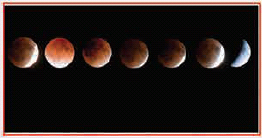
The following photographs are taken from the recent lunar eclipse which occurred on January 31, 2018. Is it possible to prove that Earth is a sphere from these photographs?
2.
Let the two springs A and B be such that kA > kB, On which spring will more work has to be done if they are stretched by the same force?
3.
Convert a velocity of 72 kmh-1 into ms-1 with the help of dimensional analysis.
4.
State principle of moments
5.
Write down the kinematic equations for angular motion.
6.
Write down the kinetic energy and total energy expressions in terms of linear momentum, For one-dimensional case.
7.
A steam engine boiler is maintained at 250°C and water is converted into steam. This steam is used to do work and heat is ejected to the surrounding air at temperature 300K. Calculate the maximum efficiency it can have?
8.
Mercury has an angle of contact equal to 140° with soda lime glass. A narrow tube of radius 2 mm, made of this glass is dipped in a trough containing mercury. By what amount does the mercury dip down in the tube relative to the liquid surface outside?. Surface tension of mercury T = 0.456 N m-1; Density of mercury \(\rho\) = 13.6\(\times\)103 kg m-3
9.
Consider two trains A and B moving along parallel tracks with the same velocity in the same direction. Let the velocity of each train be 50 km h-1 due east. Calculate the relative velocities of the trains.
10.
Show that impulse is the change of momentum.
1.
From the shadows it is revealed that Earth has spherical shape with bulging along equator and flat at poles.
2.
F = kAxA = kBxB
\({ x }_{ A }=\frac { F }{ { k }_{ A } } ,{ x }_{ B }=\frac { F }{ { k }_{ B } } \)
The work done on the springs are stored as potential energy in the springs.
\({ U }_{ A }=\frac { 1 }{ 2 } { k }_{ A }{ x }_{ A }^{ 2 };\quad { U }_{ B }=\frac { 1 }{ 2 } { k }_{ B }{ x }_{ B }^{ 2 }\)
\(\frac { { U }_{ A } }{ { U }_{ B } } =\frac { { k }_{ A }{ x }_{ A }^{ 2 } }{ { k }_{ B }{ x }_{ B }^{ 2 } } =\frac { { { k }_{ A }\left( \frac { F }{ { k }_{ A } } \right) }^{ 2 } }{ { { k }_{ B }\left( \frac { F }{ { k }_{ B } } \right) }^{ 2 } } =\frac { \frac { 1 }{ { k }_{ A } } }{ \frac { 1 }{ { k }_{ B } } } \)
\(\frac { { U }_{ A } }{ { U }_{ B } } =\frac { { k }_{ B } }{ { k }_{ A } } \)
kA > kB implies that UB > UA.Thus, more work is done on B than A.
3.
n1 = 72 kmh-1 n2 =? ms-1
L1 = 1 km L2 = 1m
T1=1h T2=1s
\(n_2=n_1[\frac{L_1}{L_2}]^a[\frac{T_1}{T_2}]^b\)
The dimensional formula for velocity is [LT-1]
a = 1 b =-1
\(n_2=72[\frac{1\ km}{1\ m}][\frac{1\ h}{1\ s}]^{-1}\)
\(=72[\frac{1000\ m}{1\ m}]^1[\frac{3600\ s}{1\ s}]^{-1}=72\times1000\times\frac{1}{3600}=20ms^{-1}\)
72km h-1 = 20ms-1
4.
Sum of the clockwise moments is equal to sum of the anticlockwise moments when a body is in rotational equilibrium or algebraic sum of moments at any point is zero.
5.
| 1. \(\omega ={ \omega }_{ 0 }+\alpha t\) | \(\omega \) = Final angular velocity |
| 2. \(\theta ={ \omega }_{ 0 }t+\frac { 1 }{ 2 } { \alpha t }^{ 2 }\) | \({ \omega }_{ 0 }\) = initial angular velocity |
| 3. \({ \omega }^{ 2 }={ \omega }_{ 0 }^{ 2 }+2\alpha \theta \) | \(\theta \) = Angular displacement |
| 4. \(\theta =\frac { \left( { \omega }_{ 0 }+\omega \right) t }{ 2 } \) | \(\alpha \) = angular acceleration t = time |
6.
Kinetic energy is KE\(=\frac { 1 }{ 2 } { mv }_{ x }^{ 2 }\)
Multiply numerator and denominator by m
\(KE=\frac { 1 }{ 2m } { m^{ 2 }v }_{ x }^{ 2 }=\frac { 1 }{ 2m } \left( { mv }_{ x } \right) ^{ 2 }=\frac { 1 }{ 2m } { P }_{ x }^{ 2 }\)
where, Px is the linear momentum of the particle executing simple harmonic motion.
Total energy can be written as sum of kinetic energy and potential energy, therefore, from equation (10.73) and also from equation (10.75), we get
E = KE + U(x) \(=\frac { 1 }{ 2m } { P }_{ x }^{ 2 }+\frac { 1 }{ 2m } { m\omega ^{ 2 }v }_{ x }^{ 2 }\) = constant
7.
The steam engine is not a Carnot engine, because all the process involved in the steam engine are not perfectly reversible. But we can calculate the maximum possible efficiency of the steam engine by considering it as a Carnot engine.
\(\eta =1-\frac { { T }_{ L } }{ { T }_{ H } } =1-\frac { 300K }{ 523K } =0.43\)
The steam engine can have maximum possible 43% of efficiency, implying this steam engine can convert 43% of input heat into useful work and remaining 57% is ejected as heat. In practice the efficiency is even less than 43%.
8.
Capillary descent, cos140 = cos(90+50)–sin50 = –0.7660
\(h=\frac { 2Tcos\theta }{ r\rho g } =\frac { 2\times ({ 0.465N \ m }^{ -1 })({ cos \ 140 }^{ 0 }) }{ \left( 2\times { 10 }^{ -3 }m \right) \left( 13.6\times { 10 }^{ 3 } \right) \left( { 9.8 }ms^{ -2 } \right) } \)
\(=\frac{2 \times 0.456 \times(-0.7660)}{2 \times 13.6 \times 9.8}
\)
\(=\frac{-0.6986}{266.56}=-2.62 \times 10^{-3} \mathrm{~m}\)
where, negative sign indicates that there is fall of mercury (mercury is depressed) in glass tube.
9.
Relative velocity of B with respect to A
\({ v }_{ BA }={ v }_{ B }-{ v }_{ A }\)
= 50 km h-1 + (-50) km h-1
= 0 kmh-1
Similarly, relative velocity of A with respect to B i.e., vAB is also zero.
Thus each train will appear to be at rest with respect to the other.
10.
Impulse: When a large force works on a body for very small time interval, it is called impulsive force. An impulsive force does not remain constant, but changes first from zero to maximum and then from maximum to zero. In such case we measure the total effect of force.
\(\vec{F} =\frac{d \vec{p}}{d t} \text { or }
\)
\(\int_{t_{1}}^{t_{2}} \vec{F} d t =\int_{p_{1}}^{p_{2}} d \vec{p} \Rightarrow \vec{I}=\overrightarrow{p_{2}}-\overrightarrow{p_{1}}=\overrightarrow{\Delta p}\)
\(\therefore\) the impulse of a force is equal to the change in momentum. This statement is known as Impulse momentum theorem. If no external force acts on a system (called isolated) of constant mass, the total momentum of the system remains constant with time. According to this law for a system of particles \(\vec{F}=0 \ then \ \vec{p}=\) constant.
Examples: Hitting, kicking, catching, jumping, diving, collision etc.

11th Standard Syllabus & Materials
11th Standard
TN 11th Tamil பீடு பெற நில் - செய்யுள் - காவடிச்சிந்து Important Questions And Answers Study Material - QB365 Set A
NEW11th Standard
TN 11th Tamil பீடு பெற நில் - உரைநடை - மலை இடப்பெயர்கள் : ஓர் ஆய்வு Important Questions And Answers Study Material - QB365 Set A
NEW11th Standard
TN 11th Tamil மாமழை போற்றுதும் - துணைப்பாடம் - யானை டாக்டர் Important Questions And Answers Study Material - QB365 Set A
NEW11th Standard
TN 11th Tamil மாமழை போற்றுதும் - செய்யுள் - ஐங்குறுநூறு Important Questions And Answers Study Material - QB365 Set A



Tamilnadu Stateboard 11th Standard Subjects

Maths

Commerce

Economics

Biology

Business Maths and Statistics

Accountancy

Computer Science
Physics

Chemistry
Maths
Biology
Economics
Physics
Chemistry

History
Business Maths and Statistics

Computer Science
Accountancy

Computer Applications
History
Computer Technology
Commerce
Computer Applications
Computer Technology

Tamil

English

French
Tamilnadu Stateboard Standards



