
 100% FREE ACCESS
11th Standard Syllabus & Materials
11th Standard
TN 11th Tamil இயற்கை வேளாண்மை,சுற்றுச்சூழல் -செய்யுள் - மனோன்மணீயம் Important Questions And Answers Study Material - QB365 Set A
NEW11th Standard
TN 11th Tamil என்னுயிர் என்பேன் -துணைப்பாடம் - இசைத்தமிழர் இருவர் Important Questions And Answers Study Material - QB365 Set A
NEW11th Standard
TN 11th Tamil மொழி கலை -செய்யுள் - ஒவ்வொரு புல்லையும் Important Questions And Answers Study Material - QB365 Set A
NEW11th Standard
TN 11th Tamil பீடு பெற நில் - இலக்கணம் - பகுபத உறுப்புகள் Important Questions And Answers Study Material - QB365 Set A
NEW11th Standard
TN 11th Tamil பீடு பெற நில் - துணைப்பாடம் - வாடிவாசல் Important Questions And Answers Study Material - QB365 Set A
NEW11th Standard
TN 11th Tamil பீடு பெற நில் - செய்யுள் - குறுந்தொகை Important Questions And Answers Study Material - QB365 Set A

Published on: 29/11/2018
Preparing for board exams is quite difficult. Practicing with good questions leads you to score high. Here we are providing a solution for this.
In this question paper, unique questions were added to improve students ability to understand all kind of questions. This is the most important half yearly model question paper for 11th commerce.
Creative questions were added in this question paper in order to enhance the student's knowledge and get the idea that how to answer strategic questions asked in the board exams. This question paper is designed based on the academic syllabus.
Download Tamil Nadu 11th Standard Commerce question papers, model tests, one-mark questions, important questions, and public exam papers in PDF format. Free study materials and answer keys for TN State Board students.
Questions + Answers key
Take MCQ Commerce Test1.
What is main aim of EXIM Bank?
2.
Define State enterprises.
3.
What is the National objective of a business?
4.
What is meant by Entrepot Trade?
5.
6.
What is SAARC?
7.
What are the benefits of KPO?
8.
Name any two sources of funds classified under borrowed funds.
9.
Who are Rochdale Pioneers?
10.
What are the Corporate enterprises?
11.
Debentures are treated as ________.
Fixed Capital
Permanent Capital
Fluctuating Capital
Loan Capital
12.
Balance of payment of a country includes ______.
Current account
Monetary account
Capital account
All of the above
13.
In due course __________ was replaced by ______ on 1st January 1995.
GATO, WTO
ETO, GATT
GATT, WTO
IMF, GATT
14.
Home trade is classified into______.
Wholesale Trade
Retail Trade
Both (a) and (b)
None of these
15.
The ethical conduct of employees leading to standard practices results in ___________
Good behaviour
Bad behaviour
Ethical behaviour
Correct decision making
16.
Self help groups convert the savings into a common fund known as____
Common Fund
Groups corpus Fund
Group Fund
None of the above
17.
Production which involves several stages for manufacturing finished product is known as __________
Analytical Industry
Synthetic Industry
Processing Industry
None of the above
18.
19.
20.
Social responsibility towards employees represents the following except _____________
reasonable remuneration
proper facilities
Social security
Exploitation
21.
The oldest form of organisation in public sector
Public Sector Undertakings
Departmental Undertakings
Multi National Corporations
Statutory Corporation
22.
Foreign banks are begun their operation since
1978
1979
1980
1976
23.
The Factoring Regulation Act was passed in the year ____________
2011
2012
2015
2017
24.
Dispersal of decision making power to branches/ affiliates/subsidiaries by head office represent __________
Centralisation
Decentralisation
Power
Integration
25.
'Only the male members in the family get the right of inheritance by birth' as ________
Hindu law
Mitakshara Law
Dayabhaga law
None of these
26.
Which one of the following holder is given voting rights?
Debentures
Preference Shares
Equity shares
Bonds
27.
___________ can be given as a collateral security for getting financial assistance from bank.
Dock warrant
Warehouse Receipt
Dock Receipt
Warehouse warrant
28.
An organization carrying out activities to move goods from Producer to Consumer is __________
Transport
Logistics
Channels
Marketing
29.
Bankers are not only dealers of money but also leaders in
Economic Development
Trade Development
Industry Development
Service Development
30.
Trade and Commerce was common to ____________ Dynasty.
Pallava
Chola
Pandya
Chera
31.
What are pack animals? What is their significance?
32.
Explain BHIM.
33.
What is meant by Foreign Currency Convertible Bonds?
34.
What are the objectives involved in Regional Rural banks?
35.
Write a Note on:
(i) Mitakshara Law
(ii) Dayabhaga Law
36.
Briefly state the human objectives of a business.
37.
What is charter party?
38.
Explain the points of differences between Logistics and Supply Chain Management.
39.
Explain the nature of liability of Karta.
40.
What are the disadvantages of Co-operatives? (Any 3)
41.
Mr. Kovalan completed his M.Com. degree and proposed to start a business dealing powerloom machines. After a complete analysis, it was found that it is better to buy from foreign countries than to buy from domestic manufacturers. So what is your opinion whether to purchase from foreign countries or from domestic manufacturers.
42.
"Saving leads to the economic development of a country" - Justify the statement.
43.
Write a note on SHGs in Tamil Nadu.
44.
Discuss the role of International Benchmarking on the working of Companies in India.
45.
Explain the various Secondary functions of commercial banks. (any 5)
46.
47.
Write down the Structure of Capital Account.
48.
State any five features of FCCB. (any 5)
49.
50.
51.
What are the types of Cooperative Society? (any 5)
52.
Explain the services rendered by wholesalers to retailers.
53.
State the demerits in barter system.
54.
1.
The main objective of EXIM bank is to co-ordinate the various activities of institutions and bank engaged in financing foreign trade.
2.
According to S.S.Kher, State Enterprises are "The industrial, commercial and economic activities carried on by the central or by a state government and in each case either solely or in association with private enterprise, so long it is managed by self-contained management."
3.
The goal of the country may be to provide employment opportunity to its citizen, earn revenue for its exchequer, become selfsufficient in production of goods and services, promote social justice, etc.Business activities should be conducted keeping these goals of country in mind, is known as national objective of business.
4.
When the firm of a country imports goods for the purpose of exporting the same goods to the firms of some other country with or without making any change in the goods meant for export it is known as entrepot trade.
5.
6.
South Asian Association for Regional Co-operation (SAARC) is the regional intergovernmental organization and geo-political union of nations in South Asia.
7.
1. Usage of Best skills.
2. Ultimate use of knowledge.
3. Finding solution to complex problems.
4. Reduction of Expenditure
5. Special focus on principal functions.
6. Outsources reduces the risk.
8.
The sources of funds can be grouped into two categories based on generation:
1. Internal sources
2. External sources
9.
The cooperative movement was started by Robert Owen, in the year 1844. He formed a consumer's cooperative society in England with 28 workers as members, called " Rochdale Society of Equitable Pioneers".
10.
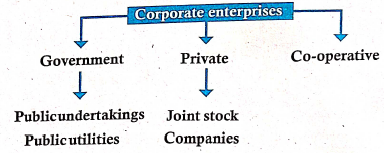
11.
(d)
Loan Capital
12.
(d)
All of the above
13.
(c)
GATT, WTO
14.
(c)
Both (a) and (b)
15.
(d)
Correct decision making
16.
(b)
Groups corpus Fund
17.
(c)
Processing Industry
18.
(b)
19.
(c)
20.
(d)
Exploitation
21.
(b)
Departmental Undertakings
22.
(c)
1980
23.
(a)
2011
24.
(b)
Decentralisation
25.
(b)
Mitakshara Law
26.
(c)
Equity shares
27.
(d)
Warehouse warrant
28.
(a)
Transport
29.
(a)
Economic Development
30.
(c)
Pandya
31.
In backward areas, hilly tracts, forest regions in desert lands, animals like horse, mule, donkey, elephant, camel, etc., are used for carrying loads. These animals are called pack animals.
These animals are used in areas which are inaccessible to modem means of transport. They are also useful for carrying small load economically.
32.
Bharat Interface for Money is an app that lets a bank customer make simple,easy and quick payment transactions using Unified Payments Interface (UPI).A bank customer can make instant bank to bank payments and pay and collect money using just mobile number or virtual payment address (VPA).It was launched in December 2016.
33.
1. FCCB is issued by an Indian company in foreign currency.
2. It is a convertible debt instrument.
3. It carries interest coupon.
4. It is unsecured.
5. It can be converted into equity or depository receipt after a certain period.
34.
1. The objective of RRB is to develop rural economy and play supplementary role to cooperative societies.
2. They mobilise deposits from the rural public and provide finance to rural artisans, small entrepreneurs and farmers and try to avoid their dependency on money lenders.
3. As on 31.3.2016, there were 56 RRBs in India with 14,494 branches.
4. They are regulated and supervised by NABARD.
35.
(i) Mitakshara Law:
(1) According to 'Mitakshara Law' only the male members in the family get the right of inheritance by birth.
(2) It is applied throughout India except Assam and West Bengal.
(ii) Dayabhaga:
(1) According to Dayabhaga Law, the right of property devolves on the coparceners by succession and not by birth.
(2) The Share in the property is not fluctuating on the basis of births and deaths.
(3) The Shares are specified prior to partition.
36.
Human objectives refer to the objectives aimed at the well-being as well as fulfillment of expectations of employees as also of people who are disabled, handicapped and deprived of proper education and training. The human objectives of business may thus include economic well-being of the employees, social and psychological satisfaction of employees and development of human resources.
37.
When goods are to be consigned in large quantity, it is advantageous to hire the whole or substantial part of the ship. The document through which this contract is made in known as 'Charter Party'. This may be known as 'Voyage Charter' or 'Time Charter',
38.
Logistics Management to Supply Chain Management:
1. Logistics Management deals with the efficient management of a static gap between demand and supply whereas Supply Chain Management tries to identify the dynamic nature of the value creation itself such as responsiveness, quality and design.
2. Hence, it aims for an effective management response over the longer run.
3. SCM focuses on profit maximization rather than cost minimization.
4. LM activity is supply driven and SCM is more demand driven.
39.
Liability:
Except the Karta, the liability of all other members is limited to their shares in the business. The Karta is not only liable to the extent of his share in the business but his separate property is equally attachable and amount of debt can be recovered from his personal property.
40.
Benefit to rural rich:
Co-operatives, have benefited the rural rich and not the rural poor.
Inadequate rural credit:
Co-operative societies give loans only for productive purposes and not for personal or family expenses.
Lack of managerial skills:
Co-operative societies are managed by the managing committee elected by its members. The members of the managing committee may not have the required qualification, skill or experience.
41.
In my opinion; if he purchases from foreign countries, it will be a quality one. It will work a long time. First of all he should get the quotation from all countries. He can choose which is the low cost and high quality machines. A very good brand also can be chosen.
42.
Yes. The money invested in various attributes helps in the economic development of a country.
The following are the reasons:
1. Money invested in bank deposits facilitates employment generation in various sectors of economy and poverty alleviation.
2. The savings invested in bank deposits lead to credit creation in the country which in turn promotes industrial and agricultural development in a country.
3. Savings invested in government bonds and various institutions helps in great measure in building in strengthening the infrastructure facilities in a country.
4. The country with higher savings can easily face the consequences of economic recession.
5. The bad consequences of inflation can be met easily with strong savings. As a result the evil effect of soaring prices can be controlled.
43.
In Tamil Nadu, Tamil Nadu Corporation for Development of Women Limited (TNCDW) was established in the year 1983 with the prime objective of socio-economic development and empowerment of rural women. The Government of TamilNadu spearheaded the Self Help Group concept in the country by forming SHGs in Dharmapuri district with the assistance of International Fund for Agricultural Development (IFAD) in September 1989. The success of the IFAD project paved way for the now popularly called "Mahalir Thittam" project, which was launched during 1997-98 with the State Government funding and was progressively extended to all the 30 districts. The SHG movement has now emerged as a powerful and vibrant movement illuminating the lives of many poor women in the state.
44.
International Benchmarks:
Benchmarking is comparing one's business processes and performance metrics to industry bests and best practices from other companies. There are four primary types of benchmarking: internal, competitive, functional, and generic. Internal benchmarking is a comparison of a business process to a similar process inside the organization
1. Select a product, service or process to benchmark.
2. Identify the key performance metrics.
3. Choose companies or internal areas to benchmark.
4. Collect data on performance and practices.
5. Analyze the data and identify opportunities for improvement
45.
Secondary functions :
Apart from the basic or Primary functions commercial Banks render various other services which are known as Secondary functions. These services can be broadly classified into agency services and general utility services.
(1) Agency Functions:
Banks Act as agents of Customers and provide certain services. They are called Agency functions, which are as follows:
(a) Transfer of Funds:
Banks issue demand drafts, bankers' cheques, travelers' cheques, etc. and help in transfer of funds from one place to another. Customers need not carry cash. They can just forward the draft issued by the bank to the receiving institution. A small commission is collected by banks for this service.
(b) Periodic Payment of Premiums, Rent, etc.
After instruction from the customers, banks undertake the monthly payment of insurance premium, rent, telephone bill, etc. from the accounts of customers. Nowadays these payments are made through electronic clearing system facility offered by the banks.
(c) Collection and payment of cheques:
On behalf of customers bank collect the cheques deposited into the accounts of customers from other banks and deposit cash in the customers' accounts. Similarly cheques issued by a customer is honoured and the amount paid as directed by the customer.
(d) Acting as Executors, Trustees and Attorneys:
Banks act as executors of will of the customers and implement their will after their death. As a trustee a bank takes care of the funds of the customers Banker signs transfer deed of the properties of the customers in the capacity of attorney to customers.
(e) Conduct share market transactions:
A Demat account should be opened with Depository Participant and that demat account should be linked with savings bank account by the customer. Then the customer can ask the bank to conduct online purchase or sale of securities, on behalf him.
(f) Preparation of Income tax return :
Banks prepare the Annual Income Tax return on behalf of the customers and provide Income tax related advices to them.
(g) Dealing in Foreign Exchange :
Banks buy and sell Foreign currencies on behalf of customers.
(h) Acting as Correspondent· :
Banks Act as Correspondent of customers and receive Travel Ticket, Passport, etc
(2) General Utility Functions :
In addition to primary, secondary and agency functions, commercial Banks offer some services for the general welfare of the customers. They are called general utility services. They are as follows.
(a) Issue of demand drafts and Banker's cheques:
Demand drafts and banker's cheques are issued to public and customers as well. Instead of sending money they can attach these instruments for payment of educational fees, etc.
(b) Accepting Bill of exchange on behalf of Customers:
Banks accept Bills on behalf of customers and make payments to the foreign exporter. Afterwards, the bank collect from the customers
(c) Safety Lockers :
Valuable documents, jewels etc. can be kept safely in a vault provided by Bank for a Rent. These vaults room is called "Strong Room".
(d) Letters of Credit:
This Document is given by bank on behalf of importing customer to the Exporter guaranteeing payment for the Imported goods. It is a very important document in International trade.
(e) Travellers Cheques:
Customers need not carry cash during travel in India or abroad. The denomination and words are printed in the cheque. It is accepted as money in shops, hotels, travel agencies, etc.
(f) Gift Cheques:
These denomination printed cheques are available in attractive design so that it can be presented during Wedding, Birthday Functions, etc.
(g) Reference Service:
Business firms can give their Bank's name as reference to the new Business Institution with which they want to establish commercial relationship. Banks willingly act as referees and provide information about the financial standing of their customers.
46.
47.
Capital Account:
The Capital Account consists of three Components.
(i) Private Capital
(ii) Banking Capital
(iii) Official Capital
(i) Private Capital:
Private Capital consists of Foreign Investments, long-term loans and Foreign Currency deposits.
(ii) Banking Capital:
It includes movement into external financial Asset and Liabilities, commercial and Co-operative banks authorised to deal in Foreign Exchange.
(iii) Official Capital:
It includes RBI's holdings of Foreign Currencies and Special Drawing Right (SDR) held by the Government.
48.
Foreign currency convertible Bond (FCCB) is a special type of bond issued in the currency other than home currency. In other words, companies issue Foreign Currency convertible bonds to raise money in Foreign Currency.
Features of FCCBs are given below:
1. FCCB is issued by an Indian company in foreign currency.
2. These are listed and traded in foreign stock exchange and similar to the debenture.
3. It is a convertible debt instrument.
4. It carries interest coupon.
5. It is unsecured.
6. It gives its holders the right to convert for a fixed numbers of shares at a predetermined price.
7. It can be converted into equity or depository receipt after a certain period.
49.
50.
51.
Consumers Cooperative:
Consumer cooperatives are organized by consumers that want to achieve better prices or quality in the goods or services they purchase.
Producers Cooperative:
Producer cooperatives are established and operated by producers. Producers can decide to work together or as separate entities to help increase marketing possibilities and production efficiency.
Marketing Cooperative:
Cooperative marketing societies are associations of small producers formed for the purpose of marketing their produce.
Credit Cooperative:
Cooperative credit societies are societies formed for providing short-term financial help to their members.
Housing Cooperative:
These cooperative housing societies are meant to provide residential accommodation to their members on ownership basis or on rent.
Cooperative Farming Societies:
When various farmers in a village pool their land together and agree to; treat the pooled piece of land as one big farm for the purpose of cultivation, purchase the necessary inputs for the cultivation, and market the crops jointly, they are assumed to have formed a cooperative farming society. Such a society, for its proper working elects its office bearers on the basis of one member-one-vote.
52.
A wholesaler provides valuable services to manufacturers, producers, retailers and customers.
Services to Retailers:
(i) Financial Assistance:
Wholesaler provide financial assistance to retailers by selling goods on credit. This is done by allowing credit to retailers purchasing goods from them and makes payment to them after receiving money from their customers. This helps retailers to manage his business with small amount of working capital.
(ii) Meeting the Requirements :
Due to small and lack of space, a retailer cannot hold large variety of products. The wholesaler removes this difficulty by selling the quantity as and when the retailer, what he needs.
(iii) Introduction of New Products:
Wholesalers bring new products and their uses to the notice of retailers. Retailers get the benefit of specialisation and guidance from wholesalers.
(iv) Price Stability:
Wholesalers reduce price fluctuations by adjusting supply and demand and save the retailers from loss may occur due to price fluctuations.
(v) Economy in Transport:
A wholesaler often delivers goods at the doorsteps of retailers and save his time and cost of Transport.
(vi) Regular Supply:
Wholesaler keeps large stock of varieties of goods and provide a regular supply of goods as per the retailer's need. Retailers can purchase as much as they like, from time to time and need not maintain a large stock of goods.
53.
The barter system envisages mutual exchange of one's goods to other without the intervention of money as a medium of exchange. It imposes certain constraints in the smooth flow of trade as explained below.
Lack of Double Coincidence of Wants:
Unless two persons who have surplus have the demand for the goods possessed by each other, barter could not materialize. For instance 'A' is having a surplus of groundnut and 'B' is possessing rice in surplus. In this case A should be in need of rice possessed by B as the latter should desperately need groundnut possessed by A. If this "coincidence of wants" does not exist, Barter cannot take place.
Non-Existence of Common Measure of Value:
Barter system could not determine the value of commodities to be exchanged as they lacked commonly acceptable measures to evaluate each and every commodity. It was difficult to compare the values of all articles in the absence of an acceptable medium of exchange.
Lack of Direct Contact between Producer and Consumers:
It was not possible for buyers and sellers to meet face to face in many contexts for exchanging the commodities for commodities. This hindered the process of barter in all practical sense.
Lack of Surplus Stock:
Absence of surplus stock was one of the impediments in barter system. If the buyers and sellers do not have surplus then no barter was possible.
54.

11th Standard Syllabus & Materials
11th Standard
TN 11th Tamil பீடு பெற நில் - செய்யுள் - காவடிச்சிந்து Important Questions And Answers Study Material - QB365 Set A
NEW11th Standard
TN 11th Tamil பீடு பெற நில் - உரைநடை - மலை இடப்பெயர்கள் : ஓர் ஆய்வு Important Questions And Answers Study Material - QB365 Set A
NEW11th Standard
TN 11th Tamil மாமழை போற்றுதும் - துணைப்பாடம் - யானை டாக்டர் Important Questions And Answers Study Material - QB365 Set A
NEW11th Standard
TN 11th Tamil மாமழை போற்றுதும் - செய்யுள் - ஐங்குறுநூறு Important Questions And Answers Study Material - QB365 Set A



Tamilnadu Stateboard 11th Standard Subjects

Maths
Commerce

Economics

Biology

Business Maths and Statistics

Accountancy

Computer Science

Physics

Chemistry
Maths
Biology
Economics
Physics
Chemistry

History
Business Maths and Statistics

Computer Science
Accountancy

Computer Applications
History
Computer Technology
Commerce
Computer Applications
Computer Technology

Tamil

English

French
Tamilnadu Stateboard Standards

