
 100% FREE ACCESS
11th Standard Syllabus & Materials
11th Standard
TN 11th Tamil இயற்கை வேளாண்மை,சுற்றுச்சூழல் -செய்யுள் - மனோன்மணீயம் Important Questions And Answers Study Material - QB365 Set A
NEW11th Standard
TN 11th Tamil என்னுயிர் என்பேன் -துணைப்பாடம் - இசைத்தமிழர் இருவர் Important Questions And Answers Study Material - QB365 Set A
NEW11th Standard
TN 11th Tamil மொழி கலை -செய்யுள் - ஒவ்வொரு புல்லையும் Important Questions And Answers Study Material - QB365 Set A
NEW11th Standard
TN 11th Tamil பீடு பெற நில் - இலக்கணம் - பகுபத உறுப்புகள் Important Questions And Answers Study Material - QB365 Set A
NEW11th Standard
TN 11th Tamil பீடு பெற நில் - துணைப்பாடம் - வாடிவாசல் Important Questions And Answers Study Material - QB365 Set A
NEW11th Standard
TN 11th Tamil பீடு பெற நில் - செய்யுள் - குறுந்தொகை Important Questions And Answers Study Material - QB365 Set A

Published on: 19/09/2019
Gravitation
Download Tamil Nadu 11th Standard Physics question papers, model tests, one-mark questions, important questions, and public exam papers in PDF format. Free study materials and answer keys for TN State Board students.
Questions + Answers key
Take MCQ Physics Test1.
What is the difference between gravitational potential and gravitational potential energy?
2.
Define gravitational potential energy.
3.
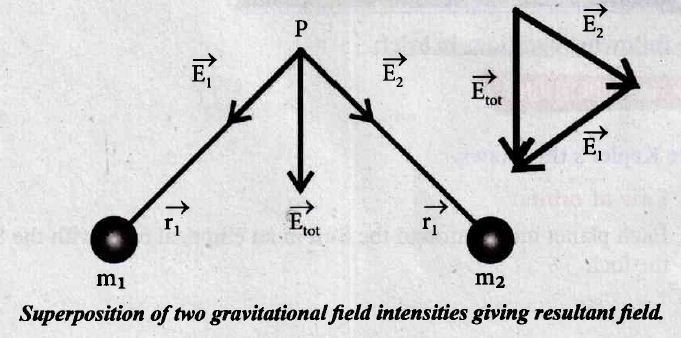
What is meant by superposition of gravitational field?
4.
What is meant by retrograde motion of planet?
5.
Why does the gravitational potential energy U(r) is always negative
6.
Which model is accepted 'Heliocentric model'? Why?
7.
State the theory proposed by Copernicus?
8.
Why does tides arise in the ocean?
9.
By which law is the Kepler's law of areas identical? Is this Kepler's law kinematic?
10.
What is the effect of rotation of the earth on the acceleration due to gravity?
11.
Why does a tennis ball bounce higher on a hall than on plains?
12.
Calculate the change in g value in your district of Tamilnadu. (Hint: Get the latitude of your district of Tamilnadu from the Google). What is the difference in g values at Chennai and Kanyakumari?
13.
If the Earth’s pull on the Moon suddenly disappears, what will happen to the Moon?
14.
If a comet suddenly hits the Moon and imparts energy which is more than the total energy of the Moon, what will happen?
15.
Define gravitational potential.
1.
| S.No | Gravitational potential | Gravitational potential energy |
| 1. | It depends only on the source mass. | It depends upon two masses and the distance between them. |
| 2. | It is a scalar | It is a scalar |
| 3. | It's unit is J Kg-1. | Its unit is Joule. |
2.
The gravitational potential energy U(r) of a system of two masses m1 and m2 separated by a distance r as the amount of work done to bring the mass m2 from infinity to a distance r assuming m1 to be fixed in its position and is written as
\(\mathrm{U}(\mathrm{r})=-\frac{G m_{1} m_{2}}{r}\)
3.
Consider 'n' particles of masses \(m_{1}, m_{2}, \ldots \ldots m_{n}\), distributed in space at positions \(\overrightarrow{r_{1}}, \overrightarrow{r_{2}}, \overrightarrow{r_{3}}, \ldots .\) etc, with respect to point P. The total gravitational field at a point P due to all the masses is given by the vector sum of the gravitational field due to the individual masses. This principle is known as superposition of gravitational fields.
\(\vec{E}_{\text {total }} =\vec{E}_{1}+\vec{E}_{2}+\ldots \vec{E}_{n}
\)
\(=-\frac{G m_{1}}{r_{1}^{2}} \hat{r}_{1}-\frac{G m_{2}}{r_{2}^{2}} \hat{r}_{2}-\ldots-\frac{G m_{n}}{r_{n}^{2}} \hat{r}_{n}=-\sum_{i=1}^{n} \frac{G m_{i}}{r_{i}^{2}} \hat{r}_{i}\)
4.
The planets move eastwards and reverse their motion for a while and return to eastward motion again. This is called "retrograde motion" of planets.
To explain this retrograde motion, Ptolemy introduced the concept of "epicycle" in his geocentric model. According to this theory, while the planet orbited the Earth, it also underwent another circular motion termed as "epicycle". A combination of epicycle and circular motion around the Earth gave rise to retrograde motion of the planets with respect to Earth.
5.
Because two masses come together slowly from infinity, work is done by the system.
6.
This model successfully explained the motion of all celestial objects. But the motion of Mars and Jupiter could not be explained effectively.
7.
Nicholas Copernicus (1473-1543) proposed a new model called the 'Heliocentric model' in which the Sun was considered to be at the center of the solar system and all planets including the Earth orbited the Sun in circular orbits.
8.
Tides arise in the ocean due to the force of attraction between the moon & sea water.
9.
(i) The law of conservation of angular momentum.
(ii) Yes,∵ Kepler's III law is. the relation between distance & time.
10.
The acceleration due to gravity decreases due to rotation of the earth. This effect is zero at poles & maximum at the equator.
11.
The value of g is less on hills because they are comparatively at a greater distance from the centre of the earth. ஃ The gravitational pull on the tennis bell is less on hill tops & so it bounces higher on hills than on plains.
12.
\(\mathrm{g}_{\text {latitude'}} \ g^{\prime}=g-\omega^{2} R \cos ^{2} \lambda\)
Value of latitude of g at Chennai \(\simeq 13^{\circ}\)
\(\operatorname{Cos} 13^{\circ} =0.2268 \mathrm{rad}
\)
\(\omega =\frac{2 \pi}{T}=\frac{2 \pi}{24 \times 3600}
\)
\(=\frac{2 \pi}{86400}=\frac{2 \times 3.14}{86400}
\)
\(\therefore \omega^{2} R =\left(\frac{2 \times 3.14}{86400}\right)^{2} \times\left(6400 \times 10^{3}\right)
\)
\(=3.4 \times 10^{-2} \mathrm{~m} / \mathrm{s}^{2}
\)
\(\mathrm{g}_{\text {Cbeanai }} =\mathrm{g}-\omega^{2} R \cos ^{2} \lambda
\)
\(=9.8-\left(3.4 \times 10^{-2}\right)^{2} \cos (0.2268)^{2}
\)
\(\mathrm{~g}_{\text {Chennai }} =9.7677 \mathrm{~m} / \mathrm{s}^{2}\)
Value of latitude at Kanyakumari
\(=8.088^{\circ} \mathrm{N}=8.08=8.1^{\circ} \mathrm{N}
\)
\(\omega =\frac{2 \pi}{T}=\frac{2 \times 3.14}{86400}
\)
\(\omega^{2} R =\left(\frac{2 \times 3.14}{86400}\right)^{2} \times\left(6400 \times 10^{3}\right)
\)
\(=3.4 \times 10^{2} \mathrm{~m} / \mathrm{s}^{2}\)
\(\mathrm{g}_{\text {Kanyakumari }} =g-\omega^{2} R \cos ^{2} \lambda
\)
\(=9.8-\left(3.4 \times 10^{2}\right)^{2}\left[\cos \left(8.1^{\circ}\right)\right]^{2}
\)
\(g_{\text {Kanyakumari }} =9.798 \mathrm{~ms}^{-2}
\)
\(\Delta g =9.798-9.767=0.031 \mathrm{~ms}^{-2}\)
13.
Moon will start to move in spiral path towards the earth and it may hit on the surface of the Earth.
14.
Kinetic energy of the moon will vary but its total energy remains constant.
15.
The gravitational potential at a distance r due to a mass is defined as the amount of work required to bring unit mass from infinity to the distance r and it is denoted as V(r).
\(\mathrm{V}(\mathrm{r})=-\frac{\mathrm{Gm}}{r}\)

11th Standard Syllabus & Materials
11th Standard
TN 11th Tamil பீடு பெற நில் - செய்யுள் - காவடிச்சிந்து Important Questions And Answers Study Material - QB365 Set A
NEW11th Standard
TN 11th Tamil பீடு பெற நில் - உரைநடை - மலை இடப்பெயர்கள் : ஓர் ஆய்வு Important Questions And Answers Study Material - QB365 Set A
NEW11th Standard
TN 11th Tamil மாமழை போற்றுதும் - துணைப்பாடம் - யானை டாக்டர் Important Questions And Answers Study Material - QB365 Set A
NEW11th Standard
TN 11th Tamil மாமழை போற்றுதும் - செய்யுள் - ஐங்குறுநூறு Important Questions And Answers Study Material - QB365 Set A



Tamilnadu Stateboard 11th Standard Subjects

Maths

Commerce

Economics

Biology

Business Maths and Statistics

Accountancy

Computer Science
Physics

Chemistry
Maths
Biology
Economics
Physics
Chemistry

History
Business Maths and Statistics

Computer Science
Accountancy

Computer Applications
History
Computer Technology
Commerce
Computer Applications
Computer Technology

Tamil

English

French
Tamilnadu Stateboard Standards

