
 100% FREE ACCESS
11th Standard Syllabus & Materials
11th Standard
TN 11th Tamil இயற்கை வேளாண்மை,சுற்றுச்சூழல் -செய்யுள் - மனோன்மணீயம் Important Questions And Answers Study Material - QB365 Set A
NEW11th Standard
TN 11th Tamil என்னுயிர் என்பேன் -துணைப்பாடம் - இசைத்தமிழர் இருவர் Important Questions And Answers Study Material - QB365 Set A
NEW11th Standard
TN 11th Tamil மொழி கலை -செய்யுள் - ஒவ்வொரு புல்லையும் Important Questions And Answers Study Material - QB365 Set A
NEW11th Standard
TN 11th Tamil பீடு பெற நில் - இலக்கணம் - பகுபத உறுப்புகள் Important Questions And Answers Study Material - QB365 Set A
NEW11th Standard
TN 11th Tamil பீடு பெற நில் - துணைப்பாடம் - வாடிவாசல் Important Questions And Answers Study Material - QB365 Set A
NEW11th Standard
TN 11th Tamil பீடு பெற நில் - செய்யுள் - குறுந்தொகை Important Questions And Answers Study Material - QB365 Set A

Published on: 30/10/2019
Download Tamil Nadu 11th Standard Business Maths and Statistics question papers, model tests, one-mark questions, important questions, and public exam papers in PDF format. Free study materials and answer keys for TN State Board students.
Questions + Answers key
Take MCQ Business Maths and Statistics Test
1.
If 4(nC2) = (n + 2)C3 , find n
2.
Solve by using matrix inversion method:
2x + 5y = 1
3x + 2y = 7
3.
If \(A=\left[ \begin{matrix} 2 & 4 \\ -3 & 2 \end{matrix} \right] \)then, find A -1.
4.
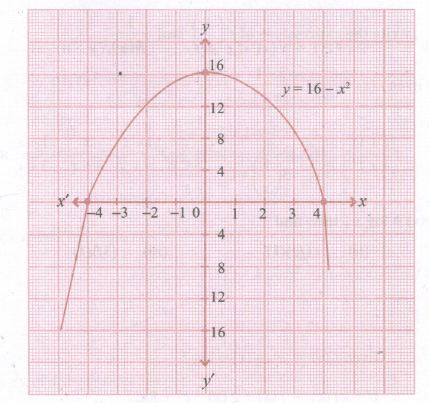
Draw the graph of the following functions : f(x) = 16 - x2
5.
Solve : \(\tan^{-1}2x+\tan^{-1}3x=\frac{\pi}{4}\)
6.
Differentiate sin2 x with respect to x2.
7.
If A \(= \begin{bmatrix} 1 & -1 \\2 & 3 \end{bmatrix}\) show that A2 - 4A + 5I2 = 0 and also find A-1.
8.
Solve: \(\begin{vmatrix}2& x&3\\4&1&6\\1&2&7 \end{vmatrix}=0\)
9.
Expand the following by using binomial theorem.\(\left( x+\frac { 1 }{ y } \right) ^{ 7 }\)
10.
Probability that at least one of the events A, B occur is _________.
\(P(A\cup B)\)
\(P(A\cap B)\)
P(A/B)
\((A\cup B)\)
11.
When calculating the average growth of economy, the correct mean to use is?
Weighted mean
Arithmetic mean
Geometric mean
Harmonic mean
12.
13.
14.
The dividend received on 200 shares of face value Rs.100 at 8% is ________.
Rs. 1600
Rs. 1000
Rs. 1500
Rs. 800
15.
The variable which influences the values or is used for prediction is called________.
Dependent variable
Independent variable
Explained variable
Regressed
16.
If the values of two variables move in same direction then the correlation is said to be ______.
Negative
positive
Perfect positive
No correlation
17.
18.
Given an L.P.P maximize Z = 2x1 + 3x2 subject to the constrains x1 + x2 ≤ 1, 5x1 + 5x2 ≥ 0 and x1 ≥ 0, x2 ≥ 0 using graphical method, we observe ______.
No feasible solution
unique optimum solution
multiple optimum solution
none of these
19.
Network problems have advantage in terms of project _______.
Scheduling
Planning
Controlling
All the above
20.
A solution which maximizes or minimizes the given LPP is called ______.
a solution
a feasible solution
an optimal solution
none of these
21.
The graph of y = ex intersect the y-axis at _______.
(0,0)
(1,0)
(0,1)
(1,1)
22.
The value of \(\frac{1}{cosec(-45^o)}\) is _______.
\(\frac{-1}{\sqrt2}\)
\(\frac{1}{\sqrt2}\)
\(\sqrt2\)
\(-\sqrt2\)
23.
The degree measure of \(\frac{\pi}{8}\) is ______.
20o60'
22o30'
20o60'
20o30'
24.
The slope of the line 7x + 5y - 8 = 0 is _______.
7/5
-7/5
5/7
-9/7
25.
The term containing x3 in the expansion of (x - 2y)7 is _________.
3rd
4th
5th
6th
26.
The value of n, when nP2 = 20 is _______.
3
6
5
4
27.
If any three rows or columns of a determinant are identical then the value of the determinant is ________.
0
2
1
3
28.
If A is square matrix of order 3, then |kA| is________.
k|A|
-k|A|
k3|A|
-k3|A|
29.
The value of x if \(\begin{vmatrix} 0 & 1 & 0 \\ x & 2 & x \\ 1 & 3 & x \end{vmatrix}=0\) is_________.
0, - 1
0, 1
- 1, 1
- 1, - 1
30.
Verify the relationship among AM, GM and HM for the following data
| X | 7 | 10 | 13 | 16 | 19 | 22 | 25 | 28 |
| f | 10 | 22 | 24 | 28 | 19 | 9 | 12 | 16 |
31.
For the given lines of regression 3X – 2Y = 5 and X – 4Y = 7. Find
(i) Regression coefficients
(ii) Coefficient of correlation
32.
A company buys in lots of 500 boxes which is a 3 month supply. The cost per box is Rs. 125 and the ordering cost in Rs. 150. The inventory carrying cost is estimated at 20% of unit value.
(i) Determine the total amount cost of existing inventory policy
(ii) Determine EOQ in units
(iii) How much money could be saved by applying the economic order quantity?
33.
By the principle of mathematical induction, prove the following.
52n - 1 is divisible by 24, for all \(n\in N\) .
34.
Evaluate:\(\begin{vmatrix} 1&a&a^2-bc\\1&b&b^2-ca\\1&c&c^2-ab \end{vmatrix}\)
35.
Evaluate: \(\underset { x\rightarrow 1 }{ lim } \frac { { x }^{ 3 }-1 }{ x-1 } \)
36.
Find n, if \(\frac{1}{9!}+\frac{1}{10!}=\frac{n}{11!}\)
37.
The total cost function for the production of x units of an item is given by c = 10 - 4x3 + 3x4 find the (i) average cost function (ii) marginal cost function (iii) marginal average cost fuction.
38.
A tour operator charges Rupees 136 per passenger with a discount of 40 paisa for each passenger in excess of 100. The operator requires at least 100 passengers to operate the tour. Determine the number of passenger that will maximize the amount of money the tour operator receives.
39.
Find the stationary value and the stationary points f(x) = x2 + 2x – 5.
40.
Express each of the following as the product of sine and cosine sinA + sin2A
41.
Convert the following degree measure into radian measure 60o
1.
4(nC2) = (n + 2)C3
\(4 \frac{n(n-1)}{1 \times 2}=\frac{(n+2)(n+1)(n)}{1 \times 2 \times 3}\)
\(12\left( n-1 \right) =\left( n+2 \right) \left( n+1 \right) \)
\(12\left( n-1 \right) =\left( { n }^{ 2 }+3n+2 \right) \)
\({ n }^{ 2 }-9n+14=0\)
\( \left( n-2 \right) \left( n-7 \right) =0\Rightarrow n=2,n=7\)
2.
The given system can be written as
\(\left[ \begin{matrix} 2 & 5 \\ 3 & 2 \end{matrix} \right] \left[ \begin{matrix} x \\ y \end{matrix} \right] =\left[ \begin{matrix} 1 \\ 7 \end{matrix} \right] \)
i.e., AX = B
X = A–1B
where \(A=\left[ \begin{matrix} 2 & 5 \\ 3 & 2 \end {matrix} \right] ,X=\left [ \begin{matrix} x \\ y \end {matrix} \right] and\ B=\left [ \begin{matrix} 1 \\ 7 \end{matrix} \right] \)
\(|A|=\left[ \begin{matrix} 2 & 5 \\ 3 & 2 \end{matrix} \right] \)
= –11 \(\neq \) 0
A–1 exists.
\(adj\ A=\left[ \begin{matrix} 2 & -5 \\ -3 & 2 \end{matrix} \right] \)
\(A^{-1}=\frac{1}{|A|}adjA\)
\(=\frac{1}{-11}\left[ \begin{matrix} 2 & -5 \\ -3 & 2 \end{matrix} \right] \)
\(X=A^{-1} B\)
\(=\frac{1}{-11}\left[ \begin{matrix} 2 & -5 \\ -3 & 2 \end{matrix} \right] \ \left[ \begin{matrix} 1 \\ 7 \end{matrix} \right] \)
\(=\frac{1}{-11}\left[ \begin{matrix} -33 \\ 11 \end{matrix} \right] = \left[ \begin{matrix} 3 \\ -1 \end{matrix} \right] \)
\(\left[ \begin{matrix} x \\ y \end{matrix} \right] =\left[ \begin{matrix} 3 \\ -1 \end{matrix} \right] \)
x = 3, and y = -1.
3.
\(A=\left[ \begin{matrix} 2 & 4 \\ -3 & 2 \end{matrix} \right] \)
\(|A|=\left[ \begin{matrix} 2 & 4 \\ -3 & 2 \end{matrix} \right] \)
=16 ≠ 0
Since A is a nonsingular matrix, A -1 exists
Now adj \(A=\left[ \begin{matrix} 2 & -4 \\3 & 2 \end{matrix} \right] \)
\({ A }^{ -1 }=\frac { 1 }{ \left| A \right| } adjA\)
\(=\frac { 1 }{ 16 } \left[ \begin{matrix} 2 & -4 \\ 3 & 2 \end{matrix} \right] \)
4.
\(y=16-x^2\)
| x | -4 | -3 | 0 | 1 | 2 | 4 |
| y | 0 | 7 | 16 | 15 | 12 | 0 |
5.
\(\tan ^{-1} 2 x+\tan ^{-1} 3 x=\pi / 4\)
\(\tan^{-1}\left(\frac{2x+3x}{1-(2x)(3x)}\right)=\frac{\pi}{4}\)
\(\frac{5 x}{1-6 x^2}=\tan \pi / 4=1 \text { if } 6 x^2<1 \)
\(5 x=1-6 x^2 \quad x^2<1 / 6 \)
\(6 x^2+5 x-1=0 \quad \frac{-1}{\sqrt{6}}<x<\frac{1}{\sqrt{6}} \)
\(6 x^2+6 x-x-1=0 \)
\(x=-1, \frac{1}{6} \text { and } \frac{-1}{\sqrt{6}}<x<\frac{1}{\sqrt{6}}
\)
\(x=1 / 6\)
6.
u = sin2 x and v = x2
\(\frac { du }{ dx } =2 \sin x \cos x;\quad \frac { dv }{ dx } =2x\)
= 2 sinx
\(\therefore \frac { du }{ dv } =\frac { \frac { du }{ dx } }{ \frac { dv }{ dx } } =\frac { sin2x }{ 2x } \)
7.
\(A^{-1}=\left(\begin{array}{cc} 1 & -1 \\ 2 & 3 \end{array}\right)\)
\(A^2=\left(\begin{array}{cc} 1 & -1 \\ 2 & 3 \end{array}\right)\left(\begin{array}{cc} 1 & -1 \\ 2 & 3 \end{array}\right)\)
\(=\left(\begin{array}{ll} 1-2 & -1-3 \\ 2+6 & -2+9 \end{array}\right)=\left(\begin{array}{cc} -1 & -4 \\ 8 & 7 \end{array}\right)\)
\(\mathrm{LHS}=A^2-4 A+5 l_2\)
\(=\left(\begin{array}{cc} -1 & -4 \\ 8 & 7 \end{array}\right)-4\left(\begin{array}{cc} 1 & -1 \\ 2 & 3 \end{array}\right)+5\left(\begin{array}{ll} 1 & 0 \\ 0 & 1 \end{array}\right)\)
\(=\left(\begin{array}{cc} -1 & -4 \\ 8 & 7 \end{array}\right)-\left(\begin{array}{cc} 4 & -4 \\ 8 & 12 \end{array}\right)+\left(\begin{array}{ll} 5 & 0 \\ 0 & 5 \end{array}\right)\)
\(=\left(\begin{array}{cc} -1 & -4 \\ 8 & 7 \end{array}\right)+\left(\begin{array}{cc} 1 & 4 \\ -8 & -7 \end{array}\right)=\left(\begin{array}{ll} 0 & 0 \\ 0 & 0 \end{array}\right)\)
\(=O=R H S\)
\(\mathrm{A}^{-1}=\frac{1}{|A|} \operatorname{adj} A\)
\(|A|=3+2=5 \neq 0\)
\(A^{-1}=\frac{1}{5}\left(\begin{array}{cc} 3 & 1 \\ -2 & 1 \end{array}\right)\)
8.
Expanding along R1 we get,
\(\left|\begin{array}{lll} 2 & x & 3 \\ 4 & 1 & 6 \\ 1 & 2 & 7 \end{array}\right|=0\)
⇒ 2 (7 -12) -x (28- 6) + 3 (8 - 1) = 0
⇒ -10 - 22x + 21 = 0
⇒ 11 = 22x
⇒ \(x={11\over 22}={1\over 2}\)
9.
\(\left(x+\frac{1}{y}\right)^7 =7 C_0 x^7+7 C_1 x^6\left(\frac{1}{y}\right)+7 C_2 x^5\left(\frac{1}{y}\right)^2 +7 C_4 x^3\left(\frac{1}{y}\right)^4+7 C_5 x^2\left(\frac{1}{y}\right)^5 +7 C_6 x\left(\frac{1}{y}\right)^6+7 C_7\left(\frac{1}{y}\right)^7\)
\(=x^7+\frac{7 x^6}{y}+\frac{21 x^5}{y^2}+\frac{35 x^4}{y^3} +\frac{35 x^3}{y^4}+\frac{21 x^2}{y^5}+\frac{7 x}{y^6}+\frac{1}{y^7}\)
10.
(a)
\(P(A\cup B)\)
11.
(c)
Geometric mean
12.
(b)
13.
(b)
14.
Investment = 200 x 100 x \(\frac{8}{100}\)= Rs. 1600
15.
(b)
Independent variable
16.
(b)
positive
17.
(b)
18.
Since there is no common area between the lines x1 + x2 ≤ 1 and 5x1 + 5x2 ≥ 0
19.
(d)
All the above
20.
(c)
an optimal solution
21.
(c)
(0,1)
22.
\(\frac{-1}{\operatorname{cosec} 45^{\circ}}=\frac{-1}{\sqrt{2}}\)
23.
\(\frac{\pi}{8}=\frac{180^{\circ}}{8}=22 \frac{1}{2}^{\circ}=22^{\circ} 30^{\prime}\)
24.
\(m=\frac{-a}{b}=\frac{-7}{5}\)
25.
(c)
5th
26.
nP2 = 20
n(n - 1) = 5 x 4
n = 5
27.
(a)
0
28.
(Since \(|k A|=k^n|A|,\) n is the order of matrix A
29.
\(\left|\begin{array}{lll} 0 & 1 & 0 \\ x & 2 & x \\ 1 & 3 & x \end{array}\right|=0 \Rightarrow-1\left[x^2-x\right]=0\)
\(\Rightarrow x(x-1)=0 \Rightarrow x=0,1\)
30.
| X | f | Xf | logX | flogX | f/X |
| 7 | 10 | 70 | 0.8451 | 8.4510 | 1.4286 |
| 10 | 22 | 220 | 1 | 22.0000 | 2.2000 |
| 13 | 24 | 312 | 1.1139 | 26.7346 | 1.8462 |
| 16 | 28 | 448 | 1.2041 | 33.7154 | 1.7500 |
| 19 | 19 | 361 | 1.2788 | 24.2963 | 1.0000 |
| 22 | 9 | 198 | 1.3424 | 12.0818 | 0.4091 |
| 25 | 12 | 300 | 1.3979 | 16.7753 | 0.4800 |
| 28 | 16 | 448 | 1.4472 | 23.1545 | 0.5714 |
| \(\sum\)f = N = 140 | \(\sum\)fX = 2357 | \(\sum\)flog x = 167.209 | \(\sum { \frac { f }{ x } } \)= 9.6852 |
\(AM=\frac { \sum { fx } }{ N } =\frac { 2357 }{ 140 } =16.84\)
GM = Anti \(\log { \left( \frac { \sum { flogX } }{ N } \right) } \)
= Anti \(\log { \left( \frac { 167.209 }{ 140 } \right) } \)
= Anti log(1.1944) = 15.65
\(HM=\frac { N }{ \sum { \left( \frac { f }{ X } \right) } } =\frac { 140 }{ 9.6852 } =14.46\)
i.e.,16.84 >15.65 >14.46
\(\therefore\) AM > GM > HM
31.
(i) First convert the given equations Y on X and X on Y in standard form and find their regression coefficients respectively.
Given regression lines are
3X–2Y = 5 ... (1)
X–4Y = 7 ... (2)
Let the line of regression of X on Y is
3X–2Y = 5
3X = 2Y+5
X = \(\frac{1}{3}\)(2Y+5)
X = \(\frac{1}{3}\)(2Y+5)
X = \(\frac { 2 }{ 3 } Y+\frac { 5 }{ 3 } \)
∴ Regression coefficient of X on Y is
bxy =\(\frac{2}{3}\)(<1)
Let the line of regression of Y on X is
X–4Y = 7
–4Y = –X+7
4Y = X–7
Y = \(\frac{1}{4}\)(X-7)
Y = \(\frac{1}{4}\)X-\(\frac{7}{4}\)
∴ Regression coefficient of Y on X is
byx = \(\frac{1}{4}\)(<1)
(ii) Coefficient of correlation
Since the two regression coefficients are positive then the correlation coefficient is also positive and it is given by
r = \(\sqrt { { b }_{ yx }.{ b }_{ xy } } \)
= \(\sqrt { \frac { 2 }{ 3 } .\frac { 1 }{ 4 } } \)
= \(\sqrt { \frac { 1 }{ 6 } } \)
= 0.4082
∴ r = 0.4082
32.
Given
Ordering cost per order : C3 = Rs. 150 per order.
Number of units per order: q = 500 units
Annual demand = 500 × 4 = 2000 units
∴ Demand rate : R = 2000 per year
Carrying cost : C1 = 20% of unit value
C1 = \(\frac { 20 }{ 100 } \times 125=Rs25\)
(i) Total annual cost of due existing inventory policy
= \(\frac { R }{ q } \times { C }_{ 3 }+\frac { q }{ 2 } { C }_{ 1 }\) = \(\frac { 2000 }{ 500 } \times 150+\frac { 500 }{ 2 } \times 25\)
= Rs. 6850
(ii) EOQ = \(\sqrt { \frac { 2Rc_{ 3 } }{ { c }_{ 1 } } } \)
= \(\sqrt { \frac { 2\times 2000\times 150 }{ 25 } } \)
= \(\sqrt { 12\times 2000 } \)
= 155 units (app.)
(iii) Minimum annual cost \(= \sqrt { { 2Rc_{ 3 } }{ { c }_{ 1 } } } \)
= \(\sqrt { 2\times 2000\times 150\times 25 } \)
= Rs. 3873.
By applying the economic order quantity, money saved by a company = 6850 – 3873 = Rs. 2977.
33.
Let P(n) denote the statement 52n - 1 is divisible by 24.
Step-1: Put n = 1
52(1) - 1 = 25 - 1 = 24 is divisible by 24
∴ P(1) is true.
Step-2:
Let us assume that P(k) is true
∴ 52k - 1 is divisible by 24.
⇒ 52k - 1 = 24m
⇒ 52k = 24m + 1 ...(1)
To prove that P(k + 1) is true
P(k + 1) = 52(k+1) - 1
= 52k+2 - 1 = 52k.52 - 1
= (24m + 1)25 - 1
= 24m. 25 + 25 - 1
= 24m + 25 - 24
= 24(25m + 1)
Which is divisible by 24
∴ P (k + 1) is true whenever P(k) is true.
∴ p(n) is true for all \(n\in N\).
34.
Let A \(=\begin{vmatrix} 1 & a&a^2&-bc \\1 &b&{b}^{2}&-ca\\1&c&c^2&-ab \end{vmatrix}\)
\(=\left|\begin{array}{lll} 1 & a & a^2 \\ 1 & b & b^2 \\ 1 & c & c^2 \end{array}\right|+\left|\begin{array}{ccc} 1 & a & -b c \\ 1 & b & -c a \\ 1 & c & -a b \end{array}\right|\)
\(A=\begin{vmatrix} 1 & a&{a}^{2} \\ 1 &b&b^2\\1&c&c^2 \end{vmatrix}-\begin{vmatrix} 1 & a&bc \\1 &b&ca\\1&c&ab \end{vmatrix}\)
\(=\left|\begin{array}{lll} 1 & a & a^2 \\ 1 & b & b^2 \\ 1 & c & c^2 \end{array}\right|-\frac{1}{a b c}\left|\begin{array}{ccc} a & a^2 & a b c \\ b & b^2 & a b c \\ c & c^2 & a b c \end{array}\right|\)
(Multiplying R1, R2 and R3 of II det by a, b, c respectively)
\(=\left|\begin{array}{lll} 1 & a & a^2 \\ 1 & b & b^2 \\ 1 & c & c^2 \end{array}\right|-\frac{a b c}{a b c}\left|\begin{array}{lll} a & a^2 & 1 \\ b & b^2 & 1 \\ c & c^2 & 1 \end{array}\right|\)
\(\left|\begin{array}{lll} 1 & a & a^2 \\ 1 & b & b^2 \\ 1 & c & c^2 \end{array}\right|-\left|\begin{array}{lll} 1 & a & a^2 \\ 1 & b & b^2 \\ 1 & c & c^2 \end{array}\right|=0\)
35.
\(\underset { x\rightarrow 1 }{ lim } \frac { { x }^{ 3 }-1 }{ x-1 } \) is of the type \(\frac { 0 }{ 0 } \)
\(\underset { x\rightarrow 1 }{ lim } \cfrac { { x }^{ 3 }-1 }{ x-1 } =\underset { x\rightarrow 1 }{ lim } \cfrac { \left( x-1 \right) \left( { x }^{ 2 }+x+1 \right) }{ \left( x-1 \right) } \)
\(=\underset { x\rightarrow 1 }{ lim } \left( { x }^{ 2 }+x+1 \right) \)
\(=\left( 1 \right) ^{ 2 }+1+1\)
= 3
36.
\(\cfrac { 1 }{ 9! } +\cfrac { 1 }{ 10! } =\cfrac { n }{ 11! } \)
\(\cfrac { 1 }{ 9! } +\cfrac { 1 }{ 10\times 9! } =\cfrac { n }{ 11! }\)
\( \cfrac { 1 }{ 9! } \left[ 1+\cfrac { 1 }{ 10 } \right] =\cfrac { n }{ 11! } \)
\( \cfrac { 1 }{ 9! } \times \cfrac { 11 }{ 10 } =\cfrac { n }{ 11! } \)
\(n=\cfrac { 11!\times 11 }{ 9!\times 10 } \)
\(=\cfrac { 11!\times 11 }{ 10! } \)
\( =\cfrac { 11\times 10!\times 11 }{ 10! } \)
\(n=121\)
37.
Given C = 10- 4x3 + 3x4
(i) Average Cost (AC) = \({C\over x}=\frac { 10 }{ x } \) - 4x2 + 3x3
(ii) Marginal Cost (MC) = \({dC\over dx}\)= -12x2 + 12x3
(iii) Marginal Average Cost (MAC) = \({d\over dx }(AC)=-\frac { 10 }{ { x }^{ 2 } } \) - 8x + 9x2
38.
Let x be the number of passengers.
\(P=136 -\frac{40}{100}(x-100) \text { if } x \geq 100 \)
\(R=p x =136 x-\frac{2 x^2}{5}+40 x \)
\(=176 x-\frac{2 x^2}{5} \)
\(\frac{d R}{d x} =176-\frac{4 x}{5}\)
For max. revenue \(\frac{d R}{d x}=0\)
\(176 =\frac{4 x}{5} \)
\(x =\frac{176 \times 5}{4}=220 \)
\(\frac{d^2 R}{d x^2} =-\frac{4}{5}<0\)
∴ At x = 220,
Revenue is maximum.
39.
Given that f(x) = x2 + 2x – 5 … (1)
f '(x) = 2x + 2
At stationary points, f'(x) = 0
\(\Rightarrow\) 2x + 2 = 0 \(\Rightarrow\) x = –1
f(x) has stationary value at x = –1
When x = –1, from (1)
f(–1) = (–1)2 + 2(–1) – 5 = – 6
Stationary value of f (x) is – 6
Hence stationary point is (–1,–6)
40.
\(\sin A + \sin 2 A=2 \sin \frac{A + 2 A}{2} \cos \frac{A-2 A}{2}\)
\(=2 \sin \frac{3 A}{2} \cos \frac{A}{2}\)
41.
\({ 60 }^{ o }=60\times \frac { \pi }{ 180 } = \frac { \pi }{ 3 } \)

11th Standard Syllabus & Materials
11th Standard
TN 11th Tamil பீடு பெற நில் - செய்யுள் - காவடிச்சிந்து Important Questions And Answers Study Material - QB365 Set A
NEW11th Standard
TN 11th Tamil பீடு பெற நில் - உரைநடை - மலை இடப்பெயர்கள் : ஓர் ஆய்வு Important Questions And Answers Study Material - QB365 Set A
NEW11th Standard
TN 11th Tamil மாமழை போற்றுதும் - துணைப்பாடம் - யானை டாக்டர் Important Questions And Answers Study Material - QB365 Set A
NEW11th Standard
TN 11th Tamil மாமழை போற்றுதும் - செய்யுள் - ஐங்குறுநூறு Important Questions And Answers Study Material - QB365 Set A



Tamilnadu Stateboard 11th Standard Subjects

Maths

Commerce

Economics

Biology
Business Maths and Statistics

Accountancy

Computer Science

Physics

Chemistry
Maths
Biology
Economics
Physics
Chemistry

History
Business Maths and Statistics

Computer Science
Accountancy

Computer Applications
History
Computer Technology
Commerce
Computer Applications
Computer Technology

Tamil

English

French
Tamilnadu Stateboard Standards
