
 100% FREE ACCESS
9th Standard CBSE Syllabus & Materials
9th Standard CBSE
CBSE 9th Science Is matter around us pure? - New Model Questions Papers Study Material - QB365 Set A
NEW9th Standard CBSE
CBSE 9th Science Matter in our surroundings - New Model Questions Papers Study Material - QB365 Set A
NEW9th Standard CBSE
CBSE 9th Mathematics Heron's Formula Sample Question Papers Study Material - QB365 Set A
NEW9th Standard CBSE
CBSE 9th Mathematics Circles Sample Question Papers Study Material - QB365 Set A
NEW9th Standard CBSE
CBSE 9th Mathematics Quadrilaterals Sample Question Papers Study Material - QB365 Set A
NEW9th Standard CBSE
CBSE 9th Mathematics Triangles Sample Question Papers Study Material - QB365 Set A
Published on: 21/10/2025
Download CBSE Class 9th Standard CBSE Social Science question papers, sample papers, important questions, and previous year solved papers in PDF format. Get free study materials, NCERT solutions, and exam preparation resources for Class 9th Standard CBSE Social Science
Questions + Answers key
Take MCQ Social Science Test
1.
Feature of Centralised Planning
Land was socialised
Industries nationalised
Five Year Plans
Banks nationalised
2.
What was the period of the civil war in Russia?
1918-1919
1918-1920
1917-1919
1918-1921
3.
Voting in the Estates General was conducted on the principle of
each member one vote
male adult franchise
universal adult franchise
each Estate one vote
4.
The most important of the privileges enjoyed by the clergy and nobility
right to collect dues
ownership of land
participate in wars
exemption from taxes tot eh state
5.
Describe the October Revolution of 1917 in Russia.
6.
Why were women disappointed by the Constitution of 1791 in France?
7.
What industries were most prone to strikes?
8.
What was the most revolutionary social reform of the Jacobin regime?
9.
What was the 'Declaration of Rights of Man and Citizen according to the French Constitution of 1791?
10.
What did the revolutionary government do to improve the condition of women in France?
11.
Describe any three steps taken by Lenin to improve agriculture and economy of Russia.
12.
What was the reaction of most Bolshevik Party members to Lenin's 'April Theses'.
13.
Try to recognise the picture and answer the following questions:
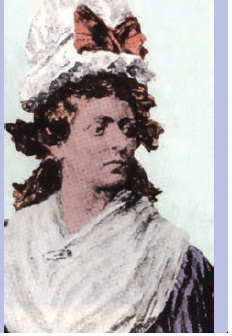
(i) Who has been shown in the given picture?
(ii) How did she contribute to the nation and woman's rights?
14.
Read the following extract and answer the questions that follow
Rabindranath Tagore wrote from Russia in 1930
‘Moscow appears much less clean than the other European capitals. None of those hurrying along the streets look smart. The whole place belongs to the workers … Here the masses have not in the least been put in the shade by the gentlemen … those who lived in the background for ages have come forward in the open today … I thought of the peasants and workers in my own country. It all seemed like the work of the Genii in the Arabian Nights. [here] only a decade ago they were as illiterate, helpless and hungry as our own masses … Who could be more astonished than an unfortunate Indian like myself to see how they had removed the mountain of ignorance and helplessness in these few years’.
(i) How does the author of the above passage portray Moscow?
(ii) What is the condition of the mass there?
(iii) Why does the author call himself unfortunate?
1.
(c)
Five Year Plans
2.
(b)
1918-1920
3.
(a)
each member one vote
4.
(d)
exemption from taxes tot eh state
5.
(i) On April 1917, the Bolshevik leader Lenin returned from exile to Russia.
(ii) In July 1917, demonstrations were held by the Bolsheviks against the Provisional Government led by Kerenskii.
(iii) Between July and September, peasants seized land from the rich landlords.
(iv) On October 16, 1917, Lenin persuaded the Petrograd Soviet and the Bolshevik Party to agree to a 'Socialist Seizure of Power'. The date of the event was kept a secret.
(v) On 23rd Oct 1917 a Military Revolutionary Committee under Leon Trotskii organised the seizure. It was timed with the All Russian Congress of Soviet of Workers and Soldiers. The uprising began on 24th October. '
(vi) Provisional government under Kerenskii resisted. At dawn loyal milit~ men seized buildings of two Bolshevik newspapers, telephone, and telegraph offices and protected the Winter Palace.
(vii) In a swift response, the Military Revolutionary Committee ordered its supporters to seize government officers and arrest ministers. The seizure was complete within a day. The Navy, the Ship Aurora shelled the Winter Palace played a significant role in the assault of the Winter Palace. Kerenskii however escaped.
(viii) At a meeting of the All Russian Congress of Soviets in Petrograd, the majority approved the Bolshevik action.
(ix) Uprising took place in other cities.
(x) There was heavy fighting-especially in Moscow-but by December (1917), the Bolsheviks controlled the Moscow Petrograd area.
(xi) The Bolshevik party was renamed the Russian Communist Party. In November 1917 in the elections conducted to the Constituent Assembly the Bolsheviks failed to gain majority support. Lenin dismissed the assembly and assumed leadership.
The most immediate effect of the October Revolution was that power passes into the hands of the Bolsheviks under Lenin. The revolution led to the establishment of the world's first communist regime.
6.
(i) Women were disappointed by the constitution of 1791 because it reduced them to 'passive' citizens.
(ii) Despite being active participants in the revolution, they were denied the right to vote, to be elected to the Assembly, and to hold political office.
7.
The metal and textile were most prone to strikes.
8.
Abolition of slavery in 1794 was the most revolutionary social reform of the Jacobn regime.
9.
The Declaration of Rights of Man and Citizen:
(i) Men are born and remain free and equal in rights.
(ii) The objective of each political association is the preservation of the natural and inalienable rights of man. i.e. right to liberty, property, security and resistance to oppression.
(iii) The source of all sovereignty resides in the nation; no group or individual may exercise authority that does not come from the people.
(iv) The law has the right to forbid only actions that are injurious to society.
10.
The revolutionary government in the early years introduced several laws to improve the condition of women in France:
(i) State schools were created and schooling was made compulsory for all girls.
(ii) Women could no longer be forced to marry against their wishes.
(iii) Marriage was made into a contract, entered into freely and registered under civil law.
(iv) Divorce was made legal and could be applied for by both women and men.
(v) Women could now train for jobs could become artists or run small businesses.
11.
Lenin's New Economic Policy:
(i) Lands of nobles and church were confiscated and given to peasant societies. Land was made state property.
(ii) While major industries were under government control, small businesses and home industries could be privately owned and operated for profit. Private trade was allowed in a limited measure.
(iii) Foreign capital was welcomed for the development of state industries. This helped revive the Russian economy and improvement in the condition of the common people.
12.
(i) Most others in the Bolshevik Party were initially surprised by the April Theses.
(ii) They thought time was not yet ripe for a socialist revolution.
(iii) They felt the Provisional Government needed to be supported.
(iv) However, the development of the subsequent months changed their attitude.
13.
(i) The above picture is of Olympe de Gouges, one of the most important of the politically active women in revolutionary France.
(ii) She protested against the Constitution and the Declaration of Rights of Man and Citizen as women were excluded from basic rights that each human being was entitled to.
In 1791, she wrote a Declaration of the Rights of Woman and Citizen, which she addressed to the Queen and to the members of the National Assembly, demanding that they act upon it.
14.
(i) Moscow, as the author describes, is much less clean than other European capitals. The whole place belongs to the workers.
(ii) The mass now look smart and enlightened.
(iii) The author calls so for being a citizen of the country which had long been under the influence of illiteracy and poverty and it took a long time to remove them.

9th Standard CBSE Syllabus & Materials
9th Standard CBSE
CBSE 9th Mathematics Lines and Angles Sample Question Papers Study Material - QB365 Set A
NEW9th Standard CBSE
CBSE 9th Mathematics Introduction to Euclid's Geometry Sample Question Papers Study Material - QB365 Set A
NEW9th Standard CBSE
CBSE 9th Mathematics Linear Equations in Two Variables Sample Question Papers Study Material - QB365 Set A
NEW9th Standard CBSE
CBSE 9th Mathematics Coordinate Geometry Sample Question Papers Study Material - QB365 Set A



NCERT Books

Syllabus

Exam Pattern

Sample Question Papers

Previous year Question Papers

Important Notes

MCQ Practice test

NCERT Exemplers

Case study Questions

Image Based Questions

Passage based Questions

HOT Questions

Value Based Questions

Model Questions Papers
NCERT ( Book Back ) Questions

Assertion and Reason
Important Questions And Answers

CBSE 9th Standard CBSE Subjects
CBSE Standards


